


5 months 5 days ago
To have no food for our heads no food for our hearts, no food for our activity, is that nothing? If we have no food for the body, how do we cry out, how all the world hears of it, how all the newspapers talk of it, with a paragraph headed in great capital letters, DEATH FROM STARVATION! But suppose one were to put a paragraph in the Times, Death of Thought from Starvation, or Death of Moral Activity from Starvation, how people would stare, how they would laugh and wonder! One would think we had no heads nor hearts, by the total indifference of the public towards them. Our bodies are the only things of any consequence.
2 months 2 weeks ago
I cannot conceive, how a body, destitute of understanding and sense, truly so called, can moderate and determine its own motions; especially so as to make them conformable to laws that it has no knowledge of.
▼
Source
source
Sect.1.
4 months 3 weeks ago
The man who holds the divine theory of life recognizes life not in his own individuality, and not in societies of individualities (in the family, the clan, the nation, the tribe, or the government), but in the eternal undying source of life-in God; and to fulfill the will of God he is ready to sacrifice his individual and family and social welfare. The motor power of his life is love. And his religion is the worship in deed and in truth of the principle of the whole-God.
▼
Source
source
Chapter IV, Christianity Misunderstood by Men of Science
5 months 2 weeks ago
Blessed is the lion which becomes man when consumed by man; and cursed is the man whom the lion consumes, and the lion becomes man. (7) This saying has been interpreted by some as referring to such anger as consumes a man…(rather than is consumed by him, through his reason and love), 'til that man is the lion of Anger. Other more mystical interpretations might also be found or devised that have merit.

7 months 1 week ago
Thus the sum of things is ever being renewed, and mortal creatures live dependent one upon another. Some species increase, others diminish, and in a short space the generations of living creatures are changed and, like runners, pass on the torch of life.
▼
Source
source
Book II, line 75 (tr. Rouse)


6 months 2 weeks ago
What is the case, the fact, is the existence of atomic facts.
▼
Source
source
(2) Original German: Was der Fall ist, die Tatsache, ist das Bestehen von Sachverhalten.
3 months 1 week ago
A thatched roof once covered free men; under marble and gold dwells slavery.

6 months 3 weeks ago
It is the nature and intention of a constitution to prevent governing by party, by establishing a common principle that shall limit and control the power and impulse of party, and that says to all parties, thus far shalt thou go and no further. But in the absence of a constitution, men look entirely to party; and instead of principle governing party, party governs principle.
2 months 2 weeks ago
...that to expect a bad person not to harm others is like expecting fig trees not to secrete juice, babies not to cry, horses not to neigh-the inevitable not to happen.
▼
Source
source
(Hays translation) XII, 16
5 months 2 weeks ago
The victor and the one who keeps My works to the end: I will give him authority over the nations and He will shepherd them with an iron scepter; He will shatter them like pottery just as I have received this from My Father.

6 months 3 weeks ago
Looking for God-or Heaven-by exploring space is like reading or seeing all Shakespeare's plays in the hope that you will find Shakespeare as one of the characters or Stratford as one of the places. Shakespeare is in one sense present at every moment in every play.
▼
Source
source
"The Seeing Eye", in Christian Reflections (1967), p. 167
5 months 2 weeks ago
Sleep on now, and take your rest: behold, the hour is at hand, and the Son of man is betrayed into the hands of sinners. Rise, let us be going: behold, he is at hand that doth betray me.
▼
Source
source
26:45-46 (KJV)
2 months 3 weeks ago
The entire Earth, with her trees and her waters, with her animals, with her men and her gods, calls from within your breast. Earth rises up in your brains and sees her entire body for the first time.
3 months 4 days ago
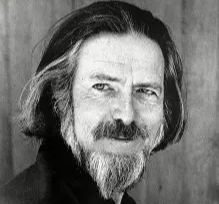
The prevalent sensation of oneself as a separate ego enclosed in a bag of skin is a hallucination which accords neither with Western science nor with the experimental philosophy-religions of the East - in particular the central and germinal Vedanta philosophy of Hinduism. This hallucination underlies the misuse of technology for the violent subjugation of man's natural environment and, consequently, its eventual destruction. We are therefore in urgent need of a sense of our own existence which is in accord with the physical facts and which overcomes our feeling of alienation from the universe.

2 months 3 weeks ago
Self-interest, or rather self-love, or egoism, has been more plausibly substituted as the basis of morality. But I consider our relations with others as constituting the boundaries of morality. With ourselves, we stand on the ground of identity, not of relation, which last, requiring two subjects, excludes self-love confined to a single one. To ourselves, in strict language, we can owe no duties, obligation requiring also two parties. Self-love, therefore, is no part of morality. Indeed, it is exactly its counterpart.
▼
Source
source
Letter to Thomas Law

3 months 1 week ago
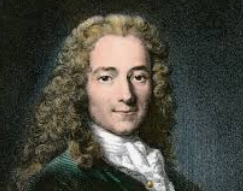
Imagine that nature is saying to us: "Those things of which you complain are the same for all. I cannot give anything easier to any man, but whoever wishes will make things easier for himself." In what way? By equanimity. You must suffer pain, and thirst, and hunger, and old age too, if a longer stay among men shall be granted you; you must be sick, and you must suffer loss and death.
3 months 4 days ago
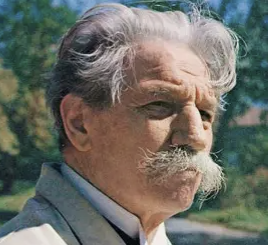
Altogether, Jesus never behaves like a man wandering in a system of delusions. He reacts in absolutely normal fashion to what is said to Him, and to the events that concern Him. He is never out of touch with reality.
▼
Source
source
Ch. 12 : Literary Work During My Medical Course, p. 133.
3 months 1 week ago
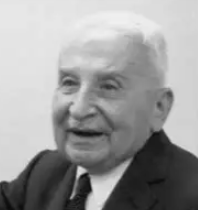
State and government are the social apparatus of violent coercion and repression. Such an apparatus, the police power, is indispensable in order to prevent anti-social individuals and bands from destroying social co-operation. Violent prevention and suppression of anti-social activities benefit the whole of society and each of its members. But violence and oppression are none the less evils and corrupt those in charge of their application. It is necessary to restrict the power of those in office lest they become absolute despots. Society cannot exist without an apparatus of violent coercion. But neither can it exist if the office holders are irresponsible tyrants free to inflict harm upon those they dislike.

5 months 2 weeks ago
It is debasing to die the way one does; it is intolerable to be exposed to an end over which we have no control, an end which lies in wait for us, overthrows us, casts us into the unnameable.

3 months 2 weeks ago
For both the pragmatic... and... moral reasons... liberalism became the dominant doctrine of the 20th century, and should... continue to be defended....
▼
Source
source
12:32
6 months 3 weeks ago
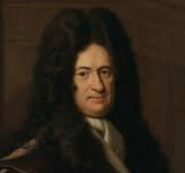
Thus there is nothing waste, nothing dead in the universe; no chaos, no confusions, save in appearence. We might compare this to the appearence of a pond in the distance, where we can see the confused movement and swarming of the fish, without distinguishing the fish themselves.Thus we are that each living body has a dominante entelechy, which in case of an animal is the soul, but the members of this living body are full of other living things, plants and animals, of which each has in turn ita dominant entelechy or soul.
▼
Source
source
Monadology (69-70).
6 months 3 weeks ago
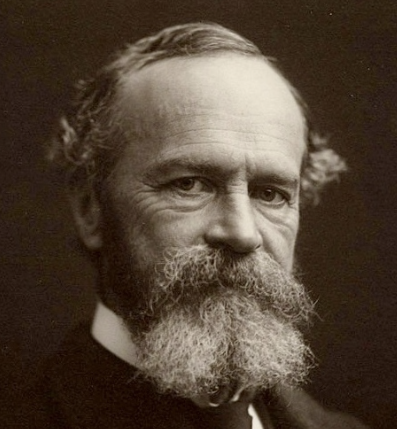
We must frankly confess, then, using our empirical common sense and ordinary practical prejudices, that in the world that actually is, the virtues of sympathy, charity, and non-resistance may be, and often have been, manifested in excess. ... You will agree to this in general, for in spite of the Gospel, in spite of Quakerism, in spite of Tolstoi, you believe in fighting fire with fire, in shooting down usurpers, locking up thieves, and freezing out vagabonds and swindlers.
▼
Source
source
Lectures XIV and XV, "The Value of Saintliness"
3 months 1 week ago
The fact is that in order to do any thing in this world worth doing, we must not stand shivering on the bank thinking of the cold and the danger, but jump in and scramble through as well as we can.
▼
Source
source
Lecture IX : On the Conduct of the Understanding
5 months 2 weeks ago
His disciples said to Him, "When will the Kingdom come?" Jesus said, "It will not come by waiting for it. It will not be a matter of saying 'Here it is' or 'There it is.' Rather, the Kingdom of the Father is spread out upon the earth, and men do not see it."

3 months 2 weeks ago
We are firm believers in the maxim that for all right judgment of any man or thing it is useful, nay, essential, to see his good qualities before pronouncing on his bad.
▼
Source
source
Goethe.
7 months 6 days ago
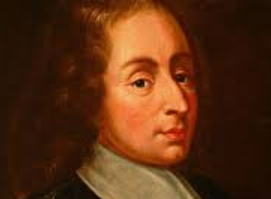
As to the objection that these rules are common in the world, that it is necessary to define every thing and to prove every thing, and that logicians themselves have placed them among their art, I would that the thing were true and that it were so well known... But so little is this the case, that, geometricians alone excepted, who are so few in number that they are a single in a whole nation and long periods of time, we see no others that know it.
3 months 1 week ago
Happiness is the free play of the instincts, and so is youth.
▼
Source
source
Ch. 2 : On Youth
4 months 3 weeks ago
Unfortunately not only were the rulers, who were considered supernatural beings, benefited by having the peoples in subjection, but as a result of the belief in, and during the rule of, these pseudodivine beings, ever larger and larger circles of people grouped and established themselves around them, and under an appearance of governing took advantage of the people. And when the old deception of a supernatural and God-appointed authority had dwindled away these men were only concerned to devise a new one which like its predecessor should make it possible to hold the people in bondage to a limited number of rulers.
▼
Source
source
III

6 months 2 weeks ago
Neither our distance from a preventable evil nor the number of other people who, in respect to that evil, are in the same situation as we are, lessens our obligation to mitigate or prevent that evil.

5 months 4 weeks ago
Justice is the first virtue of those who command, and stops the complaints of those who obey.
▼
Source
source
As quoted in The Golden Treasury of Thought : A Gathering of Quotations from the Best Ancient and Modern Authors (1873) by Theodore Taylor, p. 227
3 months 2 weeks ago
Is not my present nearer my past of yesterday than the present of Sirius?
6 months 3 weeks ago
The only thing we are naturally afraid of is pain, or loss of pleasure. And because these are not annexed to any shape, colour, or size of visible objects, we are frighted of none of them, till either we have felt pain from them, or have notions put into us that they will do us harm.
▼
Source
source
Sec. 115
3 months 1 week ago
The goal of liberalism is the peaceful cooperation of all men. It aims at peace among nations too. When there is private ownership of the means of production everywhere and when laws, the tribunals and the administration treat foreigners and citizens on equal terms, it is of little importance where a country's frontiers are drawn. Nobody can derive any profit from conquest, but many can suffer losses from fighting. War no longer pays; there is no motive for aggression. The population of every territory is free to determine to which state it wishes to belong, or whether it prefers to establish a state of its own. All nations can coexist peacefully, because no nation is concerned about the size of its state.
▼
Source
source
Omnipotent Government : The Rise of the Total State and Total War
6 months 3 weeks ago
Perfect humility dispenses with modesty.
6 months 3 weeks ago
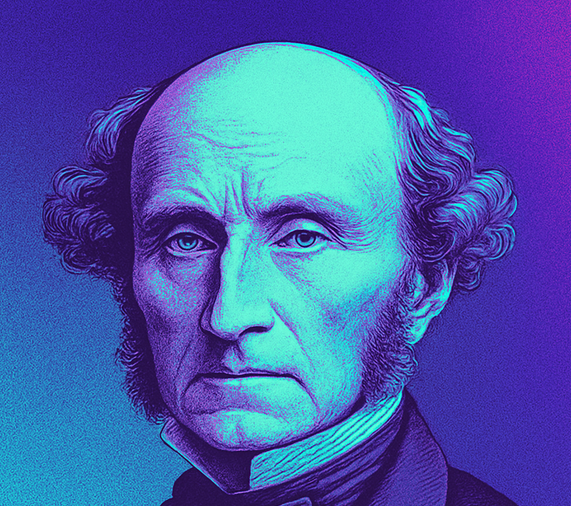
From the winter of 1821, when I first read Bentham, and especially from the commencement of the Westminster Review, I had what might truly be called an object in life; to be a reformer of the world. My conception of my own happiness was entirely identified with this object. The personal sympathies I wished for were those of fellow labourers in this enterprise. I endeavoured to pick up as many flowers as I could by the way; but as a serious and permanent personal satisfaction to rest upon, my whole reliance was placed on this...
▼
Source
source
(p. 132)
6 months 2 weeks ago
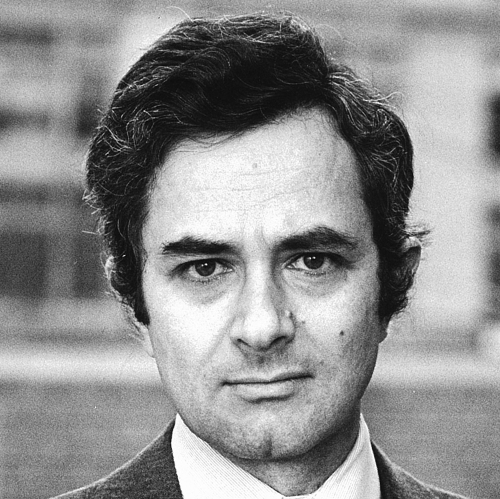
The idealist tradition, including contemporary phenomenology, has of course admitted subjective points of view as basic and has gone to the opposite length of denying an irreducible objective reality. ... I find the idealist solution unacceptable ...: objective reality cannot be analyzed or shut out of existence any more than subjective reality can. Even if not everything is something from no point of view, some things are.The deep source of both idealism and its objectifying opposite is the same: a conviction that a single world cannot contain both irreducible points of view and irreducible objective reality - that one of them must be what there really is and the other somehow reducible or dependent on it. This is a very powerful idea. To deny it is in a sense to deny that there is a single world.
▼
Source
source
"Subjective and Objective" (1979), p. 212.

5 months 6 days ago
The exploration of oneself is usually also an exploration of the world at large, of other writers, a process of comparison with oneself with others, discoveries of kinships, gradual illumination of one's own potentialities.
▼
Source
source
p. 231

7 months 1 week ago
Force overcome by force.
▼
Source
source
Pro Milone, Chapter XI, section 30 Variant translation: Violence conquered by violence.
5 months 1 day ago
We favor hypotheses for their simplicity and explanatory power, much as the architect of the world might have done in choosing which possibility to create.
▼
Source
source
Chapter 15, Inductive Logic, p. 142.

7 months 1 week ago
Charity is no substitute for justice withheld.
▼
Source
source
As quoted in Majority of One (1957) by Sydney J. Harris, p. 283
5 months 2 weeks ago
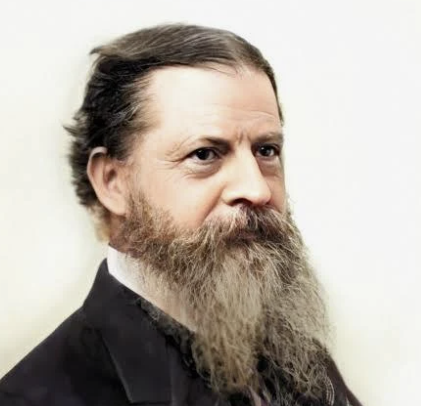
When anything is present to the mind, what is the very first and simplest character to be noted in it, in every case, no matter how little elevated the object may be? Certainly, it is its presentness.
▼
Source
source
Lecture II : The Universal Categories, § 1 : Presentness, CP 5.44

6 months 2 weeks ago
Beneath the humanization of the penalties, what one finds are all those rules that authorize, or rather demand, 'leniency', as a calculated economy of the powder to punish. But they also provoke a shift in the point of application of this power: it is no longer the body, with the ritual play of excessive pains, spectacular branding in the ritual of the public execution; it is the mind or rather a play of representations and sings circulating discreetly but necessarily and evidently in the minds of all. It is no longer the body, but the soul, said Mably. And we see very clearly what he meant by this term: the correlative of a technique of power. Old 'anatomies' of punishment are abandoned, But have we really entered the age of non-corporal punishment?
▼
Source
source
Chapter Two, Generalized Punishment, pp. 101
5 months 3 weeks ago
Reflect how you are to govern a people who think they ought to be free, and think they are not. Your scheme yields no revenue; it yields nothing but discontent, disorder, disobedience; and such is the state of America, that after wading up to your eyes in blood, you could only end just where you begun; that is, to tax where no revenue is to be found, to - my voice fails me; my inclination indeed carries me no farther - all is confusion beyond it.
6 months 3 weeks ago
What is new in our time is the increased power of the authorities to enforce their prejudices.
▼
Source
source
Quoted on Who Said That?, BBC TV, 8/8/1958
CivilSimian.com created by AxiomaticPanic, CivilSimian, Kalokagathia