

7 months 1 week ago
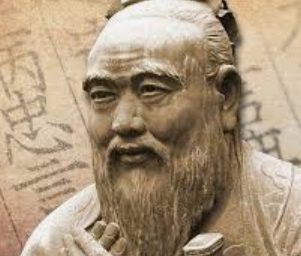
The journey of a thousand miles begins with a single step.
7 months 2 days ago
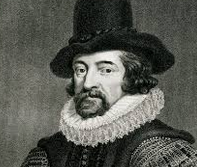
Human knowledge and human power meet in one; for where the cause is not known the effect cannot be produced. Nature to be commanded must be obeyed; and that which in contemplation is as the cause is in operation as the rule.
▼
Source
source
Aphorism 3


2 months 3 weeks ago
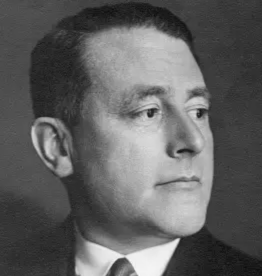
The political is the most intense and extreme antagonism, and every concrete antagonism becomes that much more political the closer it approaches the most extreme point, that of the friend-enemy grouping.
6 months 3 weeks ago
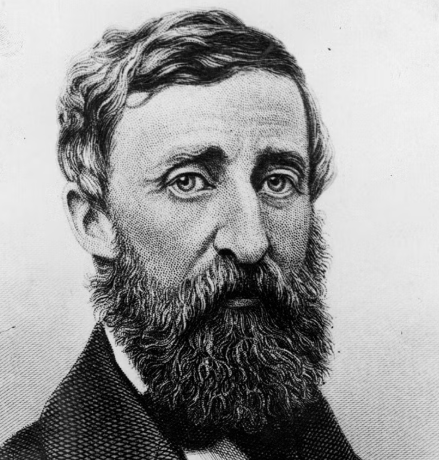
Men and boys are learning all kinds of trades but how to make men of themselves. They learn to make houses; but they are not so well housed, they are not so contented in their houses, as the woodchucks in their holes. What is the use of a house if you haven't got a tolerable planet to put it on? - If you cannot tolerate the planet that it is on? Grade the ground first. If a man believes and expects great things of himself, it makes no odds where you put him, or what you show him ... he will be surrounded by grandeur. He is in the condition of a healthy and hungry man, who says to himself, - How sweet this crust is!
▼
Source
source
Letter to Harrison Blake (20 May 1860); published in Familiar Letters, 1865
3 months 2 weeks ago
We can get some idea of a whole from a part, but never knowledge or exact opinion. Special histories therefore contribute very little to the knowledge of the whole and conviction of its truth. It is only indeed by study of the interconnexion of all the particulars, their resemblances and differences, that we are enabled at least to make a general survey, and thus derive both benefit and pleasure from history.

5 months 2 weeks ago
You read the face of the sky and of the earth, but you have not recognized the one who is before you, and you do not know how to read this moment.
6 months 3 weeks ago
To oppose the torrent of scholastic religion by such feeble maxims as these, that it is impossible for the same thing to be and not to be, that the whole is greater than a part, that two and three make five; is pretending to stop the ocean with a bullrush. Will you set up profane reason against sacred mystery? No punishment is great enough for your impiety. And the same fires, which were kindled for heretics, will serve also for the destruction of philosophers.
▼
Source
source
Part XI - With regard to reason or absurdity
5 months 3 days ago
If all else fails, the character of a man can be recognized by nothing so surely as by a jest which he takes badly.
▼
Source
source
K 46 Variant translation: A person reveals his character by nothing so clearly as the joke he resents.
4 months 2 weeks ago
There is no doubt in my mind that, from the third-person point of view, monarchy is the most reasonable form of government. By embodying the state in a fragile human person, it captures the arbitrariness and the givenness of political allegiance, and so transforms allegiance into affection.
▼
Source
source
The Meaning of Conservatism: Third Edition (2001), p. 193
6 months 3 weeks ago
In the deepest heart of all of us there is a corner in which the ultimate mystery of things works sadly.
▼
Source
source
"Is Life Worth Living?"
7 months 2 weeks ago
Martyrs must choose between being forgotten, mocked, or made use of. As for being understood, never!
7 months 1 week ago
Let not that which in the case of another is contrary to nature become an evil for you; for you are born not to be humiliated along with others, nor to share in their misfortunes, but to share in their good fortune. If, however, someone is unfortunate, remember that his misfortune concerns himself. For God made all mankind to be happy, to be serene.
▼
Source
source
Book III, ch. 24, 1
6 months 3 weeks ago
Metaphysical fallacies contain the only clues we have to what thinking means to those who engage in it.
▼
Source
source
p. 12
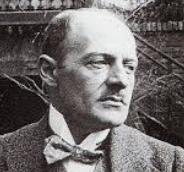
5 months 2 weeks ago
Whenever convictions are not arrived at by direct contact with the world and the objects themselves, but indirectly through a critique of the opinions of others, the processes of thinking are impregnated with ressentiment. The establishment of "criteria" for testing the correctness of opinions then becomes the most important task. Genuine and fruitful criticism judges all opinions with reference to the object itself. Ressentiment criticism, on the contrary, accepts no "object" that has not stood the test of criticism.
▼
Source
source
L. Coser, trans. (1973), pp. 67-68
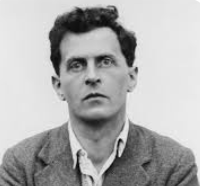
6 months 2 weeks ago
The problems are dissolved in the actual sense of the word - like a lump of sugar in water.
▼
Source
source
Ch. 9 : Philosophy, p. 183
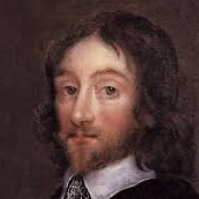
5 months 4 weeks ago
Burden not the back of Aries, Leo, or Taurus, with thy faults, nor make Saturn, Mars, or Venus, guilty of thy Follies.
▼
Source
source
Part III, Section VII

5 months 6 days ago
Human nature asserts itself regardless of all laws, nor is there any plausible reason why nature should adapt itself to a perverted conception of morality.
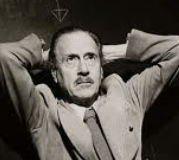
4 months 3 weeks ago
Ads represent the main channel of intellectual and artistic effort in the modern world.
▼
Source
source
Commonweal, Vol. 58 (1953), p. 557
6 months 3 weeks ago
In the past, there was a small leisure class and a larger working class. The leisure class enjoyed advantages for which there was no basis in social justice; this necessarily made it oppressive, limited its sympathies, and caused it to invent theories by which to justify its privileges.
▼
Source
source
Ch. 1: In Praise of Idleness, p. 13

6 months ago
This whole which is visible in different ways in bodies, as far as formation, constitution, appearance, colors and other properties and common qualities, is none other than the diverse face of the same substance - a changeable, mobile face, subject to decay, of an immobile, permanent and eternal being.
▼
Source
source
As translated by Paul Harrison

5 months 2 weeks ago
As incompetent in life as in death, I loathe myself and in this loathing I dream of another life, another death. And for having sought to be a sage such as never was, I am only a madman among the mad.
6 months 3 weeks ago
Intellectuals cannot be good revolutionaries; they are just good enough to be assassins.
▼
Source
source
Act 5, sc. 3
4 months 2 weeks ago
You don't have to be a scientist - you don't have to play the Bunsen burner - in order to understand enough science to overtake your imagined need and fill that fancied gap. Science needs to be released from the lab into the culture.
3 months 2 weeks ago
In the same way that the figure of the peasant tends to disappear, so too does the figure of the industrial worker, the service industry worker and all other separate categories.
▼
Source
source
125

6 months 2 weeks ago
The condemned man found himself transformed into a hero by the sheer extend of his widely advertised crimes, and sometimes the affirmation of his belated repentance. Against the law, against the rich, the powerful, the magistrates, the constabulary or the watch, against taxes and their collectors, he appeared to have waged a struggle with which one all too easily identified. The proclamation of these crimes blew up to epic proportions the tiny struggle that passed unperceived in everyday life. If the condemned man was shown to be repentant, accepting the verdict, asking both God and man for forgiveness for his crimes, it was as if he had come through some process of purification: he died, in his own way, like a saint.
▼
Source
source
Chapter One: The Spectacle of the scaffold, pp. 67
6 months 3 weeks ago
Now, what is 'unrighteousness' in practice? It is in practice behavior of a kind disliked by the herd. By calling it unrighteousness, and by arranging an elaborate system of ethics around this conception, the herd justifies itself in wreaking punishment upon the objects of its own dislike, while at the same time, since the herd is righteous by definition, it enhances its own self-esteem at the very moment when it lets loose its impulse to cruelty. This is the psychology of lynching, and of the other ways in which criminals are punished. The essence of the conception of righteousness, therefore, is to afford an outlet for sadism by cloaking cruelty as justice.
▼
Source
source
"The Idea of Righteousness"
7 months 3 weeks ago
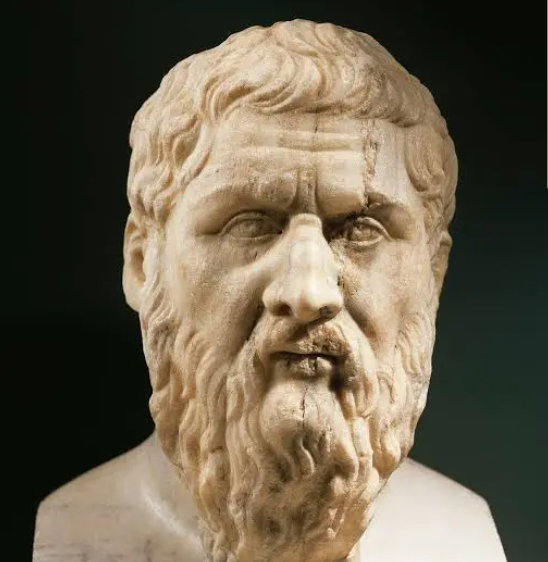
Beholding beauty with the eye of the mind, he will be enabled to bring forth, not images of beauty, but realities (for he has hold not of an image but of a reality), and bringing forth and nourishing true virtue to become the friend of God and be immortal, if mortal man may.
5 months 3 weeks ago
To execute laws is a royal office; to execute orders is not to be a king. However, a political executive magistracy, though merely such, is a great trust.
▼
Source
source
Volume iii, p. 497
4 months 2 weeks ago
If it's really true, that the museum at Liberty University has dinosaur fossils which are labelled as being 3000 years old, then that is an educational disgrace. It is debauching the whole idea of a university, and I would strongly encourage any members of Liberty University who may be here...to leave and go to a proper university.
▼
Source
source
At Randolph-Macon Woman's College in Lynchburg, Virginia, (23 October 2006) Broadcasted by C-SPAN2

7 months 1 week ago
We should never take pleasure in causing pain to others, even to those who have wronged us, but rather strive to do good to all.
4 months 3 weeks ago
World War I a railway war of centralization and encirclement. World War II a radio war of decentralization concluded by the Bomb. World War III a TV guerrilla war with no divisions between civil and military fronts.
▼
Source
source
(p. 152)
6 months 5 days ago
Avoid doing what you would blame others for doing.
▼
Source
source
As quoted in Diogenes Laërtius, The Lives and Opinions of Eminent Philosophers, I, 36 Cf. Golden Rule
5 months 2 weeks ago
With the disintegration of all that Nietzsche had revered, existence, to him, had become a desert in which only one thing remained, namely that which had relentlessly forced him into this path: truthfulness that knows no limits and is not subject to any condition.
▼
Source
source
p. 45
5 months 2 weeks ago
In order to have the stuff of a tyrant, a certain mental derangement is necessary.
7 months 1 week ago
Some things are in our control and others not. Things in our control are opinion, pursuit, desire, aversion, and, in a word, whatever are our own actions. Things not in our control are body, property, reputation, command, and, in one word, whatever are not our own actions.
▼
Source
source
(1).
6 months 3 weeks ago
It was his peculiar doctrine that a man has a perfect right to interfere by force with the slaveholder, in order to rescue the slave. I agree with him. They who are continually shocked by slavery have some right to be shocked by the violent death of the slaveholder, but no others.

4 months 3 weeks ago
If the immutable character of sex is contested, perhaps this construct called 'sex' is as culturally constructed as gender; indeed, perhaps it was always already gender, with the consequence that the distinction between sex and gender turns out to be no distinction at all.
▼
Source
source
Gender Trouble: Feminism and the Subversion of Identity

6 months 5 days ago
If thy fellows hurt thee in small things, suffer it! and be as bold with them!
6 months 3 weeks ago
The ordinary surroundings of life which are esteemed by men (as their actions testify) to be the highest good, may be classed under the three heads - Riches, Fame, and the Pleasures of Sense: with these three the mind is so absorbed that it has little power to reflect on any different good.
▼
Source
source
I, 3 Variant translation: The things which ... are esteemed as the greatest good of all ... can be reduced to these three headings, to wit : Riches, Fame, and Pleasure. With these three the mind is so engrossed that it cannot scarcely think of any other
4 months 3 weeks ago
The "tragic flaw" is not a detail of characterization, a mere "fly in the ointment", but a structural feature of ordinary consciousness.
▼
Source
source
(p.45)

5 months 3 weeks ago
The man that does not know himself not to be at the mercy of other men, that does not feel that he is invulnerable to all the vicissitudes of fortune, is incapable of a constant and inflexible virtue.
▼
Source
source
Book V, "Of Education"


7 months 1 week ago
What should a philosopher say, then, in the face of each of the hardships of life? "It was for this that I've been training myself, it was for this that I was practising."
▼
Source
source
Book III, ch. 10,7.
5 months 2 weeks ago
Good health is the best weapon against religion. Healthy bodies and healthy minds have never been shaken by religious fears.

6 months 3 weeks ago
And then one babbles - 'if only I could bear it, or the worst of it, or any of it, instead of her.' But one can't tell how serious that bid is, for nothing is staked on it. If it suddenly became a real possibility, then, for the first time, we should discover how seriously we had meant it. But is it ever allowed? It was allowed to One, we are told, and I find I can now believe again, that He has done vicariously whatever can be done. He replies to our babble, 'you cannot and dare not. I could and dared.'
6 months 3 weeks ago
Nature offers nothing that can be called this man's rather than another's ; but, under nature, everything belongs to all - that is, they have authority to claim it for themselves. But, under dominion, where it is by common law determined what belongs to this man, and what to that, he is called just who has a constant will to render to every man his own, but he, unjust who strives, on the contrary, to make his own that which belongs to another.
▼
Source
source
Ch. 2, Of Natural Right
CivilSimian.com created by AxiomaticPanic, CivilSimian, Kalokagathia