

4 months 6 days ago
Man is a born geometer. Even when he is expressing himself in curves, as he has done in the undulating roofs of Eastern Asia and in the flowing sculptures at Borobudur, his lines follow mathematical laws that are unknown to Nature; and he is frankly defying her when he works in rectangles. Angkor is perhaps the greatest of Man's essays in rectangular architecture that has yet been brought to light... The Buddhist stupa at Borobudur in Central Java is a lyric poem in stone, flowing round the crown of a hill to the musical accompaniment of a jagged mountain range on one side and a green expanse of rice fields on the other. Angkor is not orchestral; it is monumental. It is an epic poem which makes its effect, like the Odyssey and like Paradise Lost, by the grandeur of its structure as well as by the beauty of the details. Angkor is an epic in rectangular forms imposed upon the Cambodian jungle.
▼
Source
source
27. Angkor
3 months 2 weeks ago
One lives but once in the world.
▼
Source
source
Clavigo, Act I, sc. i
6 months 3 weeks ago
Is that to say we are against Free Trade? No, we are for Free Trade, because by Free Trade all economical laws, with their most astounding contradictions, will act upon a larger scale, upon the territory of the whole earth; and because from the uniting of all these contradictions in a single group, where they will stand face to face, will result the struggle which will itself eventuate in the emancipation of the proletariat.
▼
Source
source
Writing in the Chartist newspaper (1847), in Marx Engels Collected Works Vol 6, pg 290.
5 months 1 week ago
We live in a nightmare of falsehoods, and there are few who are sufficiently awake and aware to see things as they are. Our first duty is to clear away illusions and recover a sense of reality. If war should come, it will do so on account of our delusions, for which our hag-ridden conscience attempts to find moral excuses. To recover a sense of reality is to recover the truth about ourselves and the world in which we live, and thereby to gain the power of keeping this world from flying asunder.
▼
Source
source
p. 80
3 months 2 weeks ago
Marx sees Epicurus as a destroyer of the Greek myths and as a philosopher bringing to light the break-up of a tribal community. His system destroyed the visible heaven of the ancients as a keystone of political and religious life. Marx allies himself, so to speak, with Epicurean atheism, which he regards at this stage as a challenge by the intellectual élite to the cohorts of common sense. 'As long as a single drop of blood pulses in her world-conquering and totally free heart, philosophy will continually shout at her opponents the cry of Epicurus: "Impiety does not consist in destroying the gods of the crowd but rather in ascribing to the gods the ideas of the crowd."'
▼
Source
source
(pp. 102-3)
6 months 3 weeks ago
A poem is one undivided unimpeded expression fallen ripe into literature, and it is undividedly and unimpededly received by those for whom it was matured.


6 months 2 weeks ago
This dysfunction of power was related to a central excess: what might be called the monarchical 'super-power', which identified the right to punish with the personal power of the sovereign.
▼
Source
source
Chapter Two, pp.80

5 months 2 weeks ago
We suffer: the external world begins to exist . . . ; we suffer to excess: it vanishes. Pain instigates the world only to unmask its unreality.
7 months 3 weeks ago
In an age as agitated as ours, it no longer suffices just to be advertised in the newspaper. To be advertised in this way is the same thing as being consigned to oblivion. If one is to be noticed, once must as least appear on the first page under a hand that points to and, as it were, announces or advertises the advertisement.

7 months 2 weeks ago
There is no mystery in humans creation. Will performs this miracle. But at least there is no true creation without a secret.
4 months 3 weeks ago
Our design, not respecting arts, but philosophy, and our subject, not manual, but natural powers, we consider chiefly those things which relate to gravity, levity, elastic force, the resistance of fluids, and the like forces, whether attractive or impulsive; and therefore we offer this work as mathematical principles of philosophy; for all the difficulty of philosophy seems to consist in this - from the phenomena of motions to investigate the forces of nature, and then from these forces to demonstrate the other phenomena...
▼
Source
source
Preface
2 months 2 weeks ago
If democracy has become superfluous or annoying to the bourgeoisie, it is on the contrary necessary and indispensable to the working class. It is necessary to the working class because it creates the political forms (autonomous administration, electoral rights, etc.) which will serve the proletariat as fulcrums in its task of transforming bourgeois society. Democracy is indispensable to the working class because only through the exercise of its democratic rights, in the struggle for democracy, can the proletariat become aware of its class interests and its historic task.
▼
Source
source
Ch.8
6 months 2 weeks ago
In the tragedies of the early seventeenth century, madness too provided the dénouement, but it did so in liberating the truth. It still opened onto language, to a renewed form of speech, that of explanation and of the real regained. The most it could ever be was the penultimate moment of tragedy. Not the closing moment, as in Andromaque, where no truth appears, other than, in Delirium, the truth of a passion that finds its fullest, most perfect expression in madness.
▼
Source
source
Part Two: 2. The Transcendence of Delirium

6 months 3 weeks ago
Beings who are so uniquely constituted must necessarily express themselves in other ways than ordinary men. It is impossible that with souls so differently modified, they should not carry over into the expression of their feelings and ideas the stamp of those modifications.
▼
Source
source
First Dialogue; translated by Judith R. Bush, Christopher Kelly, Roger D. Masters
3 months 1 day ago
I truly cannot say what the person who still has hope for man should think of the imminence of quasi-apocalyptic destruction. It would certainly force many to face the existential problem in all its nakedness, and subject them to extreme trials; but is this a worse evil than that of mankind's safe, secure, satisfied, and total consignment to the kind of happiness that befits Nietzsche's "last man": a comfortable consumer civilization of socialized human animals, aided by all the discoveries of science and industry and reproducing demographically in a squirming, catastrophic crescendo?
▼
Source
source
p. 140

5 months 2 weeks ago
The total victimization of the individual that takes place is encouraged for the specific benefit of the industrial and political bureaucracy. It therefore cannot be justified on the ground of the individual's true interest. National Socialist ideology simply states that true human existence consists in unconditional sacrifice, that it is of the essence of the individual's life to abbey and to serve-'service which never comes to an end because service and life coincide.'
▼
Source
source
P. 416
4 months 3 days ago
All urgent calls he shall hear at once, but never put off; for when postponed, they will prove too hard or impossible to accomplish.
▼
Source
source
Book I : "Concerning Discipline" Chapter 19
6 months 2 weeks ago
If we tried to rely entirely on reason, and pressed it hard, our lives and beliefs would collapse - a form of madness that may actually occur if the inertial force of taking the world and life for granted is somehow lost. If we lose our grip on that, reason will not give it back to us.
▼
Source
source
"The Absurd" (1971), p. 20.
5 months 2 weeks ago
Gentile himself call his doctrine 'absolute formalism': there is no; 'matter' apart from the pure 'form' of acting. 'The only matter there is in the spiritual act is the form itself, as activity.'
▼
Source
source
P. 407
6 months 3 weeks ago
It is a matter of perfect indifference where a thing originated; the only question is: "Is it true in and for itself?" Many think that by pronouncing a doctrine to be Neo-Platonic, they have ipso facto banished it from Christianity. Whether a Christian doctrine stands exactly thus or thus in the Bible, the point to which the exegetical scholars of modern times devote all their attention is not the only question. The Letter kills, the Spirit makes alive: this they say themselves, yet pervert the sentiment by taking the Understanding for the Spirit.
▼
Source
source
Pt. III, sec. 3, ch. 2 Lectures on the History of History Vol 1 p. 344 John Sibree translation (1857), 1914
3 months 1 week ago
If you set a high value on liberty, you must set a low value on everything else.
6 months 3 weeks ago
One always speaks badly when one has nothing to say.
▼
Source
source
1827
6 months 1 week ago
All things were together, infinite both in number and in smallness; for the small too was infinite.
▼
Source
source
Frag. B 1, quoted in John Burnet's Early Greek Philosophy, (1920), Chapter 6.
5 months 2 weeks ago
I feel effective, competent, likely to do something positive only when I lie down and abandon myself to an interrogation without object or end.
6 months 3 weeks ago
It is amusing to hear the modern Christian telling you how mild and rationalistic Christianity really is and ignoring the fact that all its mildness and rationalism is due to the teaching of men who in their own day were persecuted by all orthodox Christians.
▼
Source
source
"Sources of Intolerance"
7 months 1 day ago
The day of your birth is one day's advance towards the grave.
▼
Source
source
Ch. 20. Of the Force of Imagination (tr. Cotton, rev. W. Carew Hazlitt, 1877) Cf. Dávid Baróti Szabó, Nem kímíl meg senkit halál, wr. 1786; ed. 1914
4 months 2 weeks ago
There is but one art, to omit.
▼
Source
source
As cited in The Harper Book of Quotations, Revised Edition (1993), Ed. R. Fitzhenry, HarperCollins, p. 498 : ISBN 0062732137, 9780062732132
6 months 3 weeks ago
Thus, while the refugee serfs only wished to be free to develop and assert those conditions of existence which were already there, and hence, in the end, only arrived at free labour, the proletarians, if they are to assert themselves as individuals, will have to abolish the very condition of their existence hitherto (which has, moreover, been that of all society up to the present), namely, labour. Thus they find themselves directly opposed to the form in which, hitherto, the individuals, of which society consists, have given themselves collective expression, that is, the State. In order, therefore, to assert themselves as individuals, they must overthrow the State.
▼
Source
source
"Communism. The Production of the Form of Intercourse Itself", The Marx-Engels Reader

3 months 2 weeks ago
Every noble crown is, and on earth will forever be, a crown of thorns.
▼
Source
source
Bk. III, ch. 7.
6 months 3 weeks ago
To each according to his threat advantage does not count as a principle of justice.
▼
Source
source
Chapter III, Section 24, pg. 141
5 months 1 week ago
The whole economic system of Capitalism is an offshoot of a devouring and overwhelming lust, of a kind that can hold sway only in a society that has deliberately renounced the Christian asceticism and turned away from Heaven to give itself over exclusively to earthly gratifications. ... It is the result of a secularization of economic life, and by it the hierarchical subordination of the material to the spiritual is inverted. The autonomy of economics has ended in their dominating the whole life of human societies: the worship of Mammon has become the determining force of the age. And the worst of it is that this undisguised "mammonism" is regarded as a very good thing, an attainment to the knowledge of truth and a release from illusions. Economic materialism formulates this to perfection when it brands the whole spiritual life of man as a deception and a dream.
▼
Source
source
p. 92
7 months 2 weeks ago
It happens that the stage sets collapse. Rising, streetcar, four hours in the office or the factory, meal, streetcar, four hours of work, meal, sleep and Monday Tuesday Wednesday Thursday Friday and Saturday according to the same rhythm this path is easily followed most of the time. But one day the "why" arises and everything begins in that weariness tinged with amazement.
5 months 3 weeks ago
We are firmly convinced that the most imperfect republic is a thousand times better than the most enlightened monarchy. In a republic, there are at least brief periods when the people, while continually exploited, is not oppressed; in the monarchies, oppression is constant. The democratic regime also lifts the masses up gradually to participation in public life--something the monarchy never does. Nevertheless, while we prefer the republic, we must recognise and proclaim that whatever the form of government may be, so long as human society continues to be divided into different classes as a result of the hereditary inequality of occupations, of wealth, of education, and of rights, there will always be a class-restricted government and the inevitable exploitation of the majorities by the minorities. The State is nothing but this domination and this exploitation, well regulated and systematised.
5 months 2 weeks ago
Now I am about to take my last voyage, a great leap in the dark.
▼
Source
source
Last words
6 months 1 week ago
As Athenodorus was taking his leave of Cæsar, "Remember," said he, "Cæsar, whenever you are angry, to say or do nothing before you have repeated the four-and-twenty letters to yourself."
▼
Source
source
Cæsar Augustus
6 months ago
Indeed, the drunken man while in that condition does not know the definition of drunkenness nor the scientific account of it; he has not the very least scientific knowledge of it. The sober man, on the other hand, knows the definition of drunkenness and its basis, yet he is not drunk in the very least. Again the doctor, when he is himself ill, knows the definition and causes of health and the remedies which restore it, and yet is lacking in health. Similarly there is a difference between knowing the true nature and causes and conditions of the ascetic life and actually leading such a life and forsaking the world.
▼
Source
source
III. The Classes of Seekers, p. 47.
3 months 1 week ago
If you are wise, mingle these two elements: do not hope without despair, or despair without hope.
▼
Source
source
Line 12 Alternate translation: Hope not without despair, despair not without hope. (translated by Zachariah Rush).
5 months 2 weeks ago
Master, we saw one casting out devils in thy name, and he followeth not us: and we forbad him, because he followeth not us. But Jesus said, Forbid him not: for there is no man which shall do a miracle in my name, that can lightly speak evil of me. For he that is not against us is on our part.
▼
Source
source
Mark 9:38-40 (KJV)
7 months 2 days ago
States as great engines move slowly.
▼
Source
source
Book II
4 months 3 weeks ago
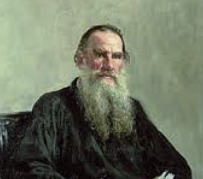
Those attacks upon language and religion in Poland, the Baltic provinces, Alsace, Bohemia, upon the Jews in Russia, in every place that such acts of violence occur-in what name have they been, and are they, perpetrated? In none other than the name of that patriotism which you defend. Ask our savage Russifiers of Poland and the Baltic provinces, ask the persecutors of the Jews, why they act thus. They will tell you it is in defence of their native religion and language; they will tell you that if they do not act thus, their religion and language will suffer-the Russians will be Polonised, Teutonised, Judaised.
▼
Source
source
A Reply to Criticisms
3 months 1 week ago
Most men ebb and flow in wretchedness between the fear of death and the hardships of life; they are unwilling to live, and yet they do not know how to die.
6 months 3 weeks ago
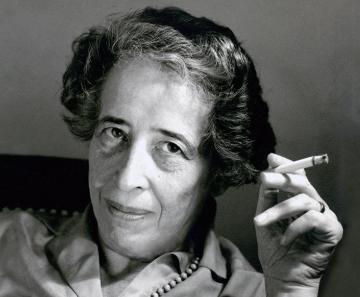
The emotions I feel are no more meant to be shown in their unadulterated state than the inner organs by which we live.
▼
Source
source
pp. 31-32
2 months 2 weeks ago
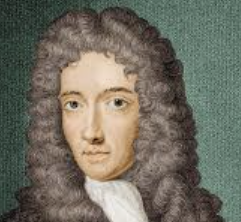
As for silver, I never could see any degree of fire make it part with any of its three principles. ...But admitting, that some parts of the silver were driven away by the violence of the fire, what proof is there, that it was either the salt, the sulphur, or the mercury of the metal, and not rather a part of it homogeneous to what remained? for besides that the silver, that was left, seemed not sensibly altered, which probably would have appeared, had so much of any one of its principles been separated from it.
CivilSimian.com created by AxiomaticPanic, CivilSimian, Kalokagathia