

6 months 2 weeks ago
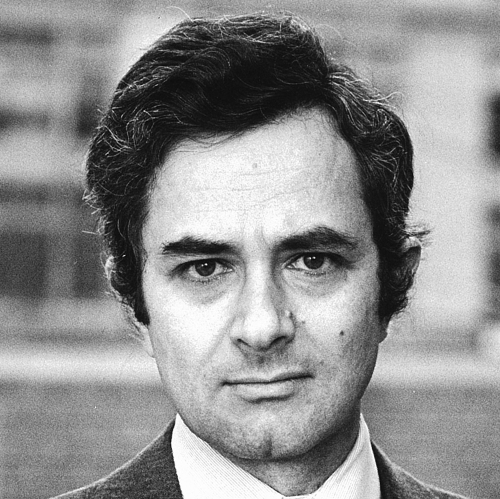
If things emerged from a spaceship which we could not be sure were machines or conscious beings, what we were wondering about would have an answer even if the things were so different from anything we were familiar with that we could never discover it. It would depend on whether there was something it was like to be them, not on whether behavioral similarities warranted our saying so. ... [W]e need ... to ask whether experience is present in [the] alien thing[s], ... whether there is something it is like to be them, and ... the answer to that question is what determines whether they are conscious.
▼
Source
source
"Panpsychism" (1979), pp. 191-193.

5 months 4 weeks ago
In a revolution, as in a novel, the most difficult part to invent is the end.
▼
Source
source
Recollections of Alexis de Tocqueville, p. 71.
5 months 3 weeks ago
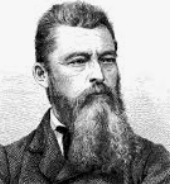
All presentation, all demonstration-and the presentation of thought is demonstration-has, according to its original determination-and this is all that matters to us-the cognitive activity of the other person as its ultimate aim.
▼
Source
source
Z. Hanfi, trans., in The Fiery Brook (1972), p. 67
4 months 2 weeks ago
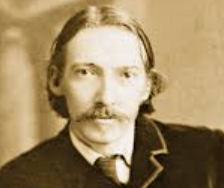
The devil, depend upon it, can sometimes do a very gentlemanly thing.
▼
Source
source
The Suicide Club, Story of the Young Man with the Cream Tarts.
6 months 1 week ago
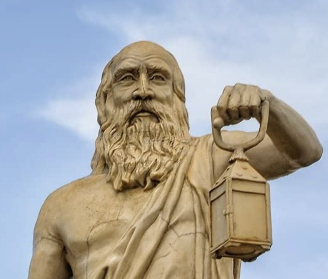
If you are to be kept right, you must possess either good friends or red-hot enemies. The one will warn you, the other will expose you.
▼
Source
source
Plutarch, Moralia, 74C



3 months 2 weeks ago
I do not feel obliged to believe that the same God who has endowed us with senses, reason, and intellect has intended us to forgo their use and by some other means to give us knowledge which we can attain by them.

7 months 2 weeks ago
With the exception of professional rationalists, today people despair of true knowledge. If the only significant history of human thought were to be written, it would have to be history of its successive regrets and impotences.
6 months 3 weeks ago
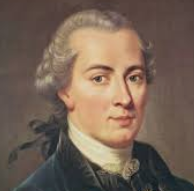
The man of principles has character. Of him we know definitely what to expect. He does not act on the basis of his instinct, but on the basis of his will. Therefore, without being redundant one can classify characteristics according to a person's faculty of desire (what is practical), as a) his nature, or natural talent, b) his temperament, or disposition, and c) his general character, or mode of thinking.
▼
Source
source
Kant, Immanuel (1996), page 195
5 months 2 weeks ago
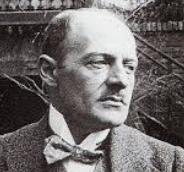
The ultimate goal of the arriviste's aspirations is not to acquire a thing of value, but to be more highly esteemed than others. He merely uses the "thing" as an indifferent occasion for overcoming the oppressive feeling of inferiority which results from his constant comparisons.
▼
Source
source
L. Coser, trans. (1973), pp. 55-56

5 months 2 weeks ago
As incompetent in life as in death, I loathe myself and in this loathing I dream of another life, another death. And for having sought to be a sage such as never was, I am only a madman among the mad.
2 months 3 weeks ago
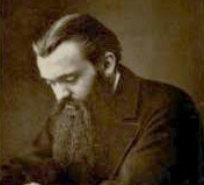
Inquiry into the evidence of a doctrine is not to be made once for all, and then taken as finally settled. It is never lawful to stifle a doubt; for either it can be honestly answered by means of the inquiry already made, or else it proves that the inquiry was not complete. "But," says one, "I am a busy man; I have no time for the long course of study which would be necessary to make me in any degree a competent judge of certain questions, or even able to understand the nature of the arguments." Then he should have no time to believe.

5 months 1 week ago
To desire friendship is a great fault. Friendship should be a gratuitous joy like those afforded by art or life. We must refuse it so that we may be worthy to receive it; it is of the order of grace.
▼
Source
source
p. 274
2 months 3 weeks ago
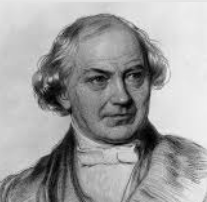
'Intuitive' is opposed to 'discursive' reason. In intuition, we obtain our conclusions by dwelling upon 'one' aspect of the fundamental Idea; in discursive reasoning, we combine several aspects of the Idea
6 months 3 weeks ago
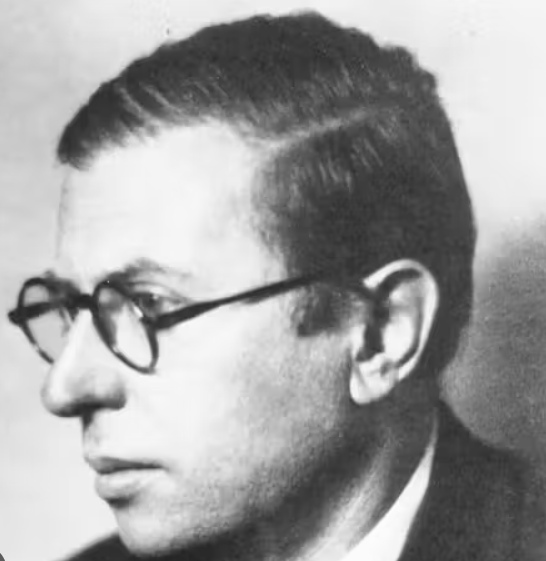
I know only one Church: it is the society of men.
▼
Source
source
Act 1
4 months 2 weeks ago
A man, Mr. Scrymgeour, may fall into a thousand perplexities, but if his heart be upright and his intelligence unclouded, he will issue from them all without dishonour.
▼
Source
source
The Rajah's Diamond, Story of the House with the Green Blinds.
5 months 4 weeks ago
Americans of all ages, all stations of life, and all types of disposition are forever forming associations... In democratic countries knowledge of how to combine is the mother of all other forms of knowledge; on its progress depends that of all the others.
▼
Source
source
Book Two, Chapter V.

7 months 2 days ago
Do not wonder, if the common people speak more truly than those of high rank; for they speak with more safety.
▼
Source
source
Exempla Antithetorum, IX. Laus, Existimatio (Pro.)

5 months 2 weeks ago
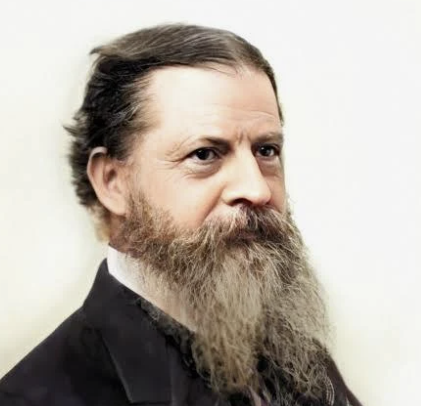
Wherever ideas come together they tend to weld into general ideas; and whenever they are generally connected, general ideas govern the connection; and these general ideas are living feelings spread out.

5 months 1 week ago
Racism has always been a divisive force separating black men and white men, and sexism has been a force that unites the two groups.

6 months 5 days ago
Wind indeed increases fire, but custom love.
▼
Source
source
Pythagorean Ethical Sentences From Stobæus
6 months 3 weeks ago
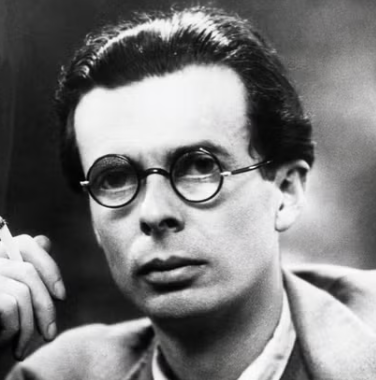
Of course I base my characters partly on the people I know-one can't escape it-but fictional characters are oversimplified; they're much less complex than the people one knows.
▼
Source
source
Interview, The Paris Review, 1960

3 months 2 weeks ago
The barrenest of all mortals is the sentimentalist.
▼
Source
source
Characteristics.
5 months 1 week ago
These terrible sociologists, who are the astrologers and alchemists of our twentieth century.
▼
Source
source
Fanatical Skepticism
5 months 2 weeks ago
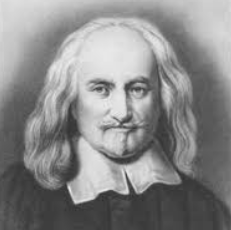
Desire, to know why, and how, CURIOSITY; such as is in no living creature but Man; so that Man is distinguished, not only by his Reason; but also by this singular Passion from other Animals; in whom the appetite of food, and other pleasures of Sense, by predominance, take away the care of knowing causes; which is a Lust of the mind, that by a perseverance of delight in the continual and indefatigable generation of Knowledge, exceedeth the short vehemence of any carnal Pleasure.
▼
Source
source
The First Part, Chapter 6, p. 26
6 months 3 weeks ago
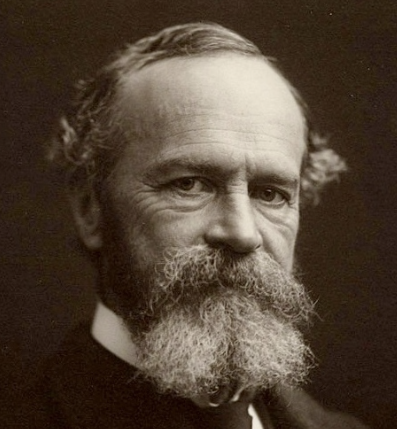
The study a posteriori of the distribution of consciousness shows it to be exactly such as we might expect in an organ added for the sake of steering a nervous system grown too complex to regulate itself.
▼
Source
source
Ch. 5

7 months 6 days ago
All men are almost led to believe not of proof, but by attraction. This way is base, ignoble, and irrelevant; every one therefore disavows it. Each one professes to believe and even to love nothing but what he knows to be worthy of belief and love.

2 months 3 weeks ago
The Pythagoreans called the monad "intellect" because they thought that intellect was akin to the One; for among the virtues, they likened the monad to moral wisdom; for what is correct is one. And they called it "being," "cause of truth," "simple," "paradigm," "order," "concord," "what is equal among the greater and the lesser," "the mean between intensity and slackness," "moderation in plurality," "the instant now in time," and moreover they call it "ship," "chariot," "friend," "life," "happiness."
▼
Source
source
On the Monad
6 months 3 weeks ago
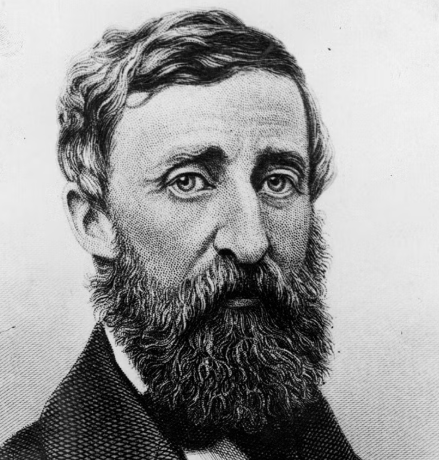
Sphere Music - Some sounds seem to reverberate along the plain, and then settle to earth again like dust; such are Noise, Discord, Jargon. But such only as spring heavenward, and I may catch from steeples and hilltops in their upward course, which are the more refined parts of the former, are the true sphere music - pure, unmixed music - in which no wail mingles.
▼
Source
source
August 5, 1838

5 months 3 weeks ago
Till society is very differently constituted, parents, I fear, will still insist on being obeyed, because they will be obeyed, and constantly endeavour to settle that power on a Divine right, which will not bear the investigation of reason.
▼
Source
source
Ch. 11

5 months 6 days ago
Like Fichte, Brentano had one simple and powerful insight. He declared: there is a basic difference between a mental and physical act. if I slip on the snow and fall flat on my back, that is an unintentional physical act. But there is no such thing as an unintentional mental act. When I think, I have to think about something; I have to focus my mind on it. You could compare all mental acts (thinking, willing, loving, trying to remember something) to a searchlight beam stabbing into the darkness. There is an element of will, of 'intentionality,' in all mental activity. So it is quite inaccurate to compare mental activity to chemistry, or to a kind of drifting, like leaves on a stream. It flows purposefully or not at all.
▼
Source
source
p. 35
5 months 2 weeks ago
I think of so many people who are no more, and I pity them. Yet they are not so much to be pitied, for they have solved every problem, beginning with the problem of death.

4 months 3 weeks ago
No matter how corrupt, greedy, and heartless our government, our corporations, our media, and our religious and charitable institutions may become, the music will still be wonderful. If I should ever die, God forbid, let this be my epitaph:THE ONLY PROOF HE NEEDEDFOR THE EXISTENCE OF GOD WAS MUSIC. Now, during our catastrophically idiotic war in Vietnam, the music kept getting better and better and better. We lost that war, by the way. Order couldn't be restored in Indochina until the people kicked us out. That war only made billionaires out of millionaires. Today's war is making trillionaires out of billionaires. Now I call that progress.
▼
Source
source
As quoted in "Vonnegut's Blues For America" Sunday Herald
6 months 5 days ago
A good Soul hath neither too great joy, nor too great sorrow: for it rejoiceth in goodness; and it sorroweth in wickedness. By the means whereof, when it beholdeth all things, and seeth the good and bad so mingled together, it can neither rejoice greatly; nor be grieved with over much sorrow.
5 months 2 weeks ago
"What's wrong - what's the matter with you?" Nothing, nothing's the matter, I've merely taken a leap outside my fate, and now I don't know where to turn, what to run for...

3 months 1 day ago
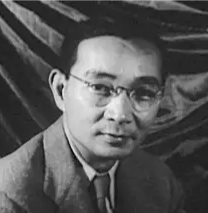
The secret of contentment is knowing how to enjoy what you have, and to be able to lose all desire for things beyond your reach.
▼
Source
source
As quoted in Remarks of Famous People (1965) by Jacob Morton Braude, p. 23
5 months 2 days ago
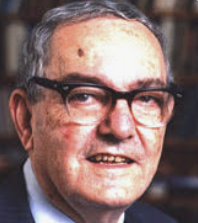
Since these questions lie in the future, imagination must supply the lack of experienced feeling in attaching value to them. But values can be only imperfectly anticipated.
7 months 1 day ago
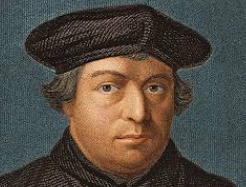
The heathen really make their self-invented notions and dreams of God and idol. Ultimately, they put their trust in that which is nothing. So it is with all idolatry. For it happens not merely by erecting an image and worshipping it, but rather it happens in the heart. For the heart seeks help and consolation from creatures, saints, or devils. It neither cares for God, nor looks to Him for anything better than to believe that He is willing to help.
▼
Source
source
"On Infant Baptism," Large Catechism

7 months 3 weeks ago
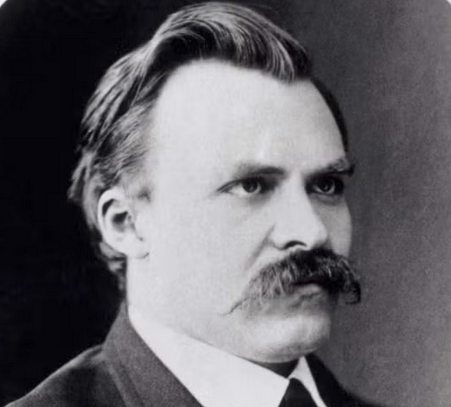
For those who need consolation no means of consolation is so effective as the assertion that in their case no consolation is possible: it implies so great a degree of distinction that they at once hold up their heads again.
4 months 3 weeks ago
The judge is condemned when the guilty is absolved.
▼
Source
source
Maxim 407 Adopted by the original Edinburgh Review magazine as its motto.
3 months 1 day ago
If compelled to indicate my religion on an immigration blank, I might be tempted to put down the word "Taoist," to the amazement of the customs officer who probably never heard of it.
▼
Source
source
The Wisdom of Laotse (1948), Introduction, p. 15

6 months 3 weeks ago
"They have an engine called the Press whereby the people are deceived."
▼
Source
source
Ch. 13 : They Have Pulled Down Deep Heaven on Their Heads
5 months 2 weeks ago
I know well that many of my readers do not think as I do. This also is most natural and confirms the theorem. For although my opinion turn out erroneous, there will always remain the fact that many of those dissentient readers have never given five minutes' thought to this complex matter. How are they going to think as I do? But by believing that they have a right to an opinion on the matter without previous effort to work one out for themselves, they prove patently that they belong to that absurd type of human being which I have called the "rebel mass." It is precisely what I mean by having one's soul obliterated, hermetically closed. Here it would be the special case of intellectual hermetism.
▼
Source
source
Chap. VIII: The Masses Intervene In Everything, And Why Their Intervention Is Solely By Violence

6 months 2 weeks ago
In the Greek conception of parrhesia... truth-having is guaranteed by the possession of... moral qualities... required... to know... and... convey such truth...

2 months 2 weeks ago
The modern proletarian class doesn't carry out its struggle according to a plan set out in some book or theory; the modern workers' struggle is a part of history, a part of social progress, and in the middle of history, in the middle of progress, in the middle of the fight, we learn how we must fight... That's exactly what is laudable about it, that's exactly why this colossal piece of culture, within the modern workers' movement, is epoch-defining: that the great masses of the working people first forge from their own consciousness, from their own belief, and even from their own understanding the weapons of their own liberation.
▼
Source
source
The Politics of Mass Strikes and Unions; Collected Works 2
6 months 3 weeks ago
Great men are they who see that spiritual is stronger than any material force, that thoughts rule the world. No hope so bright but is the beginning of its own fulfillment.
▼
Source
source
July 18, 1867, Progress of Culture Phi Beta Kappa Address
CivilSimian.com created by AxiomaticPanic, CivilSimian, Kalokagathia