

5 months 6 days ago
It is always right that a man should be able to render a reason for the faith that is within him.
▼
Source
source
Vol. I, ch. 3, p. 91
8 months 3 weeks ago
The stronghold of the determinist argument is the antipathy to the idea of chance...This notion of alternative possibility, this admission that any one of several things may come to pass is, after all, only a roundabout name for chance.
▼
Source
source
The Dilemma of Determinism (1884) p.153
7 months 3 weeks ago
When the leaders choose to make themselves bidders at an auction of popularity, their talents, in the construction of the state, will be of no service. They will become flatterers instead of legislators; the instruments, not the guides, of the people.
8 months 2 weeks ago
Karsky: I met your father last week. Are you still interested in hearing how he is doing?
Hugo: No.
Karsky: It is very probable that you will be responsible for his death.
Hugo: It is virtually certain that he is responsible for my life. We are even.
▼
Source
source
Act 4, sc. 4
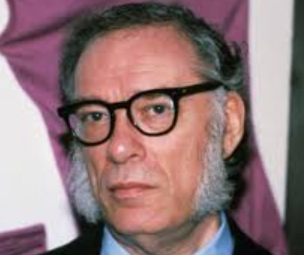
9 months 2 weeks ago
Q. You do not consider your statement a disloyal one? A. No, sir. Scientific truth is beyond loyalty and disloyalty. Q. You are sure that your statement represents scientific truth? A. I am.
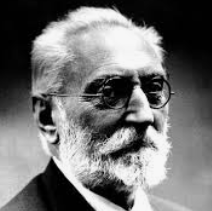
7 months 1 week ago
This mortal Don Quixote died and descended into hell, which he entered lance on rest, and freed all the condemned, as he freed the galley slaves, and he shut the gates of hell, and tore down the scroll that Dante saw there and replaced it by one on which was written "Long live hope!" and escorted by those whom he had freed, and they laughing at him, he went to heaven. And God laughed paternally at him, and this divine laughter filled his soul with eternal happiness.
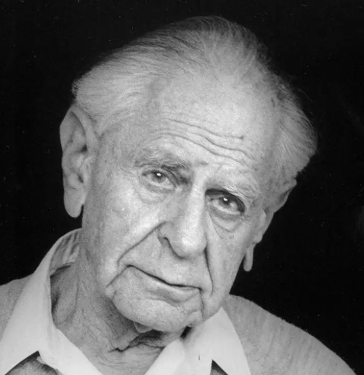
8 months 2 weeks ago
Scientific Method... is even less existent than some other non-existent subjects.
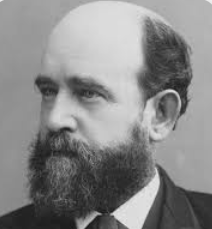
4 months 2 weeks ago
It is as to whether its services or uses are to be exchanged or not which makes a tool an article of capital or merely an article of wealth. Thus, the lathe of a manufacturer used in making things which are to be exchanged is capital, while the lathe kept by a gentleman for his own amusement is not.
▼
Source
source
Book I, Ch. 3
8 months 4 weeks ago
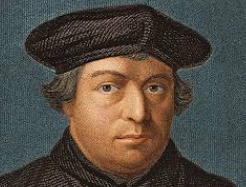
I approached the task of destroying images by first tearing them out of the heart through God's Word and making them worthless and despised. This indeed took place before Dr. Karlstadt ever dreamed of destroying images. For when they are no longer in the heart, they can do no harm when seen with the eyes. But Dr. Karlstadt, who pays no attention to matters of the heart, has reversed the order by removing them from sight and leaving them in the heart. For he does not preach faith, nor can he preach it; unfortunately, only now do I see that. Which of these two forms of destroying images is best, I will let each man judge for himself.
▼
Source
source
pp. 84-85
7 months 2 weeks ago
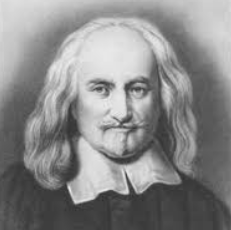
Men looke not at the greatnesse of the evill past, but the greatnesse of the good to follow.
▼
Source
source
The First Part, Chapter 15, p. 76 (Italics as per text)

7 months 3 days ago
Perhaps it is not true to speak of God as a judge at all, or of his judgements. There does not seem to be really any evidence that His worlds are places of trial but rather schools, place of training, or that He is a judge but rather a Teacher, a Trainer, not in the imperfect sense in which men are teachers, but in the sense of His contriving and adapting His whole universe for one purpose of training every intelligent being to be perfect. ... I think God would not be the Almighty, the All-Wise, the All-Good, if he were the judge, in the sense that the evangelical and Roman Catholic Christians impute judgement to him. ... Our business is, I think, to understand, not to judge. What He does, as far as we know, to rule by law down to the most infinitesimally small portion of His universe, not to judge.
▼
Source
source
As quoted in Florence Nightingale's Theology: Collected Works of Florence Nightingale (2002) by Lynn McDonald, pps. 177-179
6 months ago
We are passengers, comprehended and displaced by metaphor.
▼
Source
source
Chapter 8, Performative Reflexivity, p. 137

8 months 2 weeks ago
Christian Apocalyptic offers us no such hope. It does not even foretell, (which would be more tolerable to our habits of thought) a gradual decay. It foretells a sudden, violent end imposed from without; an extinguisher popped onto the candle, a brick flung at the gramophone, a curtain rung down on the play - "Halt!"


8 months 2 weeks ago
In the long run the answer to all those who object to the doctrine of hell, is itself a question: What are you asking God to do? To wipe out their past sins and, at all costs, to give them a fresh start, smoothing every difficulty and offering every miraculous help? But He has done so, on Calvary. To forgive them? They will not be forgiven. To leave them alone? Alas, I am afraid that is what He does.

7 months 2 weeks ago
Man is fulfilled only when he ceases to be man.
7 months 2 weeks ago
In the fact of being born there is such an absence of necessity that when you think about it a little more than usual, you are left-ignorant how to react-with a foolish grin

7 months 4 days ago
One cannot ignore half of life for the purposes of science, and then claim that the results of science give a full and adequate picture of the meaning of life. All discussions of 'life' which begin with a description of man's place on a speck of matter in space, in an endless evolutionary scale, are bound to be half-measures, because they leave out most of the experiences which are important to use as human beings.
▼
Source
source
p. 309
6 months 3 weeks ago
You need to know enough philosophy so that the methods of logical analysis are available to you to be used as a tool. One of the most depressing things about educated people today is that so few of them, even among professional intellectuals, are able to follow the steps of a simple logical argument.
7 months 1 week ago
The word 'definition' has come to have a dangerously reassuring sound, owing no doubt to its frequent occurrence in logical and mathematical writings.
▼
Source
source
"Two dogmas of Empiricism", p. 26
8 months 3 weeks ago
Advocates of capitalism are very apt to appeal to the sacred principles of liberty, which are embodied in one maxim: The fortunate must not be restrained in the exercise of tyranny over the unfortunate.
▼
Source
source
Ch. 13: Freedom in Society
6 months 2 weeks ago
But perhaps the rest of us could have separate classes in science appreciation, the wonder of science, scientific ways of thinking, and the history of scientific ideas, rather than laboratory experience.

4 months 2 weeks ago
It is somewhat strange to me, that neither the Spagyrists themselves, nor yet their Adversaries, should have taken notice that Chymists have rather supposed than evinced, that the Analysis of bodies by fire, or even that at least some Analysis is the onely instrument of investigating what Ingredients mixt bodies are made up of, since in divers cases That may be discovered by Composition as well as by Resolution; as it may appear, that Vitriol consists of metalline parts (whether Martial, or Venereal, or both) associated by Coagulation with acid ones, one may, I say, discover this as well by making true Vitriol with Spirit (improperly called Oil) of Sulphur, or that of Salt, as by distilling or Resolving Vitriol by the fire.
8 months 4 weeks ago
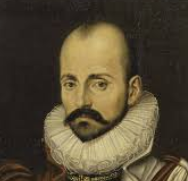
All passions that suffer themselves to be relished and digested are but moderate.
▼
Source
source
Ch. 2. Of Sorrow, tr. Cotton, rev. W. Hazlitt, 1842

5 months 1 week ago
Love is ever the beginning of Knowledge as fire is of light.
▼
Source
source
Essays, Death of Goethe.

7 months 1 week ago
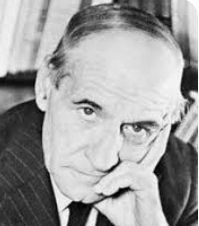
Torn in this way from its normal connection with contemplation, with being within one's self, pure action permits and produces only a chain of stupidities which we might better call "stupidity unchained." So we see today that an absurd attitude justifies the appearance of an opposing attitude no more reasonable; at least, reasonable enough, and so on indefinitely. Such is the extreme to which political affairs in the West have come!
▼
Source
source
p. 34
4 months 2 weeks ago
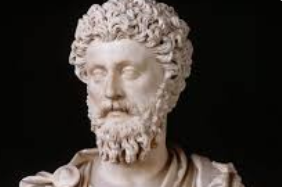
Nothing happens to anyone that he can't endure.
▼
Source
source
(Hays translation) Nothing happens to anybody which he is not fitted by nature to bear. , V, 18
8 months 3 weeks ago
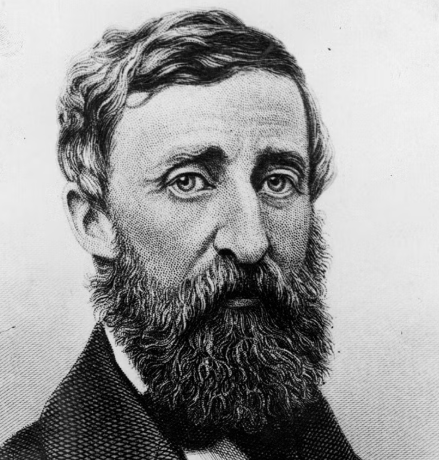
The Hindoos are most serenely and thoughtfully religious than the Hebrews. They have perhaps a purer, more independent and impersonal knowledge of God. Their religious books describe the first inquisitive and contemplative access to God; the Hebrew bible a conscientious return, a grosser and more personal repentance. Repentance is not a free and fair highway to God. A wise man will dispense with repentance. It is shocking and passionate. God prefers that you approach him thoughtful, not penitent, though you are chief of sinners. It is only by forgetting yourself that you draw near to him. The calmness and gentleness with which the Hindoo philosophers approach and discourse on forbidden themes is admirable. In 1853.
▼
Source
source
A Tribute to Hinduism, 2008
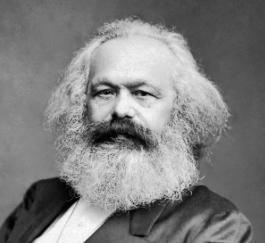
8 months 3 weeks ago
As a beast of toil an ox is fixed capital. If he is eaten, he no longer functions as an instrument of labour, nor as fixed capital either.
▼
Source
source
Vol. II, Ch. VIII, p. 163.
7 months 2 weeks ago
Late at night. I feel like falling into a frenzy, doing some unprecedented thing to release myself, but I don't see against whom, against what...

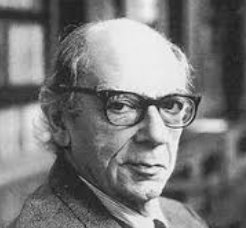
7 months 1 week ago
But to manipulate men, to propel them towards goals which you - the social reformer - see, but they may not, is to deny their human essence, to treat them as objects without wills of their own, and therefore to degrade them.
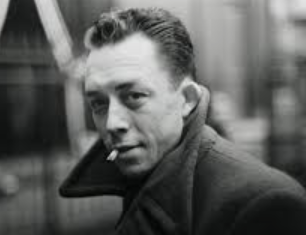
9 months 2 weeks ago
Artistic creation is a demand for unity and a rejection of the world.
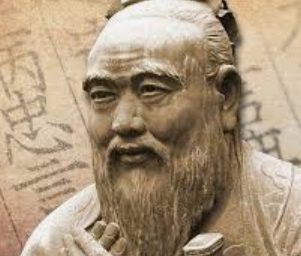
9 months 1 week ago
The institutions of the Ruler are rooted in his own character and conduct, and sufficient attestation of them is given by the masses of the people. He examines them by comparison with those of the three kings, and finds them without mistake. He sets them up before Heaven and Earth, and finds nothing in them contrary to their mode of operation. He presents himself with them before spiritual beings, and no doubts about them arise. He is prepared to wait for the rise of a sage a hundred ages after, and has no misgivings. His presenting himself with his institutions before spiritual beings, without any doubts arising about them, shows that he knows Heaven. His being prepared, without any misgivings, to wait for the rise of a sage a hundred ages after, shows that he knows men.
7 months 1 week ago
The most immediate result of this unbalanced specialisation has been that to-day, when there are more "scientists" than ever, there are much less "cultured" men than, for example, about 1750. And the worst is that with these turnspits of science not even the real progress of science itself is assured. For science needs from time to time, as a necessary regulator of its own advance, a labour of reconstitution, and, as I have said, this demands an effort towards unification, which grows more and more difficult, involving, as it does, ever-vaster regions of the world of knowledge. Newton was able to found his system of physics without knowing much philosophy, but Einstein needed to saturate himself with Kant and Mach before he could reach his own keen synthesis. Kant and Mach - the names are mere symbols of the enormous mass of philosophic and psychological thought which has influenced Einstein.
▼
Source
source
Chapter XII: The Barbarism Of "Specialisation"
6 months 2 weeks ago
The "tragic flaw" is not a detail of characterization, a mere "fly in the ointment", but a structural feature of ordinary consciousness.
▼
Source
source
(p.45)
8 months 3 weeks ago
Every hero becomes a bore at last.
▼
Source
source
Uses of Great Men
7 months 3 weeks ago
To enrich God, man must become poor; that God may be all, man must be nothing.
6 months ago
All art is autobiographical; the pearl is the oyster's autobiography.
▼
Source
source
On the autobiographical nature of his films, in The Atlantic
5 months 2 weeks ago
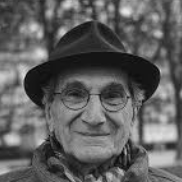
The multitude is the real productive force of our social world, whereas Empire is a mere apparatus of capture that lives only off the vitality of the multitude - as Marx would say, a vampire regime of accumulated dead labor that survives only by sucking off the blood of the living.
▼
Source
source
62

8 months 3 weeks ago
The origin of our passions, the root and spring of all the rest, the only one which is born with man, which never leaves him as long as he lives, is self-love; this passion is primitive, instinctive, it precedes all the rest, which are in a sense only modifications of it. In this sense, if you like, they are all natural. But most of these modifications are the result of external influences, without which they would never occur, and such modifications, far from being advantageous to us, are harmful. They change the original purpose and work against its end; then it is that man finds himself outside nature and at strife with himself.
8 months 3 weeks ago
Communism is for us not a state of affairs which is to be established, an ideal to which reality [will] have to adjust itself. We call communism the real movement which abolishes the present state of things. The conditions of this movement result from the premises now in existence.
▼
Source
source
Vol. I, Part 1.
8 months 3 weeks ago
Instead of noble men, let us have noble villages of men. If it is necessary, omit one bridge over the river, round a little there and throw one arch at least over the darker gulf of ignorance which surrounds us.
▼
Source
source
Editorial, Andhra Granthalayam, vol. 1, no. 2 (1939) p. 6
8 months 3 weeks ago
Few people can be happy unless they hate some other person, nation, or creed.
▼
Source
source
Attributed to Russell in Prochnow's Speakers Handbook of Epigrams and Witticisms (1955), p. 132
5 months 2 weeks ago
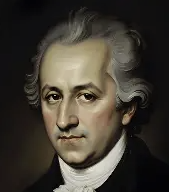
Should I not be proud, when for twenty years I have had to admit to myself that the great Newton and all the mathematicians and noble calculators along with him were involved in a decisive error with respect to the doctrine of color, and that I among millions was the only one who knew what was right in this great subject of nature?
▼
Source
source
Letter to Eckermann
8 months 3 weeks ago
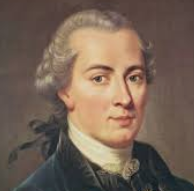
Collectively, the more civilized men are, the more they are actors. They assume the appearance of attachment, of esteem for others, of modesty, and of disinterestedness, without ever deceiving anyone, because everyone understands that nothing sincere is meant. Persons are familiar with this, and it is even a good thing that this is so in this world, for when men play these roles, virtues are gradually established, whose appearance had up until now only been affected. These virtues ultimately will become part of the actor's disposition. To deceive the deceiver in ourselves, or the tendency to deceive, is a fresh return to obedience.
▼
Source
source
Kant, Immanuel (1996), page 37
8 months 3 weeks ago
First of all: what is work? Work is of two kinds: first, altering the position of matter at or near the earth's surface relatively to other such matter; second, telling other people to do so. The first kind is unpleasant and ill paid; the second is pleasant and highly paid.
▼
Source
source
Ch. 1: In Praise of Idleness
CivilSimian.com created by AxiomaticPanic, CivilSimian, Kalokagathia