

4 months 4 weeks ago
All states in the world, large or small, are cities of Heaven, and all people, young or old, honourable or humble, are its subjects; for they all graze oxen and sheep, feed dogs and pigs, and prepare clean wine and cakes to sacrifice to Heaven. Does this not mean that Heaven claims all and accepts offerings from all? Since Heaven does claim all and accepts offerings from all, what then can make us say that it does not desire men to love and benefit one another? Hence those who love and benefit others Heaven will bless. Those who hate and harm others Heaven will curse, for it is said that he who murders the innocent will be visited by misfortune. How else can we explain the fact that men, murdering each other, will be cursed by Heaven? Thus we are certain that Heaven desires to have men love and benefit one another and abominates to have them hate and harm one another.
▼
Source
source
Book 1; On the necessity of standards
4 months 1 week ago
The moral decline we are compelled to witness and the suffering it engenders are so oppressive that one cannot ignore them even for a moment. No matter how deeply one immerses oneself in work, a haunting feeling of inescapable tragedy persists. Still, there are moments when one feels free from one's own identification with human limitations and inadequacies. At such moments, one imagines that one stands on some spot of a small planet, gazing in amazement at the cold yet profoundly moving beauty of the eternal, the unfathomable: life and death flow into one, and there is neither evolution nor destiny; only being.


4 months 3 weeks ago
My religious reading has long been confined to the moral branch of religion, which is the same in all religions; while in that branch which consists of dogmas, all differ.
▼
Source
source
Letter to Thomas Leiper (21 January 1809).

7 months 4 days ago
Husserl has shown that man's prejudices go a great deal deeper than his intellect or his emotions. Consciousness itself is 'prejudiced' - that is to say, intentional.
▼
Source
source
p. 54
5 months 6 days ago
Of all these experiences that seem so frightful, none is insuperable. Separate trials have been over- come by many: fire by Mucius, crucifixion by Regulus, poison by Socrates, exile by Rutilius, and a sword-inflicted death by Cato; therefore, let us also overcome something.
4 months 3 weeks ago
The assumption of a Final Cause in the structure of each part of animals and plants is as inevitable as the assumption of an Efficient Cause for every event. The maxim that in organized bodies nothing is 'in vain', is as necessarily true as the maxim that nothing happens 'by chance'.
7 months 1 week ago
Once the needs of hunger are satisfied - and they are soon satisfied - the vanity, the necessity - for it is a necessity - arises of imposing ourselves upon and surviving in others. Man habitually sacrifices his life to his purse, but he sacrifices his purse to his vanity. He boasts even of his weakness and his misfortunes, for want of anything better to boast of, and is like a child who, in order to attract attention, struts about with a bandaged finger.
4 months 2 weeks ago
The happiness and unhappiness of the rational, social animal depends not on what he feels but on what he does; just as his virtue and vice consist not in feeling but in doing.
▼
Source
source
IX, 16

5 months 1 week ago
World,-this man is not a slave with thee! None of thy promotions is necessary for him. His place is with the stars of Heaven: to thee it may be momentous, to him it is indifferent, whether thou place him in the lowest hut, or forty feet higher at the top of thy stupendous high tower, while here on Earth. The joys of Earth that are precious, they depend not on thee and thy promotions. Food and raiment, and, round a social hearth, souls who love him, whom he loves: these are already his. He wants none of thy rewards;
9 months 6 days ago
The first and most necessary topic in philosophy is that of the use of moral theorems, such as, "We ought not to lie;" the second is that of demonstrations, such as, "What is the origin of our obligation not to lie;" the third gives strength and articulation to the other two, such as, "What is the origin of this is a demonstration." For what is demonstration? What is consequence? What contradiction? What truth? What falsehood? The third topic, then, is necessary on the account of the second, and the second on the account of the first. But the most necessary, and that whereon we ought to rest, is the first. But we act just on the contrary. For we spend all our time on the third topic, and employ all our diligence about that, and entirely neglect the first.
▼
Source
source
(51).
5 months 2 weeks ago
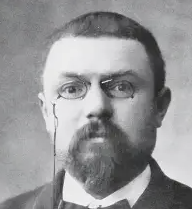
But, one will say, if raw experience can not legitimatize reasoning by recurrence, is it so of experiment aided by induction? We see successively that a theorem is true of the number 1, of the number 2, of the number 3 and so on; the law is evident, we say, and it has the same warranty as every physical law based on observations, whose number is very great but limited. But there is an essential difference. Induction applied to the physical sciences is always uncertain, because it rests on the belief in a general order of the universe, an order outside of us. Mathematical induction, that is, demonstration by recurrence, on the contrary, imposes itself necessarily, because it is only the affirmation of a property of the mind itself.
▼
Source
source
Ch. I. (1905) Tr. George Bruce Halstead
5 months 1 week ago
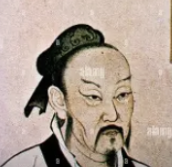
Tsze-Kung asked Confucius, saying, "Master, are you a sage?" Confucius answered him: "A sage is what I cannot rise to. I learn without satiety, and teach without being tired." Tsze-Kung said: "You learn without satiety: that shows your wisdom. You teach without being tired: that shows your benevolence. Benevolent and wise:- Master, you are a sage."
▼
Source
source
"Humility", no. 139
9 months 3 weeks ago
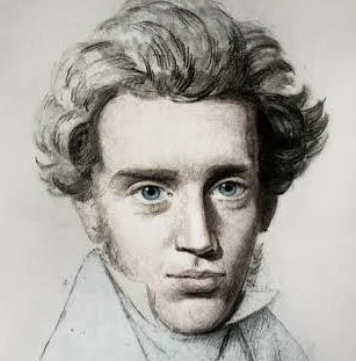
If someone were to expound that godliness is to belong to childhood in the temporal sense and thus dwindle and die with the years as childhood does, is to be a happy frame of mind that cannot be preserved but only recollected; if someone were to expound that repentance as a weakness of old age accompanies the decline of one's powers, when the senses are dulled, when sleep no longer strengthens but increases lethargy-this would be ungodliness and foolishness.
7 months 2 weeks ago
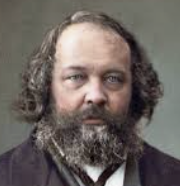
The great honor of Christianity, its incontestable merit, and the whole secret of its unprecedented and yet thoroughly legitimate triumph, lay in the fact that it appealed to that suffering and immense public to which the ancient world, a strict and cruel intellectual and political aristocracy, denied even the simplest rights of humanity. Otherwise it never could have spread.
▼
Source
source
Dover edition, p. 75
7 months 1 week ago
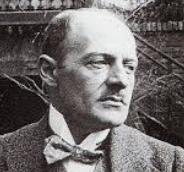
Ressentiment is always to some degree a determinant of the romantic type of mind. At least this is so when the romantic nostalgia for some past era (Hellas, the Middle Ages, etc.) is not primarily based on the values of that period, but on the wish to escape from the present. Then all praise of the "past" has the implied purpose of downgrading present-day reality.
▼
Source
source
L. Coser, trans. (1973), p. 68

4 months 2 weeks ago
Whatever the virtue may be, from whatever source it may come, it is worthy of esteem... Mind, beauty, wealth, nobility, although the children of chance, all have their own value, as skill, learning and virtue have theirs.

7 months 2 weeks ago
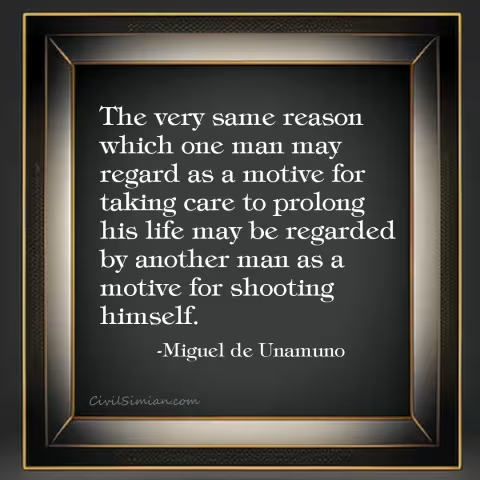
A man does not kill himself, as is commonly supposed, in a fit of madness but rather in a fit of unendurable lucidity, in a paroxysm which may, if so desired, be identified with madness; for an excessive perspicacity, carried to the limit and of which one longs to be rid at all costs, exceeds the context of reason.
7 months 6 days ago
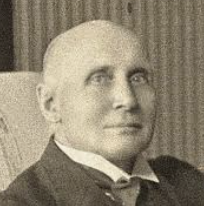
The fact of the religious vision, and its history of persistent expansion, is our one ground for optimism. Apart from it, human life is a flash of occasional enjoyments lighting up a mass of pain and misery, a bagatelle of transient experience.
▼
Source
source
Ch. 12: "Religion and Science", p. 268
8 months 2 weeks ago
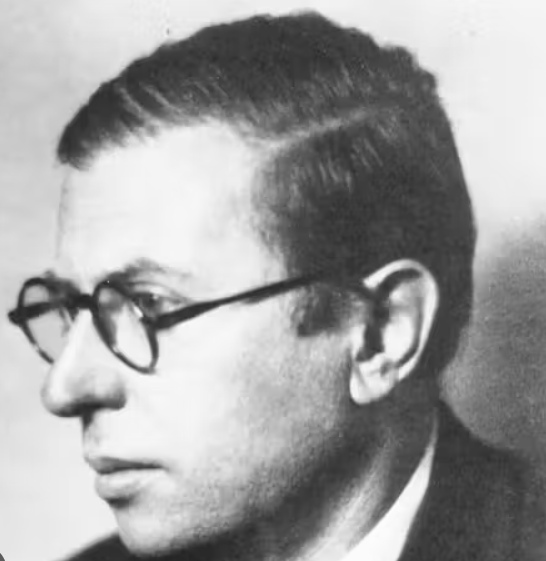
What do you want to do with the [Communist] Party? A racing stable? What good is it to sharpen a knife every day if you never use it for slicing? A party is never more than a means. There is only one objective: power.
▼
Source
source
Hoederer to Hugo, Act 5, sc. 3
4 months 3 weeks ago
I, however, place economy among the first and most important republican virtues, and public debt as the greatest of the dangers to be feared.
▼
Source
source
Letter to William Plumer

9 months 1 week ago
By faithfulness we are collected and wound up into unity within ourselves, whereas we had been scattered abroad in multiplicity.
▼
Source
source
As quoted in Footprints in Time : Fulfilling God's Destiny for Your Life (2007) by Jeff O'Leary, p. 223
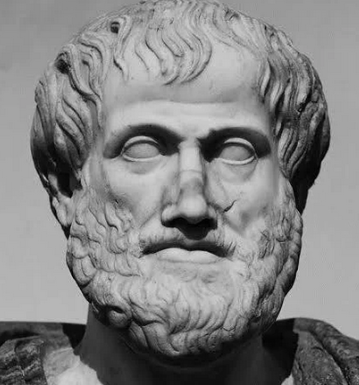
9 months 3 weeks ago
There is only one way to avoid criticism: do nothing, say nothing and be nothing.
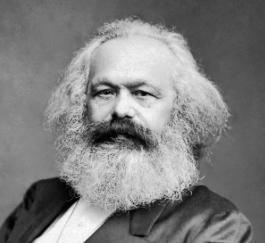
8 months 3 weeks ago
If production be capitalistic in form, so, too, will be reproduction.
▼
Source
source
Vol. I, Ch. 23, pg. 620.
7 months 3 weeks ago
Religion is usually nothing but a supplement to or even a substitute for education, and nothing is religious in the strict sense which is not a product of freedom.
▼
Source
source
"Selected Aphorisms from the Athenaeum (1798)", Dialogue on Poetry and Literary Aphorisms, Ernst Behler and Roman Struc, trans. (Pennsylvania University Press:1968) #233
4 months 3 weeks ago
"I do not know whether behind appearances there lives and moves a secret essence superior to me. Nor do I ask; I do not care. I create phenomena in swarms, and paint with a full palette a gigantic and gaudy curtain before the abyss. Do not say, "Draw the curtain that I may see the painting." The curtain is the painting.
5 months 1 week ago
Our English careers to born genius are twofold. There is the silent or unlearned career of the Industrialisms, which are very many among us; and there is the articulate or learned career of the three professions, Medicine, Law (under which we may include Politics), and the Church. Your born genius, therefore, will first have to ask himself, Whether he can hold his tongue or cannot? True, all human talent, especially all deep talent, is a talent to do, and is intrinsically of silent nature; inaudible, like the Sphere Harmonies and Eternal Melodies, of which it is an incarnated fraction.
9 months 1 week ago
To no one but the Son of Heaven does it belong to order ceremonies, to fix the measures, and to determine the written characters.

7 months 3 days ago
How very little can be done under the spirit of fear.
▼
Source
source
As quoted in The Book of Positive Quotations (2007) by John Cook, p. 479
4 months 3 weeks ago
What I stand for is what I stand on.
▼
Source
source
Below in A Part
7 months 2 weeks ago
Life is not, and death is a dream. Suffering has invented them both as self-justification. Man alone is torn between an unreality and an illusion.
6 months 3 weeks ago
It is indeed a matter of great difficulty to discover, and effectually to distinguish, the true motions of particular bodies from the apparent; because the parts of that immovable space, in which those motions are performed, do by no means come under the observation of our senses. Yet the thing is not altogether desperate; for we have some arguments to guide us, partly from the apparent motions, which are the differences of the true motions; partly from the forces, which are the causes and effects of the true motions.
▼
Source
source
Definitions - Scholium
8 months 4 weeks ago
Don't discuss yourself, for you are bound to lose; if you belittle yourself, you are believed; if you praise yourself, you are disbelieved.
▼
Source
source
Book III, Ch. 8
8 months 1 week ago
As Athenodorus was taking his leave of Cæsar, "Remember," said he, "Cæsar, whenever you are angry, to say or do nothing before you have repeated the four-and-twenty letters to yourself."
▼
Source
source
Cæsar Augustus
8 months 4 weeks ago
A true prayer and religious reconciling of ourselves to Almighty God cannot enter into an impure soul, subject at the very time to the dominion of Satan. He who calls God to his assistance whilst in a course of vice, does as if a cut-purse should call a magistrate to help him, or like those who introduce the name of God to the attestation of a lie.
▼
Source
source
Ch. 56, tr. Cotton, rev. W. Carew Hazlitt, 1877
7 months 2 weeks ago
All nature abounds in proofs of other influences than merely mechanical action, even in the physical world. They crowd in upon us at the rate of several every minute. And my observation of men has led me to this little generalization. Speaking only of men who really think for themselves and not of mere reporters, I have not found that it is the men whose lives are mostly passed within the four walls of a physical laboratory who are most inclined to be satisfied with a purely mechanical metaphysics. On the contrary, the more clearly they understand how physical forces work the more incredible it seems to them that such action should explain what happens out of doors. A larger proportion of materialists and agnostics is to be found among the thinking physiologists and other naturalists, and the largest proportion of all among those who derive their ideas of physical science from reading popular books.
▼
Source
source
Lecture II : The Universal Categories, §3. Laws: Nominalism, CP 5.65
8 months 2 weeks ago
The usage of the words "public" and "public sphere" betrays a multiplicity of concurrent meanings. Their origins go back to various historical phases and, when applied synchronically to the conditions of a bourgeois society that is industrially advanced and constituted as a social-welfare state, they fuse into a clouded amalgam. Yet the very conditions that make the inherited language seem inappropriate appear to require these words, however confused their employment.
▼
Source
source
p. 1 as cited in: Gandy, M (1997) "Ecology, modernity and the intellectual legacy of the Frankfurt School". In: Light, A and Smith, JM, (eds.) Space, Place and Environmental Ethics. p. 240
4 months 2 weeks ago
The longest-lived and the shortest-lived man, when they come to die, lose one and the same thing.
▼
Source
source
II, 14
4 months 3 weeks ago
The Constitution of the United States asserts that all power is inherent in the people; that they may exercise it by themselves; that it is their right and duty.
▼
Source
source
Letter to Justice William Johnson

8 months 1 week ago
Human social institutions can effect the course of human evolution. Just as climate-change, food supply, predators, and other natural forces of selection have molded our nature, so too can our culture.
▼
Source
source
Chapter 6, A New Understanding Of Ethics, p. 172
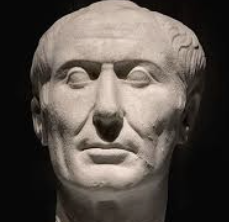
6 months 2 weeks ago
Pardon one offence and you encourage the commission of many.
▼
Source
source
Maxim 750
8 months 1 week ago
For many, as Cranton tells us, and those very wise men, not now but long ago, have deplored the condition of human nature, esteeming life a punishment, and to be born a man the highest pitch of calamity; this, Aristotle tells us, Silenus declared when he was brought captive to Midas.
5 months 1 week ago
All greatness is unconscious, or it is little and naught.
CivilSimian.com created by AxiomaticPanic, CivilSimian, Kalokagathia