


5 months 1 week ago
Our "Theories of Taste," as they are called, wherein the deep, infinite, unspeakable Love of Wisdom and Beauty, which dwells in all men, is "explained," made mechanically visible, from "Association" and the like, ...
8 months 3 weeks ago
The first intellectual operation in which I arrived at any proficiency, was dissecting a bad argument, and finding in what part the fallacy lay: and though whatever capacity of this sort I attained was due to the fact that it was an intellectual exercise in which I was most perseveringly drilled by my father, yet it is also true that the school logic, and the mental habits acquired in studying it, were among the principal instruments of this drilling. I am persuaded that nothing, in modern education, tends so much, when properly used, to form exact thinkers, who attach a precise meaning to words and propositions, and are not imposed on by vague, loose, or ambiguous terms. The boasted influence of mathematical studies is nothing to it; for in mathematical processes, none of the real difficulties of correct ratiocination occur.
▼
Source
source
(p. 19)
9 months 3 weeks ago
It is simplicity that makes the uneducated more effective than the educated when addressing popular audiences.

4 months 2 weeks ago
Every legal constitution is the product of a revolution. In the history of classes, revolution is the act of political creation, while legislation is the political expression of the life of a society that has already come into being. Work for reform does not contain its own force independent from revolution. During every historic period, work for reforms is carried on only in the direction given to it by the impetus of the last revolution and continues as long as the impulsion from the last revolution continues to make itself felt. Or, to put it more concretely, in each historic period work for reforms is carried on only in the framework of the social form created by the last revolution. Here is the kernel of the problem.
▼
Source
source
Ch. 8

5 months 2 days ago
There are two kinds of openness, the openness of indifference-promoted with the twin purposes of humbling our intellectual pride and letting us be whatever we want to be, just as long as we don't want to be knowers-and the openness that invites us to the quest for knowledge and certitude, for which history and the various cultures provide a brilliant array of examples for examination.
▼
Source
source
p. 41.
7 months 1 week ago
This idea is that laws which purport to be statements of what actually occurs are statistical in character as distinct from so-called dynamic laws that are abstract and mathematical, and disguised definitions. Recognition of the statistical nature of physical laws was first effected in the case of gases when it became evident that generalizations regarding the behavior of swarms of molecules were not descriptions or predictions of the behavior of any individual particle. A single molecule is not and cannot be a gas. It is consequently absurd to suppose that a scientific law is about the elementary constituents of a gas. It is a statement of what happens when a large number of such constituents interact with one another under certain conditions.


7 months 1 week ago
Whenever a human being, through the commission of a crime, has become exiled from good, he needs to be reintegrated with it through suffering. The suffering should be inflicted with the aim of bringing the soul to recognize freely some day that its infliction was just. This reintegration with the good is what punishment is. Every man who is innocent, or who has finally expiated guilt, needs to be recognized as honourable to the same extent as anyone else.
4 months 2 weeks ago
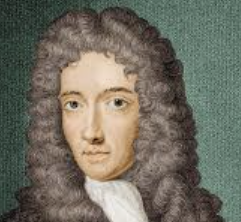
And therefore I think you have done very wisely to make it your business to consider the Phœnomena relating to the present question, which have been afforded by experiments, especially since it might seem injurious to our senses, by whose mediation we acquire so much of the knowledge we have of things corporal, to have recourse to far-fetched and abstracted Ratiocination, to know what are the sensible ingredients of those sensible things that we daily see and handle, and are supposed to have the liberty to untwist (if I may so speak) into the primitive bodies they consist of.
7 months 3 weeks ago
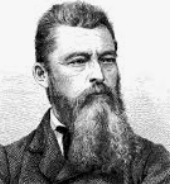
God, I have said, is the fulfiller, or the reality, of the human desires for happiness, perfection, and immortality. From this it may be inferred that to deprive man of God is to tear the heart out of his breast. But I contest the premises from which religion and theology deduce the necessity and existence of God, or of immortality, which is the same thing. I maintain that desires which are fulfilled only in the imagination, or from which the existence of an imaginary being is deduced, are imaginary desires, and not the real desires of the human heart; I maintain that the limitations which the religious imagination annuls in the idea of God or immortality, are necessary determinations of the human essence, which cannot be dissociated from it, and therefore no limitations at all, except precisely in man's imagination.
▼
Source
source
Lecture XXX, Atheism alone a Positive View


5 months 2 weeks ago
After World War II, liberal rights were not something that were only deserved by white Europeans. ...There was a recognition that the black and brown peoples being held in colonial bondage could not consistently be held in that bondage, because liberalism was a universal doctrine. ...That's the other respect in which we can defend liberalism, a moral one.
▼
Source
source
10:30
7 months 1 week ago
If the awareness of our limitations begins to limit or to dim our value consciousness as well-as happens, for instance, in old age with regard to the values of youth-then we have already started the movement of devaluation which will end with the defamation of the world and all its values. Only a timely act of resignation can deliver us from this tendency toward self-delusion.
▼
Source
source
L. Coser, trans. (1973), p. 59
8 months 3 days ago
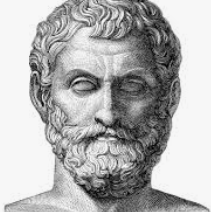
Avoid doing what you would blame others for doing.
▼
Source
source
As quoted in Diogenes Laërtius, The Lives and Opinions of Eminent Philosophers, I, 36 Cf. Golden Rule
7 months 6 days ago
The theme of Cosmology, which is the basis of all religions, is the story of the dynamic effort of the World passing into everlasting unity, and of the static majesty of God's vision, accomplishing its purpose of completion by absorption of the World's multiplicity of effort.
▼
Source
source
Pt. V, ch. II, sec. V.
6 months 2 weeks ago
I am not advocating a morality based on evolution. I am saying how things have evolved. I am not saying how we humans morally ought to behave.
▼
Source
source
Ch. 1. Why Are People?

5 months 2 weeks ago
Even when labor is subjugated by capital it always necessarily maintains its own autonomy, and this ever more clearly true today with respect to the new immaterial, cooperative and collaborative forms of labor. This relationship is not isolated to the economic terrain but, as we will argue later, spills over into the biopolitical terrain of society as a hole, including military conflicts. In any case, we should recognize here that even in asymmetrical conflicts victory in terms of complete domination is not possible. All that can be achieved is a provisional and limited maintenance of control and order that must constantly be policed and preserved. Counterinsurgency is a full-time job.
▼
Source
source
54
7 months 3 weeks ago
What man calls Absolute Being, his God, is his own being. The power of the object over him is therefore the power of his own being. Thus, the power of the object of feeling is the power of feeling itself; the power of the object of reason is the power of reason itself; and the power of the object of will is the power of will itself.
▼
Source
source
Introduction, Z. Hanfi, trans., in The Fiery Brook (1972), p. 102

9 months 1 week ago
In this one man, the whole Church has been assumed by the Word.
▼
Source
source
p.434
7 months 2 weeks ago
Great and enduring civilizations like those of the Hindus and the Chinese were built upon this foundation and developed from it a discipline of self-knowledge which they brought to a high pitch of refinement both in philosophy and practice.
▼
Source
source
Carl Jung, Modern Man in Search of a Soul. quoted in Hindu Culture, K. Guru Dutt, and quoted in Gewali, Salil (2013). Great Minds on India. New Delhi: Penguin Random House.
5 months 2 days ago
Macbeth's self-justifications were feeble - and his conscience devoured him. Yes, even Iago was a little lamb too. The imagination and the spiritual strength of Shakespeare's evildoers stopped short at a dozen corpses. Because they had no ideology.
▼
Source
source
The Gulag Archipelago
8 months 3 weeks ago
Those who forget good and evil and seek only to know the facts are more likely to achieve good than those who view the world through the distorting medium of their own desires.
▼
Source
source
Ch. 1: Mysticism and Logic

8 months 2 weeks ago
There are more ideas on earth than intellectuals imagine. And these ideas are more active, stronger, more resistant, more passionate than "politicians" think. We have to be there at the birth of ideas, the bursting outward of their force: not in books expressing them, but in events manifesting this force, in struggles carried on around ideas, for or against them. Ideas do not rule the world. But it is because the world has ideas (and because it constantly produces them) that it is not passively ruled by those who are its leaders or those who would like to teach it, once and for all, what it must think.
▼
Source
source
As quoted in Michel Foucault (1991) by Didier Eribon, as translated by Betsy Wind, Harvard University Press, p. 282

7 months 2 weeks ago
O ye of little faith, why reason ye among yourselves, because ye have brought no bread? Do ye not yet understand, neither remember the five loaves of the five thousand, and how many baskets ye took up? Neither the seven loaves of the four thousand, and how many baskets ye took up? How is it that ye do not understand that I spake it not to you concerning bread, that ye should beware of the leaven of the Pharisees and of the Sadducees?
▼
Source
source
16:8-11 (KJV)
5 months 1 week ago
Consider how, even in the meanest sorts of Labour, the whole soul of a man is composed into a kind of real harmony, the instant he sets himself to work! Doubt, Desire, Sorrow, Remorse, Indignation, Despair itself, all these like helldogs lie beleaguering the soul of the poor dayworker, as of every man: but he bends himself with free valour against his task, and all these are stilled, all these shrink murmuring far off into their caves. The man is now a man. The blessed glow of Labour in him, is it not as purifying fire, wherein all poison is burnt up, and of sour smoke itself there is made bright blessed flame!
5 months 1 week ago
On the contrary, to educate rational people, that should be sufficient; it is not really intended for sensible people; to understand things and conditions, there is the matter ended,-to understand oneself does not seem to be everyman's concern.
▼
Source
source
p. 22
7 months 2 weeks ago
FREEDOM, the realization of freedom: who can deny that this is what today heads the agenda of history? ... Revolutionary propaganda is in its deepest sense the negation of the existing conditions of the State, for, with respect to its innermost nature, it has no other program than the destruction of whatever order prevails at the time.... We must not only act politically, but in our politics act religiously, religiously in the sense of freedom, of which the one true expression is justice and love. Indeed, for us alone, who are called the enemies of the Christian religion, for us alone it is reserved, and even made the highest duty ... really to exercise love, this highest commandment of Christ and this only way to true Christianity.
▼
Source
source
"The Reaction in Germany" (1842), Bakunin's first political writings, under the pseudonym "Jules Elysard"; it was not until 1860 that he began to publicly assert a stance of firm atheism and vigorous rejection of traditional religious institutions.
7 months 2 weeks ago
If you have money, don't lend it at interest. Rather, give it to someone from whom you won't get it back.
8 months 2 weeks ago
So we do sometimes think because it has been found to pay.
▼
Source
source
§ 470
5 months 6 days ago
As the French say, there are three sexes - men, women, and clergymen.
▼
Source
source
Vol. I, ch. 9, p. 313
8 months 2 weeks ago
Only a neutral, who is indifferent to the stake and perhaps to all stakes, can appreciate aesthetically the grandeur of a fine disaster
▼
Source
source
p. 212
6 months 1 week ago
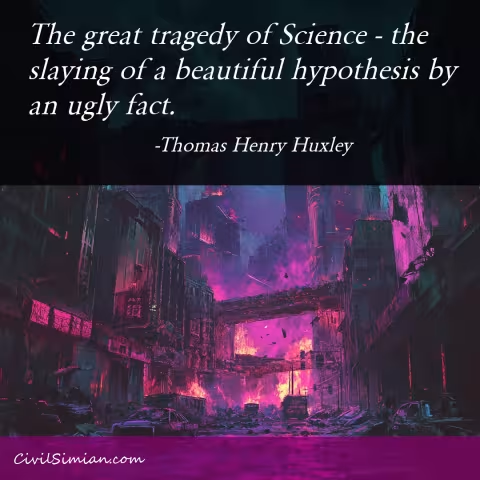
God give me strength to face a fact though it slay me.
▼
Source
source
As quoted in Nature Vol. 149 (Jan-Jun) 1942 p. 291, and A Philosophy for Our Time (1954) by Bernard Mannes Baruch, p. 13
8 months 3 weeks ago
Science may set limits to knowledge, but should not set limits to imagination.
7 months 1 week ago
This they do in the service of an imaginary science; and, like the astrologers and soothsayers whom they have succeeded, cast up their eyes to the clouds, and speak in immense, unsubstantiated images and similes, in deeply misleading metaphors and allegories, and make use of hypnotic formulae with little regard for experience, or rational argument, or tests of proven reliability. Thereby they throw dust in their own eyes as well as in ours, obstruct our vision of the real world, and further confuse an already sufficiently bewildered public about the relations of morality to politics, and about the nature and methods of the natural sciences and historical studies alike.
8 months 3 weeks ago
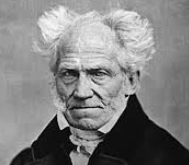
The chief objection I have to Pantheism is that it says nothing. To call the world "God" is not to explain it; it is only to enrich our language with a superfluous synonym for the word "world".
▼
Source
source
On Pantheism as quoted in Faiths of Famous Men in Their Own Words (1900) by John Kenyon Kilbourn; also in Religion: A Dialogue and Other Essays (2007), p. 40

7 months 2 weeks ago
Knowledge, having irritated and stimulated our appetite for power, will lead us inexorably to our ruin.

9 months 2 weeks ago
The slave begins by demanding justice and ends by wanting to wear a crown. He must dominate in his turn.
7 months 3 weeks ago
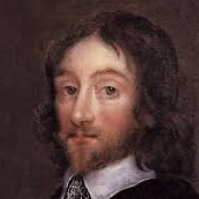
Not to be content with Life is the unsatisfactory state of those which destroy themselves; who being afraid to live, run blindly upon their own Death, which no Man fears by Experience.
8 months 3 weeks ago
Brief and powerless is Man's life; on him and all his race the slow, sure doom falls pitiless and dark.
6 months 3 weeks ago
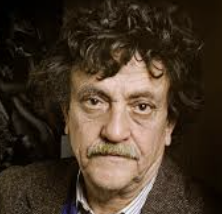
If you are going to be a writer, you must be paranoid. The thing is, in the arts if you don't overreact, you fall asleep.
7 months 2 weeks ago
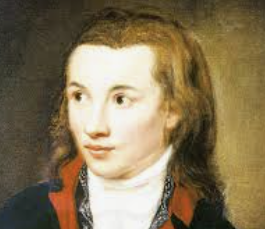
Philosophy can bake no bread; but she can procure for us God, Freedom, Immortality. Which, then, is more practical, Philosophy or Economy?
▼
Source
source
The first sentence of this was used by William Torrey Harris for the motto of the Journal of Speculative Philosophy

4 months 3 weeks ago
In our university of Virginia you know there is no Professorship of Divinity. A handle has been made of this, to disseminate an idea that this is an institution, not merely of no religion, but against all religion. Occasion was taken at the last meeting of the Visitors, to bring forward an idea that might silence this calumny, which weighed on the minds of some honest friends to the institution.
▼
Source
source
Letter to Thomas Cooper (3 November 1822), published in The Works of Thomas Jefferson in Twelve Volumes, Federal Edition, Paul Leicester Ford, ed., New York: G. P. Putnam's Sons, 1904, Vol. 12, p. 272
6 months 2 weeks ago
A man's reach must exceed his grasp or what's a metaphor?
▼
Source
source
(p.7) A play on the lines in Robert Browning's poem "Andrea del Sarto":Ah, but a man's reach should exceed his grasp, Or what's a heaven for?
7 months 2 weeks ago
The people should never be deceived, under any pretext or for any purpose. It would not only be criminal but detrimental to the revolutionary cause, for deception of any kind, by its very nature, is shortsighted, petty, narrow, always sewn with rotten threads, so that it inevitably tears and is exposed.
▼
Source
source
"Appendix A"

7 months 3 weeks ago
What has always made the state a hell on earth has been precisely that man has tried to make it heaven.
CivilSimian.com created by AxiomaticPanic, CivilSimian, Kalokagathia