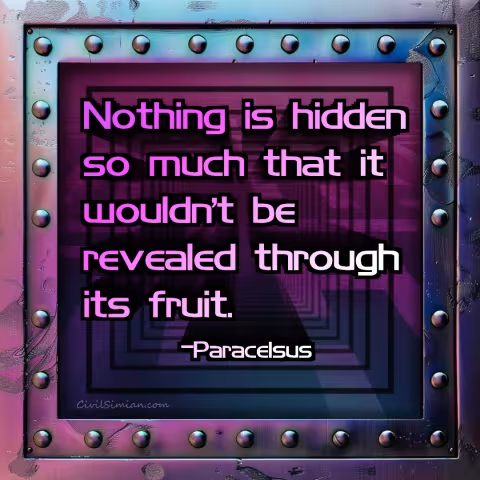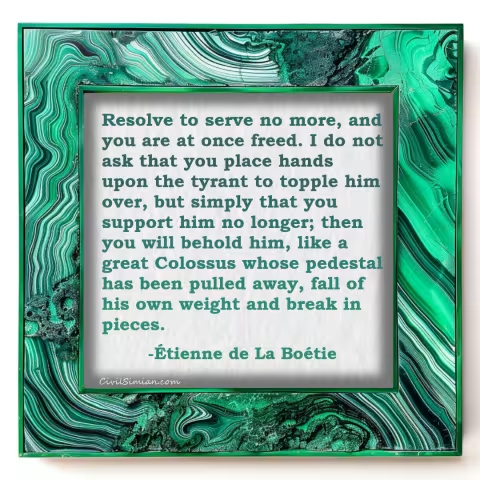
I'm not sure this thinking is relevant anymore....


Roughly speaking, rationality is concerned with the selection of preferred behavior alternatives in terms of some system of values, whereby the consequences of behavior can be evaluated.
The chief requirement of the good life... is to live without any image of oneself.
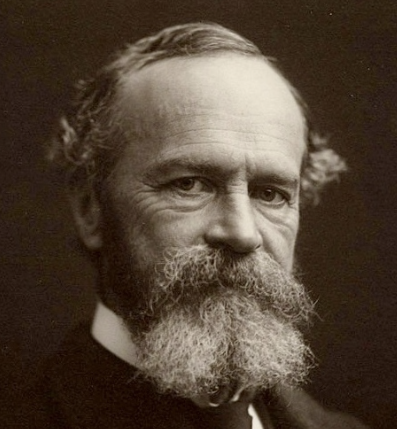
At the present day, civilized opinion is a curious mental mixture. The military instincts and ideals are as strong as ever, but they are confronted by reflective criticisms which sorely curb their ancient freedom. Innumerable writers are showing up the bestial side of military service. Pure loot and mastery seem no longer morally allowable motives, and pretexts must be found for attributing them solely to the enemy.

I am convinced that the unwritten knowledge scattered among men of different callings surpasses in quantity and in importance anything we find in books, and that the greater part of our wealth has yet to be recorded.
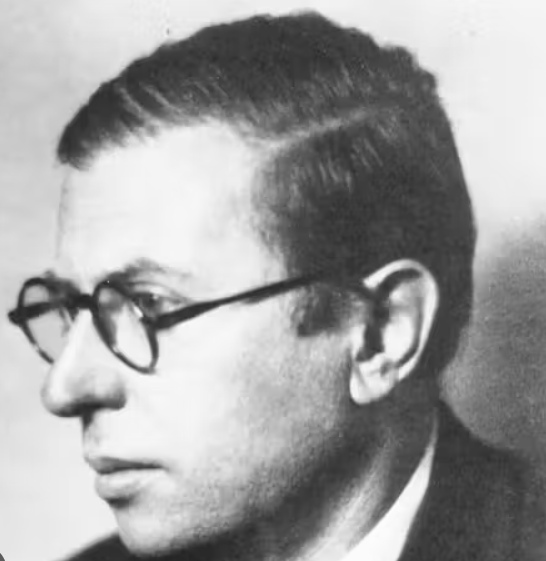
To whomever gives a kiss or a blowRender a kiss or blow, but to whomever gives when you are unable to return, offer all the hatred in your hear, for you were slaves and he enslaves you.

In the mid nineteenth century, the typical murderer was a drunken illiterate; a hundred years later the typical murderer regards himself as a thinking man.
Times before you, when even the living men were Antiquities; when the living might exceed the dead, and to depart this world, could not be properly said, to go unto the greater number. Dedication
We, who are dying, are doing better, than they, who will live. For Crete doesn't need householders, she needs madmen like us. These madmen make Crete immortal.
I... believe in the rationalist tradition of a commonwealth of learning, and in the urgent need to preserve this tradition.
Democracy can hardly be expected to flourish in societies where political and economic power is being progressively concentrated and centralized. But the progress of technology has led and is still leading to just such a concentration and centralization of power.
Money is a corporate image depending on society for its institutional status.
The first and the simplest emotion which we discover in the human mind is Curiosity.

Be not the slave of Words.
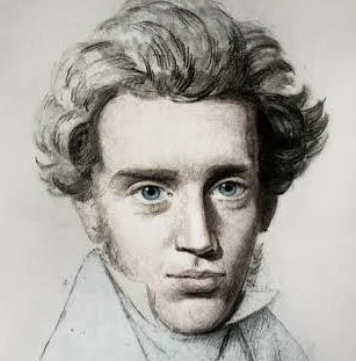
I was brought up in the Christian religion, and although I can scarcely sanction all the improper attempts to gain the emancipation of woman, all paganlike reminiscences also seem foolish to me. My brief and simple opinion is that woman is certainly as good as man-period. Any more discursive elaboration of the difference between the sexes or deliberation on which sex is superior is an idle intellectual occupation for loafers and bachelors.

Should it be proved that woman is naturally weaker than man, from whence does it follow that it is natural for her to labour to become still weaker than nature intended her to be? Arguments of this cast are an insult to common sense, and savour of passion. The divine right of husbands, like the divine right of kings, may, it is to be hoped, in this enlightened age, be contested without danger, and though conviction may not silence many boisterous disputants, yet, when any prevailing prejudice is attacked, the wise will consider, and leave the narrow-minded to rail with thoughtless vehemence at innovation.
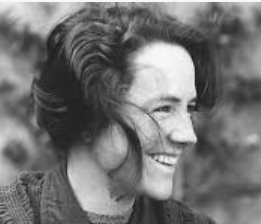
When one is a stranger to oneself then one is estranged from others too. If one is out of touch with oneself, then one cannot touch others.
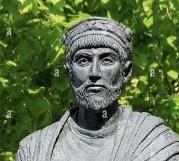
We must not suppose any corporeal conjunction or marriage in the case - all which are merely the sportive fables of Poetry; but must hold the father and the producer of that Being as something most divine and super-eminent. Of such a nature is He who is above all things, around whom, and by reason of whom, all things do subsist. But Homer calls him by his father's name, "Hyperion," in order to show that he is independent, and not subjected to any constraint.
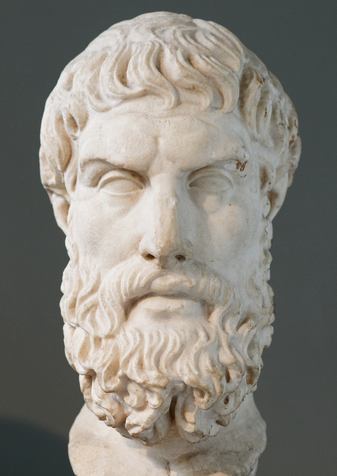
Those animals which are incapable of making binding agreements with one another not to inflict nor suffer harm are without either justice or injustice; and likewise for those peoples who either could not or would not form binding agreements not to inflict nor suffer harm.
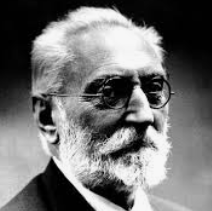
Underlying even the so-called problem of knowledge there is simply this human feeling, just as underlying the inquiry into the "why," the cause, there is simply the search for the "wherefore," the end. All the rest is either to deceive oneself or to wish to deceive others; and to wish to deceive others in order to deceive oneself.
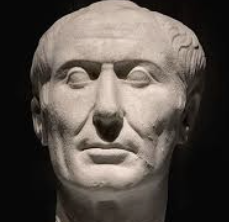
We are interested in others, when they are interested in us.
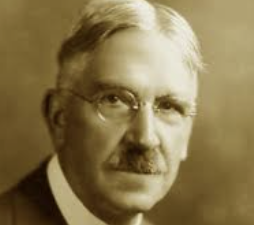
But the individual butterfly or earthquake remains just the unique existence which it is. We forget in explaining its occurrence that it is only the occurrence that is explained, not the thing itself.
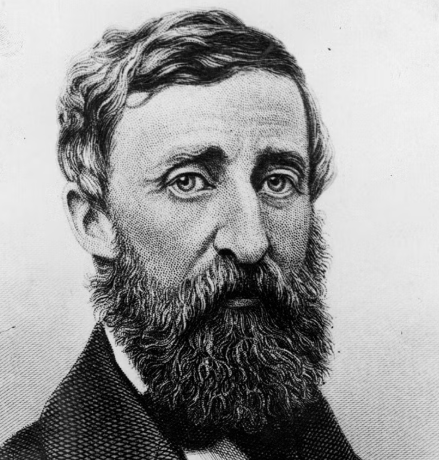
One may discover the root of a Hindoo religion in his own private history, when, in the silent intervals of the day or night, he does sometimes inflict on himself like austerities with a stern satisfaction.

Nothing is so wearing as the possession or abuse of liberty.
Yet with every allowance, one feels it difficult to see how any mortal ever could consider this Koran as a Book written in Heaven, too good for the Earth; as a well-written book, or indeed as a book at all; and not a bewildered rhapsody; written, so far as writing goes, as badly as almost any book ever was!

Try to exclude the possibility of suffering which the order of nature and the existence of free-wills involve, and you find that you have excluded life itself.
Art expresses, it does not state; it is concerned with existences in their perceived qualities, not with conceptions symbolized in terms.

We are born to inquire after truth; it belongs to a greater power to possess it. It is not, as Democritus said, hid in the bottom of the deeps, but rather elevated to an infinite height in the divine knowledge.
The lowest stage of humanity is experienced when the individual must labour for a small pittance of wages from others.

Materialism ends up denying the existence of any irreducible subjective qualitative states of sentience or awareness.
"You really should come to the house - one of these days we might die without having seen each other again." - "Since we have to die in any case, what's the use of seeing each other again?"
But he, with these burthens on him, planned, commenced, and completed, the History of India; and this in the course of about ten years, a shorter time than has been occupied (even by writers who had no other employment) in the production of almost any other historical work of equal bulk, and of anything approaching to the same amount of reading and research. And to this is to be added, that during the whole period, a considerable part of almost every day was employed in the instruction of his children: in the case of one of whom, myself, he exerted an amount of labour, care, and perseverance rarely, if ever, employed for a similar purpose, in endeavouring to give, according to his own conception, the highest order of intellectual education.

In the natural state no concept of God can arise, and the false one which one makes for himself is harmful. Hence the theory of natural religion can be true only where there is no science; therefore it cannot bind all men together.

Full of gods means full of meaning, full of narration. The world becomes readable, like a picture.

What is at stake here is precisely the problem of the fulfillment of desire: when we encounter in reality an object which has all the properties of the fantasized object of desire, we are nevertheless necessarily somewhat disappointed; we experience a certain this is not it; it becomes evident that the finally found real object is not the reference of desire even though it possesses all the required properties.
If there are different Notions of the science of Philosophy, it is the true Notion alone that puts us in a position to understand the writings of philosophers who have worked in the knowledge of it. For in thought, and particularly in speculative thought, comprehension means something quite different from understanding the grammatical sense of the words alone, and also from understanding them in the region of ordinary conception only. Hence we may possess a knowledge of the assertions, propositions, or of the opinions of philosophers; we may have occupied ourselves largely with the grounds of and deductions from these opinions, and the main point in all that we have done may be wanting - the comprehension of the propositions.
Eros, erotic desire, conquers depression. It delivers us from the inferno of the same to the utopia, indeed utopia, of the wholly other.
Every man has some reminiscences which he would not tell to everyone, but only to his friends. He has others which he would not reveal even to his friends, but only to himself, and that in secret. But finally there are still others which a man is even afraid to tell himself, and every decent man has a considerable number of such things stored away. That is, one can even say that the more decent he is, the greater the number of such things in his mind.
If I were to be totally sincere, I would say that I do not know why I live and why I do not stop living. The answer probably lies in the irrational character of life which maintains itself without reason.
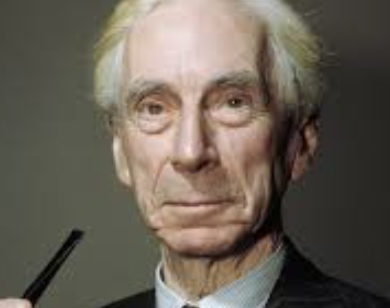
The church is in its major part an opponent still of progress and improvement in all the ways that diminish suffering in the world, because it has chosen to label as morality a certain narrow set of rules of conduct which have nothing to do with human happiness; and when you say that this or that ought to be done because it would make for human happiness, they think that has nothing to do with the matter at all. "What has human happiness to do with morals? The object of morals is not to make people happy."
To covet truth is a very distinguished passion.
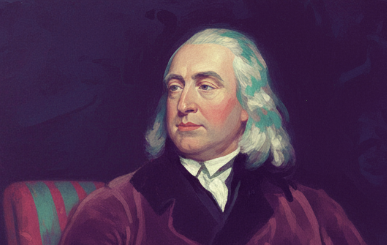
Want keeps pace with dignity. Destitute of the lawful means of supporting his rank, his dignity presents a motive for malversation, and his power furnishes the means.

Civilizations have always been pyramidal in structure. As one climbs toward the apex of the social edifice, there is increased leisure and increasing opportunity to pursue happiness. As one climbs, one finds also fewer and fewer people to enjoy this more and more. Invariably, there is a preponderance of the dispossessed. And remember this, no matter how well off the bottom layers of the pyramid might be on an absolute scale, they are always dispossessed in comparison with the apex.So there is always social friction in ordinary human societies. The action of social revolution and the reaction of guarding against such revolution or combating it once it has begun are the causes of a great deal of the human misery with which history is permeated.
CivilSimian.com created by AxiomaticPanic, CivilSimian, Kalokagathia