

4 months 2 weeks ago
The social product grows from year to year. Who is now the true creator of this surplus value which grows wildly and beyond any measure? Who can afford to figure out the profit yielded causally adequate by this immense wealth and the series of economic miracles? In concrete terms: who is the legitimate distributor of the social product and who actually assesses the shares in practical life? As long as the issue is about value, all such questions must above all be formulated as economic questions.
7 months 2 weeks ago
Life has always seemed to me like a plant that lives on its rhizome. Its true life is invisible, hidden in the rhizome. The part that appears above ground lasts only a single summer. What we see is the blossom, which passes. The rhizome remains. Closing lines of the preface
8 months 3 weeks ago
Every man is, no doubt, by nature, first and principally recommended to his own care; and as he is fitter to take care of himself than of any other person, it is fit and right that it should be so.
▼
Source
source
Section II, Chap. II.
8 months 3 weeks ago
I fancy I need more than another to speak (rather than write), with such a formidable tendency to the lapidary style. I build my house of boulders.
▼
Source
source
Letter to Thomas Carlyle, 30 October 1841
7 months 4 days ago
I had never doubted my own abilities, but I was quite prepared to believe that "the world" would decline to recognize them.
▼
Source
source
p. 3
7 months 1 week ago
What man shall there be among you, that shall have one sheep, and if it fall into a pit on the sabbath day, will he not lay hold on it, and lift it out? How much then is a man better than a sheep? Wherefore it is lawful to do well on the sabbath days.
▼
Source
source
12:11-12 (KJV) Said to the Pharisees.
8 months 2 weeks ago
There is only one way to science-or to philosophy... to meet a problem, to see its beauty and fall in love with it; to get married to it, and to live with it happily, till death do ye part-unless you should meet another... more fascinating problem, or... obtain a solution. But even if you do... you may... discover, to your delight, the... a whole family of enchanting... perhaps difficult problem children for whose welfare you may work, with a purpose, to the end of your days.
8 months 3 weeks ago
Space is employed as the type even of the concept of time itself, representing it by a line, and its limits - moments - by points. Time, on the other had, approaches more to a universal and rational concept, comprising under its relations all things whatsoever, to wit, space itself, and besides, those accidents which are not comprehended in the relations of space, such as the thoughts of the soul. Again, time, besides this, though it certainly does not dictate the laws of reason, yet constitutes the principal conditions tinder favor of which the mind compares its notions according to the laws of reason. Thus, I cannot judge what is impossible except by predicating a and not-a of the same subject at the same time.
7 months 2 weeks ago
The traditional disputes of philosophers are, for the most part, as unwarranted as they are unfruitful. The surest way to end them is to establish beyond question what should be the purpose and method of a philosophical enquiry. And this is by no means so difficult a task as the history of philosophy would lead one to suppose. For if there are any questions which science leaves it to philosophy to answer, a straightforward process of elimination must lead to their discovery.
▼
Source
source
Ch. 1, first lines.
6 months 2 weeks ago
It is only the ignorant who despise education.
▼
Source
source
Maxim 571
5 months 6 days ago
Let words proceed as they please, provided only your soul keeps its own sure order, provided your soul is great and holds unruffled to its ideals, pleased with itself on account of the very things which displease others, a soul that makes life the test of its progress, and believes that its knowledge is in exact proportion to its freedom from desire and its freedom from fear.
8 months 3 weeks ago
If this labourer were in possession of his own means of production, and was satisfied to live as a labourer, he need not work beyond beyond the time necessary for the reproduction of his means of subsistence, say 8 hours a day.
▼
Source
source
Vol. I, Ch. 11, pg. 336.
7 months 2 weeks ago
A modest man is steady, an humble man timid, and a vain one presumptuous.
▼
Source
source
Ch. 7
7 months 1 week ago
"Relation" in its idiomatic usage denotes something direct and active, something dynamic and energetic. It fixes attention upon the way things bear upon one another, their clashings and unitings, the way they fulfill and frustrate, promote and retard, excite and inhibit one another. Intellectual relations subsist in propositions; they state the connection of terms with one another. In art, as in nature and in life, relations are modes of interaction.
▼
Source
source
p. 139
8 months 3 weeks ago
The whole mystery of commodities, all the magic and necromancy that surrounds the products of labor as long as they take the form of commodities, vanishes therefore, so soon as we come to other forms of production.
▼
Source
source
Vol. I, ch.1, section 4.



8 months 2 weeks ago
When I was a student in the 1950s, I read Husserl, Sartre, Merleau-Ponty. When you feel an overwhelming influence, you try to open a window. Paradoxically enough, Heidegger is not very difficult for a Frenchman to understand. When every word is an enigma, you are in a not-too-bad position to understand Heidegger. Being and Time is difficult, but the more recent works are clearer. Nietzsche was a revelation to me. I felt that there was someone quite different from what I had been taught. I read him with a great passion and broke with my life, left my job in the asylum, left France: I had the feeling I had been trapped. Through Nietzsche, I had become a stranger to all that.
▼
Source
source
Truth, Power, Self : An Interview with Michel Foucault
8 months 3 weeks ago
No one can be a great thinker who does not recognise, that as a thinker it is his first duty to follow his intellect to whatever conclusions it may lead...Not that it is solely, or chiefly, to form great thinkers, that freedom of thinking is required. On the contrary, it is as much and even more indispensable to enable average human beings to attain the mental stature which they are capable of.
▼
Source
source
Ch. II: Of the Liberty of Thought and Discussion

7 months 3 weeks ago
The hatred that men bear to privilege increases in proportion as privileges become fewer and less considerable, so that democratic passions would seem to burn most fiercely just when they have least fuel. I have already given the reason for this phenomenon. [all conditions are unequal, no inequality is so great as to offend the eye, whereas the slightest dissimilarity is odious in the midst of general uniformity; the more complete this uniformity is, the more insupportable the sight of such a difference becomes.] Hence it is natural that the love of equality should constantly increase together with equality itself, and that it should grow by what it feeds on.
▼
Source
source
Chapter III.
7 months 1 day ago
Man can acquire accomplishments or he can become an animal, whichever he wants. God makes the animals, man makes himself.
▼
Source
source
F 49
7 months 1 week ago
... classic philosophy maintained that change, and consequently time, are marks of inferior reality, holding that true and ultimate reality is immutable and eternal. Human reasons, all too human, have given birth to the idea that over and beyond the lower realm of things that shift like the sands on the seashore there is the kingdom of the unchanging, of the complete, the perfect. The grounds for the belief are couched in the technical language of philosophy, but the grounds for the cause is the heart's desire for surcease from change, struggle, and uncertainty. The eternal and immutable is the consummation of mortal man's quest for certainty.
8 months 3 weeks ago
If you try to imagine, as nearly as you can, what an amount of misery, pain and suffering of every kind the sun shines upon in its course, you will admit that it would be much better if, on the earth as little as on the moon, the sun were able to call forth the phenomena of life; and if, here as there, the surface were still in a crystalline state.
▼
Source
source
"On the Sufferings of the World"
9 months 2 weeks ago
Scientific theories can always be improved and are improved. That is one of the glories of science. It is the authoritarian view of the Universe that is frozen in stone and cannot be changed, so that once it is wrong, it is wrong forever.
7 months 2 weeks ago
Irons and the unbreathable air of this world strip us of everything, except the freedom to kill ourselves; and this freedom grants us a strength and pride to triumph over the loads which overwhelm us.
7 months 2 weeks ago
Only those are happy who never think or, rather, who only think about life's bare necessities, and to think about such things means not to think at all. True thinking resembles a demon who muddies the spring of life or a sickness which corrupts its roots. To think all the time, to raise questions, to doubt your own destiny, to feel the weariness of living, to be worn out to the point of exhaustion by thoughts and life, to leave behind you, as symbols of your life's drama, a trail of smoke and blood - all this means you are so unhappy that reflection and thinking appear as a curse causing a violent revulsion in you.
4 months 2 weeks ago
Put an end once for all to this discussion of what a good man should be, and be one.
▼
Source
source
X. 16,
6 months 3 weeks ago
This realistic image, however, does not catch at all what really is, but what should not be - death and misery - what should not exist, from our moral and humanistic point of view. And at the same time making an aesthetic and commercial, perfectly immoral use and abuse of this misery. Images that actually testify, behind their pretended "objectivity", of a deep denial of the real, and of an equal denial of the image - assigned to present what does not even want to be represented, assigned to the rape of the real by burglary.

6 months 1 week ago
How do we remember the parts of our histories we'd rather forget?
▼
Source
source
Repression and revision are always options.
8 months 3 weeks ago
The unitive knowledge of the Divine Ground has, as its necessary condition, self-abnegation and charity. Only by means of self-abnegation and charity can we clear away the evil, folly and ignorance which constitute the thing we call our personality and prevent us from becoming aware of the spark of divinity illuminating the inner man.

9 months 3 weeks ago
My lectures are published and not published; they will be intelligible to those who heard them, and to none beside.

9 months 1 week ago
And what can be more divine than the exhalations of the earth, which affect the human soul so as to enable her to predict the future ? And could the hand of time evaporate such a virtue? Do you suppose you are talking of some kind of wine or salted meat ?
▼
Source
source
Book I, Chapter III

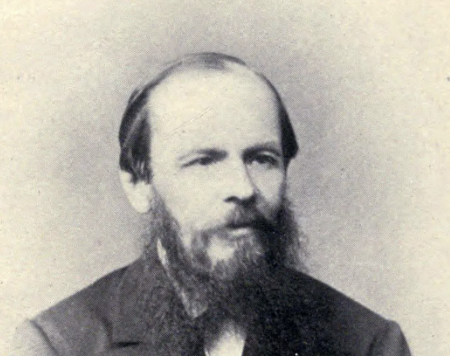
7 months 3 weeks ago
To be acutely conscious is a disease, a real, honest-to-goodness disease.
▼
Source
source
Part 1, Chapter 2 (tr. David Magarshack, 1950) To think too much is a disease, a real, actual disease.
8 months 4 weeks ago
Habit is a second nature.
▼
Source
source
Book III, Ch. 10
7 months 4 days ago
The freedom of the 'everyday mind' consists rather in not kneeling down in awe. Its mental attitude is better expressed as sitting unmoveable like an object.
8 months 3 weeks ago
One who believes, as I do, that the free intellect is the chief engine of human progress, cannot but be fundamentally opposed to Bolshevism, as much as to the Church of Rome.
▼
Source
source
Part I, Ch. 9: International Policy
4 months 2 weeks ago
Art thou angry with him whose arm-pits stink? art thou angry with him whose mouth smells foul? What good will this anger do thee?
▼
Source
source
V, 28
8 months 1 week ago
'Tis not in strength of body nor in gold that men find happiness, but in uprightness and in fulness of understanding.
4 months 2 weeks ago
Government is a true religion: it has its dogmas, its mysteries, and its ministers. To annihilate it or submit it to the discussion of each individual is the same thing; it lives only through national reason, that is to say through political faith, which is a creed.
▼
Source
source
p. 87
7 months 2 weeks ago
Primitive superstition lies just below the surface of even the most tough-minded individuals, and it is precisely those who most fight against it who are the first to succumb to its suggestive effects.
▼
Source
source
p. 25
7 months 4 days ago
The Outsider wants to cease to be an Outsider. He wants to be 'balanced'. He would like to achieve a vividness of sense-perception (Lawrence, Van Gogh, Hemingway) He would also like to understand the human soul and its working and, be 'possessed' by a Will topower, to more life. (Barbusse and Mitya Karamazov) He would like to escape triviality forever. Above all, he would like to know how to express himself because that is the means by which he can get to know himself and hi unknown possibilities.
▼
Source
source
Chapter Seven, The Great Synthesis…
7 months 1 week ago
Sleep on now, and take your rest: behold, the hour is at hand, and the Son of man is betrayed into the hands of sinners. Rise, let us be going: behold, he is at hand that doth betray me.
▼
Source
source
26:45-46 (KJV)

6 months 3 weeks ago
To say that the activity of science and art helps humanity's progress, if by that activity we mean the activity which now calls itself by those names, is as though one said that the clumsy, obstructive splashing of oars in a boat moving down stream assists the boat's progress. It only hinders it... The proof of this is seen in the confession made by men of science that the achievements of the arts and sciences are inaccessible to the labouring masses on account of the unequal distribution of wealth.


5 months 2 weeks ago
For both the pragmatic... and... moral reasons... liberalism became the dominant doctrine of the 20th century, and should... continue to be defended....
▼
Source
source
12:32
7 months 1 week ago
Yea; have ye never read, Out of the mouth of babes and sucklings thou hast perfected praise?
▼
Source
source
21:16 (KJV)
CivilSimian.com created by AxiomaticPanic, CivilSimian, Kalokagathia