

8 months 3 weeks ago
A person who already displays ... cruelty to animals is also no less hardened towards men. We can already know the human heart, even in regard to animals.
▼
Source
source
Part II, p. 212
7 months 5 days ago
Some philosophers fail to distinguish propositions from judgments; ... But in the real world it is more important that a proposition be interesting than that it be true. The importance of truth is that it adds to interest.
▼
Source
source
p. 259.
8 months 2 weeks ago
Don't you feel the same way? When I cannot see myself, even though I touch myself, I wonder if I really exist.
▼
Source
source
Estelle, discovering that there are no mirrors in Hell, Act 1, sc. 5
6 months 2 weeks ago
Each of our senses makes its own space, but no sense can function in isolation. Only as sight relates the touch, or kinaesthesia, or sound, can the eye see.
4 months 3 weeks ago
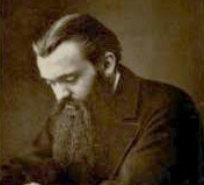
We have no right to believe a thing true because everybody says so unless there are good grounds for believing that some one person at least has the means of knowing what is true, and is speaking the truth so far as he knows it. However many nations and generations of men are brought into the witness-box they cannot testify to anything which they do not know. Every man who has accepted the statement from somebody else, without himself testing and verifying it, is out of court; his word is worth nothing at all. And when we get back at last to the true birth and beginning of the statement, two serious questions must be disposed of in regard to him who first made it: was he mistaken in thinking that he knew about this matter, or was he lying?
9 months 2 weeks ago
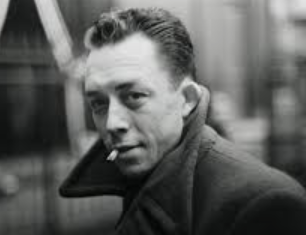
Hungary conquered and in chains has done more for freedom and justice than any people for twenty years. But for this lesson to get through and convince those in the West who shut their eyes and ears, it was necessary, and it can be no comfort to us, for the people of Hungary to shed so much blood which is already drying in our memories. In Europe's isolation today, we have only one way of being true to Hungary, and that is never to betray, among ourselves and everywhere, what the Hungarian heroes died for, never to condone, among ourselves and everywhere, even indirectly, those who killed them. It would indeed be difficult for us to be worthy of such sacrifices.
8 months 3 weeks ago
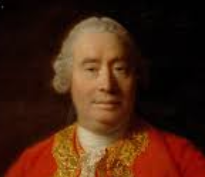
The whole is a riddle, an aenigma, an inexplicable mystery. Doubt, uncertainty, suspence of judgment appear the only result of our most accurate scrutiny, concerning this subject. But such is the frailty of human reason, and such the irresistible contagion of opinion, that even this deliberate doubt could scarcely be upheld; did we not enlarge our view, and opposing one species of superstition to another, set them a quarrelling; while we ourselves, during their fury and contention, happily make our escape, into the calm, though obscure, regions of philosophy.
▼
Source
source
Part XV - General corollary
8 months 3 weeks ago
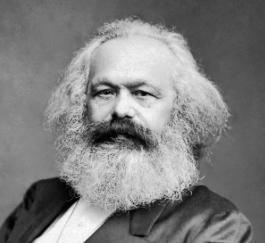
Of all the animals kept by the farmer, the labourer, the instrumentum vocale, was,thenceforth, the most oppressed, the worst nourished, the most brutally treated.
▼
Source
source
Vol. I, Ch. 25, Section 4(e), pg. 742.
7 months 4 days ago
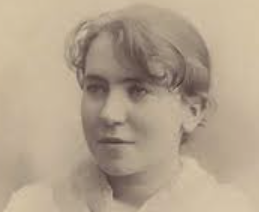
The child shows its individual tendencies in its plays, in its questions, in its association with people and things. But it has to struggle with everlasting external interference in its world of thought and emotion. It must not express itself in harmony with its nature, with its growing personality. It must become a thing, an object. Its questions are met with narrow, conventional, ridiculous replies, mostly based on falsehoods; and, when, with large, wondering, innocent eyes, it wishes to behold the wonders of the world, those about it quickly lock the windows and doors, and keep the delicate human plant in a hothouse atmosphere, where it can neither breathe nor grow freely.
7 months 1 week ago
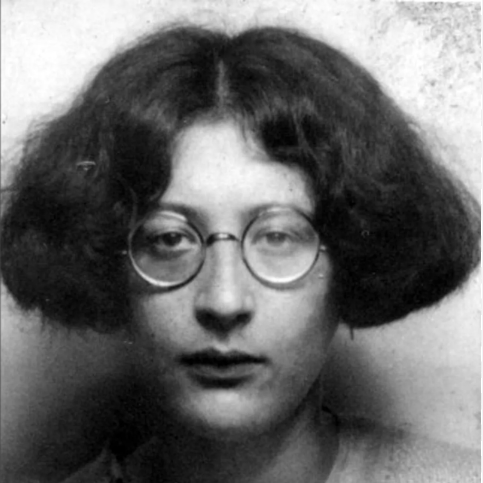
My purpose here is to denounce an idea which seems to be dangerous and false. ... Revolutionary trade unionists and orthodox communists are at one in considering everything that is purely theoretical as bourgeois. ... The culture of a socialist society would be a synthesis of theory and practice; but to synthesize is not the same as to confuse together; it is only contraries that can be synthesized. ... Marx's principal glory is to have rescued the study of societies not only from Utopianism but also and at the same time from empiricism. ... Humanity cannot progress by importing into theoretical study the processes of blind routine and haphazard experiment by which production has so long been dominated. ... The true relation between theory and application only appears when theoretical research has been purged of all empiricism.
▼
Source
source
"The teaching of mathematics," p. 71-72
8 months 2 weeks ago
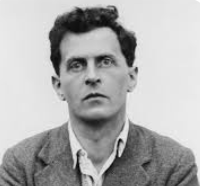
My aim is: to teach you to pass from a piece of disguised nonsense to something that is patent nonsense.
▼
Source
source
§ 464
8 months 3 weeks ago
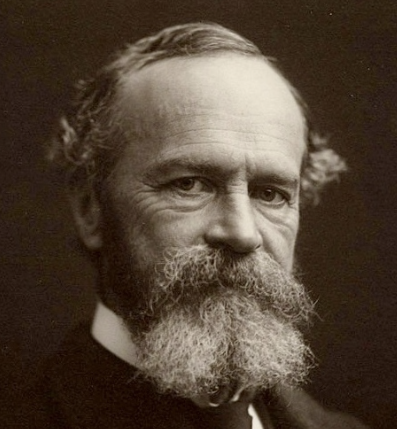
If belief consists in an emotional reaction of the entire man on an object, how can we believe at will? We cannot control our emotions.... But gradually our will can lead us to the same results by a very simple method: we need only in cold blood act as if the thing in question were real, and keep acting as if it were real, and it will infallibly end by growing into such a connection with our life that it will become real. It will become so knit with habit and emotion that our interests in it will be those which characterize belief.
▼
Source
source
Ch. 21
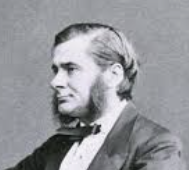
6 months 1 week ago
M. Comte's philosophy, in practice, might be compendiously described as Catholicism minus Christianity.
▼
Source
source
On the Physical Basis of Life
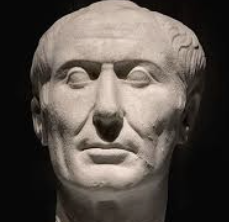
6 months 2 weeks ago
To do two things at once is to do neither.

8 months 3 weeks ago
Men did not make the earth... It is the value of the improvements only, and not the earth itself, that is individual property... Every proprietor owes to the community a ground rent for the land which he holds.
▼
Source
source
Agrarian Justice


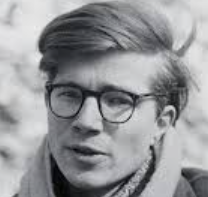
7 months 4 days ago
I must confess that my estimate of Lovecraft would not have pleased his most ardent admirers. The view I expressed in that book was that, while Lovecraft was distinctly a creative genius in his own way, his pessimism should not be taken too seriously; that it was the pessimism of a sick recluse, and had about it an element of rassentiment, a kind of desire to take revenge on the world that rejected him. In short, Lovecraft was a 19th century romantic, born in the wrong time. Most men of genius dislike their own age, but the really great ones impose their own vision on the age. The weak ones turn away into a world of gloomy fantasy.
▼
Source
source
p. 2
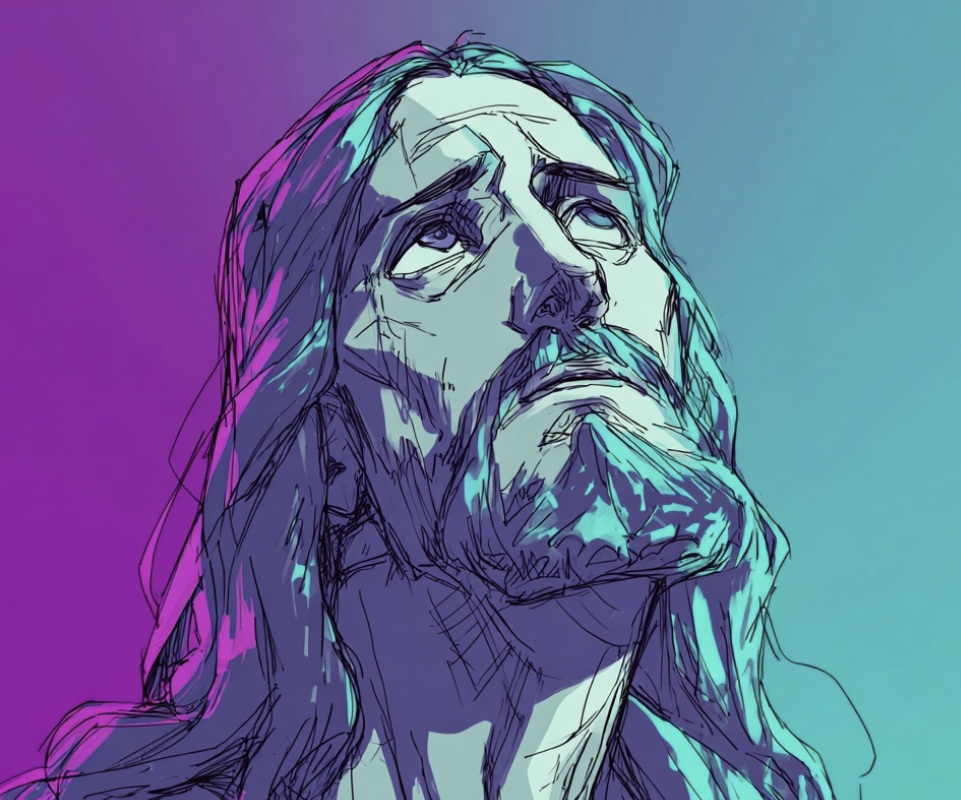
7 months 2 weeks ago
Not everyone who says to Me, 'Lord, Lord,' shall enter the kingdom of heaven, but he who does the will of My Father in heaven. Many will say to Me in that day, 'Lord, Lord, have we not prophesied in Your name, cast out demons in Your name, and done many wonders in Your name?' And then I will declare to them, 'I never knew you; depart from Me, you who practice lawlessness!'
▼
Source
source
Matthew 7:21-23 (NKJV) (Also Luke 6:24; 13:26, 27)
7 months 3 weeks ago
The strides of humanity are slow, they can only be counted in centuries.
▼
Source
source
Act II.

8 months 2 weeks ago
The soul is the prison of the body.
▼
Source
source
Discipline and Punish (1977) as translated by Alan Sheridan, p. 30
4 months 1 week ago
There are certain occupations, even in modern society, which entail living in isolation and do not require great physical or intellectual effort. Such occupations as the service of lighthouses and lightships come to mind. Would it not be possible to place young people who wish to think about scientific problems, especially of a mathematical or philosophical nature, in such occupations? Very few young people with such ambitions have, even during the most productive period of their lives, the opportunity to devote themselves undisturbed for any length of time to problems of a scientific nature.
8 months 1 week ago
When Demaratus was asked whether he held his tongue because he was a fool or for want of words, he replied, "A fool cannot hold his tongue."
▼
Source
source
Of Demaratus
6 months 2 weeks ago
A developed legal system, with elaborate common law rights, and supported by a system of natural justice, was the most precious legacy of our empire. If it were still permissible to defend colonization, I should justify it in terms of this bequest, and at the same time contrast the colonization of Africa with the Soviet "colonization" of eastern Europe, which has advanced not by the generation but by the destruction of law.
▼
Source
source
A colonial inheritance once again cast off', The Times (6 September 1983), p. 10
9 months 1 week ago
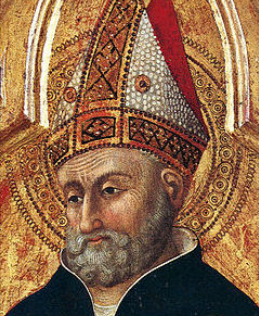
The philosophers who wished us to have the gods for our friends rank the friendship of the holy angels in the fourth circle of society, advancing now from the three circles of society on earth to the universe, and embracing heaven itself. And in this friendship we have indeed no fear that the angels will grieve us by their death or deterioration. But as we cannot mingle with them as familiarly as with men (which itself is one of the grievances of this life), and as Satan, as we read, sometimes transforms himself into an angel of light, to tempt those whom it is necessary to discipline, or just to deceive, there is great need of God's mercy to preserve us from making friends of demons in disguise, while we fancy we have good angels for our friends; for the astuteness and deceitfulness of these wicked spirits is equalled by their hurtfulness.
▼
Source
source
XIX, 9
6 months 1 week ago
Most of us, shrinking from the difficulties and dangers which beset the seeker after original answers to these riddles, are contented to ignore them altogether, or to smother the investigating spirit under the featherbed of respected and respectable tradition. But, in every age, one or two restless spirits, blessed with that constructive genius, which can only build on a secure foundation, or cursed with the mere spirit of scepticism, are unable to follow in the well-worn and comfortable track of their forefathers and contemporaries, and unmindful of thorns and stumbling-blocks, strike out into paths of their own.
▼
Source
source
Ch.2, p. 71
7 months 2 weeks ago
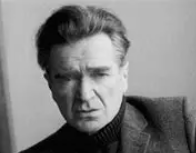
That history just unfolds, independently of a specified direction, of a goal, no one is willing to admit.

5 months 1 week ago
People is the name of the body, State of the spirit, of that ruling person that has hitherto suppressed me.
▼
Source
source
Dover 2005, p. 242
6 months 2 weeks ago
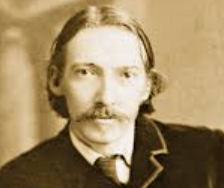
Perpetual devotion to what a man calls his business, is only to be sustained by perpetual neglect of many other things.
▼
Source
source
An Apology for Idlers.
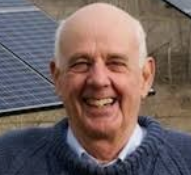
4 months 3 weeks ago
One cannot reduce terror by holding over the world the threat of what it most fears.
7 months 2 weeks ago
Get hold of yourself, be confident once more, don't forget that it is not given to just anyone to have idolized discouragement without succumbing to it.
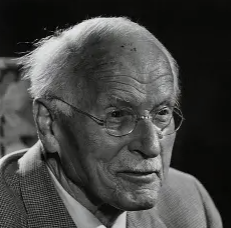
7 months 2 weeks ago
Life has always seemed to me like a plant that lives on its rhizome. Its true life is invisible, hidden in the rhizome. The part that appears above ground lasts only a single summer. What we see is the blossom, which passes. The rhizome remains. Closing lines of the preface
8 months 3 weeks ago
Lincoln is not the product of a popular revolution. This plebeian, who worked his way up from stone-breaker to Senator in Illinois, without intellectual brilliance, without a particularly outstanding character, without exceptional importance-an average person of good will, was placed at the top by the interplay of the forces of universal suffrage unaware of the great issues at stake. The new world has never achieved a greater triumph than by this demonstration that, given its political and social organisation, ordinary people of good will can accomplish feats which only heroes could accomplish in the old world!
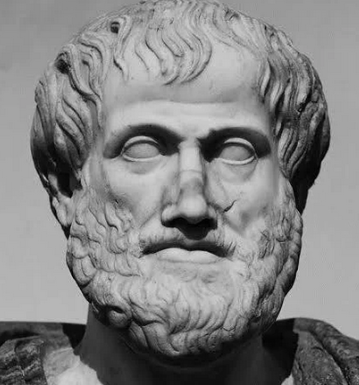
9 months 3 weeks ago
But voice is a certain sound of that which is animated; for nothing inanimate emits a voice; but they are said to emit a voice from similitude, as a pipe, and a lyre, and such other inanimate things, have extension, modulation, and dialect; for thus it appears, because voice, also, has these.
7 months 2 weeks ago
Say what we will, death is the best thing nature has found to please everyone. With each of us, everything vanishes, everything stops forever. What an advantage, what an abuse! Without the least effort on our part, we own the universe, we drag it into our own disappearance. No doubt about it, dying is immoral...
6 months 4 weeks ago
The problem with all this--the problem I discussed in the first lecture--is that if the causes/background conditions distinction is fundamentally subjective, not descriptive of the world in itself, then current philosophical explanations of the metaphysical nature of reference are bankrupt.
▼
Source
source
Lecture II: Realism and Reasonableness

8 months 3 weeks ago
Association, applied to land, shares the economic advantage of large-scale landed property, and first brings to realization the original tendency inherent in land-division, namely, equality. In the same way association also re-establishes, now on a rational basis, no longer mediated by serfdom, overlordship and the silly mysticism of property, the intimate ties of man with the earth, since the earth ceases to be an object of huckstering, and through free labour and free enjoyment becomes once more a true personal property of man.
▼
Source
source
Rent of Land, p. 65.
7 months 4 days ago
Sartre observed that he had never felt so free as during the German occupation when (as a member of the French resistance) he was in constant danger of being arrested and shot. Could there be a more conclusive proof that human beings are freer than they realize, and that their freedom is eroded by habit and laziness?
7 months 4 days ago
The Outsider may be an artist, but the artist is not necessarily an Outsider.
▼
Source
source
Chapter one, The Country of the Blind
8 months 3 weeks ago
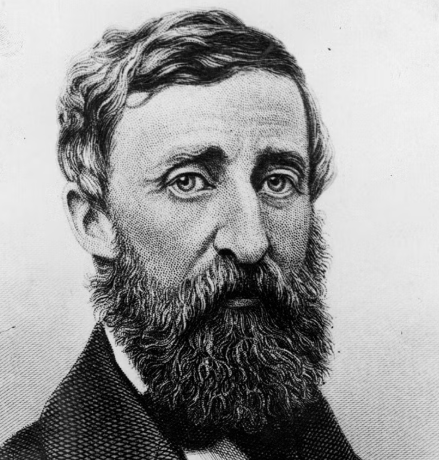
I find it wholesome to be alone the greater part of the time. To be in company, even with the best, is soon wearisome and dissipating. I love to be alone. I never found the companion that was so companionable as solitude. We are for the most part more lonely when we go abroad among men than when we stay in our chambers. A man thinking or working is always alone, let him be where he will... The really diligent student... is as solitary as a dervish in the desert. The farmer can work alone in the field or the woods all day, hoeing or chopping, and not feel lonesome.
9 months 1 week ago
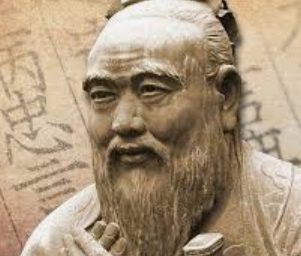
The superior man has neither anxiety nor fear. When internal examination discovers nothing wrong, what is there to be anxious about, what is there to fear?
4 months 3 weeks ago
I wish it were possible to obtain a single amendment to our Constitution. I would be willing to depend on that alone for the reduction of the administration of our government to the genuine principles of its Constitution; I mean an additional article, taking from the federal government the power of borrowing.
▼
Source
source
Letter to John Taylor (26 November 1798), shortened in The Money Masters to "I wish it were possible to obtain a single amendment to our Constitution ... taking from the federal government their power of borrowing".
8 months 2 weeks ago
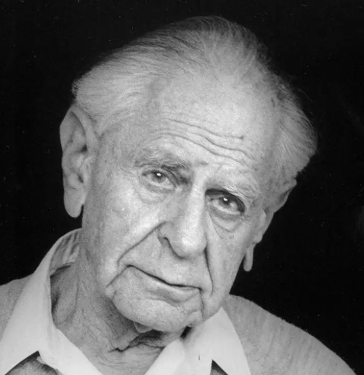
Put in a nut-shell, my thesis amounts to this. The repeated attempts made by Rudolf Carnap to show that the demarcation between science and metaphysics coincides with that between sense and nonsense have failed. The reason is that the positivistic concept of 'meaning' or 'sense' (or of verifiability, or of inductive confirmability, etc.) is inappropriate for achieving this demarcation - simply because metaphysics need not be meaningless even though it is not science. In all its variations demarcation by meaninglessness has tended to be at the same time too narrow and too wide: as against all intentions and all claims, it has tended to exclude scientific theories as meaningless, while failing to exclude even that part of metaphysics which is known as 'rational theology'.
▼
Source
source
Ch 11. "The Demarcation between Science and Metaphysics." (Summary, p. 253)
4 months 2 weeks ago
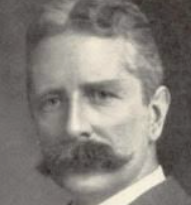
Philosophy has been called the search for the Permanent amid the changing. With this account of philosophy there is no need to quarrel. But having accepted it, a distinction remains to be observed, a distinction of capital importance, which we are in constant danger of forgetting. It is one thing to find the Permanent; it is another thing to find a form of words in which the Permanent shall stand permanently expressed. It is one thing to experience something fixed and changeless; it is another thing to fix this something by a changeless definition. The first may be possible, while the second remains impossible for ever.
5 months 1 week ago
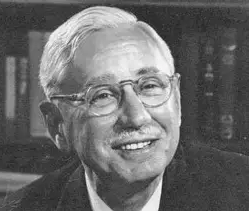
Human progress having reached a high level through respect for the liberty and dignity of men, it has become desirable to re-affirm these evident truths: That differences of race, color, and creed are natural, and that diverse groups, institutions, and ideas are stimulating factors in the development of man; That to promote harmony in diversity is a responsible task of religion and statesmanship; That since no individual can express the whole truth, it is essential to treat with understanding and good will those whose views differ from our own; That by the testimony of history intolerance is the door to violence, brutality and dictatorship; and That the realization of human interdependence and solidarity is the best guard of civilization.
5 months 1 day ago
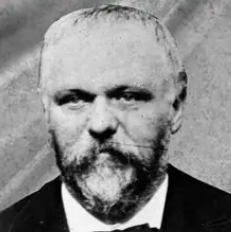
It is very difficult to understand proletarian violence as long as we try to think in terms of the ideas disseminated by bourgeois philosophy; according to this philosophy, violence is a relic of barbarism which is bound to disappear under the progress of enlightenment.
▼
Source
source
p. 65
8 months 3 weeks ago
It is the duty of every patriot to protect his country from its government.
▼
Source
source
Edward Abbey, "A patriot must always be ready to defend his country against his government." as written in "A Voice Crying in the Wilderness" (Vox Clamantis en Deserto): Notes from a Secret Journal (1990), ISBN 0312064888
8 months 3 weeks ago
Have you learned the alphabet of heaven and can count three? Do you know the number of God's family? Can you put mysteries into words? Do you presume to fable of the ineffable? Pray, what geographer are you, that speak of heaven's topography? Whose friend are you that speak of God's personality? ... Tell me of the height of the mountains of the moon, or of the diameter of space, and I may believe you, but of the secret history of the Almighty, and I shall pronounce thee mad.
CivilSimian.com created by AxiomaticPanic, CivilSimian, Kalokagathia