



7 months 4 days ago
A farewell does not dilute the presence of the past; it may make an even deeper presence.
9 months ago
Reading maketh a full man; conference a ready man; and writing an exact man.
▼
Source
source
Of Studies
8 months 3 weeks ago
That virtue we appreciate is as much ours as another's. We see so much only as we possess.
▼
Source
source
June 22, 1839
6 months 3 weeks ago
Art is a human activity consisting in this, that one consciously, by means of certain external symbols, conveys to others the feelings one has experienced, whereby people so infected by these feelings, also experience them.
5 months 2 weeks ago
Man's power appears to have increased out of all proportion to his wisdom. He has never been in a better position to build a healthy, happy, and productive world; yet things have perhaps never seemed so black.
▼
Source
source
Science and Human Behavior
4 months 2 weeks ago
Often injustice lies in what you aren't doing, not only in what you are doing.
▼
Source
source
IX. 5:223
7 months 2 weeks ago
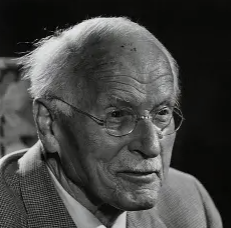
The growth of the mind is the widening of the range of consciousness, and ... each step forward has been a most painful and laborious achievement.
▼
Source
source
p. 340
7 months 3 weeks ago
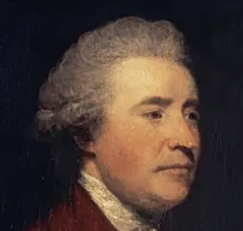
He was not merely a chip of the old Block, but the old Block itself.
▼
Source
source
On Pitt's First Speech (26 February 1781), from Wraxall's Memoirs, First Series, vol. i. p. 342
5 months 1 week ago
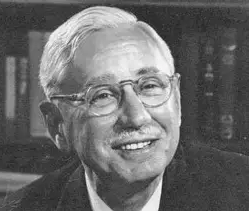
Middle age begins with marriage; for then work and responsibility replace carefree play, passion surrenders to the limitations of social order, and poetry yields to prose.
▼
Source
source
Ch. 3 : On Middle Age
6 months 4 days ago
Life itself is always pulling you away from the understanding of life.
5 months 2 weeks ago
What has philosophy got to do with measuring anything? It's the mathematicians you have to trust, and they measure the skies like we measure a field.
▼
Source
source
Matteo in Concerning the New Star

7 months 2 weeks ago
Tell me how you want to die, and I'll tell you who you are.
8 months 3 weeks ago
I have received, sir, your new book against the human species, and I thank you for it. You will please people by your manner of telling them the truth about themselves, but you will not alter them. The horrors of that human society-from which in our feebleness and ignorance we expect so many consolations-have never been painted in more striking colours: no one has ever been so witty as you are in trying to turn us into brutes: to read your book makes one long to go on all fours. Since, however, it is now some sixty years since I gave up the practice, I feel that it is unfortunately impossible for me to resume it: I leave this natural habit to those more fit for it than are you and I.
▼
Source
source
Letter to Jean-Jacques Rousseau, August 30, 1755 referring to Rousseau's Discourse on Inequality.
8 months 2 weeks ago
Scientific theories are distinguished from myths... in being criticizable, and... open to modifications... They can be neither verified nor probabilified.
6 months 2 weeks ago
Logos is the formal cause of the kosmos and all things, responsible for their nature and configuration.
▼
Source
source
p. 37
6 months 3 weeks ago
Everything comes in time to him who knows how to wait.
▼
Source
source
Bk. X, ch. 16
7 months 1 week ago
The Catholic solution of our problem, of our unique vital problem, the problem of the immortality and eternal salvation of the soul, satisfies the will, and therefore satisfies life; but the attempt to rationalize it by means of a dogmatic theology fails to satisfy the reason. And reason has its exigencies as imperious as those of life. It is no use seeking to force ourselves to consider as super-rational what clearly appears to us to be contra-rational... Infallibility, a notion of Hellenic origin, is in its essence a rationalistic category.
5 months 1 week ago
Childhood may be defined as the age of play; therefore some children are never young, and some adults are never old.
▼
Source
source
Ch. 1 : Our life begins
7 months 3 days ago
I believe in the possible realization of a world in which man can be much, even if he has little; a world in which the dominant motivation of existence is not consumption; a world in which "man" is the end, first and last; a world in which man can find the way of giving a purpose to his life as well as the strength to live free and without illusions.
7 months 4 days ago
For Jung, the 'psychic world' (i.e. the world of the mind) was an independent reality, and it was possible to travel there and make the acquaintance of its inhabitants.
▼
Source
source
p. 164
7 months 4 days ago
Depression is a narcissistic malady.
7 months 2 weeks ago
You have dreamed of setting the world ablaze, and you have not even managed to communicate your fire to words, to light up a single one!

8 months 2 days ago
Those alone are dear to Divinity who are hostile to injustice.
▼
Source
source
Pythagorean Ethical Sentences From Stobæus
7 months 2 weeks ago
The detour to ideality leads to coinciding with oneself, that is, to certainty, which remains the guide and guarantee of the whole spiritual adventure of being.
▼
Source
source
The Levinas reader by Levinas, Emmanuel p. 89

8 months 1 week ago
The core of ethics runs deep in our species and is common to human beings everywhere. It survives the most appalling hardships and the most ruthless attempts to deprive human beings of their humanity. Nevertheless, some people resist the idea that his core has a biological basis which we have inherited from our pre-human ancestors.
▼
Source
source
Chapter 2, The Biological Basis Of Ethics, p. 27

8 months 2 weeks ago
My intention was not to deal with the problem of truth, but with the problem of the truth-teller, or of truth telling... [W]ho is able to tell the truth, about what, with what consequences, and with what relations to power. ...[W]ith the question of the importance of telling the truth, knowing who is able to tell the truth, and knowing why we should tell the truth, we have the roots of what we could call the 'critical' tradition in the West.

8 months 3 weeks ago
We are faced with the paradoxical fact that education has become one of the chief obstacles to intelligence and freedom of thought.
▼
Source
source
Ch. 12: Free Thought and Official Propaganda
7 months 1 week ago
Whenever a human being, through the commission of a crime, has become exiled from good, he needs to be reintegrated with it through suffering. The suffering should be inflicted with the aim of bringing the soul to recognize freely some day that its infliction was just. This reintegration with the good is what punishment is. Every man who is innocent, or who has finally expiated guilt, needs to be recognized as honourable to the same extent as anyone else.
4 months 3 weeks ago
When common words are appropriated as technical terms, their meaning may be modified, and must be rigorously fixed.
9 months 2 weeks ago
The division between human and robot is perhaps not as significant as that between intelligence and nonintelligence.
8 months 3 weeks ago
These considerations did not make us overlook the folly of premature attempts to dispense with the inducements of private interest in social affairs, while no substitute for them has been or can be provided: but we regarded all existing institutions and social arrangements as being (in a phrase I once heard from Austin) "merely provisional," and we welcomed with the greatest pleasure and interest all socialistic experiments by select individuals (such as the Co-operative Societies), which, whether they succeeded or failed, could not but operate as a most useful education of those who took part in them, by cultivating their capacity of acting upon motives pointing directly to the general good, or making them aware of the defects which render them and others incapable of doing so.
▼
Source
source
(pp. 233-234)
6 months 1 week ago
If Man be separated by no greater structural barrier from the brutes than they are from one another-then it seems to follow that if any process of physical causation can be discovered by which the genera and families of ordinary animals have been produced, that process of causation is amply sufficient to account for the origin of Man.
▼
Source
source
Ch.2, p. 125
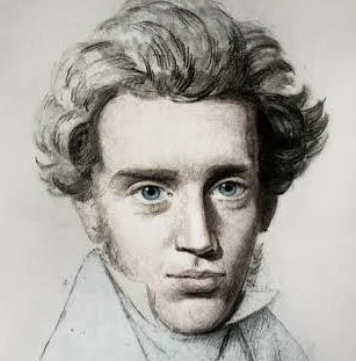
9 months 3 weeks ago
It occurs to me that artists go forward by going backward, something which I have nothing against intrinsically when it is a reproduced retreat - as is the case with the better artists. But it does not seem right that they stop with the historical themes already given and, so to speak, think that only these are suitable for poetic treatment, because these particular themes, which intrinsically are no more poetic than others, are now again animated and inspirited by a great poetic nature. In this case the artists advance by marching on the spot. - Why are modern heroes and the like not just as poetic? Is it because there is so much emphasis on clothing the content in order that the formal aspect can be all the more finished?
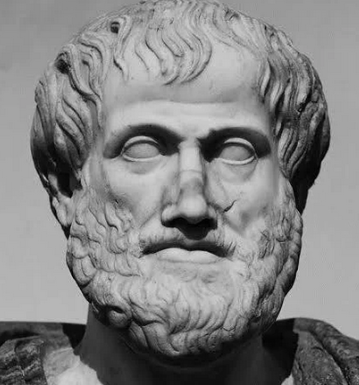
9 months 3 weeks ago
The roots of education ... are bitter, but the fruit is sweet.
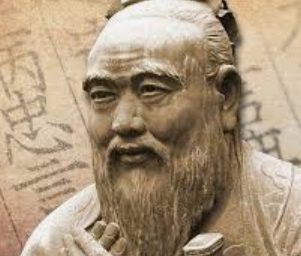
9 months 1 week ago
To rank the effort above the prize may be called love.
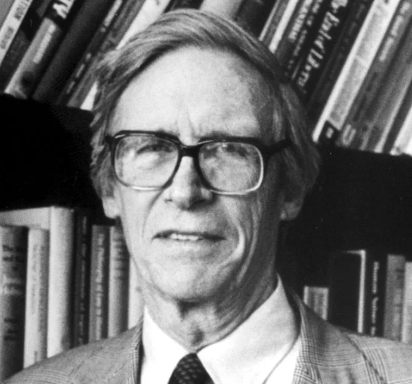
8 months 2 weeks ago
The fault of the utilitarian doctrine is that it mistakes impersonality for impartiality.
▼
Source
source
Chapter III, Section 30, pg. 190
8 months 3 weeks ago
And now, at half-past ten o'clock, I hear the cockerels crow in Hubbard's barns, and morning is already anticipated. It is the feathered, wakeful thought in us that anticipates the following day.
▼
Source
source
July 11, 1851
7 months 3 weeks ago
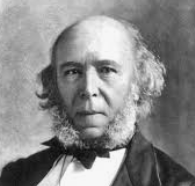
Man needed one moral constitution to fit him for his original state; he needs another to fit him for his present state; and he has been, is, and will long continue to be, in process of adaptation. And the belief in human perfectibility merely amounts to the belief that, in virtue of this process, man will eventually become completely suited to his mode of life. Progress, therefore, is not an accident, but a necessity. Instead of civilization being artificial, it is part of nature; all of a piece with the development of the embryo or the unfolding of a flower. The modifications mankind have undergone, and are still undergoing, result from a law underlying the whole organic creation; and provided the human race continues, and the constitution of things remains the same, those modifications must end in completeness.
▼
Source
source
Pt. I, Ch. 2 : The Evanescence of Evil, concluding paragraph
7 months 2 weeks ago
Lucidity's task: to attain a correct despair, an Olympian ferocity.
4 months 3 weeks ago
We collect individuals into 'kinds' by applying to them the Idea of Likeness.
6 months 1 week ago
I neither deny nor affirm the immortality of man. I see no reason for believing in it, but, on the other hand, I have no means of disproving it.
8 months 2 weeks ago
Essentially the fault lies in the fact that the democratic political process is at best regulated rivalry; it does not even in theory have the desirable properties that price theory ascribes to truly competitive markets.
▼
Source
source
Chapter IV, Section 36, p. 226
CivilSimian.com created by AxiomaticPanic, CivilSimian, Kalokagathia