Maybe around the 1850's this was true...for religious types....



There will be a time when those trying to turn the world into a Colosseum for their own amusement will be raw meat thrown to the wolves themselves, and the rest of us will watch, as justice is served, with a clean conscience.
The word 'definition' has come to have a dangerously reassuring sound, owing no doubt to its frequent occurrence in logical and mathematical writings.
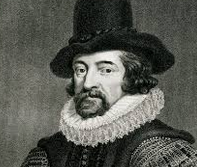
The human understanding is moved by those things most which strike and enter the mind simultaneously and suddenly, and so fill the imagination; and then it feigns and supposes all other things to be somehow, though it cannot see how, similar to those few things by which it is surrounded.

Art can speak its own language only as long as the images are alive which refuse and refute the established order.
It is necessary that every man be surpassingly temperate. That person would most of all be a man of this sort if he were superior to money, which is what corrupts all men, and if, without caring about his life, he bestowed his pains on things that are just and pursued virtue.
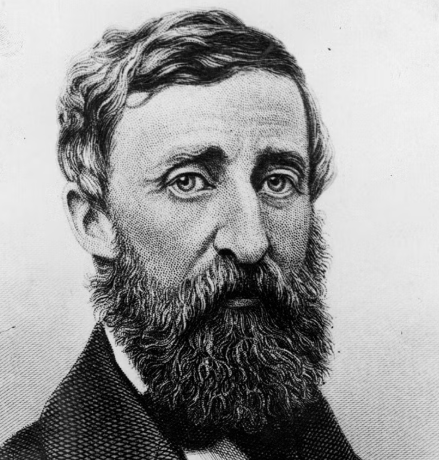
Men and boys are learning all kinds of trades but how to make men of themselves. They learn to make houses; but they are not so well housed, they are not so contented in their houses, as the woodchucks in their holes. What is the use of a house if you haven't got a tolerable planet to put it on? - If you cannot tolerate the planet that it is on? Grade the ground first. If a man believes and expects great things of himself, it makes no odds where you put him, or what you show him ... he will be surrounded by grandeur. He is in the condition of a healthy and hungry man, who says to himself, - How sweet this crust is!
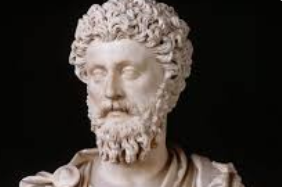
Rememberest the gods, and that they wish not to be flattered, but wish all reasonable beings to be made like themselves; and... rememberest that what does the work of a fig-tree is a fig-tree, and that what does the work of a dog is a dog, and that what does the work of a bee is a bee, and that what does the work of a man is a man.
Every innovation scraps its immediate predecessor and retrieves still older figures - it causes floods of antiques or nostalgic art forms and stimulates the search for museum pieces.
My friends, I tell you that hitherto you have been prevented from even knowing what happiness really is, solely in consequence of the errors - gross errors - that have been combined with the fundamental notions of every religion that has hitherto been taught to men. And, in consequence, they have made man the most inconsistent, and the most miserable being in existence. By the errors of these systems he has been made a weak, imbecile animal; a furious bigot and fanatic or a miserable hypocrite; and should these qualities be carried, not only into the projected villages, but into Paradise itself, a Paradise would no longer be found!

If you don't want to explode with rage, leave your memory alone, abstain from burrowing there.
So it is with minds. Unless you keep them busy with some definite subject that will bridle and control them, they throw themselves in disorder hither and yon in the vague field of imagination. ..And there is no mad or idle fancy that they do no bring forth in the agitation.
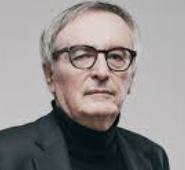
The irony of scientific progress is that in solving human problems it creates problems that are not humanly soluble. Science has given humans a kind of power over the natural world achieved by no other animal. It has not given humans the ability to remodel the planet according to their wishes. The Earth is not a clock that can be wound up and stopped at will. A living system, the planet will surely rebalance itself. It will do so, however, without any regard for humans.
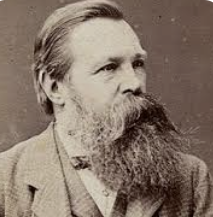
The abolition of private property is, doubtless, the shortest and most significant way to characterize the revolution in the whole social order which has been made necessary by the development of industry - and for this reason it is rightly advanced by communists as their main demand.
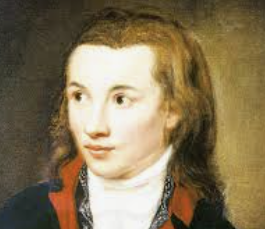
Nothing is more indispensable to true religiosity than a mediator that links us with divinity.
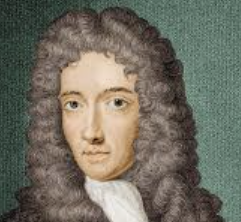
I fear that the chief Reason why Chymists have written so obscurely of their three Principles, may be, That not having Clear and Distinct Notions of them themselves, they cannot write otherwise then Confusedly of what they but Confusedly Apprehend. Not to say that divers of them, being Conscious to the Invalidity of their Doctrine, might well enough discerne that they could scarce keep themselves from being confuted, but by keeping themselves from being clearly understood.
Cock-sure certainty is the source of much that is worst in our present world, and it is something of which the contemplation of history ought to cure us, not only or chiefly because there were wise men in the past, but because so much that was thought wisdom turned out to be folly - which suggests that much of our own supposed wisdom is no better. I do not mean to maintain that we should lapse into a lazy scepticism. We should hold our beliefs, and hold them strongly. Nothing great is achieved without passion, but underneath the passion there should always be that large impersonal survey which sets limits to actions that our passions inspire.
Many who have not learned wisdom live wisely, and many who do the basest deeds can make most learned speeches.
In writing what he does not speak, what he would never say and, in truth, would probably never even think, the author of the written speech is already entrenched in the posture of the sophist; the man of non-presence and non-truth. Writing is thus already on the scene. The incompatibility between written and the true is clearly announced at the moment Socrates starts to recount the way in which men are carried out themselves by pleasure, become absent from themselves, forget themselves and die in the thrill of song.
It is an odd fact that anyone who wishes to start a war must always make it appear that he is fighting in a just cause even if the real motive is naked aggression. Fortunately for the would-be aggressor, a "just cause" is very easy to find.
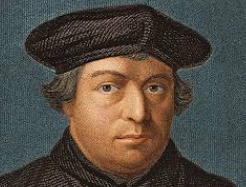
Lying and guile need only to be revealed and recognized to be undone. When once lying is recognized as such, it needs no second stroke; it falls of itself and vanishes in shame.
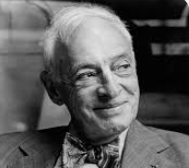
In politics continental Europe was infantile - horrifying. What America lacked, for all its political stability, was the capacity to enjoy intellectual pleasures as though they were sensual pleasures. This is what Europe offered, or was said to offer.
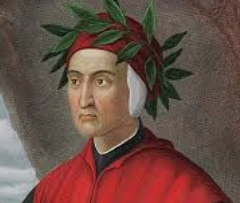
In his arms, my lady lay asleep, wrapped in a veil. He woke her then and trembling and obedient. She ate that burning heart out of his hand; Weeping I saw him then depart from me.
No explanation is required for Holy Writing. Whoso speaks truly is full of eternal life, and wonderfully related to genuine mysteries does his Writing appear to us, for it is a Concord from the Symphony of the Universe.
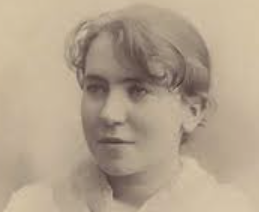
In conclusion, I wish to say that my attitude to the whole tragic question is not dictated by my Jewish antecedents. It is motivated by my abhorrence of injustice, and man's inhumanity to man. It is because of this that I have fought all my life for anarchism which alone will do away with the horrors of the capitalist régime and place all races and peoples, including the Jews, on a free and equal basis. Until then I consider it highly inconsistent for socialists and anarchists to discriminate in any shape or form against the Jews.
You have stolen my face from me: you know it and I no longer do.
Logos is the formal cause of the kosmos and all things, responsible for their nature and configuration.
To imagine that Caesar aspired to do something in the way Alexander did it - and this is what almost all historians have believed - is definitely to give up trying to understand him. Caesar is very nearly the opposite of Alexander. ...[I]t is not merely a universal kingdom that Caesar has in view. His purpose is a deeper one. He wants a Roman empire which does not live on Rome, but on the periphery, on the provinces, and this implies the complete supersession of the City-State. It implies a State in which the most diverse peoples collaborate, in regard to which all feel solidarity.
When Descartes said, "Conquer yourself rather than the world," what he meant was, at bottom, - the same - that we should act without hope. Marxists, to whom I have said thus have answered: "Your action is limited, obviously, by your death: but you can rely upon the help of others.
Radio comes to us ostensibly with person to person directness that is private and intimate, while in more urgent fact, it is really a subliminal echo chamber of magic power to touch remote and forgotten chords.
Mr. Darwin's hypothesis is not, so far as I am aware, inconsistent with any known biological fact; on the contrary, if admitted, the facts of Development, of Comparative Anatomy, of Geographical Distribution, and of Palaeontology, become connected together, and exhibit a meaning such as they never possessed before; and I, for one, am fully convinced that if not precisely true, that hypothesis is as near an approximation to the truth as, for example, the Copernican hypothesis was to the true theory of the planetary motions.
Why is it so hard to keep the mind concentrated, and to live up to our good resolutions? The problem is the basically mechanical nature of our left-brain consciousness. We have a kind of robot servant who does things for us: we learn to type or drive a car, painfully and consciously, then our robot takes over, and does it far more quickly and efficiently. Because man is the most complex creature on Earth, he is forced to rely on his robot far more than other animals. The result is that, whenever he gets tired, the robot takes over. For the modern city dweller, most of his everyday living is done by the robot. This is why it takes an emergency to concentrate the mind 'wonderfully', and why we forget so quickly.
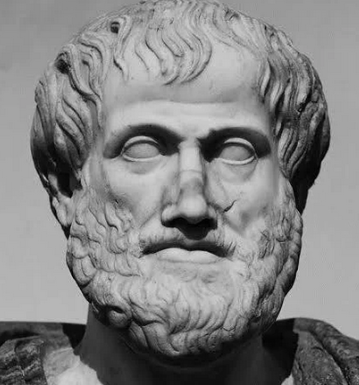
Since the science of nature is conversant with magnitudes, motion, and time, each of which must necessarily be either infinite or finite...we should speculate the infinite, and consider whether it is or not; and if it is what it is. ...All those who appear to have touched on a philosophy of this kind... consider it as a certain principle of beings. Some, indeed, as the Pythagoreans and Plato, consider it, per se, not as being an accident to any thing else, but as having an essential subsistence... the Pythagoreans... consider the infinite as subsisting in sensibles; for they do not make number to be separate; and they assert that what is beyond the heavens is infinite; but Plato says that beyond the heavens there is not any body, nor ideas, because these are no where: he affirms, however, that the infinite is both in sensibles, and in ideas. ...Plato establishes two infinities, viz. the great and the small.

Socrates' way of life is the consequence of his recognition that we can know what it is that we do not know about the most important things and that we are by nature obliged to seek that knowledge.
Incredible that the prospect of having a biographer has made no one renounce having a life.
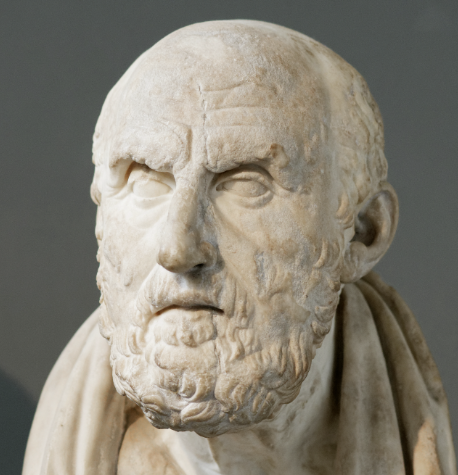
We should infer in the case of a beautiful dwelling-place that it was built for its owners and not for mice; we ought, therefore, in the same way to regard the universe as the dwelling-place of the gods.
My path was not the normal one of professors of philosophy. I did not intend to become a doctor of philosophy by studying philosophy (I am in fact a doctor of medicine) nor did I by any means, intend originally to qualify for a professorship by a dissertation on philosophy. To decide to become a philosopher seemed as foolish to me as to decide to become a poet. Since my schooldays, however, I was guided by philosophical questions. Philosophy seemed to me the supreme, even the sole, concern of man. Yet a certain awe kept me from making it my profession.
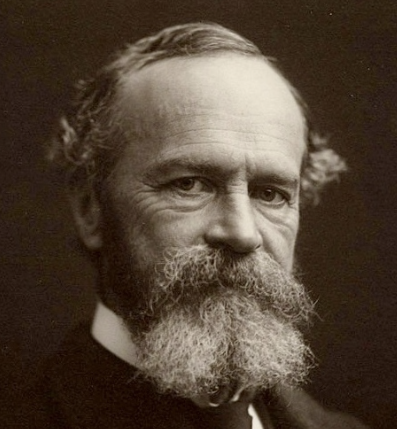
We can act as if there were a God; feel as if we were free; consider Nature as if she were full of special designs; lay plans as if we were to be immortal; and we find then that these words do make a genuine difference in our moral life.
It is more easy to get a favor from Fortune than to keep it.
He knows his own strength; he knows that he was born to carry burdens.
The doctrines of Jesus are simple, and tend all to the happiness of man.
The difference between the artificial and the artful in the artistic lies on the surface in the former there is a split between what is overly done and what is intended. The appearance is one of cordiality; the intent is that of gaining favor. Whenever this split between what is done and its purpose exists, there is insincerity, a trick, a simulation of an act that intrinsically has another effect. When the natural and the cultivated blend into one, acts of social intercourse are works of art. The animating impulsion of genial friendship and the deed performed completely coincide without intrusion of ulterior motive. Awkwardness may prevent adequacy of expression.
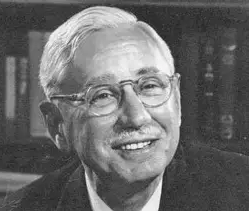
Most of our literature and social philosophy after 1850 was the voice of freedom against authority, of the child against the parent, of the pupil against the teacher. Through many years I shared in that individualistic revolt. I do not regret it; it is the function of youth to defend liberty and innovation, of the old to defend order and tradition, and of middle age to find a middle way. But now that I too am old, I wonder whether the battle I fought was not too completely won. Let us say humbly but publicly that we resent corruption in politics, dishonesty in business, faithlessness in marriage, pornography in literature, coarseness in language, chaos in music, meaninglessness in art.
The potential of any new technology is always dissipated by its users involvement in its predecessors.

This is precisely what is decisive in Nietzsche's conception of art, that he sees it in its essential entirety in terms of the artist; this he does consciously and in explicit opposition to that conception of art which represents it in terms of those who "enjoy" and "experience" it.That is a guiding principle of Nietzsche's teaching on art: art must be grasped in terms of creators and producers, not recipients. Nietzsche expresses it unequivocally in the following words (WM, 811): "Our aesthetics heretofore has been a woman's aesthetics, inasmuch as only the recipients of art have formulated their experiences of 'what is beautiful.' In all philosophy to date the artist is missing." Philosophy of art means "aesthetics" for Nietzsche too-but masculine aesthetics, not feminine aesthetics. The question of art is the question of the artist as the productive, creative one; his experiences of what is beautiful must provide the standard.
Dear rulers ... I maintain that the civil authorities are under obligation to compel the people to send their children to school. ... If the government can compel such citizens as are fit for military service to bear spear and rifle, to mount ramparts, and perform other martial duties in time of war, how much more has it a right to compel the people to send their children to school, because in this case we are warring with the devil, whose object it is secretly to exhaust our cities and principalities of their strong men.
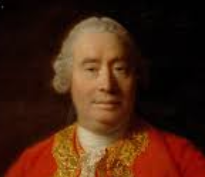
This avidity alone, of acquiring goods and possessions for ourselves and our nearest friends, is insatiable, perpetual, universal, and directly destructive of society.
CivilSimian.com created by AxiomaticPanic, CivilSimian, Kalokagathia