

8 months ago
Lucid intervals and happy pauses.
▼
Source
source
History of King Henry VII, III
7 months 3 weeks ago
Man's chief difference from the brutes lies in the exuberant excess of his subjective propensities - his preeminence over them simply and solely in the number and in the fantastic and unnecessary character of his wants, physical, moral, aesthetic, and intellectual. Had his whole life not been a quest for the superfluous, he would never have established himself as inexpugnably as he has done in the necessary.
▼
Source
source
"Reflex Action and Theism"
4 months 5 days ago
Macaulay is like a book in breeches...He has occasional flashes of silence, that make his conversation perfectly delightful.
▼
Source
source
Vol. I, ch. 11, p. 415
5 months 3 weeks ago
Just then another visitor entered the drawing room: Prince Andrew Bolkónski, the little princess' husband. He was a very handsome young man, of medium height, with firm, clearcut features. Everything about him, from his weary, bored expression to his quiet, measured step, offered a most striking contrast to his quiet, little wife. It was evident that he not only knew everyone in the drawing room, but had found them to be so tiresome that it wearied him to look at or listen to them. And among all these faces that he found so tedious, none seemed to bore him so much as that of his pretty wife. He turned away from her with a grimace that distorted his handsome face, kissed Anna Pávlovna's hand, and screwing up his eyes scanned the whole company.
▼
Source
source
Bk. I, Ch. IV
6 months 3 weeks ago
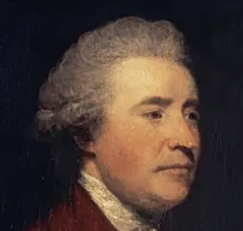
We have an enemy, to whose virtues we can owe nothing; but on this occasion we are infinitely obliged to one of his vices. We owe more to his insolence than to our own precaution.
▼
Source
source
p.3

6 months 1 week ago
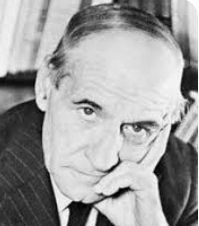
This grave dissociation of past and present is the generic fact of our time and the cause of the suspicion, more or less vague, which gives rise to the confusion characteristic of our present-day existence. We feel that we actual men have suddenly been left alone on the earth; that the dead did not die in appearance only but effectively; that they can no longer help us. Any remains of the traditional spirit have evaporated. Models, norms, standards are no use to us. We have to solve our problems without any active collaboration of the past, in full actuality, be they problems of art, science, or politics. The European stands alone, without any living ghosts by his side; like Peter Schlehmil he has lost his shadow. This is what always happens when midday comes.
▼
Source
source
"The Dehumanisation of Art"; Ortega y Gasset later used this passage in The Revolt of the Masses (1929), quoting it in Ch. III: The Height Of The Times
7 months 3 weeks ago
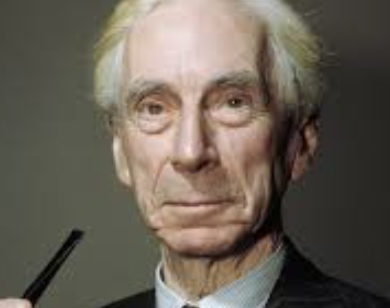
People seem good while they are oppressed, but they only wish to become oppressors in their turn: life is nothing but a competition to be the criminal rather than the victim.
▼
Source
source
Letter to Ottoline Morrell, 17 December, 1920
6 months 3 weeks ago
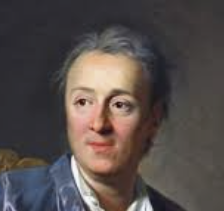
We are far more liable to catch the vices than the virtues of our associates.
▼
Source
source
As quoted in Thesaurus of Epigrams: A New Classified Collection of Witty Remarks, Bon Mots and Toasts (1942) by Edmund Fuller
4 months 1 week ago
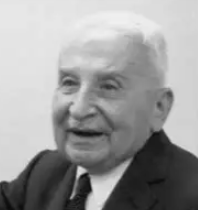
All rational action is economic. All economic activity is rational action. All rational action is in the first place individual action. Only the individual thinks. Only the individual reasons. Only the individual acts.
▼
Source
source
Part II : The Economics of a Socialist Community, § I : The Economics of an Isolated Socialist Community, Ch. 5 : The Nature of Economic Activity, p. 97
7 months 3 weeks ago
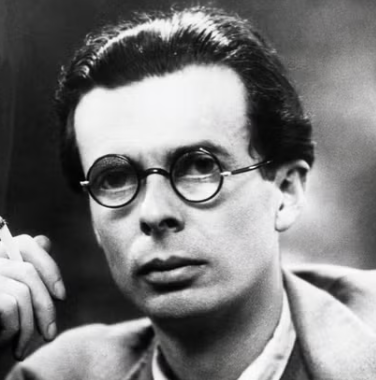
We have been given free will, in order that we may will our self-will out of existence and so come to live continuously in a 'state of grace.' All our actions must be directed, in the last analysis, to making ourselves passive in relation to the activity and the being of divine reality. We are, as it were, aeolian harps, endowed with the power either to expose themselves to the wind of the Spirit or to shut themselves away from it.
5 months 4 days ago
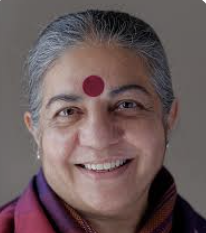
When Bill Gates pours money into Africa for feeding the poor in Africa and preventing famine, he's pushing the failed Green Revolution, he's pushing chemicals, pushing GMOs, pushing patterns.
▼
Source
source
On Bill Gate's philanthropic activities, from "Bill Gates is continuing the work of Monsanto, Vandana Shiva tells France24" France24
8 months 3 weeks ago
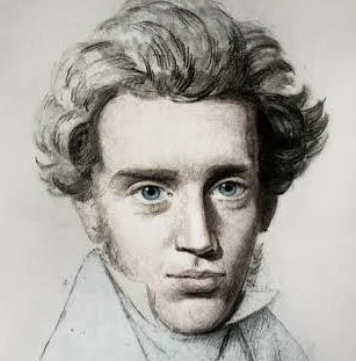
A white spot is on the horizon. There it is. A terrible storm is brewing. But no one sees the white spot or has any inkling of what it might mean. But no (this would not be the most terrible situation either), no, there is one person who sees it and knows what it means-but he is a passenger. He has no authority on the ship, can take no action. ... The fact that in Christendom there is visible on the horizon a white speck which means that a storm is threatening-this I knew; but, alas, I was an am only a passenger.
7 months 3 weeks ago
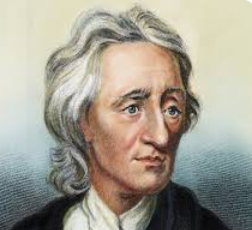
Philosophy seems to me on the whole a rather hopeless business.
▼
Source
source
Letter to Gilbert Murray, December 28, 1902
7 months 3 weeks ago
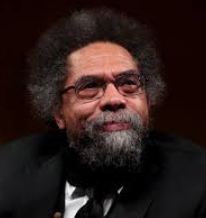
Religion, which should most distinguish us from the beasts, and ought most particularly elevate us, as rational creatures, above brutes, is that wherein men often appear most irrational, and more senseless than beasts.
▼
Source
source
Book IV, Ch. 18
7 months 2 weeks ago
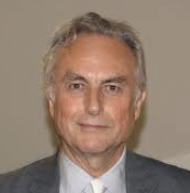
Humility is the fruit of inner security and wise maturity. To be humble is to be so sure of one's self and one's mission that one can forego calling excessive attention to one's self and status. And, even more pointedly, to be humble is to revel in the accomplishments or potentials of others -- especially those with whom one identifies and to whom one is linked organically.
▼
Source
source
(p38)
5 months 2 weeks ago
There is no general reason to expect evolution to be progressive - even in the weak, value-neutral sense. There will be times when increased size of some organ is favoured and other times when decreased size is favoured. Most of the time, average-sized individuals will be favoured in the population and both extremes will be penalised. During these times the population exhibits evolutionary stasis (i.e., no change) with respect to the factor being measured. If we had a complete fossil record and looked for trends in some particular dimension, such as leg length, we would expect to see periods of no change alternating with fitful continuations or reversals in direction - like a weathervane in changeable, gusty weather.
6 months 2 weeks ago
If the sensation that precedes the present by half a second were still immediately before me, then on the same principle, the sensation preceding that would be immediately present, and so on ad infinitum. Now, since there is a time [period], say a year, at the end of which an idea is no longer ipso facto present, it follows that this is true of any finite interval, however short.

6 months 2 weeks ago
Illusion begets and sustains the world; we do not destroy one without destroying the other. Which is what I do every day. An apparently ineffectual operation, since I must begin all over again the next day.
7 months 3 weeks ago
A habit of basing convictions upon evidence, and of giving to them only that degree of certainty which the evidence warrants, would, if it became general, cure most of the ills from which the world is suffering. But at present, in most countries, education aims at preventing the growth of such a habit, and men who refuse to profess belief in some system of unfounded dogmas are not considered suitable as teachers of the young.
▼
Source
source
preface xxiii-xxiv
5 months 3 weeks ago
Nothing is wholly obvious without becoming enigmatic. Reality itself is too obvious to be true.

5 months ago
Money is everywhere but so is poetry. What we lack are the poets.
▼
Source
source
Poets
5 months 3 weeks ago
Three days later the little princess was buried, and Prince Andrei went up the steps to where the coffin stood, to give her the farewell kiss. And there in the coffin was the same face, though with closed eyes. "Ah, what have you done to me?" it still seemed to say, and Prince Andrei felt that something gave way in his soul and that he was guilty of a sin he could neither remedy nor forget.
▼
Source
source
Bk. IV, Ch. 9
6 months 2 weeks ago
Third, consider the insistency of an idea. The insistency of a past idea with reference to the present is a quantity which is less, the further back that past idea is, and rises to infinity as the past idea is brought up into coincidence with the present.
5 months 2 weeks ago
The likelihood is that, in 100,000 years time, we shall either have reverted to wild barbarism, or else civilisation will have advanced beyond all recognition - into colonies in outer space, for instance. In either case, evolutionary extrapolations from present conditions are likely to be highly misleading.
3 months 3 weeks ago
To SEE and accept the boundaries of the human mind without vain rebellion, and in these severe limitations to work ceaselessly without protest - this is where man's first duty lies.
5 months 2 weeks ago
The unique innovation of the phonetic alphabet released the Greeks from the universal acoustic spill of tribal societies.
▼
Source
source
(p. 70)
8 months 1 week ago
The silent treasuring up of knowledge; learning without satiety; and instructing others without being wearied: which one of these things belongs to me? To keep silently in mind what one has seen and heard, to study hard and never feel contented, to teach others tirelessly; have I done (all of) these things?
7 months 2 weeks ago
The belief in a political Utopia is especially dangerous. This is possibly connected with the fact that the search for a better world, like the investigation of our environment, is (if I am correct) one of the oldest and most important of all the instincts.
6 months 1 week ago
The sin of pride may be a small or a great thing in someone's life, and hurt vanity a passing pinprick or a self-destroying or even murderous obsession. Possibly, more people kill themselves and others out of hurt vanity than out of envy, jealousy, malice or desire for revenge.
▼
Source
source
The Philosopher's Pupil (1983) p. 76.
6 months 3 days ago
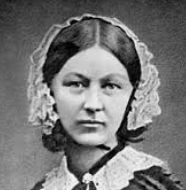
I use the word nursing for want of a better. It has been limited to signify little more than the administration of medicines and the application of poultices. It ought to signify the proper use of fresh air, light, warmth, cleanliness, quiet, and the proper selection and administration of diet - all at the least expense of vital power to the patient.
▼
Source
source
Notes on Nursing
7 months 4 weeks ago
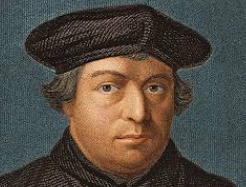
Tell your master that if there were as many devils at Worms as tiles on its roofs, I would enter.
▼
Source
source
Psalm. Ein feste Burg ist unser Gott (translated by Frederic H. Hedge), Reported in Bartlett's Familiar Quotations, 10th ed. (1919).
3 months 2 weeks ago
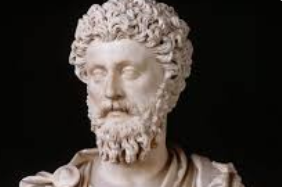
Whatever happens to you has been waiting to happen since the beginning of time. The twining strands of fate wove both of them together: your own existence and the things that happen to you.
▼
Source
source
V. 8, trans. Gregory Hays
6 months 3 weeks ago
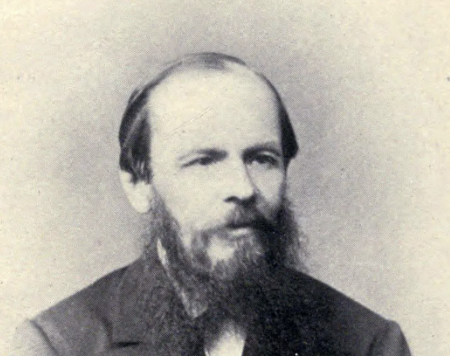
When... in the course of all these thousands of years has man ever acted in accordance with his own interests?
▼
Source
source
Part 1, Chapter 7
6 months 2 weeks ago
Executions, far from being useful examples to the survivors, have, I am persuaded, a quite contrary effect, by hardening the heart they ought to terrify. Besides, the fear of an ignominious death, I believe, never deterred anyone from the commission of a crime, because in committing it the mind is roused to activity about present circumstances.
▼
Source
source
Letter 19
7 months 1 week ago
There are many who know many things, yet are lacking in wisdom.
4 months 1 week ago
Thus the radii of all education run together into one center which is called personality.
▼
Source
source
p. 25
8 months 1 week ago
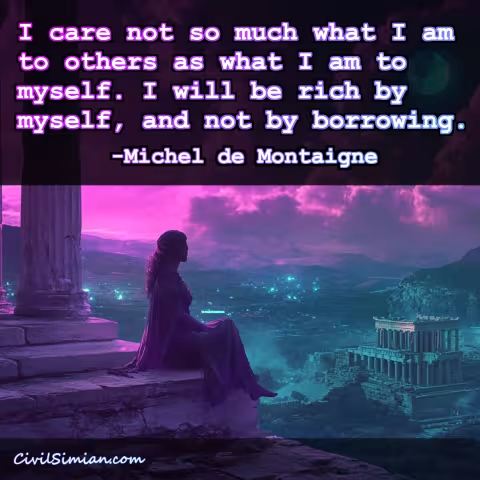
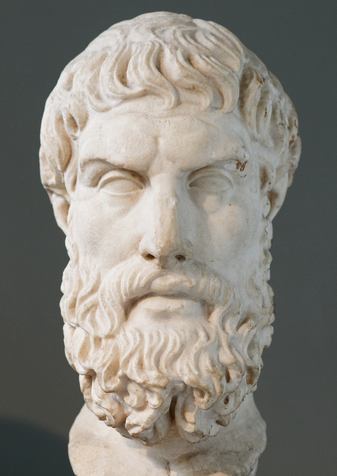
A prudent man, in order to secure his tranquility, will consult his natural disposition in the choice of his plan of life. If, for example, he be persuaded that he should be happier in a state of marriage than in celibacy, he ought to marry; but if he be convinced that matrimony would be an impediment to his happiness, he ought to remain single.
5 months 3 weeks ago
Where questions of style and exposition are concerned I try to follow a simple maxim: if you can't say it clearly you don't understand it yourself.
▼
Source
source
P. x.

4 months 1 week ago
Who is there that can recognize real intellect, and do reverence to it; and discriminate it well from sham intellect, which is so much more abundant, and deserves the reverse of reverence? He that himself has it!-One really human Intellect, invested with command, and charged to reform Downing Street for us, would continually attract real intellect to those regions, and with a divine magnetism search it out from the modest corners where it lies hid. And every new accession of intellect to Downing Street would bring to it benefit only, and would increase such divine attraction in it, the parent of all benefit there and elsewhere!

4 months 2 weeks ago
If you look at the sociology of populism in the United States, it is tied most closely to population density, which... is correlated... to these types of cultural differences... to belief... in traditional cultural values, in family, in religion and the like, and conversely to... belief in immigration and diversity as strengths... This is the fundamental division that's taken hold of the United States. It has been augmented by technology because the internet has succeeded in... destroying every other source of authority that used to filter news and facts and information that... formed the basis of a democratic ability to have political discourse.
▼
Source
source
25:32
7 months 3 weeks ago
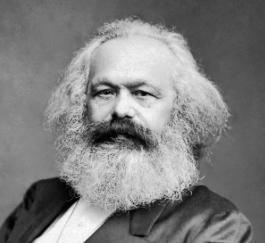
There are, besides, eternal truths, such as Freedom, Justice, etc., that are common to all states of society. But Communism abolishes eternal truths, it abolishes all religion, and all morality, instead of constituting them on a new basis; it therefore acts in contradiction to all past historical experience.
▼
Source
source
Section 2, paragraph 63
8 months 2 weeks ago
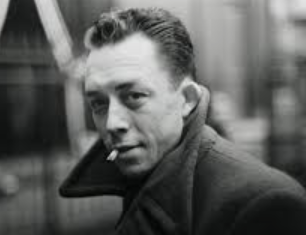
Nothing is harder to understand than a symbolic work. A symbol always transcends the one who makes use of it and makes him say in reality more than he is aware of expressing.
6 months 3 weeks ago
Granted I am a babbler, a harmless vexatious babbler, like all of us. But what is to be done if the direct and sole vocation of every intelligent man is babble, that is, the intentional pouring of water through a sieve?
▼
Source
source
Part 1, Chapter 5
8 months 2 weeks ago
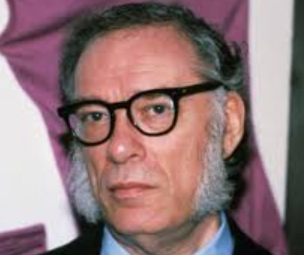
The undramatic fact is that I just think and think and think until I have something [for a story], and there is nothing marvelous or artistic about the phenomenon.
5 months 3 weeks ago
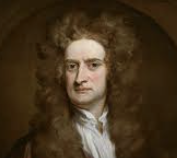
The alteration of motion is ever proportional to the motive force impressed; and is made in the direction of the right line in which that force is impressed.
▼
Source
source
Laws of Motion, II
7 months 2 weeks ago
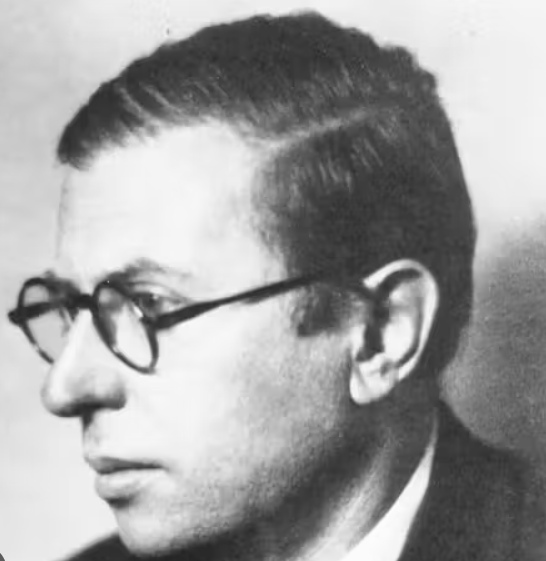
His business is here, it is here that he is despised and vilified, it is here that he must carry out his undertaking.
▼
Source
source
p. 67
6 months 3 weeks ago
The acts of France were acts of hostility to this country; her whole system, every speech, every decree, every act, bespoke an intention preclusive of accommodation. No man, he would venture to say, had a more lively sense of the importance of the question before the House, or of the evils of war, than himself. A war with France, under such circumstances as now governed her conduct, must be terrible, but peace much more so. A nation that had abandoned all its valuable distinctions, arts, sciences, religion, law order, every thing but the sword, was most formidable and dreadful to all nations composed of citizens who only used soldiers as a defence; as such, France should be resisted with spirit and temper, without fear or scruple.
▼
Source
source
Speech in the House of Commons upon the outbreak of war with France (12 February 1793)
CivilSimian.com created by AxiomaticPanic, CivilSimian, Kalokagathia