

7 months 2 weeks ago
The suppression of liberty is always likely to be irrational.
▼
Source
source
Chapter IV, Section 33, p. 210
8 months 3 weeks ago
Irony limits, finitizes, and circumscribes and thereby yields truth, actuality, content; it disciplines and punishes and thereby yields balance and consistency.
8 months 1 week ago
Although the Law of Reason is common, the majority of people live as though they had an understanding of their own.
6 months 2 weeks ago
For it is not the bare Words, but the Scope of the writer that giveth true light, by which any writing is to bee interpreted; and they that insist upon single Texts, without considering the main Designe, can derive no thing from them clearly; but rather by casting atomes of Scripture, as dust before mens eyes, make everything more obscure than it is; an ordinary artifice of those who seek not the truth, but their own advantage.
▼
Source
source
The Third Part, Chapter 43, p. 331
8 months 1 week ago
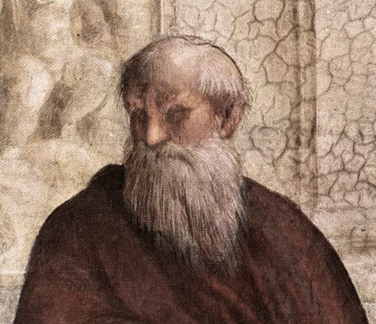
When the soul has descended into generation (from its first divine condition) she partakes of evil, and is carried a great way into a state the opposite of her first purity and integrity, to be entirely merged in which, is nothing more than to fall into a dark mire. ...The soul dies as much as it is possible for the soul to die: and the death to her is, while baptized or immersed in the present body, to descend into matter, and be wholly subjected by it; and after departing thence to lie there til it shall arise and turn its face away from the abhorrent filth. This is what is meant by falling asleep in Hades, of those who have come there.
4 months 2 weeks ago
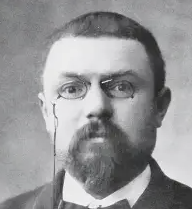
Is not my present nearer my past of yesterday than the present of Sirius?

7 months 2 weeks ago
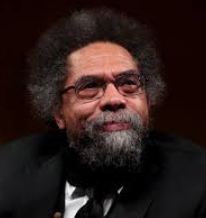
Humility is the fruit of inner security and wise maturity. To be humble is to be so sure of one's self and one's mission that one can forego calling excessive attention to one's self and status. And, even more pointedly, to be humble is to revel in the accomplishments or potentials of others -- especially those with whom one identifies and to whom one is linked organically.
▼
Source
source
(p38)
6 months 4 weeks ago
Even to have come forth is something, since I see that being able to conquer is placed in the hands of fate. However, there was in me, whatever I was able to do, that which no future century will deny to be mine, that which a victor could have for his own: Not to have feared to die, not to have yielded to any equal in firmness of nature, and to have preferred a courageous death to a noncombatant life.
3 months 3 weeks ago
Note that Unitarianism rejects concepts such as Hell, the Trinity, Original Sin, the infallability of the Bible, as well as claims that any one religion has a monopoly on theological truth and the Holy Spirit. At the same time, it accepts the notion that reason, rational thought, science, and philosophy can coexist with faith in God.
▼
Source
source
Thomas Jefferson, letter to Benjamin Waterhouse (26 June 1822), published in The Works of Thomas Jefferson in Twelve Volumes, Federal Edition, Paul Leicester Ford, ed., New York: G. P. Putnam's Sons, 1904, Vol. 12, pp. 241-243.
7 months 3 weeks ago
It is an uphill race, and a race against time, for if the American form of democracy overtakes us first, the majority will no more relax their despotism than a single despot would. But our only chance is to come forward as Liberals, carrying out the democratic idea, not as Conservatives, resisting it.
▼
Source
source
Letter to Henry Fawcett (5 February 1860), quoted in Michael St. John Packe, The Life of John Stuart Mill (1954), p. 418
5 months 2 weeks ago
To explain the origin of the DNA/protein machine by invoking a supernatural Designer is to explain precisely nothing, for it leaves unexplained the origin of the Designer.
▼
Source
source
Chapter 6 "Origins and Miracles" (p. 141)
7 months 3 weeks ago
There is something feeble and a little contemptible about a man who cannot face the perils of life without the help of comfortable myths. Almost inevitably some part of him is aware that they are myths and that he believes them only because they are comforting. But he dare not face this thought! Moreover, since he is aware, however dimly, that his opinions are not rational, he becomes furious when they are disputed.
▼
Source
source
p. 219-220
3 months 2 weeks ago
As long as one does not call his own position into question but regards it as absolute, while interpreting his opponents' ideas as a mere function of the social positions they occupy, the decisive step forward has not yet been taken.
7 months 3 weeks ago
The second is the partiality for unity proper to the philosophical mind, whence this wide-spread canon has flown forth: principles are not to be multiplied beyond supreme necessity, to which we give in our adhesion, not because we have insight into causal unity in the world either by reason or experience, but as seeking it by an impulse of the intellect which seems to itself to have by thus much advanced in the explication of phenomena, by as much as it is granted to it to descend from the same principle to a greater number of consequences,
4 months 1 week ago
It is a fact that Mussolini entered the scene of world politics as an ally of the democracies, while Lenin entered it as a virtual ally of imperial Germany.

7 months 2 weeks ago
There is but one good; that is God. Everything else is good when it looks to Him and bad when it turns from Him.
▼
Source
source
Ch. 11
7 months 3 weeks ago
The great end of all human industry, is the attainment of happiness. For this were arts invented, sciences cultivated, laws ordained, and societies modelled, by the most profound wisdom of patriots and legislators.
▼
Source
source
Part I, Essay 16: The Stoic
8 months 3 weeks ago
Arrogance on the part of the meritorious is even more offensive to us than the arrogance of those without merit: for merit itself is offensive.
5 months 2 weeks ago
It's misleading to suppose there's any basic difference between education & entertainment. This distinction merely relieves people of the responsibility of looking into the matter.
▼
Source
source
(1957) from "Classroom Without Walls", Explorations Vol. 7, 1957; reprinted in Explorations in Communication ed. E. Carpenter & M. McLuhan, (Boston: Beacon, 1960); and again in McLuhan: Hot and Cool ed. G. E. Stearn (NY: Dial, 1967).
7 months 4 weeks ago
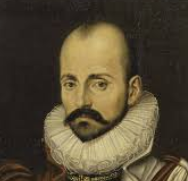
For my own part, I cannot without grief see so much as an innocent beast pursued and killed that has no defence, and from which we have received no offence at all.
▼
Source
source
Ch. 11, tr. Cotton, 1685
3 months 2 weeks ago
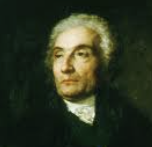
There is a great analogy between grace and genius, for genius is a grace. The real man of genius is the one who acts by grace or by impulsion, without ever contemplating himself and without ever saying to himself: Yes! It is by grace that I act.
▼
Source
source
p. 37
4 months 2 weeks ago
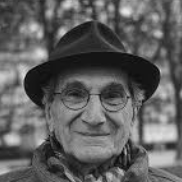
The old form of trade union, which was born in the nineteenth century and aimed primarily at negotiating wages for a specific trade is no longer sufficient. First of all, as we have been arguing, the old trade unions are not able to represent the unemployed, the poor, or even the mobile and flexible post-Fordist workers with short term contracts, all of whom participate actively in social production and increase social wealth. Second, the old unions are divided according to the various products and tasks defined in the heyday of industrial production - a miners' union, a pipefitters' union, a machinists' union and so forth. Today, insofar as the conditions and the relations of labor are becoming common, these traditional divisions (or even newly defined divisions) no longer make sense and serve only as an obstacle. Finally the old unions have become purely economic, not political, organization.
▼
Source
source
136
7 months 3 weeks ago
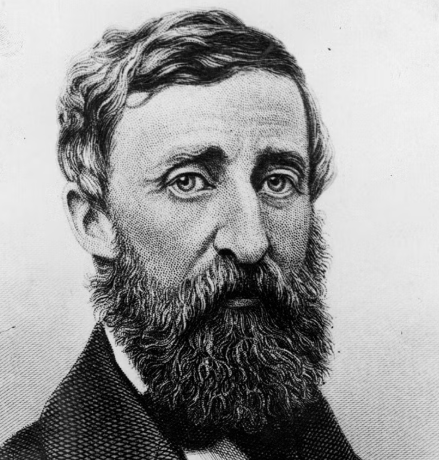
I take it for granted, when I am invited to lecture anywhere, - for I have had a little experience in that business, - that there is a desire to hear what I think on some subject, though I may be the greatest fool in the country, - and not that I should say pleasant things merely, or such as the audience will assent to; and I resolve, accordingly, that I will give them a strong dose of myself. They have sent for me, and engaged to pay for me, and I am determined that they shall have me, though I bore them beyond all precedent.
▼
Source
source
p. 484
7 months 2 weeks ago
All human activities are equivalent ... and ... all are on principle doomed to failure.
▼
Source
source
Conclusion, II
8 months 6 days ago
Remember that it is not he who gives abuse or blows who affronts, but the view we take of these things as insulting. When, therefore, any one provokes you, be assured that it is your own opinion which provokes you.
▼
Source
source
(20).
7 months 3 weeks ago
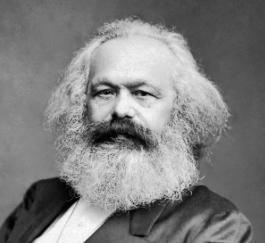
It is a bad thing to perform menial duties even for the sake of freedom; to fight with pinpricks, instead of with clubs. I have become tired of hypocrisy, stupidity, gross arbitrariness, and of our bowing and scraping, dodging, and hair-splitting over words. Consequently, the government has given me back my freedom.
▼
Source
source
Letter from Marx to Arnold Ruge (25 January 1843)
7 months 4 weeks ago
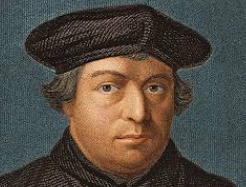
And I myself, in Rome, heard it said openly in the streets, "If there is a hell, then Rome is built on it." That is, "After the devil himself, there is no worse folk than the pope and his followers."
▼
Source
source
Against the Roman Papacy, An Institution of the Devil
7 months 3 weeks ago
Association, applied to land, shares the economic advantage of large-scale landed property, and first brings to realization the original tendency inherent in land-division, namely, equality. In the same way association also re-establishes, now on a rational basis, no longer mediated by serfdom, overlordship and the silly mysticism of property, the intimate ties of man with the earth, since the earth ceases to be an object of huckstering, and through free labour and free enjoyment becomes once more a true personal property of man.
▼
Source
source
Rent of Land, p. 65.
7 months 3 weeks ago
Let a man take time enough for the most trivial deed, though it be but the paring of his nails. The buds swell imperceptibly, without hurry or confusion; as if the short spring days were an eternity.
▼
Source
source
Pearls of Thought (1881) p. 175
6 months 3 weeks ago
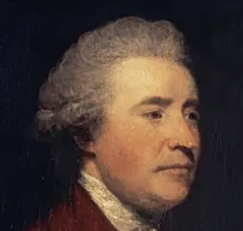
In effect, to follow, not to force the public inclination; to give a direction, a form, a technical dress, and a specific sanction, to the general sense of the community, is the true end of legislature.

7 months 1 week ago
Whoever cultivates the golden mean avoids both the poverty of a hovel and the envy of a palace.
▼
Source
source
Book II, ode x, line 5

7 months 2 weeks ago
The human body is essentially something other than an animal organism.
▼
Source
source
Letter on Humanism
7 months 2 weeks ago
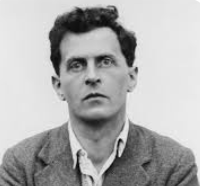
If I have exhausted the justifications, I have reached bedrock and my spade is turned. Then I am inclined to say: "This is simply what I do."
▼
Source
source
§ 217
4 months ago
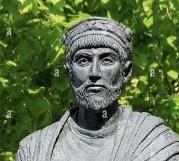
My own belief is, if philosophers be entitled to any credit, that the Sun is the common parent of all men, to use a comprehensive term. It is a true proverb, "Man begets man, and so does the Sun:" but souls that luminary showers down upon earth, both out of himself, and out of the other gods: which souls show to what end they were propagated by the kind of life that they pursue. But well is it for that man who, from the third generation backwards, and a long succession of years, has been dedicated to the service of this god; yet neither is that person's condition to be despised who, feeling in his own nature that he is a servant of this deity, alone, or with few on his side, shall have devoted himself to his worship.
8 months 2 weeks ago
He is a dreamer of ancient times, or rather, of the myths of what ancient times used to be. Such men are harmless in themselves, but their queer lack of realism makes them fools for others.
7 months 3 weeks ago
Life is just a notebook with blank pages. Every time we make a mistake, the pages get stained and living in it becomes impossible.
7 months 3 weeks ago
"...the church of England, when she baptizes any one, makes him not a Christian [...] the church of England is mistaken, and makes none but socinians Christians"
▼
Source
source
279
4 months 1 week ago
Childhood may be defined as the age of play; therefore some children are never young, and some adults are never old.
▼
Source
source
Ch. 1 : Our life begins
6 months 2 weeks ago
Fashion is something barbarous, for it produces innovation without reason and imitation without benefit.
▼
Source
source
Ch. VII
8 months 3 weeks ago
The truly good and wise man will bear all kinds of fortune in a seemly way, and will always act in the noblest manner that the circumstances allow.

6 months 2 weeks ago
Creation is in fact a fault, man's famous sin thereby appearing as a minor version of a much graver one. What are we guilty of, except of having followed, more or less slavishly, the Creator's example? Easy to recognize in ourselves the fatality which was His: not for nothing have we issued from the hands of a wicked and woebegone god, a god accursed.

7 months 2 weeks ago
One can say that the author is an ideological product, since we represent him as the opposite of his historically real function. (When a historically given function is represented in a figure that inverts it, one has an ideological production.) The author is therefore the ideological figure by which one marks the manner in which we fear the proliferation of meaning.
▼
Source
source
What is an author?
6 months 2 weeks ago
The notion of nothingness is not characteristic of laboring humanity: those who toil have neither time nor inclination to weigh their dust; they resign themselves to the difficulties or the doltishness of fate; they hope: hope is a slave's virtue.
7 months 3 weeks ago
I did not know the way in which, among the ordinary English, the absence of interest in things of an unselfish kind, except occasionally in a special thing here and there, and the habit of not speaking to others, nor much even to themselves, about the things in which they do feel interest, causes both their feelings and their intellectual faculties to remain undeveloped, or to develope themselves only in some single and very limited direction; reducing them, considered as spiritual beings, to a kind of negative existence.
▼
Source
source
(p. 59)
7 months 3 weeks ago
In former days, men sold themselves to the Devil to acquire magical powers. Nowadays they acquire those powers from science, and find themselves compelled to become devils. There is no hope for the world unless power can be tamed, and brought into the service, not of this or that group of fanatical tyrants, but of the whole human race, white and yellow and black, fascist and communist and democrat; for science has made it inevitable that all must live or all must die.
▼
Source
source
Ch. 2: Leaders and Followers
CivilSimian.com created by AxiomaticPanic, CivilSimian, Kalokagathia