I think it would be better to call it subjective and particular rather than artificial.


1. Find a subject you care about.2. Do not ramble, though.3. Keep it simple.4. Have the guts to cut.5. Sound like yourself.6. Say what you mean to say.7. Pity the readers.
We are interested in others, when they are interested in us.
Before Christianity suicide was not in any way troubling. Our lives were our own, and when we tired of them we were at liberty to end them. One might think that as Christianity has declined, this freedom would be reclaimed. Instead secular creeds have sprung up, in which each person's life belongs to everyone else. To hand back the gift of life because it does not please is still condemned as a kind of blasphemy, though the offended deity is now humanity instead of God.
Meanwhile, hold fast to this thought, and grip it close: yield not to adversity; trust not to prosperity; keep before your eyes the full scope of Fortune's power, as if she would surely do whatever is in her power to do.
A vague uncritical idealism always lends itself to ridicule and too much of it might be a danger to mankind, leading it round in a futile wild-goose chase for imaginary ideals.
Socrates is reported to have replied, when a certain person complained of having received no benefit from his travels: "It serves you right! You travelled in your own company!"
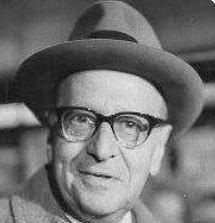
Logical empiricism holds the view, notwithstanding some its assertions, that the forms of knowledge and consequently the relations of man to nature and to other men never change. According to rationalism, too, all subjective and objective potentialities are rooted in insights which the individual already possesses, but rationality uses existing objects as well as the active inner striving and ideas of man to construct standards for the future. In this regard, it is not so closely associated with the present order as is empiricism.
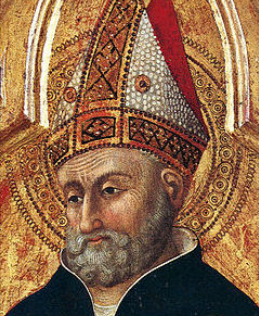
You can live, provided you live; that is, you can live for ever, provided you live a good life.
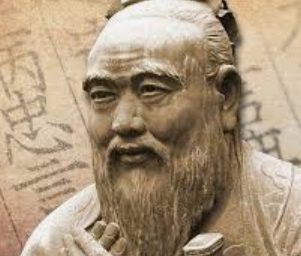
Being in humaneness is good. If we select other goodness and thus are far apart from humaneness, how can we be the wise? The opening phrase of this chapter after which the chapter is named in Chinese.

In order to properly understand the big picture, everyone should fear becoming mentally clouded and obsessed with one small section of truth.
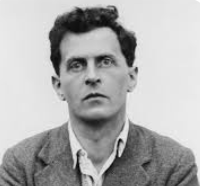
There is no more light in a genius than in any other honest man-but he has a particular kind of lens to concentrate this light into a burning point.
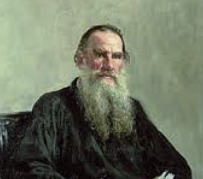
In spite the mountains of books written about art, no precise definition of art has been constructed. And the reason for this is that the conception of art has been based on the conception of beauty.
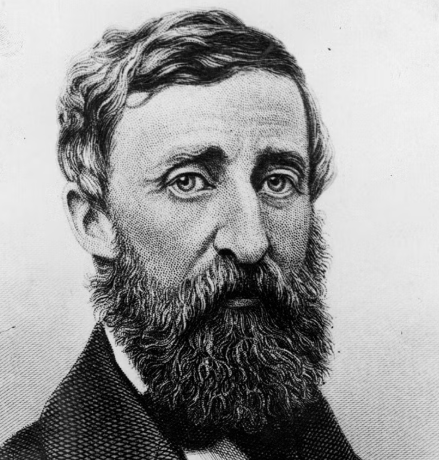
For many years I was self-appointed inspector of snowstorms and rainstorms, and did my duty faithfully, though I never received one cent for it.
I hold the brimming wineglass and relive the toils of my grandfathers and great-grandfathers. The sweat of my labor runs down like a fountain from my tall, intoxicated brow. I am a sack filled with meat and bones, blood, sweat, and tears, desires and visions.
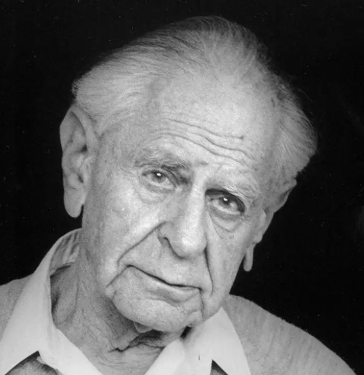
Appealing to his [Einstein's] way of expressing himself in theological terms, I said: If God had wanted to put everything into the universe from the beginning, He would have created a universe without change, without organisms and evolution, and without man and man's experience of change. But he seems to have thought that a live universe with events unexpected even by Himself would be more interesting than a dead one.
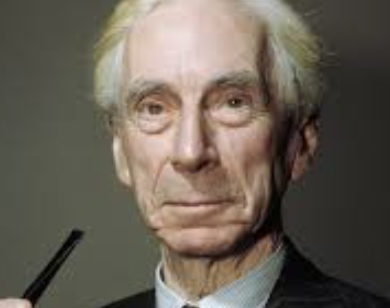
Pi's face was masked, and it was understood that none could behold it and live. But piercing eyes looked out from the mask, inexorable, cold and enigmatic.
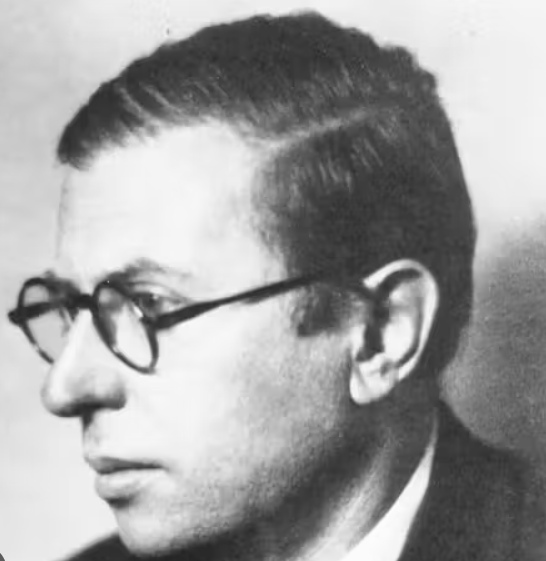
I know. I know that I shall never again meet anything or anybody who will inspire me with passion. You know, it's quite a job starting to love somebody. You have to have energy, generosity, blindness. There is even a moment, in the very beginning, when you have to jump across a precipice: if you think about it you don't do it. I know I'll never jump again.
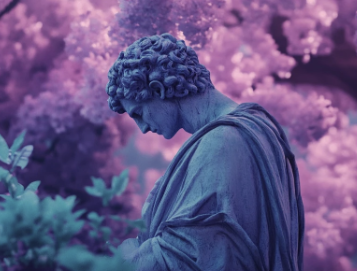
And yet it is hard to believe that anything in nature could stand revealed as solid matter.The lightning of heaven goes through the walls of houses,like shouts and speech; iron glows white in fire; red-hot rocks are shattered by savage steam; hard gold is softened and melted down by heat; chilly brass, defeated by heat, turns liquid; heat seeps through silver, so does piercing cold;by custom raising the cup, we feel them bothas water is poured in, drop by drop, above.
He is happy, whose circumstances suit his temper; but he is more excellent, who can suit his temper to any circumstances.

Everything in the universe goes by indirection. There are no straight lines.
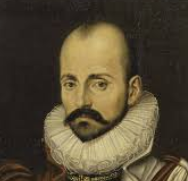
Is it not a noble farce, wherein kings, republics, and emperors have for so many ages played their parts, and to which the whole vast universe serves for a theatre?

Psychoanalysis will be entirely discredited one of these days, no doubt about it. Which will not keep it from destroying our last vestiges of naivete. After psychoanalysis, we can never again be innocent.
The superior man is satisfied and composed; the mean man is always full of distress. The virtuous is frank and open; the non-virtuous is secretive and worrying.
You will have seen that my brother died suddenly in Marseilles. I inherit from him a title, but not a penny of money, as he was bankrupt. A title is a great nuisance to me, and I am at a loss what to do, but at any rate I do not wish it employed in connection with any of my literary work. There is, so far as I know, only one method of getting rid of it, which is to be attainted of high treason, and this would involve my head being cut off on Tower Hill. This method seems to me perhaps somewhat extreme...
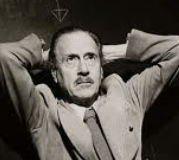
Logos is the formal cause of the kosmos and all things, responsible for their nature and configuration.
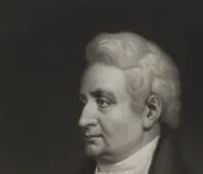
When I hear any man talk of an unalterable law, the only effect it produces upon me is to convince me that he is an unalterable fool.
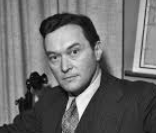
There is only one purpose to which a whole society can be directed by a deliberate plan. That purpose is war, and there is no other.

The society adopts neither rites nor priesthood, and it will never lose sight of the resolution not to advance any thing as a society inconvenient to any sect or sects, in any time or country, and under any government. It will be seen that it is so much the more easy for the society to keep within this circle, because, that the dogmas of the Theophilanthropists are those upon which all the sects have agreed, that their moral is.that upon which there has never been the least dissent; and that the name they have taken expresses the double end of all the sects, that of leading to the adoration of God and love of man.
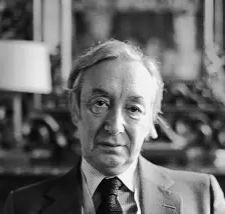
If now I...say "Stealing money is wrong," I produce a sentence which has no factual meaning - that is, expresses no proposition which can be either true or false. It is as if I had written "Stealing money!!" - where the shape and thickness of the exclamation marks show, by a suitable convention, that a special sort of moral disapproval is the feeling which is being expressed.
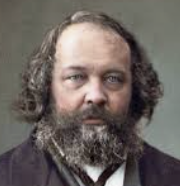
Not official revolutionary commissars in any sort of sashes, but rather revolutionary propagandists are to be dispatched into all the provinces and communes and particularly among the peasants who cannot be revolutionised by principles, nor by the decrees of any dictatorship, but only by the act of revolution itself, that is to say, by the consequences that will inevitably ensure in every commune from complete cessation of the legal and official existence of the state.
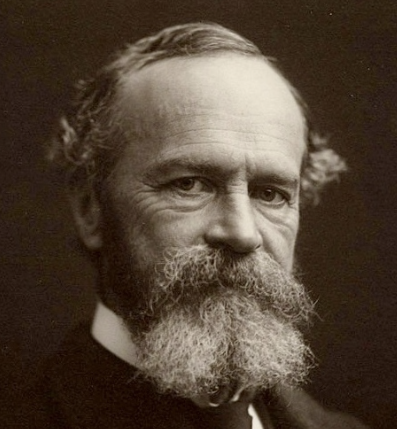
Every one is familiar with the phenomenon of feeling more or less alive on different days. Every one knows on any given day that there are energies slumbering in him which the incitements of that day do not call forth, but which he might display if these were greater. Most of us feel as if we lived habitually with a sort of cloud weighing on us, below our highest notch of clearness in discernment, sureness in reasoning, or firmness in deciding. Compared with what we ought to be, we are only half-awake. Our fires are damped, our drafts are checked. We are making use of only a small part of our possible mental and physical resources.
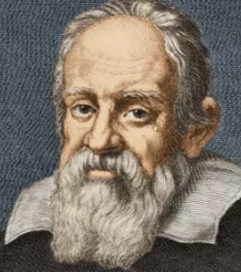
Indeed, I think we may concede to our Academician, without flattery, his claim that in the principle [principio, i. e., accelerated motion] laid down in this treatise he has established a new science dealing with a very old subject. Observing with what ease and clearness he deduces from a single principle the proofs of so many theorems, I wonder not a little how such a question escaped the attention of Archimedes, Apollonius, Euclid and so many other mathematicians and illustrious philosophers, especially since so many ponderous tomes have been devoted to the subject of motion.
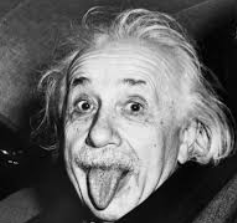
Man tries to make for himself in the fashion that suits him best a simplified and intelligible picture of the world; he then tries to some extent to substitute this cosmos of his for the world of experience, and thus to overcome it. This is what the painter, the poet, the speculative philosopher, and the natural scientist do, each in his own fashion. Each makes this cosmos and its construction the pivot of his emotional life, in order to find in this way the peace and security which he cannot find in the narrow whirlpool of personal experience.

All that time is lost which might be better employed.
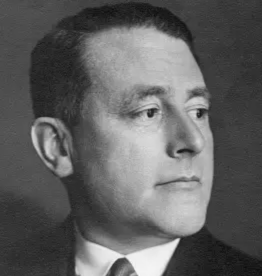
What remains is the remarkable and, for many, certainly disquieting diagnosis that all genuine political theories presuppose man to be evil, i.e., by no means an unproblematic but a dangerous and dynamic being.
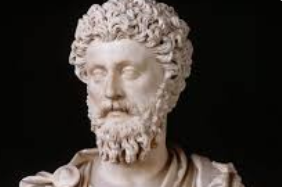
To live each day as though one's last, never flustered, never apathetic, never attitudinizing - here is perfection of character.
The impulse to take life strivingly is indestructible in the race.
The only satisfied rationalists today are blinkered scientists or Marxists.
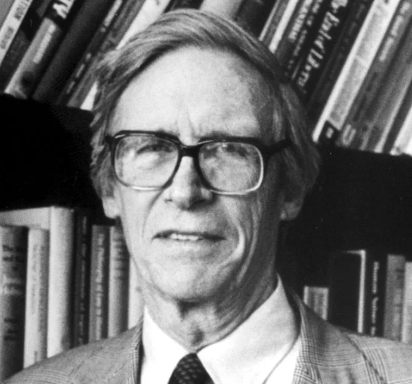
Indeed, it is tempting to suppose that it is self evident that things should be so arranged so as to lead to the most good.
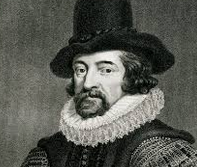
Riches are a good handmaid, but the worst mistress.
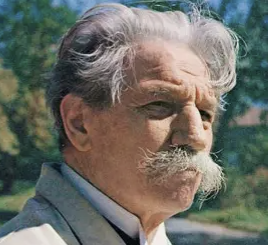
From my youth onwards, I have felt sure that all thought which thinks itself out to an issue ends in mysticism. In the stillness of the African jungle I have been able to work out this thought and give it expression.
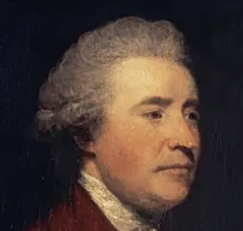
The power of perpetuating our property in our families is one of the most valuable and interesting circumstances belonging to it, and that which tends most to the perpetuation of society itself. It makes our weakness subservient to our virtue; it grafts benevolence even upon avarice. The possession of family wealth and of the distinction which attends hereditary possessions (as most concerned in it,) are the natural securities for this transmission.
The foundation of all technology is fire.
By association with nature's enormities, a man's heart may truly grow big also. There is a way of looking upon a landscape as a moving picture and being satisfied with nothing less big as a moving picture, a way of looking upon tropic clouds over the horizon as the backdrop of a stage and being satisfied with nothing less big as a backdrop, a way of looking upon the mountain forests as a private garden and being satisfied with nothing less as a private garden, a way of listening to the roaring waves as a concert and being satisfied with nothing less as a concert, and a way of looking upon the mountain breeze as an air-cooling system and being satisfied with nothing less as an air-cooling system. So do we become big, even as the earth and firmaments are big.
Someday, someday, this crazy world will have to end, And our God will take things back that He to us did lend. And if, on that sad day, you want to scold our God, Why go right ahead and scold Him. He'll just smile and nod.
Make sure that your religion is a matter between you and God only.
If a man makes the press utter atrocious things he becomes as answerable for them as if he had uttered them by word of mouth. Mr. Jefferson has said in his inaugural speech, that "error of opinion might be tolerated, when reason was left free to combat it." This is sound philosophy in cases of error. But there is a difference between error and licentiousness.
CivilSimian.com created by AxiomaticPanic, CivilSimian, Kalokagathia