
A masterpiece of art has in the mind a fixed place in the chain of being, as much as a plant or a crystal.
I have no fear that the result of our experiment will be that men may be trusted to govern themselves without a master. Could the contrary of this be proved, I should conclude either that there is no god, or that he is a malevolent being.
Matter is indeed infinitely and incredibly refined. To anyone who has ever looked on the face of a dead child or parent the mere fact that matter could have taken for a time that precious form, ought to make matter sacred ever after. It makes no difference what the principle of life may be, material or immaterial, matter at any rate co-operates, lends itself to all life's purposes. That beloved incarnation was among matter's possibilities.
Pleasure, or pain, is not only good, or evil, in itself, but the measure of what is good or evil, in every object of desire or aversion; for the ultimate reason why we pursue one thing, and avoid another, is because we expect pleasure from the former, and apprehend pain from the latter. If we sometimes decline a present pleasure, it is not because we are averse to pleasure itself, but because we conceive, that in the present instance, it will be necessarily connected with a greater pain. In like manner, if we sometimes voluntarily submit to a present pain, it is because we judge that it is necessarily connected with a greater pleasure.
Many people think they are thinking when they are merely rearranging their prejudices.
To roam in open walks, that the soul may increase and lift itself up in the free air and with much spirit; sometimes travel and a change of country will give vigor, and marriage and more liberal drink. Sometimes even to the point of drunkenness, not that it drowns us, but that it depresses us: for it washes away cares and moves the mind from below, and, as with certain diseases, so it heals sadness.
One mode of emotional excitability is exceedingly important in the composition of the energetic character, from its peculiarly destructive power over inhibitions. I mean what in its lower form is mere irascibility, susceptibility to wrath, the fighting temper; and what in subtler ways manifests itself as impatience, grimness, earnestness, severity of character. Earnestness means willingness to live with energy, though energy bring pain. The pain may be pain to other people or pain to one's self - it makes little difference; for when the strenuous mood is on one, the aim is to break something, no matter whose or what. Nothing annihilates an inhibition as irresistibly as anger does it; for, as Moltke says of war, destruction pure and simple is its essence.
The welfare of the people in particular has always been the alibi of tyrants, and it provides the further advantage of giving the servants of tyranny a good conscience. It would be easy, however, to destroy that good conscience by shouting to them: if you want the happiness of the people, let them speak out and tell what kind of happiness they want and what kind they don't want! But, in truth, the very ones who make use of such alibis know they are lies; they leave to their intellectuals on duty the chore of believing in them and of proving that religion, patriotism, and justice need for their survival the sacrifice of freedom.
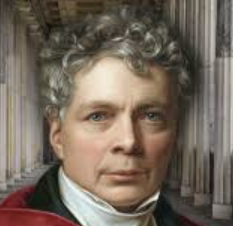
As the Genesis story teaches, knowledge cannot save us from ourselves. If we know more than before, it means only that we have greater scope to enact our fantasies. But - as the Genesis myth also teaches - there is no way we can rid ourselves of what we know. If we try to regain a state of innocence, the result can only be a worse madness. The message of Genesis is that in the most vital areas of human life there can be no progress, only an unending struggle with our own nature.
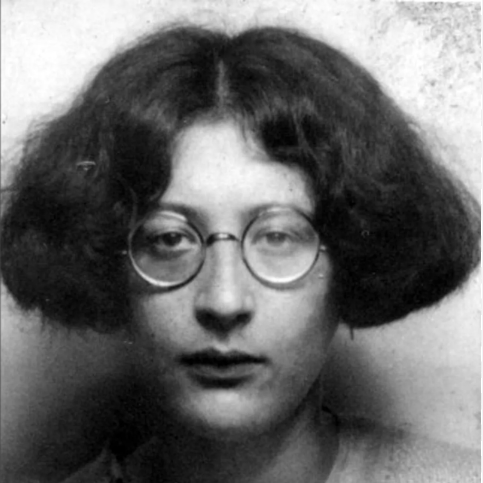
Heaven and earth shall pass away, but my words shall not pass away.
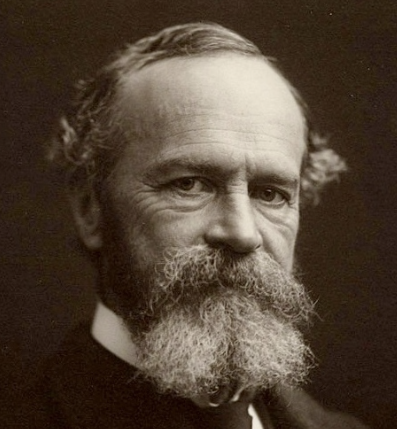
Nobody really thinks who does not abstract from that which is given, who does not relate the facts to the factors which have made them, who does not - in his mind - undo the facts. Abstractness is the very life of thought, the token of its authenticity.
Well, which is the most rational theory about these ten millions of species? Is it most likely that there have been ten millions of special creations? or is it most likely that, by continual modifications due to change of circumstances, ten millions of varieties have been produced, as varieties are being produced still?
The Law of conservation of energy tells us we can't get something for nothing, but we refuse to believe it.
This disposition to admire, and almost to worship, the rich and powerful, and to despise or, at least, neglect persons of poor and mean conditions, though necessary both to establish and to maintain the distinction of ranks and the order of society, is, at the same time, the great and most universal cause of the corruption of our moral sentiments.
Perhaps I am more than usually jealous with respect to my freedom. I feel that my connection with and obligation to society are still very slight and transient. Those slight labors which afford me a livelihood, and by which it is allowed that I am to some extent serviceable to my contemporaries, are as yet commonly a pleasure to me, and I am not often reminded that they are a necessity. So far I am successful. But I foresee, that, if my wants should be much increased, the labor required to supply them would become a drudgery. If I should sell both my forenoons and afternoons to society, as most appear to do, I am sure, that, for me, there would be nothing left worth living for. I trust that I shall never thus sell my birthright for a mess of pottage.
One cannot ignore half of life for the purposes of science, and then claim that the results of science give a full and adequate picture of the meaning of life. All discussions of 'life' which begin with a description of man's place on a speck of matter in space, in an endless evolutionary scale, are bound to be half-measures, because they leave out most of the experiences which are important to use as human beings.
What can be said, lacks reality. Only what fails to make its way into words exists and counts.
In America a woman loses her independence for ever in the bonds of matrimony. While there is less constraint on girls there than anywhere else, a wife submits to stricter obligations. For the former, her father's house is a home of freedom and pleasure; for the latter, her husband's is almost a cloister.
Some will object that the Law is divine and holy. Let it be divine and holy. The Law has no right to tell me that I must be justified by it.
If one awakens in men the idea of freedom then the free men will incessantly go on to free themselves; if on the contrary, one only educates them, then they will at all times accommodate themselves to circumstance in the most highly educated and elegant manner and degenerate into subservient cringing souls.
A man is a man to the extent that he is a superman. A man should be defined by the sum of those tendencies which impel him to surpass the human condition.
The same good sense, that directs men in the ordinary occurrences of life, is not hearkened to in religious matters, which are supposed to be placed altogether above the cognizance of human reason.
The grand discoveries which scientific experiment yielded at and about the turn of the century, in which investigators in many countries took an eminent part and which were destined all unexpectedly to give us a fresh insight into the structure of atoms, were due in the first instance, as all are aware, to the work of the great investigators of the English school, Sir Joseph Thomson and Sir Ernest Rutherford, who have inscribed their names on the tablets of the history of scientific research as distinguished witnesses to the truth that imagination and acumen are capable of penetrating the crowded mass of registered experience and of revealing Nature's simplicity to our gaze.
From the fundamental nature of the Philistine, it follows that, in regard to others, as he has no intellectual but only physical needs, he will seek those who are capable of satisfying the latter not the former. And so of all the demands he makes of others the very smallest will be that of any outstanding intellectual abilities. On the contrary, when he comes across these they will excite his antipathy and even hatred. For here he has a hateful feeling of inferiority and also a dull secret envy which he most carefully attempts to conceal even from himself; but in this way it grows sometimes into a feeling of secret rage and rancour. Therefore it will never occur to him to assess his own esteem and respect in accordance with such qualities, but they will remain exclusively reserved for rank and wealth, power and influence, as being in his eyes the only real advantages to excel in which is also his desire.
No nation was ever so virtuous as each believes itself, and none was ever so wicked as each believes the other.
Real power begins where secrecy begins.
Justice, however, never was in reality administered gratis in any country. Lawyers and attornies, at least, must always be paid by the parties; and, if they were not, they would perform their duty still worse than they actually perform it.
Thus, in this universal catastrophe, the sufferings of Christians have tended to their moral improvement, because they viewed them with eyes of faith.
"A man thinks he is dying for his country," said Anatole France, "but he is dying for a few industrialists." But even that is saying too much. What one dies for is not even so substantial and tangible as an industrialist.
In short, analytic statements are statements which we all accept and for which we do not give reasons. This is what we mean when we say that they are true by 'implicit convention'. The problem is then to distinguish them from other statements that we accept, and do not give reasons for, in particular from the statements that we unreasonably accept. To resolve this difficulty, we have to point out some of the crucial distinguishing features of analytic statements (e.g. the fact that the subject concept is not a law-cluster concept), and we have to connect these features with what, in the preceding section, was called the 'rationale' of the analytic-synthetic distinction. Having done this, we can see that the acceptance of analytic statements is rational, even though there are no reasons (in the sense of' evidence') in connection with them.
The life-giving Spirit is the very one who slays you; the first thing the life-giving Spirit says is that you must enter into death, that you must die to, it is this way in order that you many not take Christianity in vain. A life-giving Spirit, that is the invitation; who would not willingly take hold of it! But die first, that is the halt!
Boldness formerly was not the character of Atheists as such. ... But of late they are grown active, designing, turbulent, and seditious.
[W]hen the ricochets of atomic billiards chance to put together an object that has a certain, seemingly innocent property, something momentous happens in the universe. That property is an ability to self-replicate; that is, the object is able to use the surrounding materials to make exact copies of itself, including replicas of such minor flaws in copying as may occasionally arise. What will follow from this singular occurrence, anywhere in the universe, is Darwinian selection and hence the baroque extravaganza that, on this planet, we call life. Never were so many facts explained by so few assumptions. Not only does the Darwinian theory command superabundant power to explain. Its economy in doing so has a sinewy elegance, a poetic beauty that outclasses even the most haunting of the world's origin myths. Preface
I cannot help believing that Mucius was all the more lucky because he manipulated the flames as calmly as if he were holding out his hand to the manipulator. He had wiped out all his previous mistakes; he finished the war unarmed and maimed; and with that stump of a hand he conquered two kings.
I find that the whiter my hair becomes the more ready people are to believe what I say.
No multitude is able to acquire any art whatsoever. Then if there is a kingly art, neither the collective body of the wealthy nor the whole people could ever acquire this science of statesmanship.
If people did not sometimes do silly things, nothing intelligent would ever get done.
Our particular principles of religion are a subject of accountability to our god alone. I enquire after no man's and trouble none with mine; nor is it given to us in this life to know whether yours or mine, our friend's or our foe's, are exactly the right.
Arms observe no bounds; nor can the wrath of the sword, once drawn, be easily checked or stayed; war delights in blood.
You can take away a man's gods, but only to give him others in return.
Music is everything. God himself is nothing more than an acoustic hallucination.
A faithful and good servant is a real godsend; but truly 'tis a rare bird in the land.
I finished the Iliad to-day... I never admired the old fellow so much, or was so strongly moved by him. What a privilege genius like his enjoys! I could not tear myself away. I read the last five books at a stretch during my walk to-day, and was at last forced to turn into a bypath, lest the parties of walkers should see me blubbering for imaginary beings, the creations of a ballad-maker who has been dead two thousand seven hundred years. What is the power and glory of Caesar and Alexander to that? Think what it would be to be assured that the inhabitants of Monomotapa would weep over one's writings.
What the Greeks sought, and what they obtained, was Equal Rights for all Citizens. In a certain sense, we might even say Equal Privileges, for there was no race favoured by the constitution more than another;-but there existed a great inequality of power, which indeed arose only by accident and not by the constitution of the State, but which nevertheless the State could not remedy;-and in so far there did not exist Equal Privileges.
From the cradle to the grave, each individual pays for the sin of not being God. That's why life is an uninterrupted religious crisis, superficial for believers, shattering for doubters.
I regard Peter as one of the great moralists, because I suspect that more than anyone he has helped to change the attitudes of very many people to the sufferings of animals. Peter is a utilitarian in normative ethics, and a humane attitude to animals is a natural corollary of utilitarianism. Utilitarian concern for animals goes back to Bentham, who, presumably alluding to the Kantians, said that the question was not whether animals can reason, but whether they can suffer.
The Few assume to be the deputies, but they are often only the despoilers of the Many.
CivilSimian.com created by AxiomaticPanic, CivilSimian, Kalokagathia