

5 months 2 weeks ago
Money alone sets all the world in motion.
▼
Source
source
Maxim 656

7 months 3 weeks ago
Accent is the soul of language; it gives to it both feeling and truth.
▼
Source
source
English translation as quoted in A Dictionary of Thoughts: Being a Cyclopedia of Laconic Quotations from the Best Authors of the World, Both Ancient and Modern (1908) by Tryon Edwards, p. 2.


7 months 2 weeks ago
Besides, we should never attempt to balance anybody's misery against somebody else's happiness.
▼
Source
source
pp. 486-487
7 months 3 weeks ago
Whatever we may think or affect to think of the present age, we cannot get out of it; we must suffer with its sufferings, and enjoy with its enjoyments; we must share in its lot, and, to be either useful or at ease, we must even partake its character.
▼
Source
source
"The Spirit of the Age, I", Examiner (9 January 1831), p. 20 Full text online

6 months 2 weeks ago
To resign oneself or to blow out one's brains, that is the choice one faces at certain moments. In any case, the only real dignity is that of exclusion.
5 months 3 days ago
I kept looking at the flowers in a vase near me: lavender sweet peas, fragile winged and yet so still, so perfectly poised, apart, and complete. They are self-sufficient, a world in themselves, a whole - perfect. Is that then, perfection? Is what those sweet peas had what I have, occasionally in moments like that? But flowers always have it - poise, completion, fulfillment, perfection; I only occasionally, like that moment. For that moment I and the sweet peas had an understanding.
3 months 4 weeks ago
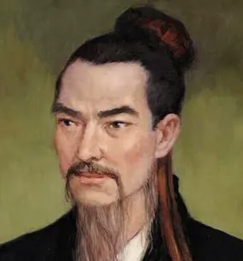
Now, as to universal love and mutual aid, they are beneficial and easy beyond a doubt. It seems to me that the only trouble is that there is no superior who encourages it. If there is a superior who encourages it, promoting it with rewards and commendations, threatening its reverse with punishments, I feel people will tend toward universal love and mutual aid like fire tending upward and water downwards - it will be unpreventable in the world.
▼
Source
source
Book 4; Universal Love III
7 months 3 weeks ago
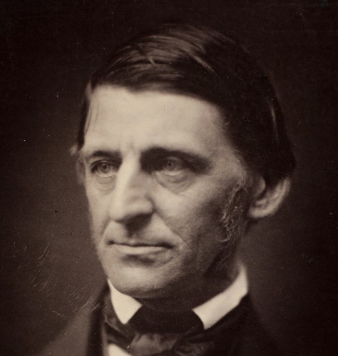
Give all to love; Obey thy heart; Friends, kindred, days, Estate, good fame, Plans, credit, and the muse; Nothing refuse.
▼
Source
source
Give All to Love, st. 1
8 months 6 days ago
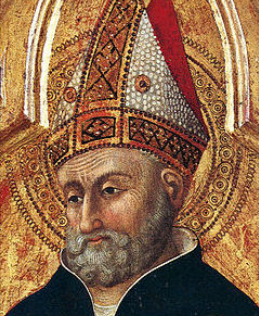
Yes, you see the Trinity if you see charity.
▼
Source
source
De Trinitate VIII 8,12.
3 months 3 weeks ago
My new trade of nail-making is to me in this country what an additional title of nobility or the ensigns of a new order are in Europe.
▼
Source
source
As quoted in The Dark Side of Thomas Jefferson, by Henry Wiencek, Smithsonian Magazine,
8 months 2 weeks ago
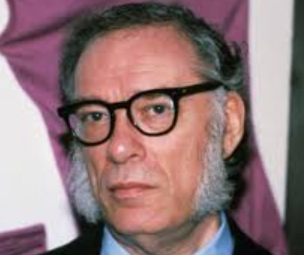
I am an atheist, out and out. It took me a long time to say it. I've been an atheist for years and years, but somehow I felt it was intellectually unrespectable to say one was an atheist, because it assumed knowledge that one didn't have. Somehow, it was better to say one was a humanist or an agnostic. I finally decided that I'm a creature of emotion as well as of reason. Emotionally, I am an atheist. I don't have the evidence to prove that God doesn't exist, but I so strongly suspect he doesn't that I don't want to waste my time.
7 months 3 weeks ago
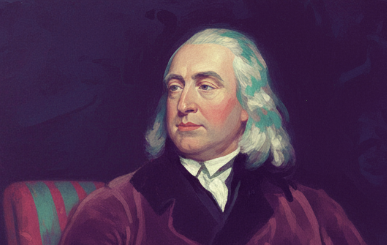
In looking over the catalogue of human actions (says a partizan of this principle) in order to determine which of them are to be marked with the seal of disapprobation, you need but to take counsel of your own feelings: whatever you find in yourself a propensity to condemn, is wrong for that very reason. For the same reason it is also meet for punishment: in what proportion it is adverse to utility, or whether it be adverse to utility at all, is a matter that makes no difference. In that same proportion also is it meet for punishment: if you hate much, punish much: if you hate little, punish little: punish as you hate. If you hate not at all, punish not at all: the fine feelings of the soul are not to be overborne and tyrannized by the harsh and rugged dictates of political utility.
▼
Source
source
Ch. 2: Of Principles Adverse to That of Utility
7 months 3 weeks ago
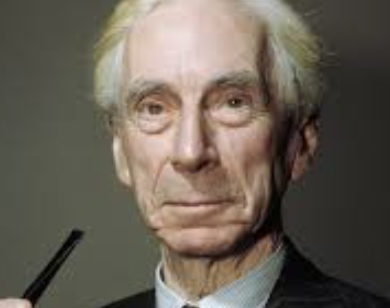
The whole conception of God is a conception derived from the ancient Oriental despotisms. It is a conception quite unworthy of free men. When you hear people in church debasing themselves and saying that they are miserable sinners, and all the rest of it, it seems contemptible and not worthy of self-respecting human beings. We ought to stand up and look the world frankly in the face. We ought to make the best we can of the world, and if it is not so good as we wish, after all it will still be better than what these others have made of it in all these ages. A good world needs knowledge, kindliness, and courage; it does not need a regretful hankering after the past, or a fettering of the free intelligence by the words uttered long ago by ignorant men.
▼
Source
source
"What We Must Do"
6 months 1 week ago
If you know these things, happy you are if you do them.
▼
Source
source
13:17, New World Translation of the Holy Scriptures
8 months 2 weeks ago
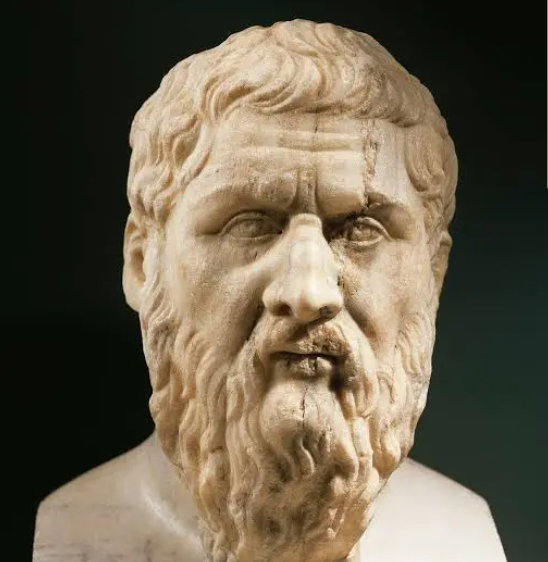
No man of sense can put himself and his soul under the control of names... You must consider courageously and thoroughly and not accept anything carelessly.

7 months 3 weeks ago
They show as little Reason as Conscience who put the matter by with saying - "Men, in some cases, are lawfully made Slaves, and why may not these?" So men, in some cases, are lawfully put to death, deprived of their goods, without their consent; may any man, therefore, be treated so, without any conviction of desert? Nor is this plea mended by adding-"They are set forth to us as slaves, and we buy them without farther inquiry, let the sellers see to it." Such men may as well join with a known band of robbers, buy their ill-got goods, and help on the trade; ignorance is no more pleadable in one case than the other; the sellers plainly own how they obtain them. But none can lawfully buy without evidence that they are not concurring with Men-Stealers; and as the true owner has a right to reclaim his goods that were stolen, and sold; so the slave, who is proper owner of his freedom, has a right to reclaim it, however often sold.
5 months 2 weeks ago
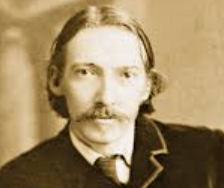
Nothing like a little judicious levity.
▼
Source
source
The Wrong Box, ch. 7 (1889).
7 months 4 weeks ago
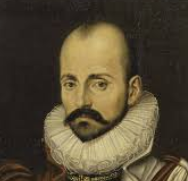
I do not speak the minds of others except to speak my own mind better.
▼
Source
source
Ch. 26. On the Education of Children
7 months 3 weeks ago
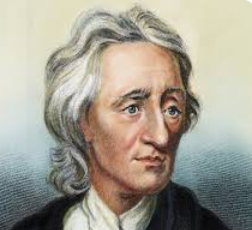
The native and untaught suggestions of inquisitive children do often offer things, that may set a considering man's thoughts on work. And I think there is frequently more to be learn'd from the unexpected questions of a child than the discourses of men, who talk in a road, according to the notions they have borrowed, and the prejudices of their education.
▼
Source
source
Sec. 121
7 months 3 weeks ago
"How then shall they have the play-games you allow them, if none must be bought for them?" I answer, they should make them themselves, or at least endeavour it, and set themselves about it. ...And if you help them where they are at a stand, it will more endear you to them than any chargeable toys that you shall buy for them.
▼
Source
source
Sec. 130
8 months 3 weeks ago
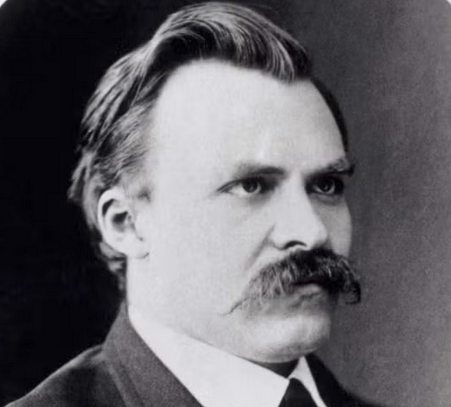
May I really say it! All truths are bloody truths to me, take a look at my previous writings.
8 months 3 days ago
I would have written a shorter letter, but I did not have the time.
▼
Source
source
Provincial Letters: Letter XVI (4 December 1656)
8 months 2 weeks ago
For once touched by love, everyone becomes a poet.
7 months 2 weeks ago
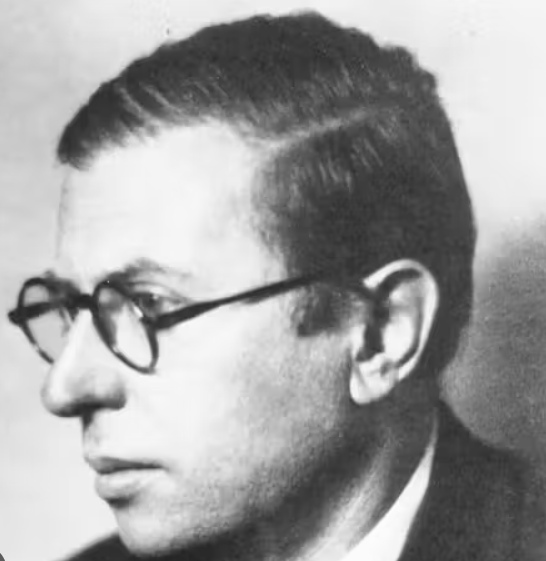
Your church is a whore: she sells her favors to the rich.
▼
Source
source
Act 1
4 months 1 day ago
Let us not violate the RIGHT of the artist to express exclusively his own experiences and introspections, disregarding everything that happens in the world beyond. Let us not DEMAND of the artist, but - reproach, beg, urge and entice him - that we may be allowed to do. After all, only in part does he himself develop his talent; the greater part of it is blown into him at birth as a finished product, and the gift of talent imposes responsibility on his free will. Let us assume that the artist does not OWE anybody anything: nevertheless, it is painful to see how, by retiring into his self-made worlds or the spaces of his subjective whims, he CAN surrender the real world into the hands of men who are mercenary, if not worthless, if not insane.
7 months 2 weeks ago
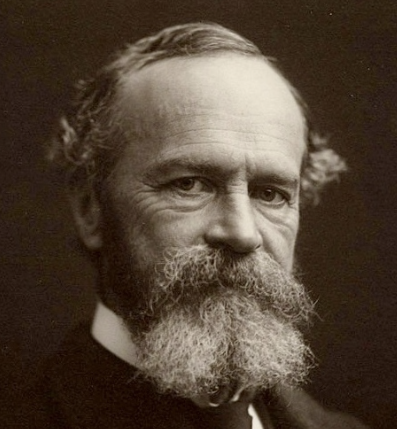
Genius, in truth, means little more than the faculty of perceiving in an unhabitual way.
▼
Source
source
Ch. 19
3 months 3 weeks ago
When the representative body have lost the confidence of their constituents, when they have notoriously made sale of their most valuable rights, when they have assumed to themselves powers which the people never put into their hands, then indeed their continuing in office becomes dangerous to the state, and calls for an exercise of the power of dissolution.
7 months 3 weeks ago
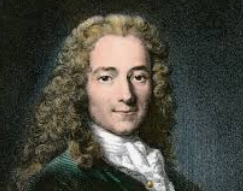
May we not return to those scoundrels of old, the illustrious founders of superstition and fanaticism, who first took the knife from the altar to make victims of those who refused to be their disciples?
▼
Source
source
Letter to Frederick II of Prussia (December 1740), published in Oeuvres complètes de Voltaire, Vol. 7 (1869), edited by Georges Avenel, p. 105; as translated by Richard Aldington
7 months 3 weeks ago
O tenderly the haughty day Fills his blue urn with fire; One morn is in the mighty heaven, And one in our desire.
▼
Source
source
Ode, st. 1
6 months 2 weeks ago
The unfortunate thing about public misfortunes is that everyone regards himself as qualified to talk about them.
5 months 2 weeks ago
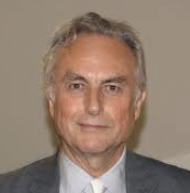
Think about the two qualities that a virus, or any sort of parasitic replicator, demands of a friendly medium, the two qualities that make cellular machinery so friendly towards parasitic DNA, and that make computers so friendly towards computer viruses. These qualities are, firstly, a readiness to replicate information accurately, perhaps with some mistakes that are subsequently reproduced accurately; and, secondly, a readiness to obey instructions encoded in the information so replicated.
6 months 2 weeks ago
The advantage of meditating upon life and death is being able to say anything at all about them.
5 months 2 weeks ago
Even the constantly reiterated insistence that we are miserable offenders, born in sin, is a kind of inverted arrogance: such vanity, to presume that our moral conduct has some sort of cosmic significance, as though the Creator of the Universe wouldn't have better things to do than tot up our black marks and our brownie points. The universe is all concerned with me. Is that not the arrogance that passeth all understanding? The Intellectual and Moral Courage of Atheism
▼
Source
source
Originally from 2007; quotes are from the slightly revised 2019 version on the website
3 months 2 weeks ago
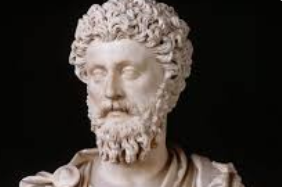
He who flies from his master is a runaway; but the law is master, and he who breaks the law is a runaway. And he also who is grieved or angry or afraid, is dissatisfied because something has been or is or shall be of the things which are appointed by Him who rules all things, and He is Law, and assigns to every man what is fit. He then who fears or is grieved or is angry is a runaway.
▼
Source
source
X, 25
6 months 2 weeks ago
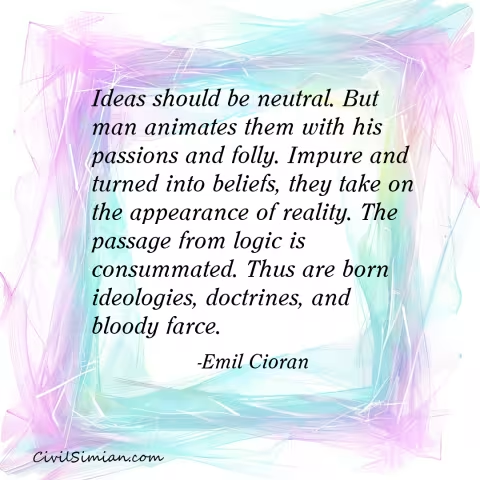
As art sinks into paralysis, artists multiply. This anomaly ceases to be one if we realize that art, on its way to exhaustion, has become both impossible and easy.
7 months 2 weeks ago
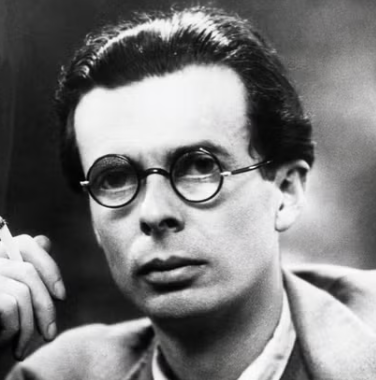
The man who comes back through the Door in the Wall will never be quite the same as the man who went out. He will be wiser but less sure, happier but less self-satisfied, humbler in acknowledging his ignorance yet better equipped to understand the relationship of words to things, of systematic reasoning to the unfathomable mystery which it tries, forever vainly, to comprehend.

6 months 4 days ago
No artist can develop without increasing his self-knowledge; but self-knowledge supposes a certain preoccupation with the meaning of human life and the destiny of man. A definite set of beliefs - Methodist Christianity, for example - may only be a hindrance to development; but it is not more so than Beckett's refusal to think at all. Shaw says somewhere that all intelligent men must be preoccupied with either religion, politics, or sex. (He seems to attribute T. E. Lawrence's tragedy to his refusal to come to grips with any of them.) It is hard to see how an artist could hope to achieve any degree of self-knowledge without being deeply concerned with at least one of the three.
▼
Source
source
p. 197
7 months 2 weeks ago
Instinct leads, intelligence does but follow.
▼
Source
source
Statement of 1902 quoted in The William James Reader (2007), Vol I, p. 264
4 months 1 day ago
If only there were evil people somewhere insidiously committing evil deeds, and it were necessary only to separate them from the rest of us and destroy them. But the line dividing good and evil cuts through the heart of every human being. And who is willing to destroy a piece of his own heart?
▼
Source
source
The Gulag Archipelago

3 months 2 weeks ago
I think we must be careful about too easily accepting, or being too easily grateful for, sacrifices made by others, especially if we have made none ourselves.
7 months 2 weeks ago
As a rule, begin my lectures on Scientific Method by telling my students that scientific method does not exist. ...having been ...the one and only professor of this non-existent subject within the British Commonwealth.
8 months 2 weeks ago
The vicious lover is the follower of earthly Love who desires the body rather than the soul; his heart is set on what is mutable and must therefore be inconstant. And as soon as the body he loves begins to pass the first flower of its beauty, he "spreads his wings and flies away," giving the lie to all his pretty speeches and dishonoring his vows, whereas the lover whose heart is touched by moral beauties is constant all his life, for he has become one with what will never fade.
6 months 2 weeks ago
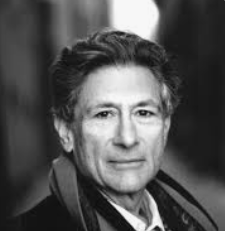
Even when nothing happens, everything seems too much for me. What can be said, then, in the presence of an event, any event?
6 months 3 days ago
When one learns something one first performs an act of will, because only by willing to learn can one learn.
▼
Source
source
"Vico: Autodidact and Humanist," The Centennial Review, Vol. 11, No. 3 (Summer 1967), p. 340
3 months 2 weeks ago
Nothing earthly succeeds by ignoring heaven, nothing heavenly by ignoring the earth.
▼
Source
source
(Hays translation) III, 14
7 months 3 weeks ago
Machines are worshipped because they are beautiful and valued because they confer power; they are hated because they are hideous and loathed because they impose slavery.
▼
Source
source
Ch. 6: Machines and the Emotions
5 months 2 weeks ago
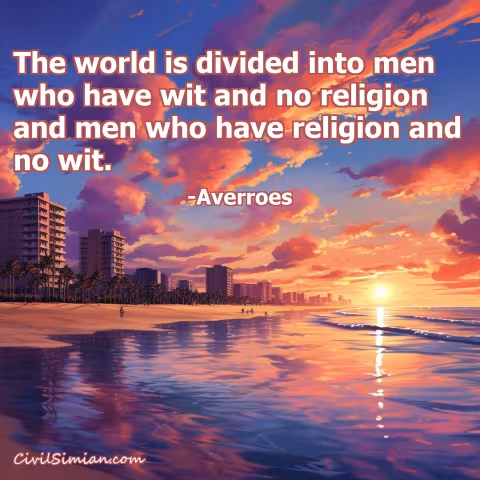
To be overwise is to ossify; and the scruple-monger ends by standing stockstill.
▼
Source
source
314
CivilSimian.com created by AxiomaticPanic, CivilSimian, Kalokagathia