


6 months 1 week ago
It is better to suffer, than to do, wrong.
5 months 6 days ago
Global rationality, the rationality of neoclassical theory, assumes that the decision maker has a comprehensive, consistent utility function, knows all the alternatives that are available for choice, can compute the expected value of utility associated with each alternative, and chooses the alternative that maximizes expected utility. Bounded rationality, a rationality that is consistent with our knowledge of actual human choice behavior, assumes that the decision maker must search for alternatives, has egregiously incomplete and inaccurate knowledge about the consequences of actions, and chooses actions that are expected to be satisfactory (attain targets while satisfying constraints).
▼
Source
source
Simon (1997, p. 17); As cited in: Gustavo Barros (2010, p. 460).

2 months 3 weeks ago
The Bolsheviks themselves will not want, with hand on heart, to deny that, step by step, they have to feel out the ground, try out, experiment, test now one way now another, and that a good many of their measures do not represent priceless pearls of wisdom. Thus it must and will be with all of us when we get to the same point-even if the same difficult circumstances may not prevail everywhere.
▼
Source
source
Chapter Six, "The Problem of Dictatorship"

7 months ago
All that time is lost which might be better employed.
▼
Source
source
As quoted in A Dictionary of Quotations in Most Frequent Use: Taken Chiefly from the Latin and French, but comprising many from the Greek, Spanish, and Italian Languages, translated into English (1809) by David Evans Macdonnel
5 months 4 weeks ago
Learning will be cast into the mire and trodden down under the hoofs of a swinish multitude.
▼
Source
source
Volume iii, p. 335

5 months 2 weeks ago
I am the resurrection and the life. The one who exercises faith in me, even though he dies, will come to life; and everyone who is living and exercises faith in me will never die at all.
▼
Source
source
11:25-26, NWT

2 months 3 weeks ago
Everything is the work of imagination, and... all the faculties of the soul can be correctly reduced to pure imagination...
5 months 3 weeks ago
Since the communists cannot enter upon the decisive struggle between themselves and the bourgeoisie until the bourgeoisie is in power, it follows that it is in the interest of the communists to help the bourgeoisie to power as soon as possible in order the sooner to be able to overthrow it.


6 months 2 days ago
It was under Catholic Feudalism that they were first united; a union for which their incorporation into the Roman empire had prepared them, and which was finally organized by the incomparable genius of Charlemagne.
▼
Source
source
p. 88
5 months 2 weeks ago
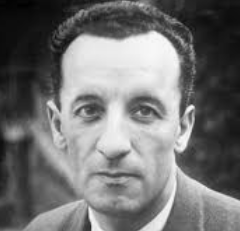
Montaigne puts not self-satisfied understanding but a consciousness astonished at itself at the core of human existence.
▼
Source
source
Signs, trans. R. McCleary (Evanston: 1964), p. 203
3 months 2 weeks ago
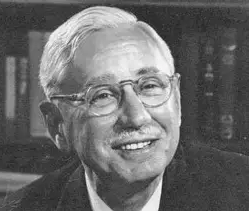
This, evidently was not a minor civilization, produced by inferior people. It ranks with the highest civilizations of history, and some, like Keyserling, would place it at the head and summit of all. The British conquest of India was the invasion and destruction of a high civilization by a trading company utterly without scruple or principle, careless of art, greedy of gain, overrunning with fire and sword a country temporarily disordered and helpless, bribing and murdering, annexing and stealing, and beginning that career of illegal and "legal" plunder which has now gone on ruthlessly for one hundred and seventy-three years, and goes on at this moment while in our secure comfort we write and read. Those who have seen the unspeakable poverty and physiological weakness of the Hindus today will hardly believe that it was the wealth of eighteenth century India which attracted the commercial pirates of England and France.

7 months 5 days ago
Let us give Nature a chance; she knows her business better than we do.
▼
Source
source
Ch. 13


3 months 1 week ago
He not only overflowed with learning but stood in the slops.
▼
Source
source
On Macaulay; reported in Hesketh Pearson, The Smith of Smiths (London: Hamish Hamilton, 1934), p. 180
7 months 4 weeks ago
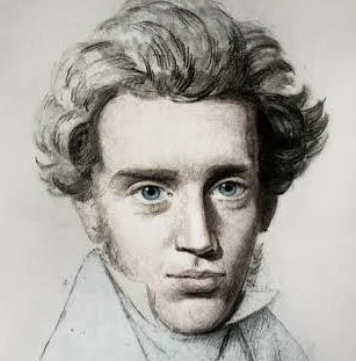
My dear reader, read aloud, if possible! If you do so, allow me to thank you for it: if you not only do it yourself, if you also influence others to do it, allow me to thank each one of them, and you again and again!
4 months 3 weeks ago
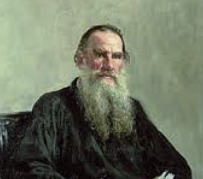
And see, a kind, refined lady will devour the carcasses of these animals with full assurance that she is doing right, at the same time asserting two contradictory propositions: First, that she is, as her doctor assures her, so delicate that she cannot be sustained by vegetable food alone, and that for her feeble organism flesh is indispensable; and, secondly, that she is so sensitive that she is unable, not only herself to inflict suffering on animals, but even to bear the sight of suffering. Whereas the poor lady is weak precisely because she has been taught to live upon food unnatural to man; and she cannot avoid causing suffering to animals - for she eats them.
▼
Source
source
Ch. IX

5 months 2 weeks ago
We have reached the point where the Objective Logic turns into the Subjective Logic, or, where subjectivity emerges as the true form of objectivity. We may sum up Hegel's analysis in the following schema: The true form of reality requires freedom. Freedom requires self-consciousness and knowledge of the truth. Self-consciousness and knowledge of the truth are the essentials of the subject. The form of reality must be conceived as subject.
▼
Source
source
P. 154-155

6 months 2 weeks ago
In forming a store of good works thou shouldst be diligent, so that it may come to thy assistance among the spirits.
2 months 3 weeks ago
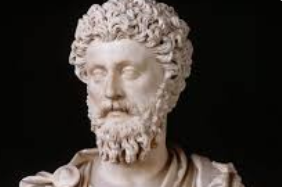
Don't tell yourself anything more than what the initial impressions report. It's been reported to you that someone is speaking badly about you. This is the report - the report wasn't that you've been harmed. I see that my son is sick - but not that his life is at risk. So always stay within your first impressions, and don't add to them in your head - this way nothing can happen to you.
▼
Source
source
VIII. 49:238
2 months 4 weeks ago
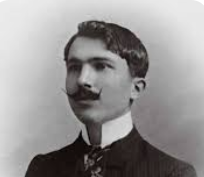
The moment is ripe: leave the heart and the mind behind you, go forward, take the third step. Free yourself from the simple complacency of the mind that thinks to put all things in order and hopes to subdue phenomena. Free yourself from the terror of the heart that seeks and hopes to find the essence of things. Conquer the last, the greatest temptation of all: Hope. This is the third duty.
5 months 2 weeks ago
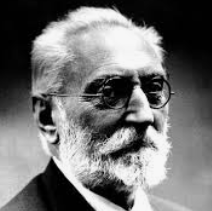
It is the vital asserting itself, and in order to assert itself it creates, with the help of its enemy, the rational, a complete dogmatic structure, and this the Church defends against rationalism, against Protestantism, and against Modernism. The Church defends life. It stood up against Galileo, and it did right; for his discovery, in its inception and until it became assimilated to the general body of human knowledge, tended to shatter the anthropomorphic belief that the universe was created for man. It opposed Darwin, and it did right, for Darwinism tends to shatter our belief that man is an exceptional animal, created expressly to be eternalized. And lastly, Pius IX, the first Pontiff to be proclaimed infallible, declared he was irreconcilable with the so-called modern civilization. And he did right.

3 months 3 weeks ago
The liberal world order that emerged, that... has these pragmatic and... moral dimensions has been severely challenged in the last few years, and the sources of this challenge are numerous. One is the rise of overtly authoritarian states like China and Russia. They have consolidated their rule. They seem to be stable internally, and they are increasingly seeking to project their power and influence, their model... across international borders.
▼
Source
source
19:23

3 months 5 days ago
I feel, like all modern Americans, no consciousness of sin and simply do not believe in it. All I know is that if God loves me only half as much as my mother does, he will not send me to Hell. That is a final fact of my inner consciousness, and for no religion could I deny its truth.
▼
Source
source
p. 407


3 months 3 weeks ago
Beginning in the 1970s, however, the techniques and organizational form of industrial production shifted toward smaller and more mobile labor units and more flexible structures of production, a shift often labeled as a move from Fordist to post-Fordist production.
▼
Source
source
82
7 months 4 weeks ago
It belongs to the imperfection of everything human that man can only attain his desire by passing through its opposite.
6 months 4 weeks ago
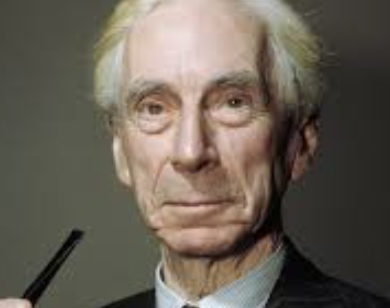
Thee might observe incidentally that if the state paid for child-bearing it might and ought to require a medical certificate that the parents were such as to give a reasonable result of a healthy child - this would afford a very good inducement to some sort of care for the race, and gradually as public opinion became educated by the law, it might react on the law and make that more stringent, until one got to some state of things in which there would be a little genuine care for the race, instead of the present haphazard higgledy-piggledy ways.
▼
Source
source
Letter to Alys Pearsall Smith (1894); published in The Selected Letters of Bertrand Russell, Volume 1: The Private Years (1884-1914)

5 months 3 weeks ago
Science raises itself above all Ages and all Times, embracing and apprehending the ONE UNCHANGING TIME as the higher source of all Ages and Epochs, and grasping that vast idea in its free, unbounded comprehension.
▼
Source
source
p. 11


7 months 2 weeks ago
The Asharites have expressed a very peculiar opinion, both with regard to reason and religion; about this problem they have explained it in a way in which religion has not, but have adopted quite an opposite method.
2 months 3 weeks ago
Enough of this miserable, whining life. Stop monkeying around! Why are you troubled? What's new here? What's so confounding? The one responsible? Take a good look. Or just the matter itself? Then look at that. There's nothing else to look at. And as far as the gods go, by now you could try being more straightforward and kind. It's the same, whether you've examined these things for a hundred years, or only three.
▼
Source
source
IX. 37:205


6 months 2 weeks ago
O Fortune, cruellest of heavenly powers, why make such game of this poor life of ours?
▼
Source
source
Book II, satire viii, line 61 (trans. Conington)

5 months 1 week ago
I too have a growing inner certainty that there is a deposit of pure gold in me which ought to be passed on. The trouble is that I am more and more convinced by my experience and observation of my contemporaries that there is no one to receive it.

6 months 3 weeks ago
The trouble with Eichmann was precisely that so many were like him, and that the many were neither perverted nor sadistic, that they were, and still are, terribly and terrifyingly normal. From the viewpoint of our legal institutions and of our moral standards of judgment, this normality was much more terrifying than all the atrocities put together, for it implied - as had been said at Nuremberg over and over again by the defendants and their counsels - that this new type of criminal, who is in actual fact hostis generis humani, commits his crimes under circumstances that make it well-nigh impossible for him to know or to feel that he is doing wrong.
▼
Source
source
Epilogue
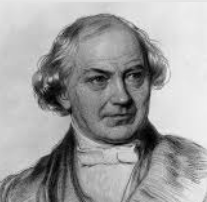
2 months 3 weeks ago
Life is a System of Vital Forces ; and the conception of such Forces involves a peculiar Fundamental Idea.
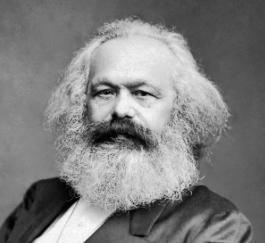
6 months 4 weeks ago
The capitalist cannot store labour-power in warehouses after he has bought it, as he may do with the raw material.
▼
Source
source
Vol. II, Ch. XV, p. 285.
2 months 4 weeks ago
How difficult, how extremely difficult for the soul to sever itself from its body the world: from mountains, seas, cities, people. The soul is an octopus and these are its tentacles. ... No force anywhere on earth is as imperialistic as the human soul. It occupies and is occupied in turn, but it always considers its empire too narrow. Suffocating, it desires to conquer the world in order to breathe freely.
▼
Source
source
My Friend The Poet. Mount Athos., Ch. 19, p. 188

7 months 3 weeks ago
The contradiction is this: man rejects the world as it is, without accepting the necessity of escaping it. In fact, men cling to the world and by far the majority do not want to abandon it.
6 months 4 weeks ago
The very cannibalism of the counterrevolution will convince the nations that there is only one way in which the murderous death agonies of the old society and the bloody birth throes of the new society can be shortened, simplified and concentrated, and that way is revolutionary terror.
▼
Source
source
"The Victory of the Counter-Revolution in Vienna," Neue Rheinische Zeitung, 7 November 1848.

6 months 4 weeks ago
Whether, then, all ought not immediately to discontinue and renounce it, with grief and abhorrence? Should not every society bear testimony against it, and account obstinate persisters in it bad men, enemies to their country, and exclude them from fellowship; as they often do for much lesser faults?

3 months 2 weeks ago
What you see, yet can not see over, is as good as infinite.
▼
Source
source
Bk. II, ch. 1.
7 months 5 days ago
Is it not a noble farce, wherein kings, republics, and emperors have for so many ages played their parts, and to which the whole vast universe serves for a theatre?
▼
Source
source
Book II, Ch. 36. Of the most Excellent Men
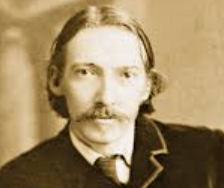
4 months 3 weeks ago
There is a sort of dead-alive, hackneyed people about, who are scarcely conscious of living except in the exercise of some conventional occupation. ... They have no curiosity; they cannot give themselves over to random provocations; they do not take pleasure in the exercise of their faculties for its own sake; and unless necessity lays about them with a stick, they will even stand still. It is no good speaking to such folk: they cannot be idle, their nature is not generous enough; and they pass those hours in a sort of coma, which are not dedicated to furious moiling in the gold-mill.
▼
Source
source
An Apology for Idlers.
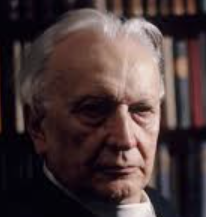
5 months 2 weeks ago
No one is guiltless...But no one is beyond the pale of human existence, provided he pays for his guilt.
2 months 3 weeks ago
Terms must be constructed and appropriated so as to be fitted to enunciate simply and clearly true general propositions.

4 months 3 weeks ago
It is the interest of the individual and of all society, that he should be made, at the earliest period, to understand his own construction, the proper use of its parts, and how to keep them at all times in a state of health; and especially that he should be taught to observe the varied effects of different kinds of food, and different quantities, upon his own constitution. He should be taught the general and individual laws of health, thus early, that he may know how to prevent the approach of disease. And the knowledge of the particular diet best suited to his constitution, is one of the most essential laws of health.
▼
Source
source
3rd Part

5 months 1 week ago
Perhaps, if prematurely we dismiss ourselves from this world, all may even have to be suffered through again - the premature birth may not contribute to the production of another being, which must be begun again from the beginning.
2 months 3 weeks ago
How many, once lauded in song, are given over to the forgotten; and how many who sung their praises are clean gone long ago!
▼
Source
source
VII, 6
CivilSimian.com created by AxiomaticPanic, CivilSimian, Kalokagathia