

4 months 6 days ago
If we already lived in a cruelty-free world, the notion of re-introducing suffering, exploitation and creatures eating each other would seem not so much frightful as unimaginable - no more seriously conceivable than reverting to surgery without anaesthesia today.
▼
Source
source
Reprogramming Predators, BLTC Research, 2009


6 months 4 weeks ago
He who knows only his own side of the case, knows little of that. His reasons may be good, and no one may have been able to refute them. But if he is equally unable to refute the reasons on the opposite side; if he does not so much as know what they are, he has no ground for preferring either opinion.
▼
Source
source
Ch. II: Of the Liberty of Thought and Discussion
5 months 2 weeks ago
Form may then be defined as the operation of forces that carry the experience of an event, object, scene, and situation to its own integral fulfillment.
3 months 5 days ago
In dealing with relationships, not only man-to-man, but also State-to-State and race-to-race, it is necessary to be able to conceive again of that obedience which does not humiliate but exalts, that command or leadership which commits one to superiority and a precise responsibility.
▼
Source
source
p. 117
5 months 2 weeks ago
And the Science of them, is the true and onely Moral Philosophy. For Moral Philosophy is nothing else but the Science of what is Good, and Evill, in the conversation, and Society of mankind. Good, and Evill, are names that signify our Appetites, and Aversions; which in different tempers, customes, and doctrines of men, are different.
▼
Source
source
The First Part, Chapter 15, p. 79
4 months 1 week ago
We must relearn to be alone.
6 months 3 weeks ago
Truth happens to an idea. It becomes true, is made true by events. Its verity is in fact an event, a process: the process namely of its verifying itself, its veri-fication. Its validity is the process of its valid-ation.
▼
Source
source
Lecture VI, Pragmatism's Conception of Truth
5 months 2 weeks ago
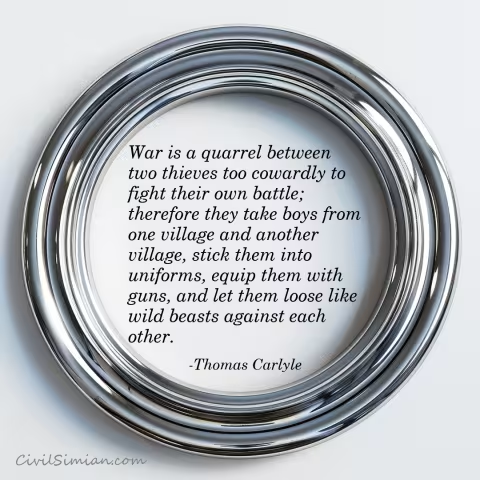
The possibility of peace, on whose behalf many are working, might perhaps become actual because the technical advances in offensive weapons make the prospect of a European war so disastrous, and because, if the nations were at grips again, even the victorious aggressor would be ruined. But there still remains open the possibility of a new war which, more dreadful than any that have preceded it would make an end of contemporary Europeans.
7 months 5 days ago
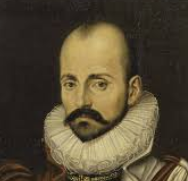
The public weal requires that men should betray and lie and massacre.
▼
Source
source
Book III, Ch. 1. Of Profit and Honesty

6 months 4 weeks ago
Acquisitiveness - the wish to possess as much as possible of goods, or the title to goods - is a motive which, I suppose, has its origin in a combination of fear with the desire for necessaries.
6 months 4 weeks ago
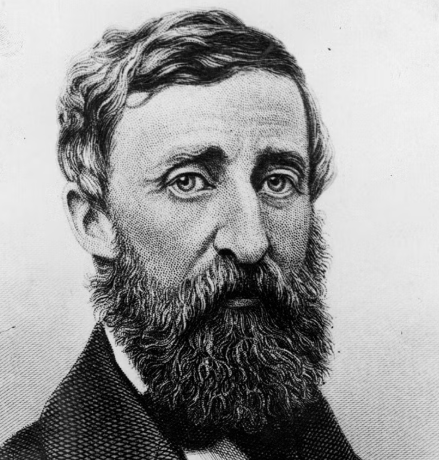
When the husk gets separated from the kernel, almost all men run after the husk and pay their respects to that. It is only the husk of Christianity that is so bruited and wide spread in this world; the kernel is still the very least and rarest of all things. There is not a single church founded on it.

6 months 3 weeks ago
"Then those people are right who say that Heaven and Hell are only states of mind?" "Hush," he said sternly. "Do not blaspheme. Hell is a state of mind - ye never said a truer word. And every state of mind, left to itself, every shutting up of the creature within the dungeon of its own mind - is, in the end, Hell. But Heaven is not a state of mind. Heaven is reality itself. All that is fully real is Heavenly."
▼
Source
source
Ch. 9
6 months 4 weeks ago
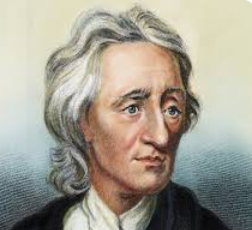
I doubt not, but from self-evident Propositions, by necessary Consequences, as incontestable as those in Mathematics, the measures of right and wrong might be made out.
▼
Source
source
Book IV, Ch. 3, sec. 18
2 months 3 weeks ago
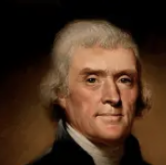
Dispersed as the Jews are, they still form one nation, foreign to the land they live in.
▼
Source
source
As quoted in The Americans by Daniel Boorstin. See Truth from the "Zog Bog" by Gyeorgos Ceres Hatonn, 1993, 224 p.

5 months 3 weeks ago
We dread the future only when we are not sure we can kill ourselves when we want to.
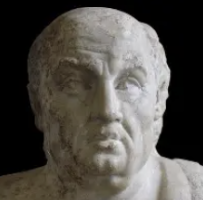
3 months 1 week ago
If you wish to be loved, love.
▼
Source
source
Seneca quotes this in Epistulae Morales ad Lucilium; Epistle IX and attributes it to Hecato

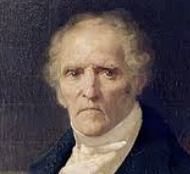
3 months 3 weeks ago
Agricultural association, which in all ages has been deemed impossible, would produce results of unbounded magnificence the rigorous demonstrations, the mathematical calculations by which these results will be verified, will not, however, prevent the picture of the future harmony and happiness which they present from repelling minds habituated to the miseries and wretchedness of our present civilization. The Theory of Social Organization.
▼
Source
source
Harmonian Man: Selected Writings of Charles Fourier, p. 5.
6 months 4 weeks ago
Political ideals must be based upon ideals for the individual life. The aim of politics should be to make the lives of individuals as good as possible.
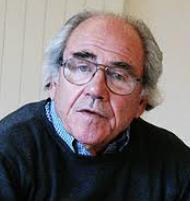
5 months ago
Whatever it may be, animals have always had, until our era, a divine or sacrificial nobility that all mythologies recount. Even murder by hunting is still a symbolic relation, as opposed to an experimental dissection. Even domestication is still a symbolic relation, as opposed to industrial breeding. One only has to look at the status of animals in peasant society. And the status of domestication, which presupposes land, a clan, a system of parentage of which the animals are a part, must not be confused with the status of the domestic pet-the only type of animals that are left to us outside reserves and breeding stations-dogs, cats, birds, hamsters, all packed together in the affection of their master. The trajectory animals have followed, from divine sacrifice to dog cemeteries with atmospheric music, from sacred defiance to ecological sentimentality, speaks loudly enough of the vulgarization of the status of man himself.
▼
Source
source
"The Animals: Territory and Metamorphoses," p. 134
5 months 3 weeks ago
History proves nothing because it contains everything.
2 months 3 weeks ago
We have no right to believe a thing true because everybody says so unless there are good grounds for believing that some one person at least has the means of knowing what is true, and is speaking the truth so far as he knows it. However many nations and generations of men are brought into the witness-box they cannot testify to anything which they do not know. Every man who has accepted the statement from somebody else, without himself testing and verifying it, is out of court; his word is worth nothing at all. And when we get back at last to the true birth and beginning of the statement, two serious questions must be disposed of in regard to him who first made it: was he mistaken in thinking that he knew about this matter, or was he lying?
7 months 6 days ago
For what is life but a play in which everyone acts a part until the curtain comes down?
5 months 3 weeks ago
Nothing, in fact, is as universal or as ancient as the iniquitous and absurd; truth and justice, on the contrary, are the least universal, the youngest features in the development of human society.
7 months 4 weeks ago
If God stops a man on the road, and calls him with a revelation and sends him armed with divine authority among men, they say to him; from whom dost thou come? He answers: from God. But now God cannot help his messenger physically like a king, who gives him soldiers or policemen, or his ring or his signature, which is known to all; in short, God cannot help men by providing them with physical certainty that an Apostle is an Apostle-which would, moreover, be nonsense. Even miracles, if the Apostle has that gift, give no physical certainty; for the miracle is the object of faith.
5 months 3 weeks ago
Let me now try to gather up all these odds and ends of commentary and restate the law of mind, in a unitary way.
2 months 3 weeks ago
Our country is now taking so steady a course as to show by what road it will pass to destruction, to wit: by consolidation of power first, and then corruption, its necessary consequence. The engine of consolidation will be the Federal judiciary; the two other branches the corrupting and corrupted instruments.
▼
Source
source
Letter, Thomas Jefferson to Nathaniel Macon, 1821: ME 15-341
4 months 3 weeks ago
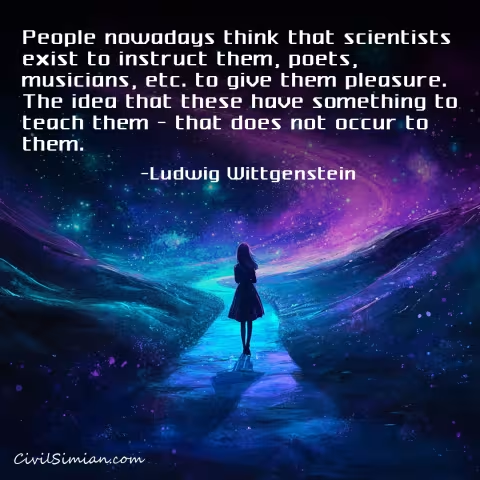
But perhaps the rest of us could have separate classes in science appreciation, the wonder of science, scientific ways of thinking, and the history of scientific ideas, rather than laboratory experience.
7 months 2 weeks ago
Recompense hatred with justice, and recompense kindness with kindness.

6 months 1 week ago
There is geometry in the humming of the strings. There is music in the spacings of the spheres.
▼
Source
source
As quoted in the preface of the book entitled Music of the Spheres by Guy Murchie
5 months 3 weeks ago
To hope is to contradict the future.
7 months 5 days ago
It is not death, it is dying that alarms me.
▼
Source
source
Book II, Ch. 13
5 months 3 weeks ago
Each individual imagines that he can exist, live, think, and act for himself, and believes that he himself is the thinking principle of his thoughts; whereas in truth he is but a single ray of the ONE universal and necessary Thought.
▼
Source
source
p. 21
2 months 2 weeks ago
The longing for guidance, for love and succor, provides the stimulus for the growth of a social or moral conception of God. This is the God of Providence, who protects, decides, rewards and punishes. This is the God who, according to man's widening horizon, loves and provides for the life of the race, or of mankind, or who even loves life itself. He is the comforter in unhappiness and in unsatisfied longing, the protector of the souls of the dead. This is the social or moral idea of God.
7 months 1 day ago
I am convinced that the unwritten knowledge scattered among men of different callings surpasses in quantity and in importance anything we find in books, and that the greater part of our wealth has yet to be recorded.
▼
Source
source
1688-1690
5 months 1 week ago
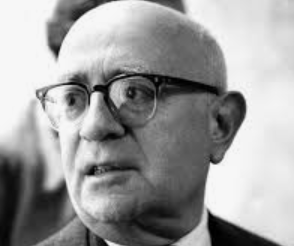
If philosophy is still necessary, it is so only in the way it has been from time immemorial: as critique, as resistance to the expanding heteronomy, even if only as thought's powerless attempt to remain its own master and to convict of untruth, by their own criteria, both a fabricated mythology and a conniving, resigned acquiescence. ... It is incumbent upon philosophy ... to provide a refuge for freedom. Not that there is any hope that it could break the political tendencies that are throttling freedom throughout the world both from within and without and whose violence permeates the very fabric of philosophical argumentation.
▼
Source
source
p. 10

6 months 3 weeks ago
A creative economy is the fuel of magnificence.
▼
Source
source
Aristocracy

4 months 4 days ago
The heterodox current in Judaism led by Jesus seems to have had no notion of an immortal soul, created by God and then infused into the body: immortality meant being raised from the dead in the body one had in life, then living for ever in a world without decay or corruption. In the Christian religion invented by Paul and Augustine, which was strongly influenced by Plato, immortality meant something quite different - a life out of time, enjoyed by the 'soul' or 'spirit' of the departed. How this Platonic immortality could preserve anything like the persons that once lived was not made clear.
▼
Source
source
Cross-correspondences (pp. 32-3)

6 months 3 weeks ago
The soul is the prison of the body.
▼
Source
source
Discipline and Punish (1977) as translated by Alan Sheridan, p. 30
4 months 1 week ago
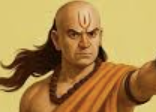
The king who is situated anywhere immediately on the circumference of the conqueror's territory is termed the enemy.The king who is likewise situated close to the enemy, but separated from the conqueror only by the enemy, is termed the friend (of the conqueror).
▼
Source
source
Book VI, "The Source of Sovereign States"
6 months 2 days ago
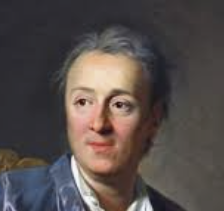
We are far more liable to catch the vices than the virtues of our associates.
▼
Source
source
As quoted in Thesaurus of Epigrams: A New Classified Collection of Witty Remarks, Bon Mots and Toasts (1942) by Edmund Fuller
6 months 2 days ago
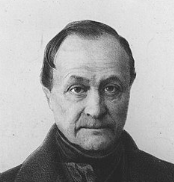
The object of all true Philosophy is to frame a system which shall comprehend human life under every aspect, social as well as individual. It embraces, therefore, the three kinds of phenomena of which our life consists, Thoughts, Feelings, and Actions.
▼
Source
source
p. 9
7 months 6 days ago
Let men learn (as we have said above) the difference that exists between the idols of the human mind, and the ideas of the Divine mind. The former are mere arbitrary abstractions; the latter the true marks of the Creator on his creatures, as they are imprinted on, and defined in matter, by true and exquisite touches. Truth, therefore, and utility are here perfectly identical.
▼
Source
source
Aphorism 124
6 months 4 weeks ago
I am as desirous of being a good neighbor as I am of being a bad subject.
2 months 3 weeks ago
Never spend your money before you have it.
CivilSimian.com created by AxiomaticPanic, CivilSimian, Kalokagathia