

5 months 3 weeks ago
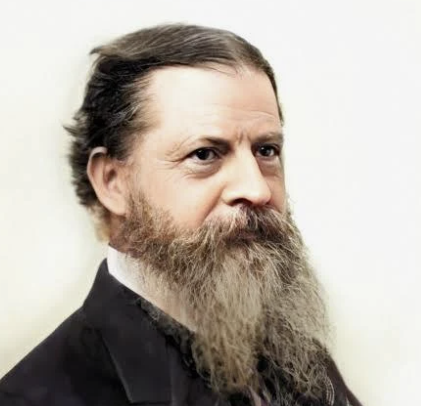
In fact, this infinitesimally spread-out consciousness is a direct feeling of its contents as spread out. In an infinitesimal interval we directly perceive the temporal sequence of its beginning, middle, and end... Now upon this interval follows another, whose beginning is the middle of the former, and whose middle is the end of the former. Here we have an immediate perception of the temporal sequence of its beginning, middle and end, or say, of the second, third, and fourth instants.
3 months 1 week ago
"New friends, however, will not be the same." No, nor will you yourself remain the same; you change with every day and every hour.
5 months 2 weeks ago
At midday the daily food of all Spaniards was the puchero or cocido, as the dish is really called which the foreigners call pot-pourri or olla podrida. This contains principally yellow chick-peas, with a little bacon, some potatoes or other vegetables and normally also small pieces of beef or sausage, all boiled in one pot at a very slow fire; the liquid of the same makes the substantial broth that is served first.
▼
Source
source
p. 14

6 months 2 weeks ago
The right-minded man, ever inclined to righteous and lawful deeds, is joyous day and night, and strong, and free from care. But if a man take no heed of the right, and leave undone the things he ought to do, then will the recollection of no one of all his transgressions bring him any joy, but only anxiety and self-reproaching.
5 months 1 week ago
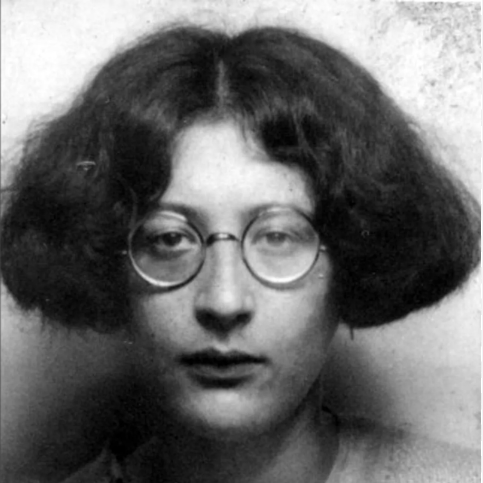
We can know only one thing about God - that he is what we are not. Our wretchedness alone is an image of this. The more we contemplate it, the more we contemplate him.
▼
Source
source
p. 216
5 months 2 weeks ago
The remembrance of forbidden fruit is the earliest thing in the memory of each of us, as it is in that of mankind.
▼
Source
source
Chapter I: Moral Obligation
5 months 1 week ago
The reason that people take selfies is not narcissism. Rather, it is inner emptiness. There is no meaning to stabilize the ego. Faced with its inner emptiness, the ego constantly produces itself.
6 months 4 weeks ago
Wisdom and contrivance are shown in overcoming difficulties, so there is no place for them in a Being for whom no difficulties exist.
▼
Source
source
pages 176-177; Early Modern Texts page 16
4 months 3 weeks ago
It's obvious that in an intelligent educated audience such as this university, I stress this university. Who saw fit to give them accreditation?
▼
Source
source
At Randolph-Macon Woman's College, (23 October 2006) Broadcasted by C-SPAN2
5 months 1 week ago
The needs of a human being are sacred. Their satisfaction cannot be subordinated either to reasons of state, or to any consideration of money, nationality, race, or colour, or to the moral or other value attributed to the human being in question, or to any consideration whatsoever. There is no legitimate limit to the satisfaction of the needs of a human being except as imposed by necessity and by the needs of other human beings. The limit is only legitimate if the needs of all human beings receive an equal degree of attention.
2 months 3 weeks ago
The Pythagoreans called the monad "intellect" because they thought that intellect was akin to the One; for among the virtues, they likened the monad to moral wisdom; for what is correct is one. And they called it "being," "cause of truth," "simple," "paradigm," "order," "concord," "what is equal among the greater and the lesser," "the mean between intensity and slackness," "moderation in plurality," "the instant now in time," and moreover they call it "ship," "chariot," "friend," "life," "happiness."
▼
Source
source
On the Monad
5 months 3 weeks ago
Every civilized human being, whatever his conscious development, is still an archaic man at the deeper levels of his psyche. Just as the human body connects us with the mammals and displays numerous relics of earlier evolutionary stages going back to even the reptilian age, so the human psyche is likewise a product of evolution which, when followed up to its origins, show countless archaic traits.
▼
Source
source
p. 126


7 months 1 day ago
There are two famous labyrinths where our reason very often goes astray. One concerns the great question of the free and the necessary, above all in the production and the origin of Evil. The other consists in the discussion of continuity, and of the indivisibles which appear to be the elements thereof, and where the consideration of the infinite must enter in.
▼
Source
source
Théodicée (1710)ː Préface
6 months 2 weeks ago
Pyrrhus said, "If I should overcome the Romans in another fight, I were undone."
▼
Source
source
47 Pyrrhus
6 months 3 days ago
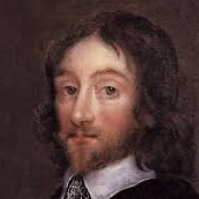
And surely, he that hath taken the true Altitude of Things, and rightly calculated the degenerate state of this Age, is not like to envy those that shall live in the next, much less three or four hundred Years hence, when no Man can comfortably imagine what Face this World will carry.
6 months 3 weeks ago
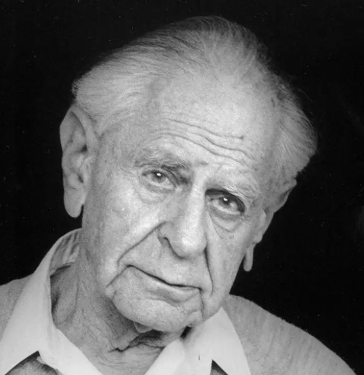
Do not allow your dreams of a beautiful world to lure you away from the claims of men who suffer here and now. Our fellow men have a claim to our help; no generation must be sacrificed for the sake of future generations, for the sake of an ideal of happiness that may never be realised.
4 months 1 week ago
Within the last fifty years, the extraordinary growth of every department of physical science has spread among us mental food of so nutritious and stimulating a character that a new ecdysis seems imminent.
▼
Source
source
Ch.2, p. 73

5 months 3 weeks ago
Everything exists; nothing exists. Either formula affords a like serenity. The man of anxiety, to his misfortune, remains between them, trembling and perplexed, forever at the mercy of a nuance, incapable of gaining a foothold in the security of being or in the absence of being.
5 months 1 week ago
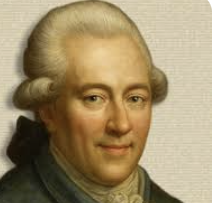
Virtue by premeditation isn't worth much.
▼
Source
source
H 13
5 months 1 week ago
There is a greatness in the lives of those who build up religious systems, a greatness in action, in idea and in self-subordination, embodied in instance after instance through centuries of growth. There is a greatness in the rebels who destroy such systems: they are the Titans who storm heaven, armed with passionate sincerity. It may be that the revolt is the mere assertion by youth of its right to its proper brilliance, to that final good of immediate joy. Philosophy may not neglect the multifariousness of the world - the fairies dance, and Christ is nailed to the cross.
▼
Source
source
Pt. V, ch. 1, sec. 1.

7 months 3 weeks ago
Whatever we may do, excess will always keep its place in the heart of man, in the place where solitude is found. We all carry within us our places of exile, our crimes and our ravages. But our task is not to unleash them on the world; it is to fight them in ourselves and in others.
4 months 3 weeks ago
Wealth brings a heavy purse; poverty, a light spirit.
▼
Source
source
p. 88
5 months 3 weeks ago
The case of mere titles is so absurd that it would deserve to be treated only with ridicule were t not for the serious mischief they impose on mankind. The feudal system was a ferocious monster, devouring, where it came, all that the friend of humanity regards with attachment and love. The system of titles appears under a different form. The monster is at length destroyed, and they who followed in his train, and fattened upon the carcasses of those he slew, have stuffed his skin, and, b exhibiting it, hope still to terrify mankind into patient and pusillanimity.
▼
Source
source
Book V, Chapter 13
2 months 3 weeks ago
When alterations in technical terms become necessary, it is desirable that the new term should contain in its form some memorial of the old one.

6 months 2 days ago
It is almost never when a state of things is the most detestable that it is smashed, but when, beginning to improve, it permits men to breathe, to reflect, to communicate their thoughts with each other, and to gauge by what they already have the extent of their rights and their grievances. The weight, although less heavy, seems then all the more unbearable.
▼
Source
source
Letter to Pierre Freslon, 23 September 1853 Selected Letters, p. 296 as cited in Toqueville's Road Map p. 103
2 months 3 weeks ago
Happy in the prospect of a restoration of primitive Christianity, I must leave to younger athletes to encounter and lop off the false branches which have been engrafted into it by the mythologists of the middle and modern ages.
▼
Source
source
Letter to Doctor Waterhouse
6 months 4 weeks ago
England, it is true, in causing a social revolution in Hindostan, was actuated only by the vilest interests, and was stupid in her manner of enforcing them. But that is not the question. The question is, can mankind fulfil its destiny without a fundamental revolution in the social state of Asia? If not, whatever may have been the crimes of England she was the unconscious tool of history in bringing about that revolution.
▼
Source
source
"The British Rule in India," New York Daily Tribune, 10 June 1853.
6 months 2 days ago
It was under Catholic Feudalism that they were first united; a union for which their incorporation into the Roman empire had prepared them, and which was finally organized by the incomparable genius of Charlemagne.
▼
Source
source
p. 88
2 months 3 weeks ago
Thou mayest foresee... the things which will be. For they will certainly be of like form, and it is not possible that they should deviate from the order of things now: accordingly to have contemplated human life for forty years is the same as to have contemplated it for ten thousand years.
▼
Source
source
VII, 49
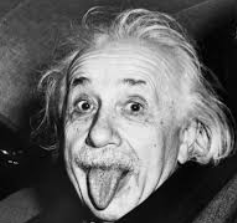
2 months 2 weeks ago
Sometimes one pays most for the things one gets for nothing.
▼
Source
source
Quoted in The Ultimate Quotable Einstein by Alice Calaprice (2010), p. 230
4 months 3 weeks ago
At the very high speed of living, everybody needs a new career and a new job and a totally new personality every ten years.
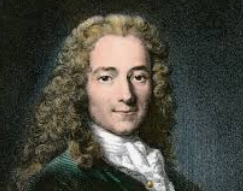
6 months 4 weeks ago
There are truths which are not for all men, nor for all times.
▼
Source
source
Letter to François-Joachim de Pierre, cardinal de Bernis, 23 April 1764
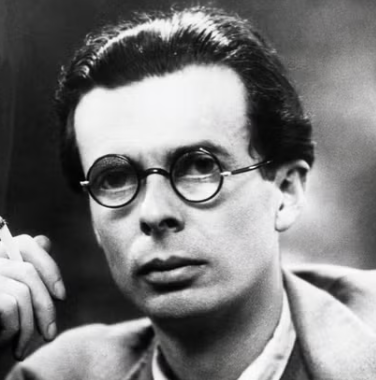
6 months 3 weeks ago
Those who believe that they are exclusively in the right are generally those who achieve something.
▼
Source
source
"Note on Dogma"
7 months 1 day ago
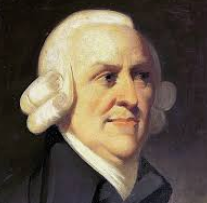
In every country it always is and must be the interest of the great body of the people to buy whatever they want of those who sell it cheapest. The proposition is so very manifest that it seems ridiculous to take any pains to prove it; nor could it ever have been called in question had not the interested sophistry of merchants and manufacturers confounded the common sense of mankind. Their interest is, in this respect, directly opposite to that of the great body of the people.
▼
Source
source
Chapter III, Part II, p. 531.
5 months 4 weeks ago
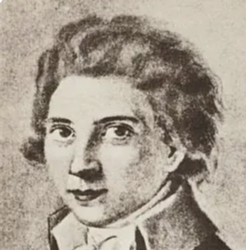
One can only become a philosopher, but not be one. As one believes he is a philosopher, he stops being one.
▼
Source
source
"Selected Aphorisms from the Athenaeum (1798)", Dialogue on Poetry and Literary Aphorisms, Ernst Behler and Roman Struc, trans. (Pennsylvania University Press:1968) #54

2 months 3 weeks ago
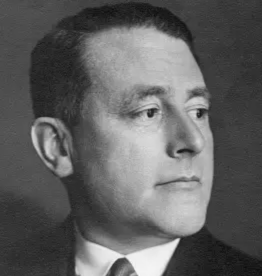
The specific political distinction to which political actions and motives can be reduced is that between friend and enemy.
5 months 4 weeks ago
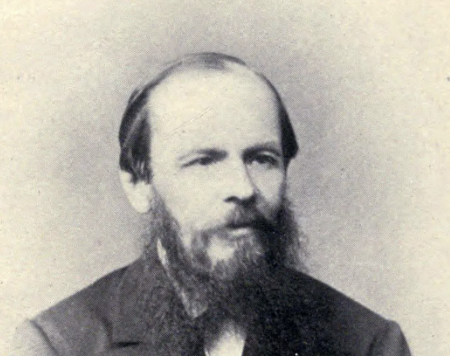
For socialism is not merely the labour question, it is before all things the atheistic question, the question of the form taken by atheism to-day, the question of the tower of Babel built without God, not to mount to heaven from earth but to set up heaven on earth.
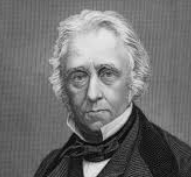
4 months 2 weeks ago
We know of no great revolution which might not have been prevented by compromise early and graciously made... [I]n all movements of the human mind which tend to great revolutions there is a crisis at which moderate concession may amend, conciliate, and preserve.
▼
Source
source
'Hallam', The Edinburgh Review (September 1828), quoted in T. B. Macaulay, Critical and Historical Essays Contributed to The Edinburgh Review, Vol. I (1843), p. 216
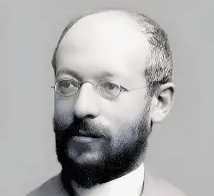
3 months 1 week ago
Man is something that is to be overcome.Logically considered, this, too, presents a contradiction: he who overcomes himself is admittedly the victor, but he is also the defeated. The ego succumbs to itself, when it wins; it achieves victory, when it suffers defeat. Yet the contradiction only arises when the two aspects of this unity are hardened into opposed, mutually exclusive conceptions. It is precisely the fully unified process of the moral life which overcomes and surpasses every lower state by achieving a higher one, and again transcends this latter state through one still higher. That man overcomes himself means that he reaches out beyond the bounds that the moment sets for him. There must be something at hand to be overcome, but it is only there in order to be overcome. Thus even as an ethical agent, man is the limited being that has no limit.
▼
Source
source
p. 5-6 part of the first essay "Life as Transcendence"
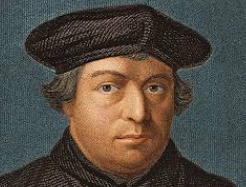
7 months 5 days ago
Faith, like light, should ever be simple and unbending; while love, like warmth, should beam forth on every side, and bend to every necessity of our brethren.
▼
Source
source
p. 220

6 months 3 weeks ago
And when his hours are numbered, and the world Is all his own, retiring, as he were not, Leaves, when the sun appears, astonished Art To mimic in slow structures, stone by stone Built in an age, the mad wind's night-work, The frolic architecture of the snow.
▼
Source
source
The Snow-Storm
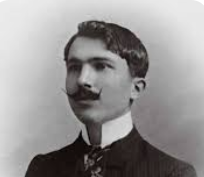
2 months 4 weeks ago
One day our Sodom and Gomorrah would be trampled by some all-powerful foot, and this world which laughed, reveled, and forgot God would be transformed, in its turn, into a Dead Sea. At the end of every period God's foot comes along in this way and tramples the cities of the overindulged belly, the overdeveloped mind. I felt afraid (Sometimes it seems to me that this world is another Sodom and Gomorrah just before God's passage above it. I think the terrible foot can already be heard approaching).
▼
Source
source
Jerusalem, Ch. 20, p. 249
7 months 5 days ago
It is an unsufferable blasphemy to reject the public ministry or to say that people can become holy without sermons and Church. This involves a destruction of the Church and rebellion against ecclesiastical order; such upheavals must be warded off and punished like all other revolts.
▼
Source
source
In Luther, Hartmann Grisar, 1915, London, Kegan Paul, Trench, vol. 4, p. 126,
3 months 5 days ago
It is a great pity that human beings cannot find all of their satisfaction in scientific contemplativeness.
▼
Source
source
As quoted in Chandra: A Biography of S. Chandrasekhar (1991) by Kameshwar C. Wali, p. 147
7 months 3 weeks ago
Writing is an addiction more powerful than alcohol, than nicotine, than crack. I could not conceive of not writing.
6 months 4 weeks ago
The theory of Communism may be summed up in the single sentence: Abolition of private property.
▼
Source
source
Section 2, paragraph 13.
4 months 3 weeks ago
The only thing that we know is that we know nothing - and that is the highest flight of human wisdom.
▼
Source
source
Book V, Ch. I
CivilSimian.com created by AxiomaticPanic, CivilSimian, Kalokagathia