

Does it? Maybe some places....


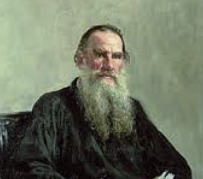
Only the truth and its expression can establish that new public opinion which will reform the ancient obsolete and pernicious order of life; and yet we not only do not express the truth we know, but often even distinctly give expression to what we ourselves regard as false. If only free men would not rely on that which has no power, and is always fettered - upon external aids; but would trust in that which is always powerful and free - the truth and its expression!

Capitalism dislikes silence.
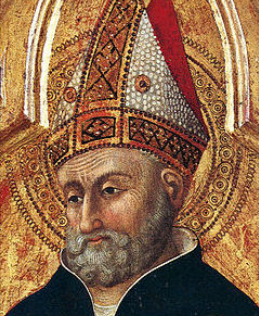
Who dismisses his adulterous wife and marries another woman, whereas his first wife still lives, remains perpetually in the state of adultery. Such a man does not any efficacious penance while he refuses to abandon the new wife. If he is a catechumen, he cannot be admitted to baptism, because his will remains rooted in the evil. If he is a (baptized) penitent, he cannot receive the (ecclesiastical) reconciliation as long as he does not break with his bad attitude.
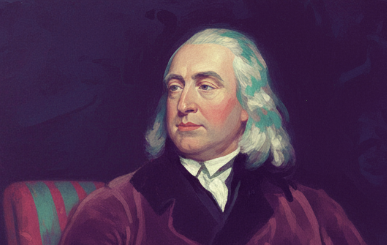
In principle and in practice, in a right track and in a wrong one, the rarest of all human qualities is consistency.
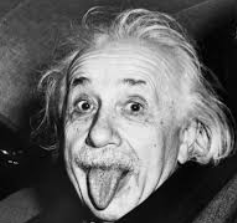
Why does this magnificent applied science which saves work and makes life easier bring us so little happiness? The simple answer runs: Because we have not yet learned to make sensible use of it. In war it serves that we may poison and mutilate each other. In peace it has made our lives hurried and uncertain. Instead of freeing us in great measure from spiritually exhausting labor, it has made men into slaves of machinery, who for the most part complete their monotonous long day's work with disgust and must continually tremble for their poor rations. ... It is not enough that you should understand about applied science in order that your work may increase man's blessings. Concern for the man himself and his fate must always form the chief interest of all technical endeavours; concern for the great unsolved problems of the organization of labor and the distribution of goods in order that the creations of our mind shall be a blessing and not a curse to mankind. Never forget this in the midst of your diagrams and equations.
Practice yourself, for heaven's sake, in little things; and thence proceed to greater.

Battles, in these ages, are transacted by mechanism; with the slightest possible development of human individuality or spontaneity: men now even die, and kill one another, in an artificial manner.
Whereas the particular conception of ideology designates only a part of the opponent's assertions as ideologies - and this only with reference to their content, the total conception calls into question the opponent's total Weltanschauung (including his conceptual apparatus), and attempts to understand these concepts as an outgrowth of the collective life of which he partakes.
Be attentive therefore, according to the instruction of the Gospel, to learn obedience from the lily and the bird. Be not affrighted, do no despair, when thou comparest thy life with these teachers. There is nothing to despair about, for indeed thou shalt learn from them; and the Gospel first comforts thee by telling thee that God is the God of patience, and then it adds: 'Thou shalt learn from the lilies and the birds, learn to be absolutely obedient like the lilies and the birds, learn not to serve two masters; for no man can serve two masters, he must either ... or.
It is indeed foolish to be unhappy now because you may be unhappy at some future time.
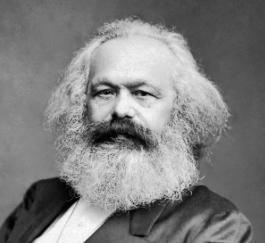
If conquest constitutes a natural right on the part of the few, the many have only to gather sufficient strength in order to acquire the natural right of reconquering what has been taken from them.
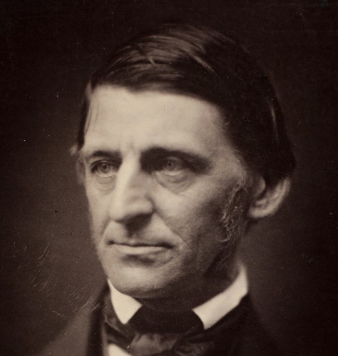
As there is a use in medicine for poisons, so the world cannot move without rogues.
And now the sagacious reader, who is capable of reading into these lines what does not stand written in them, but is nevertheless implied, will be able to form some conception of the serious feelings with which I then set foot in Emmendingen.
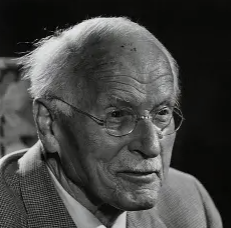
As far as we can discern, the sole purpose of human existence is to kindle a light in the darkness of mere being.
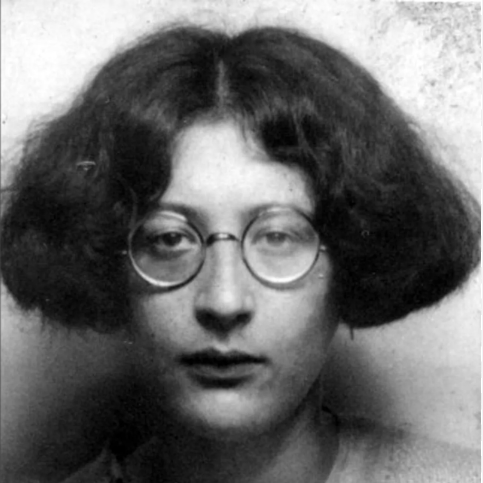
If a young girl is being forced into a brothel she will not talk about her rights. In such a situation the word would sound ludicrously inadequate.
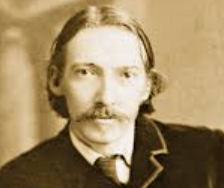
When a man is in a fair way and sees all life open in front of him, he seems to himself to make a very important figure in the world. His horse whinnies to him; the trumpets blow and the girls look out of window as he rides into town before his company; he receives many assurances of trust and regard--sometimes by express in a letter--sometimes face to face, with persons of great consequence falling on his neck. It is not wonderful if his head is turned for a time. But once he is dead, were he as brave as Hercules or as wise as Solomon, he is soon forgotten.
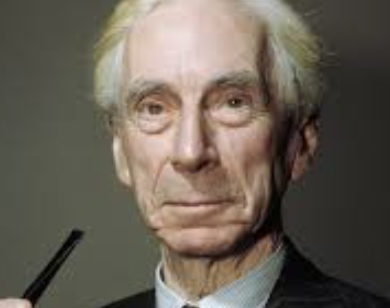
Three passions, simple but overwhelmingly strong, have governed my life: the longing for love, the search for knowledge, and unbearable pity for the suffering of mankind. These passions, like great winds, have blown me hither and thither, in a wayward course, over a deep ocean of anguish, reaching to the very verge of despair.
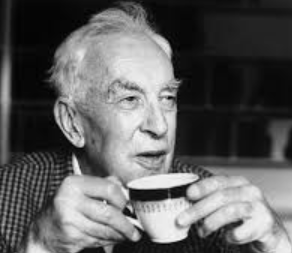
It is a paradoxical but profoundly true and important principle of life that the most likely way to reach a goal is to be aiming not at that goal itself but at some more ambitious goal beyond it.
It would be some consolation for the feebleness of ourselves and our works, if all things should perish as slowly as they come into being; but as it is, increases are of sluggish growth, but the way to ruin is rapid.

It is always necessary to call men back to history, which is the first master in politics, or more exactly the only master.
Instruction, that mysterious communing of Wisdom with Ignorance, is no longer an indefinable tentative process, requiring a study of individual aptitudes, and a perpetual variation of means and methods, to attain the same end; but a secure, universal, straightforward business, to be conducted in the gross, by proper mechanism.
Unconscious assumptions or opinions are the worst enemy of woman; they can even grow into a positively demonic passion that exasperates and disgusts men, and does the woman herself the greatest injury by gradually smothering the charm and meaning of her femininity and driving it into the background. Such a development naturally ends in profound psychological disunion, in short, in a neurosis.
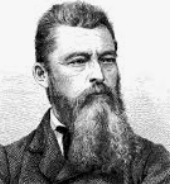
I have always taken as the standard of the mode of teaching and writing, not the abstract, particular, professional philosopher, but universal man, that I have regarded man as the criterion of truth, and not this or that founder of a system, and have from the first placed the highest excellence of the philosopher in this, that he abstains, both as a man and as an author, from the ostentation of philosophy, i.e., that he is a philosopher only in reality, not formally, that he is a quiet philosopher, not a loud and still less a brawling one.
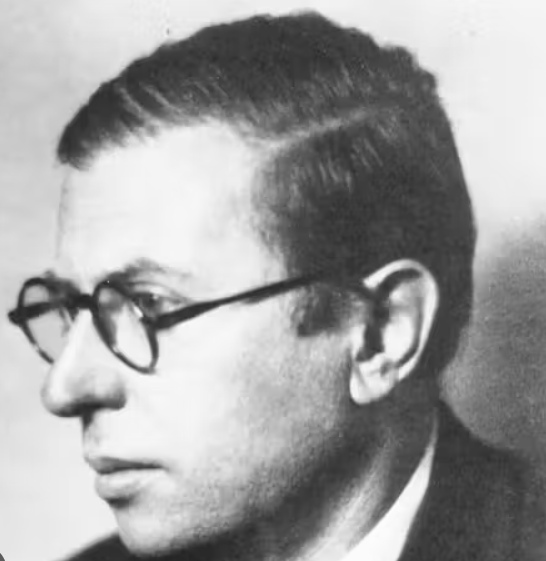
His business is here, it is here that he is despised and vilified, it is here that he must carry out his undertaking.
When I hear any man talk of an unalterable law, the only effect it produces upon me is to convince me that he is an unalterable fool.

One may be humble out of pride.

What is that one crucifixion compared to the daily kind any insomniac endures?
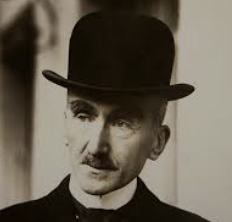
Men do not sufficiently realise that their future is in their own hands. Theirs is the task of determining first of all whether they want to go on living or not. Theirs is the responsibility, then, for deciding if they want merely to live, or intend to make just the extra effort required for fulfilling, even on their refractory planet, the essential function of the universe, which is a machine for the making of gods.

The things that we can see with our physical eyes are mere shadows of reality. If they appear ugly and ill formed, then what must be the ugliness of the soul in sin, deprived of all light? The soul, like the body, can undergo transformation in appearance. In sin it appears as completely ugly to the beholder. In virtue it shines resplendently before God.

If we want to postulate a deity capable of engineering all the organized complexity in the world, either instantaneously or by guiding evolution, that deity must have been vastly complex in the first place. The creationist, whether a naive Bible-thumper or an educated bishop, simply postulates an already existing being of prodigious intelligence and complexity. If we are going to allow ourselves the luxury of postulating organized complexity without offering an explanation, we might as well make a job of it and simply postulate the existence of life as we know it!
Correspondences are like small clothes before the invention of suspenders; it is impossible to keep them up.
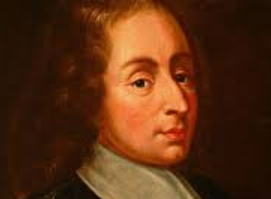
What would you say of that man who was made king by the error of the people, if he had so far forgotten his natural condition as to imagine that this kingdom was due to him, that he deserved it, and that it belonged to him of right? You would marvel at his stupidity and folly. But is there less in the people of rank who live in so strange a forgetfulness of their natural condition?
He that I am reading seems always to have the most force.

It is only necessary to make war with five things; with the maladies of the body, the ignorances of the mind, with the passions of the body, with the seditions of the city and the discords of families.

The most defenseless tenderness and the bloodiest of powers have a similar need of confession. Western man has become a confessing animal.
Let us give Nature a chance; she knows her business better than we do.
Truly it is a sad thing for a people, as for a man, to fall into Scepticism, into dilettantism, insincerity; not to know Sincerity when they see it. For this world, and for all worlds, what curse is so fatal?

Earth governments in moments of stress are not famous for being reasonable.

I need Christ, not something that resembles Him.

The christian religion is a parody on the worship of the Sun, in which they put a man whom they call Christ, in the place of the Sun, and pay him the same adoration which was originally paid to the Sun.
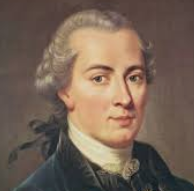
The second is the partiality for unity proper to the philosophical mind, whence this wide-spread canon has flown forth: principles are not to be multiplied beyond supreme necessity, to which we give in our adhesion, not because we have insight into causal unity in the world either by reason or experience, but as seeking it by an impulse of the intellect which seems to itself to have by thus much advanced in the explication of phenomena, by as much as it is granted to it to descend from the same principle to a greater number of consequences,
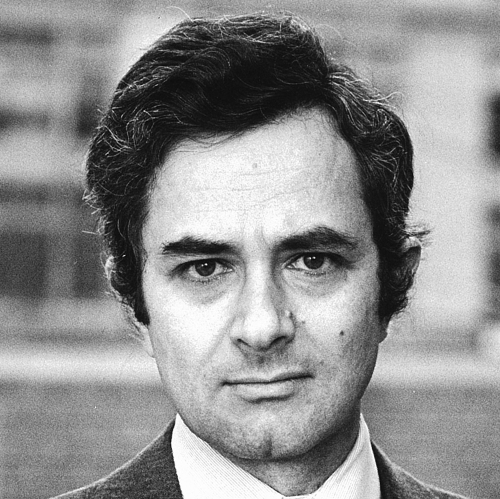
With regard to the rather common general distinction between good and bad sex ..., bad sex is generally better than none at all. This should not be controversial: it seems to hold for other important matters, like food, music, literature, and society. In the end, one must choose from among the available alternatives, whether their availability depends on the environment or on one's own constitution. And the alternatives have to be fairly grim before it becomes rational to opt for nothing.
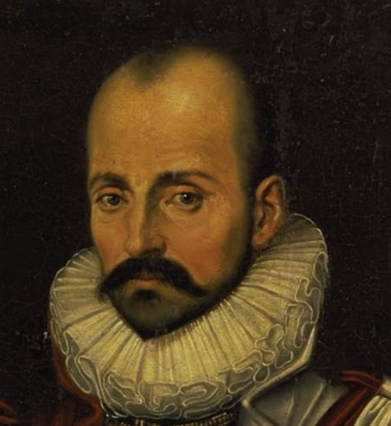
From all these indignities, such as the very beasts of the field would not endure, you can deliver yourselves if you try, not by taking action, but merely by willing to be free.
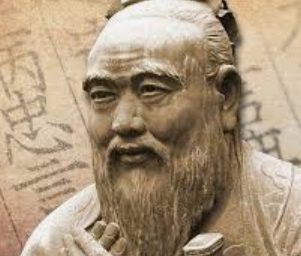
I hear and I forget. I see and I remember. I do and I understand.

It appears to me impossible that I should cease to exist, or that this active, restless spirit, equally alive to joy and sorrow, should only be organised dust - ready to fly abroad the moment the spring snaps, or the spark goes out which kept it together. Surely something resides in this heart that is not perishable, and life is more than a dream.
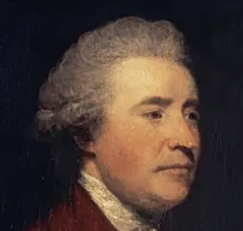
It was the case of common soldiers deserting from their officers, to join a furious, licentious populace. It was a desertion to a cause, the real object of which was to level all those institutions, and to break all those connexions, natural and civil, that regulate and hold together the community by a chain of subordination; to raise soldiers against their officers; servants against their masters; tradesmen against their customers; artificers against their employers; tenants against their landlords; curates against their bishops; and children against their parents. That this cause of theirs was not an enemy to servitude, but to society.
One life; a little gleam of Time between two Eternities; no second chance to us for evermore!
We do not rush toward death, we flee the catastrophe of birth, survivors struggling to forget it. Fear of death is merely the projection into the future of a fear which dates back to our first moment of life. We are reluctant, of course, to treat birth as a scourge: has it not been inculcated as the sovereign good - have we not been told that the worst came at the end, not at the outset of our lives? Yet evil, the real evil, is behind, not ahead of us. What escaped Jesus did not escape Buddha: "If three things did not exist in the world, O disciples, the Perfect One would not appear in the world. ..." And ahead of old age and death he places the fact of birth, source of every infirmity, every disaster.
CivilSimian.com created by AxiomaticPanic, CivilSimian, Kalokagathia
