


3 months 3 weeks ago
The pragmatic justification is that liberalism is... a political doctrine that seeks to enable societies to govern themselves over diversity. It arose in the minds of thinkers like Thomas Hobbes or John Locke or Samuel Pufendorf... as a result of the European wars of religion following the Protestant Reformation.
▼
Source
source
8:02

7 months 1 week ago
Christ is not valued at all unless He be valued above all.
▼
Source
source
p. 395

6 months 4 weeks ago
Where knowledge is a duty, ignorance is a crime.
▼
Source
source
Public Good, Philadelphia: John Dunlap, 1780
4 months 3 weeks ago
I think it is not helpful to apply Darwinian language too widely. Conquest of nation by nation is too distant for Darwinian explanations to be helpful. Darwinism is the differential survival of self-replicating genes in a gene pool, usually as manifested by individual behaviour, morphology, and phenotypes. Group selection of any kind is not Darwinism as Darwin understood it nor as I understand it. There is a very vague analogy between group selection and conquest of a nation by another nation, but I don't think it's a very helpful analogy. So I would prefer not to invoke Darwinian language for that kind of historical interpretation.
5 months 1 week ago
The order of nature cannot be justified by the mere observation of nature. For there is nothing in the present fact which inherently refers either to the past or to the future.... It illustrates the anti-rationalism of the scientific public that, when Hume did appear, it was only the religious implications of his philosophy which attracted attention. This was because the clergy were in principle rationalists, whereas the men of science were content with a simple faith in the order of nature.
▼
Source
source
Ch. 3: "The Century of Genius", p. 73
5 months 4 days ago
When land and its tillage are the basis of taxation, one need not care exactly how many people there are.
▼
Source
source
Chapter 12, Political Arithmetic, p. 103.
3 months 1 week ago
Myths are not descriptions of things, but expressions of a determination to act... A myth cannot be refuted since it is, at bottom, identical with the convictions of a group, being the expression of these convictions in the language of movement.
▼
Source
source
p. 28-29 (Letter to Daniel Halevy)
5 months 3 weeks ago
In all persuasions the bigots are persecutors; the men of a cool and reasonable piety are favourers of toleration; because the former sort of men not taking the pains to be acquainted with the grounds of their adversaries tenets, conceive them to be so absurd and monstrous, that no man of sense can give into them in good earnest. For which reason they are convinced that some oblique bad motive induces them to pretend to the belief of such doctrines, and to the maintaining of them with obstinacy. This is a very general principle in all religious differences, and it is the corner stone of all persecution.
▼
Source
source
Volume II, p. 148
6 months 2 weeks ago
Of all things the worst to teach the young is dalliance, for it is this that is the parent of those pleasures from which wickedness springs.
5 months 2 weeks ago
I Jesus have sent mine angel to testify unto you these things in the churches. I am the root and the offspring of David, and the bright and morning star.
▼
Source
source
Revelation 22:17
7 months ago
The force of the word World, as commonly used, of itself falls in with us. For no one will attribute accidents to the World as parts, but as determinations, states; hence the so-called world of the ego, unrestrained by the single substance and its accidents, is not very appositely called a World, unless, perhaps, an imaginary one.
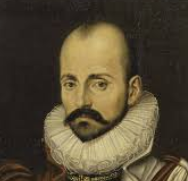
7 months 4 days ago
The first law that ever God gave to man was a law of pure obedience; it was a commandment naked and simple, wherein man had nothing to inquire after, nor to dispute; forasmuch as to obey is the proper office of a rational soul, acknowledging a heavenly superior and benefactor.
▼
Source
source
Ch. 12, tr. Cotton, 1685
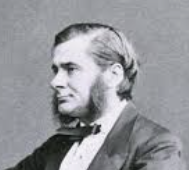
4 months 1 week ago
The students of physical science are not unfrequently told that their pursuits unfit them for the estimation of moral probability. And it may be so, for I am afraid that to those who are accustomed to severe reasoning, either in the province of Science or in that of Law, reasoning from 'moral probability' is apt to be regarded as a process of accumulating inconclusive arguments, in the hope that a great heap of them may, at least, look as firm as one good demonstration.
▼
Source
source
The Evidence of the Miracle of the Resurrection
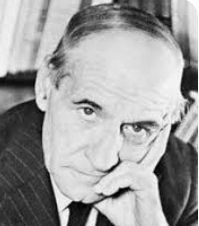
5 months 2 weeks ago
Human life, by its very nature, has to be dedicated to something, an enterprise glorious or humble, a destiny illustrious or trivial. We are faced with a condition, strange but inexorable, involved in our very existence.
▼
Source
source
Chapter XIV: Who Rules The World?
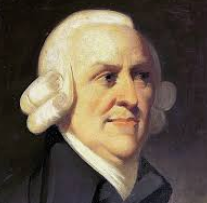
7 months 1 day ago
Among civilized and thriving nations, on the contrary, though a great number of people do no labor at all, many of whom consume the produce of ten times, frequently of a hundred times more labour than the greater part of those who work; yet the produce of the whole labour of the society is so great, that all are often abundantly supplied, and a workman, even of the lowest and poorest order, if he is frugal and industrious, may enjoy a greater share of the necessaries and conveniencies of life than it is possible for any savage to acquire.
▼
Source
source
Introduction and Plan of the Work, p. 2.
6 months 3 weeks ago
The rule of Big Money and its attendant culture of cupidity and mendacity has so poisoned our hearts, minds and souls that a dominant self-righteous neoliberal soulcraft of smartness, dollars and bombs thrives with little opposition.
▼
Source
source
America is spiritually bankrupt. We must fight back together. The Guardian,
6 months 3 weeks ago
What I give is the morphology of the use of an expression. I show that it has kinds of uses of which you had not dreamed. In philosophy one feels forced to look at a concept in a certain way. What I do is suggest, or even invent, other ways of looking at it. I suggest possibilities of which you had not previously thought. You thought that there was one possibility, or only two at most. But I made you think of others. Furthermore, I made you see that it was absurd to expect the concept to conform to those narrow possibilities. Thus your mental cramp is relieved, and you are free to look around the field of use of the expression and to describe the different kinds of uses of it.
▼
Source
source
Lectures of 1946 - 1947, as quoted in Ludwig Wittgenstein : A Memoir (1966) by Norman Malcolm, p. 43

3 months 2 weeks ago
The young generations of the world, who had in them the freshness of young children, and yet the depth of earnest men, who did not think that they had finished off all things in Heaven and Earth by merely giving them scientific names, but had to gaze direct at them there, with awe and wonder: they felt better what of divinity is in man and Nature; they, without being mad, could worship Nature, and man more than anything else in Nature.
3 months 1 week ago
I don't know what your destiny will be, but one thing I know, the only ones among you who will be really happy are those who have sought and found how to serve.
▼
Source
source
Widely attributed to Schwietzer online, no known original source.


3 months 2 weeks ago
Sarcasm I now see to be, in general, the language of the Devil; for which reason I have, long since, as good as renounced it.
▼
Source
source
Bk. II, ch. 4.
4 months 3 weeks ago
The Age of Writing has passed. We must invent a new metaphor, restructure our thoughts and feelings.
▼
Source
source
(p. 14)
7 months 1 day ago
A propensity to hope and joy is real riches: One to fear and sorrow, real poverty.
▼
Source
source
Part I, Essay 18: The Sceptic
4 months 6 days ago
A few centuries from now, if involuntary suffering still exists in the world, the explanation for its persistence won't be that we've run out of computational resources to phase out its biological signature, but rather that rational agents - for reasons unknown - will have chosen to preserve it.
▼
Source
source
The Radical Plan to Phase out Earth's Predatory Species, io9, 30 Jul. 2014

6 months 4 weeks ago
For want of the apparatus of propositional functions, many logicians have been driven to the conclusion that there are unreal objects. It is argued, e.g., by Meinong, that we can speak about "the golden mountain," "the round square," and so on; we can make true propositions of which these are the subjects; hence they must have some kind of logical being, since otherwise the propositions in which they occur would be meaningless. In such theories, it seems to me, there is a failure of that feeling for reality which ought to be preserved even in the most abstract studies. Logic, I should maintain, must no more admit a unicorn than zoology can; for logic is concerned with the real world just as truly as zoology, though with its more abstract and general features.
▼
Source
source
Ch. 16: Descriptions
7 months 4 days ago
The mariner of old said to Neptune in a great tempest, "O God! thou mayest save me if thou wilt, and if thou wilt thou mayest destroy me; but whether or no, I will steer my rudder true."
▼
Source
source
Book II, Ch. 16. Of Glory
4 months 2 weeks ago
The strange superstition has arisen in the Western world that we can start all over again, remaking human nature, human society, and the possibilities of happiness; as though the knowledge and experience of our ancestors were now entirely irrelevant.
▼
Source
source
Gentle Regrets: Thoughts from a Life
7 months 3 weeks ago
Since... nature is a principle of motion and mutation... it is necessary that we should not be ignorant of what motion is... But motion appears to belong to things continuous; and the infinite first presents itself to the view in that which is continuous. ...Frequently ...those who define the continuous, employ the nature or the infinite, as if that which is divisible to infinity is continuous.

6 months 1 day ago
There are at the present time two great nations in the world-allude to the Russians and the Americans- All other nations seem to have nearly reached their national limits, and have only to maintain their power; these alone are proceeding-along a path to which no limit can be perceived.
▼
Source
source
Chapter XVIII.

5 months 3 weeks ago
Better to be an animal than a man, an insect than an animal, a plant than an insect, and so on. Salvation? Whatever diminishes the kingdom of consciousness and compromises its supremacy.
5 months 3 weeks ago
Romantic poetry ... recognizes as its first commandment that the will of the poet can tolerate no law above itself.
▼
Source
source
Philosophical Fragments, P. Firchow, trans. (1991) § 116
3 months 2 weeks ago
Cash Payment the sole nexus; and there are so many things which cash will not pay! Cash is a great miracle; yet it has not all power in Heaven, nor even on Earth. 'Supply and demand' we will honour also; and yet how many 'demands' are there, entirely indispensable, which have to go elsewhere than to the shops, and produce quite other than cash, before they can get their supply? On the whole, what astonishing payments does cash make in this world!
▼
Source
source
Ch. 7, Not Laissez-Faire.
6 months 4 weeks ago
None of the things they learn, should ever be made a burthen to them, or impos's on them as a task. Whatever is so proposed, presently becomes irksome; the mind takes an aversion to it, though before it were a thing of delight or indifferency. Let a child but be ordered to whip his top at a certain time every day, whether he has or has not a mind to it; let this be but requir'd of him as a duty, wherein he must spend so many hours morning and afternoon, and see whether he will not soon be weary of any play at this rate. Is it not so with grown men?
▼
Source
source
Sec. 73
4 months 3 weeks ago
Ivan Ilych's life had been most simple and most ordinary and therefore most terrible.
▼
Source
source
Ch. II
4 months 3 weeks ago
The business of art is no longer the communication of thoughts or feelings which are to be conceptually ordered, but a direct participation in an experience. The whole tendency of modern communication...is towards participation in a process, rather than apprehension of concepts.
▼
Source
source
Letter to Harold Adam Innis (14 March 1951), published in Essential McLuhan (1995), edited by Eric McLuhan and Frank Zingrone, p. 73
6 months 3 weeks ago
You can't worship a spirit in spirit, unless you do it now. Wallowing in the past may be good literature. As wisdom, it's hopeless. Time Regained is Paradise Lost, and Time Lost is Paradise Regained. Let the dead bury their dead. If you want to live at every moment as it presents itself, you've got to die to every other moment.
▼
Source
source
John Rivers in The Genius and the Goddess, 1955
6 months 2 days ago
I believe the world grows near its end, yet is neither old nor decayed, nor will ever perish upon the ruins of its own principles.
▼
Source
source
Section 45
6 months 3 weeks ago
The way you use the word "God" does not show whom you mean - but, rather, what you mean.
▼
Source
source
p. 50e
2 months 3 weeks ago
How much pain have cost us the evils which have never happened.
3 months 1 week ago
Unrighteous fortune seldom spares the highest worth; no one with safety can long front so frequent perils. Whom calamity oft passes by she finds at last.
▼
Source
source
lines 325-328; (Megara).
4 months 1 week ago
Life itself is always pulling you away from the understanding of life.
6 months 3 weeks ago
Justice is the first virtue of social institutions, as truth is of systems of thought. A theory however elegant and economical must be rejected or revised if it is untrue; likewise laws and institutions no matter how efficient and well-arranged must be reformed or abolished if they are unjust. Each person possesses an inviolability founded on justice that even the welfare of society as a whole cannot override. For this reason justice denies that the loss of freedom for some is made right by a greater good shared by others. It does not allow that the sacrifices imposed on a few are outweighed by the larger sum of advantages enjoyed by many. Therefore in a just society the liberties of equal citizenship are taken as settled; the rights secured by justice are not subject to political bargaining or to the calculus of social interests.
▼
Source
source
Chapter I, Section 1, pg. 3-4
6 months 4 weeks ago
If there is anything in the world that can really be called a man's property, it is surely that which is the result of his mental activity.
▼
Source
source
Unverified attribution noted in Respectfully Quoted: A Dictionary of Quotations (1993), ed. Suzy Platt, Library of Congress, p. 227
4 months 1 week ago
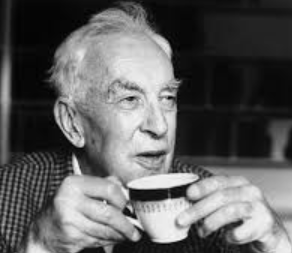
These immense cities lie basking on the beaches of the continent like whales that have taken to the land again. What do these great, sleek, well-fed creatures live on so sumptuously?
▼
Source
source
12. The Elusive Continent (on the six state capitals of Australia)
5 months 2 weeks ago
When there were gathered together an innumerable multitude of people, insomuch that they trode one upon another, he began to say unto his disciples first of all, Beware ye of the leaven of the Pharisees, which is hypocrisy. For there is nothing covered, that shall not be revealed; neither hid, that shall not be known. Therefore whatsoever ye have spoken in darkness shall be heard in the light; and that which ye have spoken in the ear in closets shall be proclaimed upon the housetops. And I say unto you my friends, Be not afraid of them that kill the body, and after that have no more that they can do. But I will forewarn you whom ye shall fear: Fear him, which after he hath killed hath power to cast into hell; yea, I say unto you, Fear him.
▼
Source
source
12:1-5
6 months 3 weeks ago
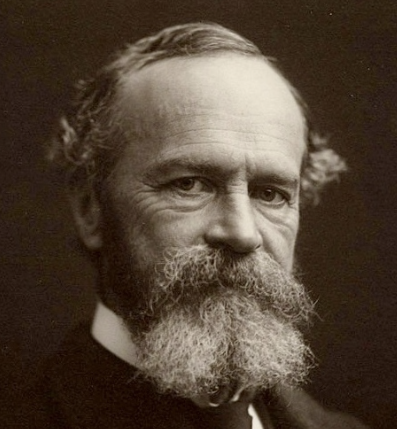
The collective name for the ripe fruits of religion in a character is Saintliness. The saintly character is the character for which spiritual emotions are the habitual centre of the personal energy; and there is a certain composite photograph of universal saintliness, the same in all religions, of which the features can easily be traced.
▼
Source
source
Lectures XI, XII, AND XIII : "Saintliness"
6 months 3 weeks ago
Pretend what we may, the whole man within us is at work when we form our philosophical opinions. Intellect, will, taste, and passion co-operate just as they do in practical affairs; and lucky it is if the passion be not something as petty as a love of personal conquest over the philosopher across the way.
2 months 3 weeks ago
I thank God that this refreshing childhood vision still lives inside me in all its fullness of color and sound. This is what keeps my mind untouched by wastage, keeps it from withering and running dry. It is the sacred drop of immortal water which prevents me from dying. When I wish to speak of the sea, woman, or God in my writing, I gaze down in my breast and listen carefully to what the child within me says. He dictates to me; and if it sometimes happens that I come close to these great forces of the sea, woman, and God, approach them by means of words and depict them, I owe it to the child who still lives within me. I become a child again to enable myself to view the world always for the first time, with virgin eyes.
▼
Source
source
The Son, Ch. 4, p. 49
CivilSimian.com created by AxiomaticPanic, CivilSimian, Kalokagathia