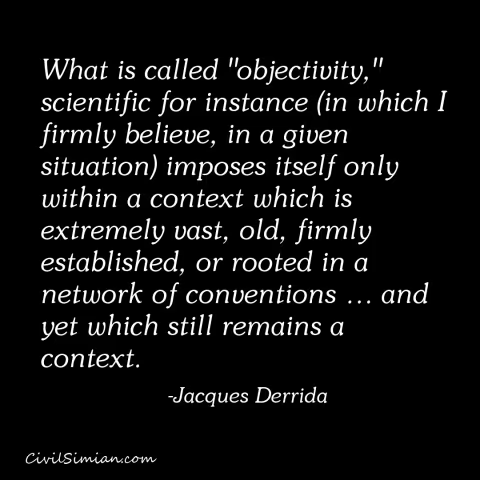
It's a context in the way that reality itself is context....


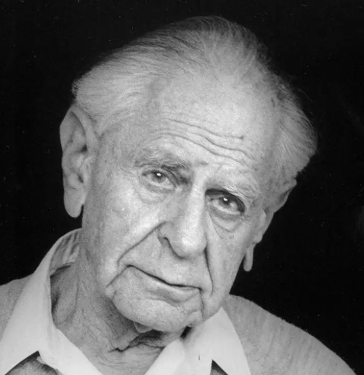
Philosophers should consider the fact that the greatest happiness principle can easily be made an excuse for a benevolent dictatorship. We should replace it by a more modest and more realistic principle - the principle that the fight against avoidable misery should be a recognized aim of public policy, while the increase of happiness should be left, in the main, to private initiative.
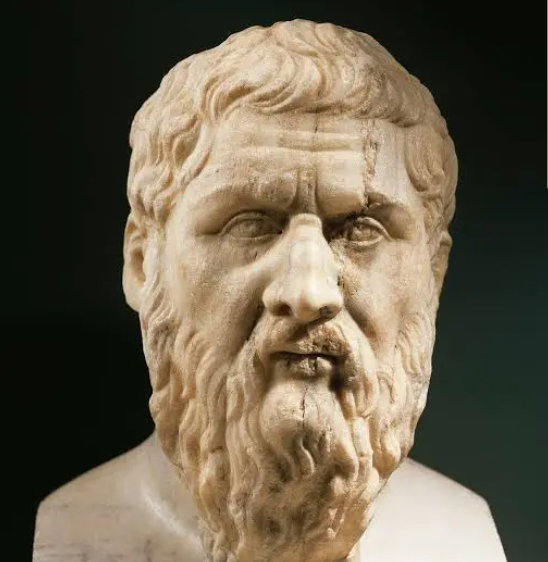
Such was the vast power which the god settled in the lost island of Atlantis; and this he afterwards directed against our land for the following reasons, as tradition tells: For many generations, as long as the divine nature lasted in them, they were obedient to the laws, and well-affectioned towards the god, whose seed they were; for they possessed true and in every way great spirits, uniting gentleness with wisdom in the various chances of life, and in their intercourse with one another.
When you see a person squirming in the clutches of the Law, say to him: "Brother, get things straight. You let the Law talk to your conscience. Make it talk to your flesh.
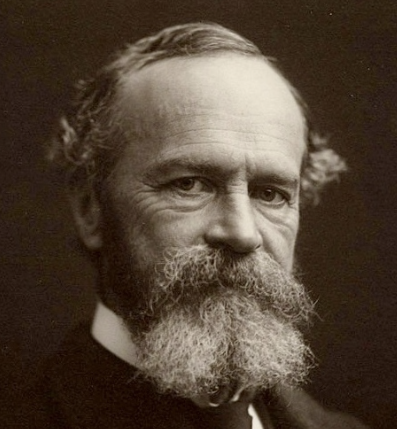
I wished, by treating Psychology like a natural science, to help her to become one.
Religion is the vision of something which stands beyond, behind and within the passing flux of immediate things; something which is real, and yet waiting to be realized; something which is a remote possibility, and yet the greatest of present facts; something that gives meaning to all that passes, and yet eludes apprehension; something whose possession is the final good, and yet is beyond all reach; something which is the ultimate ideal, and the hopeless quest.
Diet, injections, and injunctions will combine, from a very early age, to produce the sort of character and the sort of beliefs that the authorities consider desirable, and any serious criticism of the powers that be will become psychologically impossible. Even if all are miserable, all will believe themselves happy, because the government will tell them that they are so.
Quite apart from assiduous efforts to restrict the use of violence as means rather than an end, the actualization of violence as a means can inadvertently become its own end, producing new violence, producing violence anew, reiterating the license, and licensing further violence. Violence does not exhaust itself in the realization of a just end; rather, it renews itself in directions that exceed both deliberate intention and instrumental schemes. In other words, by acting as if the use of violence can be a means to achieve a nonviolent end, one imagines that the practice of violence does not in the act posit violence as its own end. The technē is undermined by the praxis, and the use of violence only makes the world into a more violent place, by bringing more violence into the world.
No rules, however wise, are a substitute for affection and tact.

Terror is not now, if it ever was, something that comes to us from outside. It is a part of the society in which we live. Both liberals and neoconservatives believe terrorism can be dealt with by removing its causes. The truth is less reassuring. Al-Qaeda has mutated into a decentralised, often locally based type of apocalyptic terrorism and, in this new guise, seems to be acquiring a formidable momentum.
The criterion of truth is that it works even if nobody is prepared to acknowledge it.
People almost invariably arrive at their beliefs not on the basis of proof but on the basis of what they find attractive.
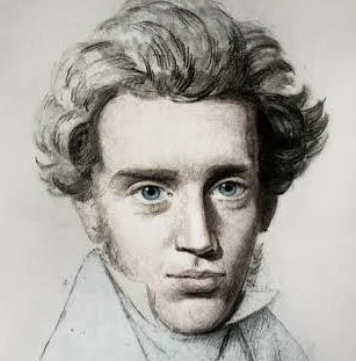
People are scarcely aware that it is a slavery they are creating; they forget this in their zeal to make people free by overthrowing dominions. They are scarcely aware that it is slavery; how could it be possible to be a slave in relation to equals?

Wisdom thoroughly learned, will never be forgotten. Science is got by diligence; but Discretion and Wisdom cometh of GOD.
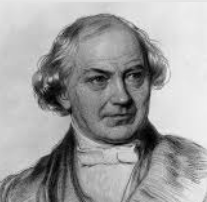
The resolution of complex Facts into precise and measured partial Facts, we call the 'Decomposition of Facts'. This process is requisite for the progress of science, but does not necessarily lead to progress. The Conceptions by which Facts are bound together, are suggested by the sagacity of discoverers. But a supply of appropriate hypotheses cannot be constructed by rule, nor without inventive talent. The truth of tentative hypotheses must be tested by their application to facts. The discoverer must be ready, carefully to try his hypotheses in this manner, and to reject them if they will not bear the test, in spite of indolence and vanity.

For we have in Latin only a few small streams and muddy puddles, while they have pure springs and rivers flowing in gold. I see that it is utter madness even to touch with the little finger that branch of theology that deals chiefly with the divine mysteries, unless one is also provided with the equipment of Greek.
There is absolutely no inevitability, so long as there is a willingness to contemplate what is happening.
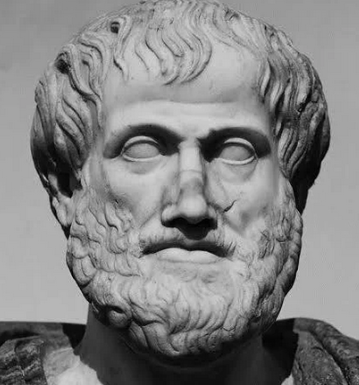
For the purposes of poetry a convincing impossibility is preferable to an unconvincing possibility.
My dear reader, read aloud, if possible! If you do so, allow me to thank you for it: if you not only do it yourself, if you also influence others to do it, allow me to thank each one of them, and you again and again!
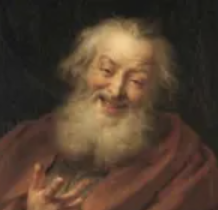
'Tis not in strength of body nor in gold that men find happiness, but in uprightness and in fulness of understanding.
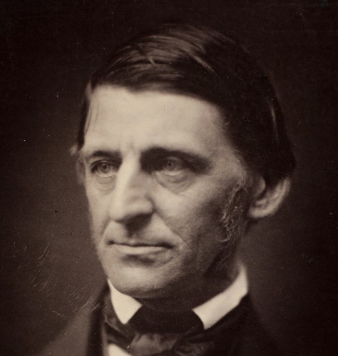
None shall rule but the humble, And none but Toil shall have.
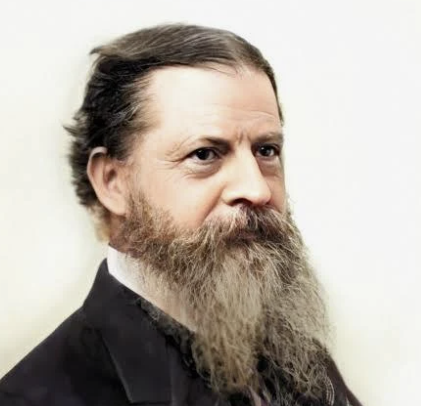
As the mathematics are now understood, each branch - or, if you please, each problem, - is but the study of the relations of a collection of connected objects, without parts, without any distinctive characters, except their names or designating letters. These objects are commonly called points; but to remove all notion of space relations, it may be better to name them monads. The relations between these points are mere complications of two different kinds of elementary relations, which may be termed immediate connection and immediate non-connection. All the monads except as serve as intermediaries for the connections have distinctive designations.
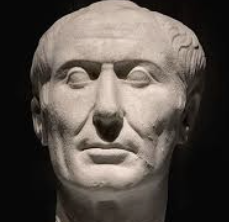
Have courage, or cunning, when you deal with an enemy.
We are accustomed to speak of ideas as reproduced, as passed from mind to mind, as similar or dissimilar to one another, and, in short, as if they were substantial things; nor can any reasonable objection be raised to such expressions. But taking the word "idea" in the sense of an event in an individual consciousness, it is clear that an idea once past is gone forever, and any supposed recurrence of it is another idea. These two ideas are not present in the same state of consciousness, and therefore cannot possibly be compared.

Bacon, Locke, Descartes, Hume, and all the others knew they were giving rights to vulgarity. But in so doing-in addition to caring for man's well-being-they were providing rights for themselves.
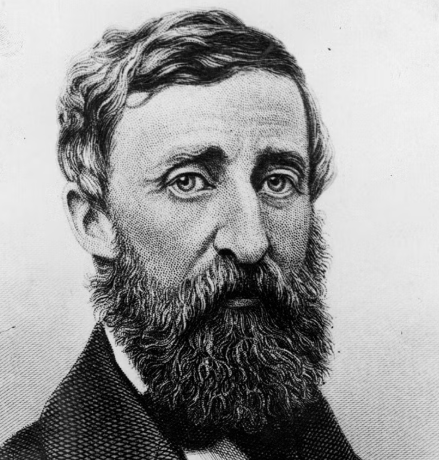
In the Hindoo scripture the idea of man is quite illimitable and sublime. There is nowhere a loftier conception of his destiny. He is at length lost in Brahma himself 'the divine male.' ... there is no grandeur conception of creation anywhere .... The very indistinctness of its theogeny implies a sublime truth.

There is hardly a pioneer's hut which does not contain a few odd volumes of Shakespeare. I remember reading the feudal drama of Henry V for the first time in a log cabin.
Do not imagine that it is less an accident by which you find yourself master of the wealth which you possess, than that by which this man found himself king.
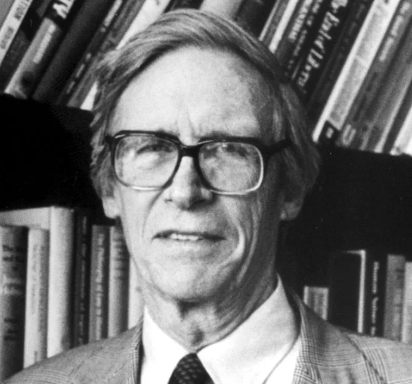
No one deserves his greater natural capacity nor merits a more favorable starting place in society.

The same energy of character which renders a man a daring villain would have rendered him useful to society, had that society been well organized.
In any country where talent and virtue produce no advancement, money will be the national god. Its inhabitants will either have to possess money or make others believe that they do. Wealth will be the highest virtue, poverty the greatest vice. Those who have money will display it in every imaginable way. If their ostentation does not exceed their fortune, all will be well. But if their ostentation does exceed their fortune they will ruin themselves. In such a country, the greatest fortunes will vanish in the twinkling of an eye. Those who don't have money will ruin themselves with vain efforts to conceal their poverty. That is one kind of affluence: the outward sign of wealth for a small number, the mask of poverty for the majority, and a source of corruption for all.
Anxiety destroys scale, and suffering makes us lose perspective.
Above and before all things, worship GOD!
Nothing is quite so wretchedly corrupt as an aristocracy which has lost its power but kept its wealth and which still has endless leisure to devote to nothing but banal enjoyments. All its great thoughts and passionate energy are things of the past, and nothing but a host of petty, gnawing vices now cling to it like worms to a corpse.
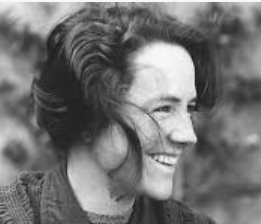
I ... understand why the saints were rarely married women. I am convinced it has nothing inherently to do, as I once supposed, with chastity or children. It has primarily to do with distractions ... Women's normal occupations in general run counter to creative life, or contemplative life or saintly life.
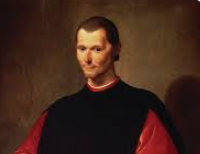
A prudent man should always follow in the path trodden by great men and imitate those who are most excellent.
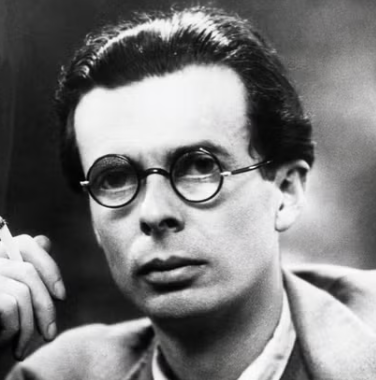
The proper study of mankind is books.
Christianity has functioned for the normative self-understanding of modernity as more than a mere precursor or a catalyst. Egalitarian universalism, from which sprang the ideas of freedom and social solidarity, of an antonomous conduct of life and emancipation, of the individual morality of conscience, human rights, and democracy, is the direct heir to the judaic ethic of justice and the Christian ethic of love. This legacy, substantially unchanged, has been the object of continual critical appropriation and reinterpretation. To this day, there is no alternative to it. And in the light of the current challenges of a postnational constellation, we continue to draw on the substance of this heritage. Everything else is just idle postmodern talk.
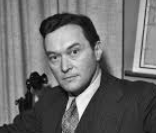
News and truth are not the same thing and must be clearly distinguished. The function of news is to signalize an event, the function of truth is to bring to light the hidden facts, to set them into relation with each other, and make a picture of reality on which men can act. Only at those points, where social conditions take recognizable and measurable shape, do the body of truth and the body of news coincide.
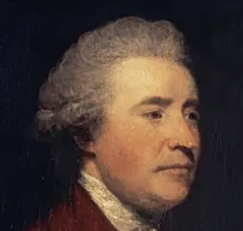
In effect, to follow, not to force the public inclination; to give a direction, a form, a technical dress, and a specific sanction, to the general sense of the community, is the true end of legislature.
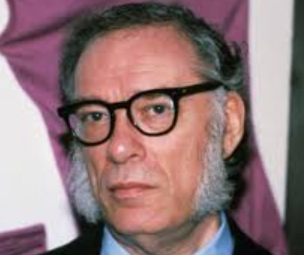
It built itself up endlessly, like a chess game, and the telemetrists began to use a computer to program the computer that designed the program for the computer that programmed the robot-controlling computer.
My parents, both of whom spoke Russian fluently, made no effort to teach me Russian, but insisted on my learning English as rapidly and as well as possible. They even set about learning English themselves, with reasonable, but limited, success.In a way, I am sorry. It would have been good to know the language of Pushkin, Tolstoy, and Dostoevski. On the other hand, I would not have been willing to let anything get in the way of the complete mastery of English. Allow me my prejudice: surely there is no language more majestic than that of Shakespeare, Milton, and the King James Bible, and if I am to have one language that I know as only a native can know it, I consider myself unbelievably fortunate that it is English.
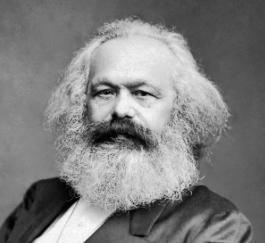
The capitalist cannot store labour-power in warehouses after he has bought it, as he may do with the raw material.
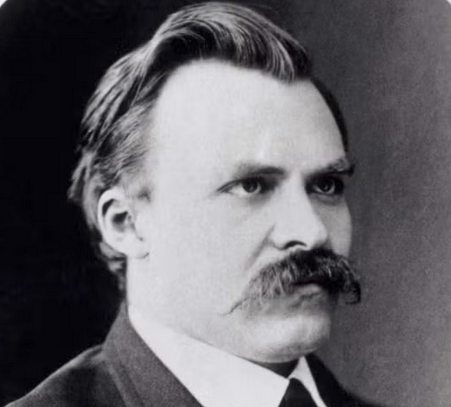
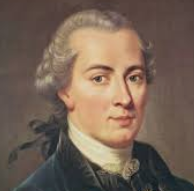
Political independence, as the right to owe his existence and continuance in society not to the arbitrary will of another, but to his own rights and powers as a member of the commonwealth.
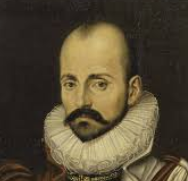
There is nothing so easy, so sweet, and so favourable, as the divine law: it calls and invites us to her, guilty and abominable as we are; extends her arms and receives us into her bosom, foul and polluted as we at present are, and are for the future to be. But then, in return, we are to look upon her with a respectful eye; we are to receive this pardon with all gratitude and submission, and for that instant at least, wherein we address ourselves to her, to have the soul sensible of the ills we have committed, and at enmity with those passions that seduced us to offend her.
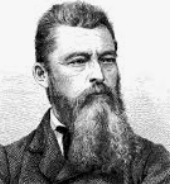
We have busied ourselves and contented ourselves long enough with speaking and writing; now at last we demand that the word become flesh, the spirit matter; we are as sick of political as we are of philosophical idealism; we are determined to become political materialists.
CivilSimian.com created by AxiomaticPanic, CivilSimian, Kalokagathia