

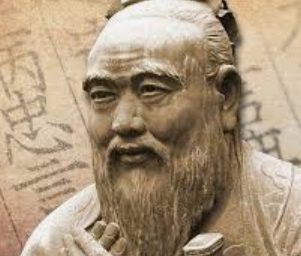
7 months 2 weeks ago
Sincerity becomes apparent. From being apparent, it becomes manifest. From being manifest, it becomes brilliant. Brilliant, it affects others. Affecting others, they are changed by it. Changed by it, they are transformed. It is only he who is possessed of the most complete sincerity that can exist under heaven, who can transform.
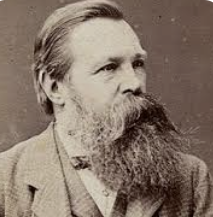
5 months 3 weeks ago
All religions so far have been the expression of historical stages of development of individual peoples or groups of peoples. But communism is the stage of historical development which makes all existing religions superfluous and brings about their disappearance.
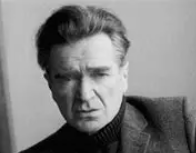
5 months 3 weeks ago
Compared to the refined culture of sclerotic forms and frames, which mask everything, the lyrical mode is utterly barbarian in its expression. Its value resides precisely in its savage quality: it is only blood, sincerity, and fire.
5 months 3 weeks ago
A regret understood by no one: the regret to be a pessimist. It's not easy to be on the wrong foot with life

3 months 2 weeks ago
Cash Payment the sole nexus; and there are so many things which cash will not pay! Cash is a great miracle; yet it has not all power in Heaven, nor even on Earth. 'Supply and demand' we will honour also; and yet how many 'demands' are there, entirely indispensable, which have to go elsewhere than to the shops, and produce quite other than cash, before they can get their supply? On the whole, what astonishing payments does cash make in this world!
▼
Source
source
Ch. 7, Not Laissez-Faire.
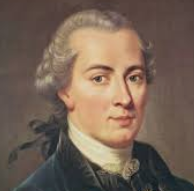
6 months 4 weeks ago
Religion should be .... successively freed from all statutes based on history, and one purely moral religion rule over all, in order that God might be all in all. The veil must fall. The leading-string of sacred tradition with all its appendices becomes by degrees useless, and at last a fetter ... The humiliating difference between laymen and clergymen must disappear, and equality spring from true liberty. All this, however, must not be expected from an exterior revolution, which acts violently, and depends upon fortune In the principle of pure moral religion, which is a sort of divine revelation constantly taking place in the soul of man, must be sought the ground for a passage to the new order of things, which will be accomplished by slow and successive reforms.
▼
Source
source
As quoted in German Thought, From The Seven Years' War To Goethe's Death : Six Lectures (1880) by Karl Hillebrand, p. 208
6 months 3 weeks ago
Mystery is delightful, but unscientific, since it depends upon ignorance.
▼
Source
source
The Analysis of Mind (1921), Lecture I: Recent Criticisms of "Consciousness"
6 months 2 weeks ago
With a foolish man make no dispute.
4 months 3 weeks ago
It may be that brain hardware has co-evolved with the internal virtual worlds that it creates. This can be called hardware-software co-evolution.
3 months 3 weeks ago
He whom God has touched will always be a being apart: he is, whatever he may do, a stranger among men; he is marked by a sign.
▼
Source
source
Oeuvres Complètes, vol. 3. L'Avenir de la Science (1890).

4 months 3 weeks ago
Man works when he is partially involved. When he is totally involved he is at play or leisure.
6 months 2 weeks ago
Thou shouldst not become presumptuous through life; for death comes upon thee at last, and the perishable part falls to the ground.
5 months 3 weeks ago
I have taken pains to make my distinction of icons, indices, and tokens clear, in order to enunciate this proposition: in a perfect system of logical notation signs of these several kinds must all be employed. Without tokens there would be no generality in the statements, for they are the only general signs; and generality is essential to reasoning. ... But tokens alone do not state what is the subject of discourse ; and this can, in fact, not be described in general terms ; it can only be indicated. The actual world cannot be distinguished from a world of imagination by any description. Hence the need of pronoun and indices, and the more complicated the subject the greater the need of them.
6 months 4 weeks ago
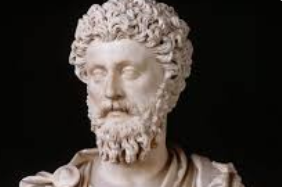
There cannot be a greater rudeness, than to interrupt another in the current of his discourse... To which, if there be added, as is usual, a correcting of any mistake, or a contradiction of what has been said, it is a mark of yet greater pride and self-conceitedness, when we thus intrude our selves for teachers, and take upon us either to set another right in his story, or shew the mistakes of his judgement.
▼
Source
source
Sec. 145
2 months 3 weeks ago
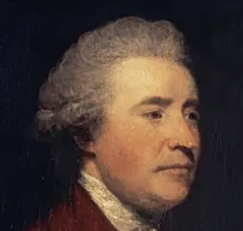
If the gods care not for me and for my children, There is a reason for it.
▼
Source
source
VII, 41
5 months 3 weeks ago
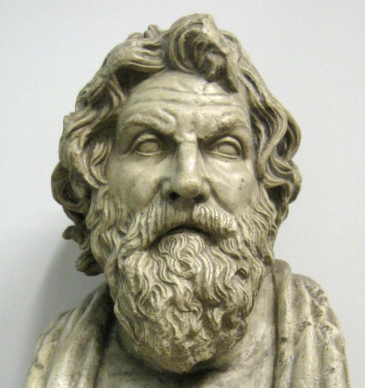
There never, gentlemen, was a period in which the steadfastness of some men has been nut to so sore a trial. It is not very difficult for well-formed minds to abandon their interest; but the separation of fame and virtue is an harsh divorce. Liberty is in danger of being made unpopular to Englishmen. Contending for an imaginary power, we begin to acquire the spirit of domination, and to lose the relish of honest equality.
6 months 2 weeks ago
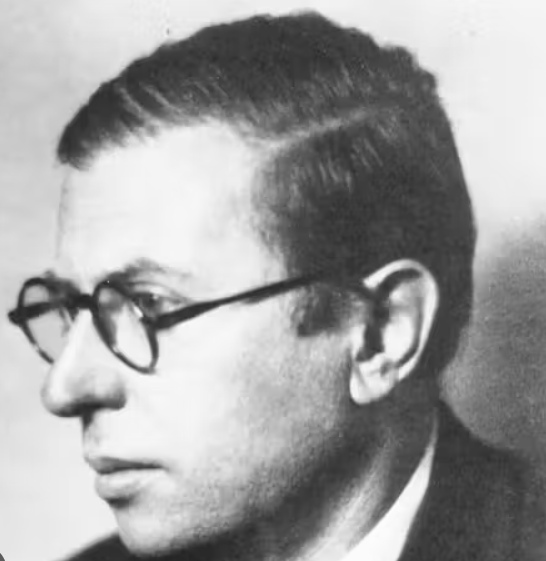
As iron is eaten away by rust, so the envious are consumed by their own passion.
▼
Source
source
§ 5
6 months 3 weeks ago
The world is sacred because it gives an inkling of a meaning that escapes us.
▼
Source
source
p. 280

7 months 1 week ago
When you close your doors, and make darkness within, remember never to say that you are alone, for you are not alone; nay, God is within, and your genius is within. And what need have they of light to see what you are doing?
▼
Source
source
Book I, ch. 14, 13, 14.
5 months 3 weeks ago
A finite interval of time generally contains an innumerable series of feelings; and when these become welded together in association the result is a general idea.
5 months 3 weeks ago
The voice in my soul in which I will have faith, and for the sake of which I have faith in all else, does not merely command me generally to act, but in every particular situation it declares what I shall do and what leave undone; it accompanies me through every event of my life, and it is impossible for me to contend against it. To listen to it and obey it honestly and impartially, without fear or equivocation, is the business of my existence. My life is no longer an empty I play without truth or significance. It is appointed that what I conscience ordains me shall be done, and for this purpose am I here. I have understanding to know, and power to execute it. By conscience alone comes truth and reality into my representations.
▼
Source
source
Jane Sinnett, trans 1846 p. 77
6 months 3 weeks ago
My difficulty is only an - enormous - difficulty of expression.
▼
Source
source
Journal entry (8 March 1915) p. 40
6 months 4 weeks ago
All natural philosophers, who wished to proceed mathematically in their work, have hence invariably (although unknown to themselves) made use of metaphysical principles, and must make use of such, it matters not how energetically they may otherwise repudiate any claim of metaphysics on their science.
▼
Source
source
Preface, Tr. Bax, 1883
5 months 3 weeks ago
I am using the word "perceive". I am using it here in such a way that to say of an object that it is perceived does not entail saying that it exists in any sense at all. And this is a perfectly correct and familiar usage of the word. If there is thought to be a difficulty here, it is perhaps because there is also a correct and familiar usage of the word "perceive", in which to say of an object that it is perceived does carry the implication that it exists.
▼
Source
source
The Foundations of Empirical Knowledge (1940).
2 months 3 weeks ago
Are not the richest and most significant experiences of man precisely those which are the least patient of verbal reproduction? A book, a treatise, a discourse, is the very thing that cannot contain them, that can contain at most their lower elements, their less significant aspects. Who shall transfer them to paper, write them in ink, utter them in words? And yet, though inexpressible thus, these things crave expression, for they are full of meaning and must be expressed. They have a language of their own. Art can utter some of them, and Nature, perhaps, can interpret them all. They borrow her tongues, speaking in the winds, singing in the voice of moving waters, looking down upon us in the cold shining of the stars. What they mean, we, too, can express; but we express it, not by speaking there and then, but by all that we become through their influence, by all that we are led to do, through their compelling, till life shall end.
4 months 3 weeks ago
Invention is the mother of all necessities.
6 months 2 weeks ago
Truthfulness under oath is, by now, a matter of our civic religion, our relation to our fellow citizens rather than our relation to a nonhuman power.
▼
Source
source
"John Searle on Realism and Relativism." Truth and Progress: Philosophical Papers, Volume 3 (1998).

2 months 3 weeks ago
Among animals, some learn to speak and sing; they remember tunes, and strike the notes as exactly as a musician. Others, for instance the ape, show more intelligence... would it be absolutely impossible to teach the ape a language? I do not think so.
3 months 1 week ago
Besides, he who follows another not only discovers nothing but is not even investigating.
5 months 3 weeks ago
The ordinary logic has a great deal to say about genera and species, or in our nineteeth century dialect, about classes. Now a class is a set of objects comprising all that stand to one another in a special relation of similarity. But where ordinary logic talks of classes the logic of relatives talks of systems. A system is a set of objects comprising all that stands to one another in a group of connected relations. Induction according to ordinary logic rises from the contemplation of a sample of a class to that of a whole class; but according to the logic of relatives it rises from the comtemplation of a fragment of a system to the envisagement of the complete system.
▼
Source
source
Vol. IV, par. 5
7 months 3 weeks ago
The Sophist demonstrates that everything is true and nothing is true.
4 months 2 weeks ago
In discussing tradition, we are not discussing arbitrary rules and conventions. We are discussing answers that have been discovered to enduring questions.
▼
Source
source
(p. 21)
5 months 3 weeks ago
The fear of your own solitude, of its vast surface and its infinity... Remorse is the voice of solitude. And what does this whispering voice say? Everything in us that is not human anymore.
5 months 3 weeks ago
Men may one day feel that they are partakers of a common nature, and that true freedom and perfect equity, like food and air, are pregnant with benefit to every constitution.
▼
Source
source
Vol. 1, bk. 1, ch. 3
3 months 1 week ago
There stood Mucius, despising the enemy and despising the fire, and watched his hand as it dripped blood over the fire on his enemy's altar, until Porsenna, envying the fame of the hero whose punishment he was advocating, ordered the fire to be removed against the will of the victim.
6 months 3 weeks ago
No one can be a great thinker who does not recognise, that as a thinker it is his first duty to follow his intellect to whatever conclusions it may lead...Not that it is solely, or chiefly, to form great thinkers, that freedom of thinking is required. On the contrary, it is as much and even more indispensable to enable average human beings to attain the mental stature which they are capable of.
▼
Source
source
Ch. II: Of the Liberty of Thought and Discussion
7 months 4 weeks ago
One has attained to mastery when one neither goes wrong nor hesitates in the performance.
5 months 3 weeks ago
A certain maxim of Logic which I have called Pragmatism has recommended itself to me for diverse reasons and on sundry considerations. Having taken it as my guide for most of my thought, I find that as the years of my knowledge of it lengthen, my sense of the importance of it presses upon me more and more. If it is only true, it is certainly a wonderfully efficient instrument. It is not to philosophy only that it is applicable. I have found it of signal service in every branch of science that I have studied. My want of skill in practical affairs does not prevent me from perceiving the advantage of being well imbued with pragmatism in the conduct of life.
▼
Source
source
Lecture I : Pragmatism : The Normative Sciences, CP 5.14
5 months 1 week ago
...the Outsider's problem is the problem of denial of self-expression.
▼
Source
source
Chapter Four The Attempt to Gain Control
6 months 4 weeks ago
Ancient histories, as one of our wits has said, are but fables that have been agreed upon.
▼
Source
source
Jeannot et Colin, 1764
5 months 1 week ago
Seek, therefore, thyself! But in finding oneself, does not one find one's own nothingness? ...Carlyle answers (Past and Present, book iii, chap. xi.). "The latest Gospel in the world is, Know thy work and do it. Know thyself: long enough has that poor self of thine tormented thee; thou wilt never get to know it, I believe! Think it thy business, this of knowing thyself; thou art an unknowable individual: know what thou canst work at; and work at it, like Hercules. That will be thine better plan." ...and what is my work? - without thinking about myself, is to love God. ...And on the other hand, in loving God in myself, am I not loving myself more than God, am I not loving myself in God?
6 months 4 weeks ago
Since the narrower or wider community of the peoples of the earth has developed so far that a violation of rights in one place is felt throughout the world, the idea of a cosmopolitan right is not fantastical, high-flown or exaggerated notion. It is a complement to the unwritten code of the civil and international law, necessary for the public rights of mankind in general and thus for the realization of perpetual peace.
▼
Source
source
Perpetual Peace: A Philosophical Sketch, 1795
6 months 3 weeks ago
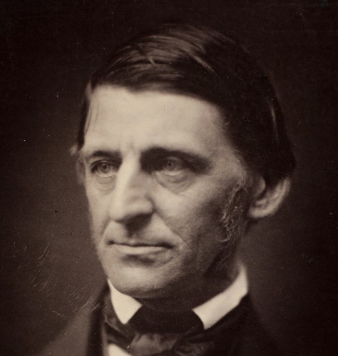
Not from a vain or shallow thought His awful Jove young Phidias brought.
▼
Source
source
The Problem, st. 2
6 months 3 weeks ago
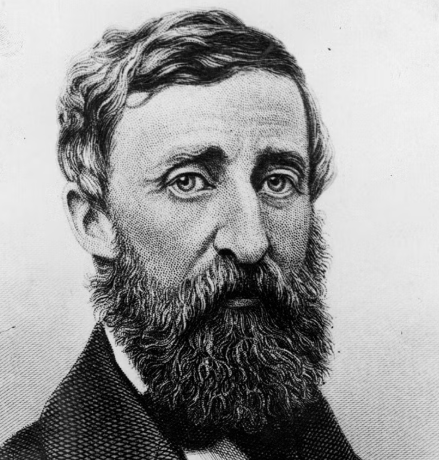
Our inventions are wont to be pretty toys, which distract our attention from serious things. They are but improved means to an unimproved end, an end which it was already but too easy to arrive at.
▼
Source
source
pp. 60-61
7 months 1 week ago
Yet God hath not only granted these faculties, by which we may bear every event without being depressed or broken by it, but like a good prince and a true father, hath placed their exercise above restraint, compulsion, or hindrance, and wholly within our own control.
▼
Source
source
Book I, ch. 6, 40.
5 months 3 weeks ago
It is important to understand what I mean by semiosis. All dynamic action, or action of brute force, physical or psychical, either takes place between two subjects, - whether they react equally upon each other, or one is agent and the other patient, entirely or partially, - or at any rate is a resultant of such actions between pairs. But by "semiosis" I mean, on the contrary, an action, or influence, which is, or involves, a cooperation of three subjects, such as a sign, its object, and its interpretant, this tri-relative influence not being in any way resolvable into actions between pairs.
▼
Source
source
"Pragmatism" (1907) in The Essential Peirce : Selected Philosophical Writings (1998) edited by the Peirce Edition Project, Vol. 2, p. 411, Indiana University Press.
CivilSimian.com created by AxiomaticPanic, CivilSimian, Kalokagathia