

4 months 4 weeks ago
If the thought enunciates an object as a truth, it is only as a challenge to this object's own self-fulfillment.
6 months 4 weeks ago
Paradise on earth is where I am.
▼
Source
source
Le Mondain, 1736
4 months 3 weeks ago
We humans are an extremely important manifestation of the replication bomb, because it is through us - through our brains, our symbolic culture and our technology - that the explosion may proceed to the next stage and reverberate through deep space.
▼
Source
source
Ch. 5: The Replication Bomb

2 months 3 weeks ago
What I stand for is what I stand on.
▼
Source
source
Below in A Part
2 months 2 weeks ago
I do not think that religion is the most important element. We are held together rather by a body of tradition, handed down from father to son, which the child imbibes with his mother's milk. The atmosphere of our infancy predetermines our idiosyncrasies and predilections.
6 months 3 weeks ago
I think that there is nothing, not even crime, more opposed to poetry, to philosophy, ay, to life itself, than this incessant business.
▼
Source
source
p. 485
3 months 6 days ago
Modern mind has become more and more calculating. The calculative exactness of practical life which the money economy has brought about corresponds to the ideal of natural science: to transform the world into an arithmetic problem, to fix every part of the world by mathematical formulas. Only money economy has filled the days of so many people with weighing, calculating, with numerical determinations, with a reduction of qualitative values to quantitative ones.
▼
Source
source
p. 414

4 months 3 days ago
An old fairy tale has it that science began with the rejection of superstition. In fact it was the rejection of rationalism that gave birth to scientific inquiry. Ancient and medieval thinkers believed the world could be understood by applying first principles. Modern science begins when observation and experiment come first, and the results are accepted even when what they show seems to be impossible.
▼
Source
source
Foreword: Two Attempts to Cheat Death (pp. 5-6)

6 months 3 weeks ago
The most advanced nations are always those who navigate the most.
▼
Source
source
Civilization
5 months 1 week ago
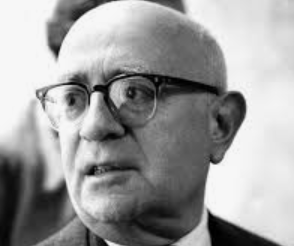
The phrase, the world wants to be deceived, has become truer than had ever been intended. People are not only, as the saying goes, falling for the swindle; if it guarantees them even the most fleeting gratification they desire a deception which is nonetheless transparent to them. They force their eyes shut and voice approval, in a kind of self-loathing, for what is meted out to them, knowing fully the purpose for which it is manufactured. Without admitting it they sense that their lives would be completely intolerable as soon as they no longer clung to satisfactions which are none at all.
▼
Source
source
Section 10
3 months 3 weeks ago
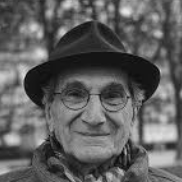
In the contemporary economy, however, and with the labor relations of post-Fordism, mobility increasingly defines the labor market as a whole, and all categories are tending toward the condition of mobility and cultural mixture common to the migrant.
▼
Source
source
130
6 months 2 weeks ago
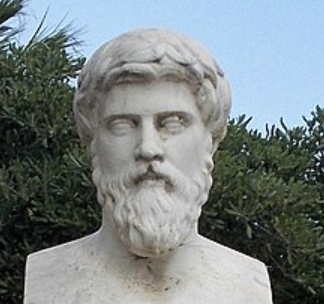
To one commending an orator for his skill in amplifying petty matters, Agesilaus said, "I do not think that shoemaker a good workman that makes a great shoe for a little foot."
▼
Source
source
Of Agesilaus the Great
6 months 3 weeks ago
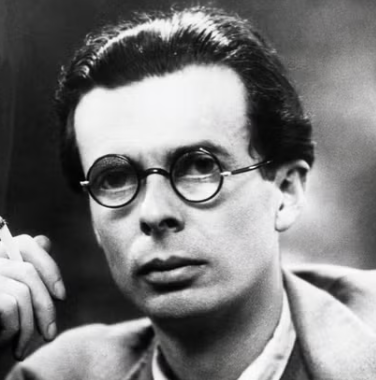
Our psychological experiences are all equally facts. There is nothing to choose between them. No psychological experience is "truer," so far as we are concerned, than any other. For even if one should correspond more closely to things in themselves as perceived by some hypothetical non-human being, it would be impossible for us to discover which it was. Science is no "truer" than common sense, or lunacy, or art, or religion. It permits us to organize our experience profitably; but tells us nothing about the real nature of the world to which our experiences are supposed to refer. From the internal reality, by which I mean the totality of psychological experiences, it actually separates us. Art, for example, deals with many more aspects of this internal reality than does science, which confines itself deliberately and by convention to the study of one very limited class of experiences - the experiences of sense.
▼
Source
source
"One and Many," p. 5-6
7 months 2 weeks ago
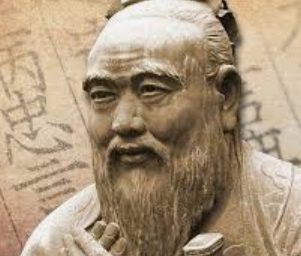
Benevolence is the characteristic element of humanity.
2 months 3 weeks ago
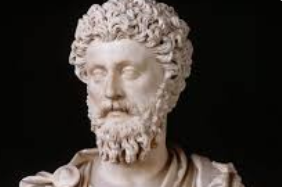
He that dies in extreme old age will be reduced to the same state with him that is cut down untimely.
▼
Source
source
IX, 33
3 months 6 days ago
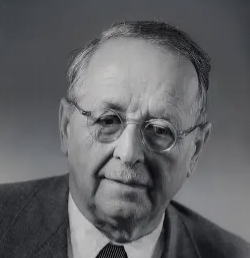
After Riemann had made known his discoveries, mathematicians busied themselves with working out his system of geometrical ideas formally; chief among these were Christoffel, Ricci, and Levi-Civita. Riemann... clearly left the real development of his ideas in the hands of some subsequent scientist whose genius as a physicist could rise to equal flights with his own as a mathematician. After a lapse of seventy years this mission has been fulfilled by Einstein.
▼
Source
source
Ch. 2 "The Metrical Continuum"

6 months 3 weeks ago
Transcendence constitutes selfhood.
▼
Source
source
Essence of Ground

2 months 3 weeks ago
The Presbyterian clergy are loudest, the most intolerant of all sects, the most tyrannical, and ambitious; ready at the word of the lawgiver, if such a word could be now obtained, to put the torch to the pile, and to rekindle in this virgin hemisphere, the flames in which their oracle Calvin consumed the poor Servetus, because he could not find in his Euclid the proposition which has demonstrated that three are one, and one is three, nor subscribe to that of Calvin that magistrates have a right to exterminate all heretics to Calvinistic creed.
▼
Source
source
Letter to William Short
6 months 3 weeks ago
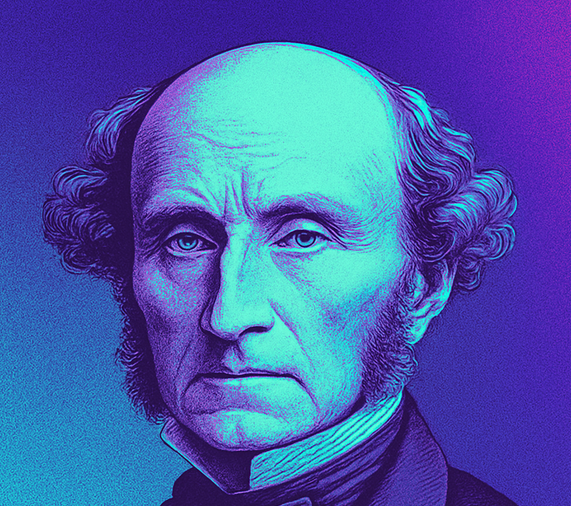
In the same year in which I began Latin, I made my first commencement in the Greek poet with the Iliad. After I had made some progress in this, my father put Pope's translation into my hands. It was the first English verse I had cared to read, and it became one of the books in which for many years I most delighted: I think I must have read it from twenty to thirty times through. I should not have thought it worth while to mention a taste apparently so natural to boyhood, if I had not, as I think, observed that the keen enjoyment of this brilliant specimen of narrative and versification is not so universal with boys, as I should have expected both à priori and from my individual experience.
▼
Source
source
(p. 10)
7 months 1 week ago
Appearances to the mind are of four kinds. Things either are what they appear to be; or they neither are, nor appear to be; or they are, and do not appear to be; or they are not, and yet appear to be. Rightly to aim in all these cases is the wise man's task.
▼
Source
source
Book I, ch. 27, § 1.

2 months 3 weeks ago
If we do not return to the old maxims, if education is not restored into the hands of priests, and if science is not every where placed in the second rank, the evils which await us are incalculable: we shall become brutalized by science, and this is the lowest degree of brutality.
▼
Source
source
XXXIX, p. 112

3 months 2 weeks ago
If you find many people who are hard and indifferent to you in a world that you consider to be unhospitable and cruel-as often, indeed, happens to a tender-hearted, stirring young creature-you will also find there are noble hearts who will look kindly on you, and their help will be precious to you beyond price.
2 months 3 weeks ago
Remember that what pulls the strings is the force hidden within; there lies the power to persuade, there the life,-there, if one must speak out, the real man.
▼
Source
source
X, 38
3 months 6 days ago
Recognition of the subjectivity of the qualities of sense is found in Galilei (and also in Descartes and Hobbes) in a form closely related to the principle underlying the constructive mathematical method of our modern physics which repudiates" qualities".
▼
Source
source
Introduction
4 months 1 week ago
The extinction of race consciousness as between Muslims is one of the outstanding achievements of Islam, and in the contemporary world there is, as it happens, a crying need for the propagation of this Islamic virtue.
▼
Source
source
Ch. 10: Islam, the West, and the Future
7 months 2 weeks ago
The superior man has neither anxiety nor fear. When internal examination discovers nothing wrong, what is there to be anxious about, what is there to fear?
2 months 3 weeks ago
Let this always be plain to thee, that this piece of land is like any other; and that all things here are the same with all things on the top of a mountain, or on the sea-shore, or wherever thou chooses to be. For thou wilt find just what Plato says, Dwelling within the walls of the city as in a shepherd's fold on a mountain.
▼
Source
source
X, 23
6 months 3 weeks ago
A masterpiece of art has in the mind a fixed place in the chain of being, as much as a plant or a crystal.
▼
Source
source
Art
5 months 1 week ago
The man of flesh and bone; the man who is born, suffers, and dies-above all, who dies; the man who eats and drinks and plays and sleeps and thinks and wills; the man who is seen and heard; the brother, the real brother.
5 months 2 weeks ago
The human race, in its intellectual life, is organized like the bees: the masculine soul is a worker, sexually atrophied, and essentially dedicated to impersonal and universal arts; the feminine is a queen, infinitely fertile, omnipresent in its brooding industry, but passive and abounding in intuitions without method and passions without justice.
5 months 3 weeks ago
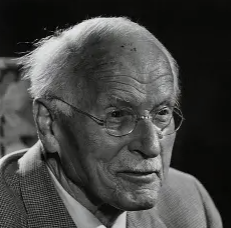
The idea of an all-powerful divine Being is present everywhere, unconsciously if not consciously, because it is an archetype. There is in the psyche some superior power, and if it is not consciously a god, it is the "belly" at least, in St. Paul's words. I therefore consider it wiser to acknowledge the idea of God consciously, for, if we do not, something else is made God, usually something quite inappropiate and stupid such as only an "enlightened" intellect could hatch forth.
▼
Source
source
C. G. Jung. 2014. Collected Works of C.G. Jung, Volume 7: Two Essays in Analytical Psychology. Princeton University Press. p. 71
2 months 3 weeks ago
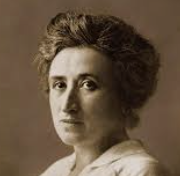
Without the collapse of capitalism the expropriation of the capitalist class is impossible.
▼
Source
source
Ch. 9
5 months 3 weeks ago
It is imperative that we should not pare down the meaning of a dream to fit some narrow doctrine. ... No language exists that cannot be misused. It is hard to realize how badly we are fooled by the abuse of ideas, it even seems as if the unconscious had a way of strangling the physician in the coils of his own theory. p 11; this was originally listed here in a somewhat misleading form combining it with another statement on the interpretations of dreams on p. 14: No language exists that cannot be misused ... Every Interpretation is hypothetical, for it is a mere attempt to read an unfamiliar text.
2 months 3 weeks ago
All this world, all this rich, endless flow of appearances is not a deception, a multicolored phantasmagoria of our mirroring mind. Nor is it absolute reality which lives and evolves freely, independent of our mind's power. It is not the resplendent robe which arrays the mystic body of God. Nor the obscurely translucent partition between man and mystery. All this world that we see, hear, and touch is that accessible to the human senses, a condensation of the two enormous powers of the Universe permeated with all of God.
7 months ago
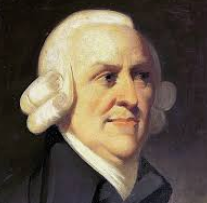
It cannot be very difficult to determine who have been the contrivers of this whole mercantile system; not the consumers, we may believe, whose interest has been entirely neglected; but the producers, whose interests has been so carefully attended to; and among this later class our merchants and manufactures have been by far the principal architects. In the mercantile regulations, which have been taken notice of in this chapter, the interest of our manufacturers has been most peculiarly attended to;and the interest, not so much of the consumers, as that of some other sets of producers, has been sacrificed to it.
▼
Source
source
Chapter VIII, p. 721.
6 months 2 weeks ago
A prating barber asked Archelaus how he would be trimmed. He answered, "In silence."
▼
Source
source
33 Archelaus
4 months 3 weeks ago
Every person I met believes if there is any disagreement between the Koran and science, then the Koran wins. It's just utterly deplorable. These are now British children who are having their minds stuffed with alien rubbish. Occasionally, my colleagues lecturing in universities lament having undergraduate students walk out of their classes when they talk about evolution. This is almost entirely Muslims.
▼
Source
source
Dawkins attacks 'alien rubbish' taught in Muslim faith schools, Daily Mail
2 months 3 weeks ago
You have your brush, you have your colours, you paint paradise, then, in you go.
▼
Source
source
As quoted in Journal of Modern Literature Vol. 2, No. 2, Nikos Kazantzakis

6 months 2 weeks ago
Neither our distance from a preventable evil nor the number of other people who, in respect to that evil, are in the same situation as we are, lessens our obligation to mitigate or prevent that evil.
7 months 3 weeks ago
There is only one way to avoid criticism: do nothing, say nothing and be nothing.
5 months 3 weeks ago
I know of nothing more terrible than the poor creatures who have learned too much. Instead of the sound powerful judgement which would probably have grown up if they had learned nothing, their thoughts creep timidly and hypnotically after words, principles and formulae, constantly by the same paths. What they have acquired is a spider's web of thoughts too weak to furnish sure supports, but complicated enough to provide confusion.
▼
Source
source
On the Relative Educational Value of the Classics and the Mathematico-Physical Sciences in Colleges and High Schools, an address in (16 April 1886)
6 months 3 weeks ago
To plead the organic causation of a religious state of mind, then, in refutation of its claim to possess superior spiritual value, is quite illogical and arbitrary, unless one have already worked out in advance some psycho-physical theory connecting spiritual values in general with determinate sorts of physiological change. Otherwise none of our thoughts and feelings, not even our scientific doctrines, not even our dis-beliefs, could retain any value as revelations of the truth, for every one of them without exception flows from the state of their possessor's body at the time.
▼
Source
source
Lecture I, "Religion and Neurology"
7 months 2 weeks ago
The knowledge of anything, since all things have causes, is not acquired or complete unless it is known by its causes. Therefore in medicine we ought to know the causes of sickness and health. And because health and sickness and their causes are sometimes manifest, and sometimes hidden and not to be comprehended except by the study of symptoms, we must also study the symptoms of health and disease. Now it is established in the sciences that no knowledge is acquired save through the study of its causes and beginnings, if it has had causes and beginnings; nor completed except by knowledge of its accidents and accompanying essentials. Of these causes there are four kinds: material, efficient, formal, and final.

3 months 3 weeks ago
That liberal world that emerged after 1945 led to one of the most spectacularly successful periods in human history. There was material progress. There was stability. There was human freedom. There was the flourishing of many human activities that can only take place in a liberal, and therefore free society...
▼
Source
source
10:06
3 months 3 weeks ago
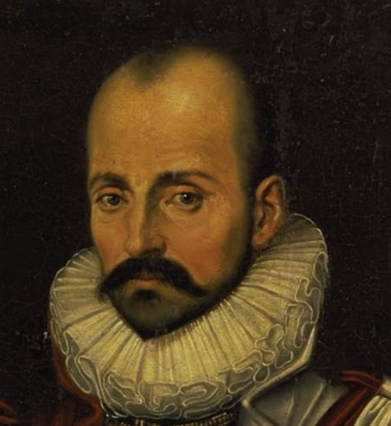
Do not imagine that there is any bird more easily caught by decoy, nor any fish sooner fixed on the hook by wormy bait, than are all these poor fools neatly tricked into servitude by the slightest feather passed, so to speak, before their mouths. Truly it is a marvelous thing that they let themselves be caught so quickly at the slightest tickling of their fancy. Plays, farces, spectacles, gladiators, strange beasts, medals, pictures, and other such opiates, these were for ancient peoples the bait toward slavery, the price of their liberty, the instruments of tyranny. By these practices and enticements the ancient dictators so successfully lulled their subjects under the yoke, that the stupefied peoples, fascinated by the pastimes and vain pleasures flashed before their eyes, learned subservience as naïvely, but not so creditably, as little children learn to read by looking at bright picture books.
▼
Source
source
Part 2
5 months 3 weeks ago
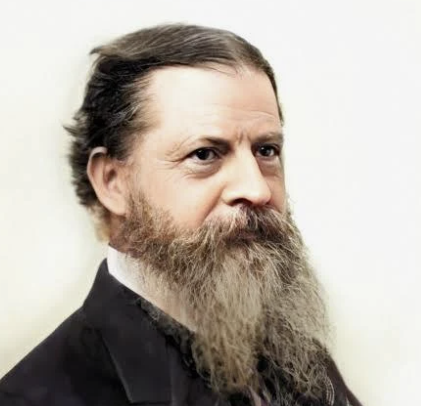
If the sensation that precedes the present by half a second were still immediately before me, then on the same principle, the sensation preceding that would be immediately present, and so on ad infinitum. Now, since there is a time [period], say a year, at the end of which an idea is no longer ipso facto present, it follows that this is true of any finite interval, however short.
6 months 3 weeks ago
Take the happiest man, the one most envied by the world, and in nine cases out of ten his inmost consciousness is one of failure. Either his ideals in the line of his achievements are pitched far higher than the achievements themselves, or else he has secret ideals of which the world knows nothing, and in regard to which he inwardly knows himself to be found wanting.
▼
Source
source
Lectures VI and VII, "The Sick Soul"
3 months 1 week ago
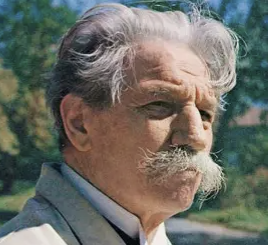
One thing that specially saddened me was that the unfortunate animals had to suffer so much pain and misery. The sight of an old limping horse, tugged forward by one man while another kept beating it with a stick to get it to the knacker's yard at Colmar, haunted me for weeks. It was quite incomprehensible to me - this was before I began going to school - why in my evening prayers I should pray for human beings only. So when my mother had prayed with me and had kissed me good-night, I used to add silently a prayer that I had composed myself for all living creatures. It ran thus: "O, heavenly Father, protect and bless all things that have breath; guard them from all evil, and let them sleep in peace."
6 months 3 weeks ago
Fear not, then, thou child infirm, There's no god dare wrong a worm.
▼
Source
source
Compensation, st. 2
CivilSimian.com created by AxiomaticPanic, CivilSimian, Kalokagathia