



5 months 3 weeks ago
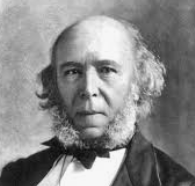
Morality knows nothing of geographical boundaries, or distinctions of race.
▼
Source
source
Pt. IV, Ch. 30 : General Considerations
7 months 2 weeks ago
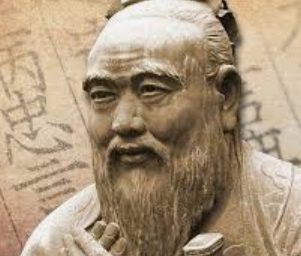
I hear and I forget. I see and I remember. I do and I understand.

3 months 2 weeks ago
Consider the great elements of human enjoyment, the attainments and possessions that exalt man's life to its present height, and see what part of these he owes to institutions, to Mechanism of any kind; and what to the instinctive, unbounded force, which Nature herself lent him.
3 months 2 weeks ago
Properly speaking, the Land belongs to these two: To the Almighty God; and to all His Children of Men that have ever worked well on it, or that shall ever work well on it. No generation of men can or could, with never such solemnity and effort, sell Land on any other principle: it is not the property of any generation, we say, but that of all the past generations that have worked on it, and of all the future ones that shall work on it.
3 months 2 weeks ago
Instruction, that mysterious communing of Wisdom with Ignorance, is no longer an indefinable tentative process, requiring a study of individual aptitudes, and a perpetual variation of means and methods, to attain the same end; but a secure, universal, straightforward business, to be conducted in the gross, by proper mechanism.
5 months 1 week ago
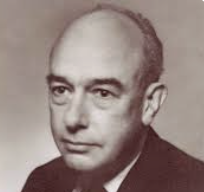
Implication is thus the very texture of our web of belief, and logic is the theory that traces it.
▼
Source
source
S. 41

5 months 3 weeks ago
Nothing is so wearing as the possession or abuse of liberty.
6 months 3 weeks ago
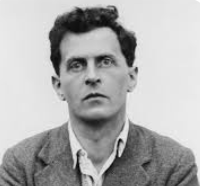
There is no more light in a genius than in any other honest man-but he has a particular kind of lens to concentrate this light into a burning point.
▼
Source
source
p. 41e

6 months 2 weeks ago
If torture was so strongly embedded in legal practice, it was because it revealed truth and showed the operation of power. It assured the articulation of the written on the oral, the secret on the public, the procedure of investigation on the operation of the confession; it made it possible to reproduce the crime on the visible body of the criminal.
▼
Source
source
Chapter One, pp.55

7 months 4 weeks ago
Who is the most moral man? First, he who obeys the law most frequently, who ... is continually inventive in creating opportunities for obeying the law. Then, he who obeys it even in the most difficult cases. The most moral man is he who sacrifices the most to custom. ... Self-overcoming is demanded, not on account of any useful consequences it may have for the individual, but so that hegemony of custom and tradition shall be made evident.
4 months 4 weeks ago
The state monopolizes violence by calling its critics "violent". Hence, we should be wary about those who claim that violence is necessary to curb or check violence; those who praise the forces of law, including the police and the prisons, as the final arbiters. To oppose violence is to understand that violence does not always take the form of the blow.
▼
Source
source
p. 63
6 months 3 weeks ago
Real life is, to most men, a long second-best, a perpetual compromise between the ideal and the possible; but the world of pure reason knows no compromise, no practical limitations, no barrier to the creative activity embodying in splendid edifices the passionate aspiration after the perfect from which all great work springs. Remote from human passions, remote even from the pitiful facts of nature, the generations have gradually created an ordered cosmos, where pure thought can dwell as in its natural home, and where one, at least, of our nobler impulses can escape from the dreary exile of the actual world.
7 months 3 weeks ago
To the contemporary, Christ can only say: I will offer myself as a sacrifice for the sins of the world and for yours also. Is this easier to believe now than when he has done it, has offered himself? Or is the comfort greater because of his saying that he will do it than it is because of his having done it? There is no greater love than this, that someone lays down his life for another, but when is it easier to believe, and when is the comfort greater: when the loving one says he will do it, or when he has done it?
4 months 3 weeks ago
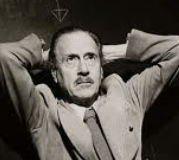
The message of radio is one of violent, unified implosion and resonance.
▼
Source
source
(p. 263)
4 months 3 weeks ago
For tribal man, space was the uncontrollable mystery. For technological man it is time that occupies the same role.
▼
Source
source
p. 85; "Magic that Changes Mood")
7 months 3 days ago
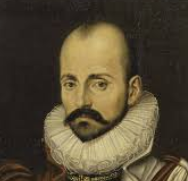
Even from their infancy we frame them to the sports of love: their instruction, behavior, attire, grace, learning and all their words azimuth only at love, respects only affection. Their nurses and their keepers imprint no other thing in them.
5 months 1 week ago
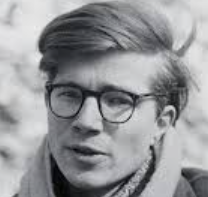
The outsider, Haller says, is a self-divided man; being self-divided, his chief desire is to be unified. He is selfish as a man with a lifelong raging toothache.
▼
Source
source
Chapter Three, The Romantic Outsider
3 months 2 weeks ago
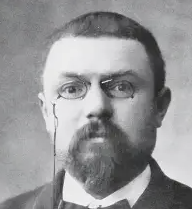
Have we really the right to speak of the cause of a phenomenon?
6 months 3 weeks ago
Her face seems ravaged by both lightning and hail. But on yours there is something like the promise of a storm: one day passion will burn it to the bone.
▼
Source
source
Act 1
7 months 3 days ago
Every other knowledge is harmful to him who does not have knowledge of goodness.
▼
Source
source
Ch. 25
6 months 3 weeks ago
...the impossible must be supposed in order to explain the superdetermination of the event
▼
Source
source
p. 301
5 months 3 weeks ago
Well, which is the most rational theory about these ten millions of species? Is it most likely that there have been ten millions of special creations? or is it most likely that, by continual modifications due to change of circumstances, ten millions of varieties have been produced, as varieties are being produced still?
5 months 3 weeks ago
Our studies of sexual life, originating in Vienna and in England, are matched or surpassed by Hindu teachings on this subject... Psychoanalysis itself and the lines of thought to which it gives rise-surely a distinctly Western development-are only a beginner's attempt compared to what is an immemorial art in the East.
▼
Source
source
quoted in Georg Feuerstein, Subhash Kak, and David Frawley. - In search of the cradle of civilization _ new light on ancient India-Quest Books
6 months 4 weeks ago
A public can only arrive at enlightenment slowly. Through revolution, the abandonment of personal despotism may be engendered and the end of profit-seeking and domineering oppression may occur, but never a true reform of the state of mind. Instead, new prejudices, just like the old ones, will serve as the guiding reins of the great, unthinking mass. All that is required for this enlightenment is freedom; and particularly the least harmful of all that may be called freedom, namely, the freedom for man to make public use of his reason in all matters. But I hear people clamor on all sides: Don't argue! The officer says: Don't argue, drill! The tax collector: Don't argue, pay! The pastor: Don't argue, believe!
5 months 3 weeks ago
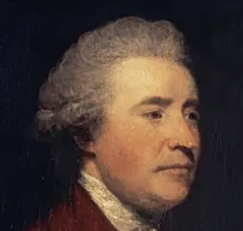
The Leaders have ever since gone...to propagate the principles of French Levelling and confusion, by which no house is safe from its Servants, and no Officer from his Soldiers, and no State or constitution from conspiracy and insurrection. I will not enter into the baseness and depravity of the System they adopt; but one thing I will remark, that its great Object is not, (as they pretend to delude worthy people to their Ruin) the destruction of all absolute Monarchies, but totally to root out that thing called an Aristocrate or Noblemen and Gentleman.
▼
Source
source
Letter to Lord Fitzwilliam (21 November 1791), quoted in Alfred Cobban and Robert A. Smith (eds.), The Correspondence of Edmund Burke, Volume VI: July 1789-December 1791 (1967), p. 451
7 months 1 week ago
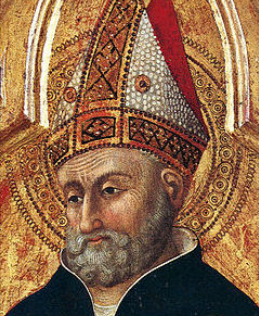
What then is time? If no one asks me, I know what it is. If I wish to explain it to him who asks, I do not know.
▼
Source
source
XI, 14
5 months 3 weeks ago
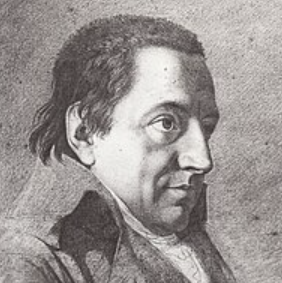
Show me what thou truly lovest, what thou seekest and strivest for with thy whole heart when thou hopest to attain to true en joyment of thyself-and thou hast thereby shown me thy Life. What thou lovest, in that thou livest. This very Love is thy Life, the root, the seat, the central point of thy being. All other emotions within thee have life only in so far as they are governed by this one central emotion.
▼
Source
source
P. 3

6 months 3 weeks ago
A man builds a fine house; and now he has a master, and a task for life: he is to furnish, watch, show it, and keep it in repair, the rest of his days.
▼
Source
source
Works and Days
3 months 1 week ago
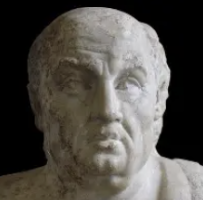
Besides, he who follows another not only discovers nothing but is not even investigating.
4 months 2 weeks ago
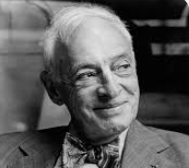
I think that New York is not the cultural center of America, but the business and administrative center of American culture.
▼
Source
source
BBC radio interview, The Listener
5 months 3 weeks ago
Laws, like houses, lean on one another.
▼
Source
source
From the Tracts Relative to the Laws Against Popery in Ireland (c. 1766), not published during Burke's lifetime.
6 months 2 weeks ago
The 'Enlightenment', which discovered the liberties, also invented the disciplines.

6 months 3 weeks ago
The doctrine of the Second Coming teaches us that we do not and cannot know when the world drama will end. The curtain may be rung down at any moment: say, before you have finished reading this paragraph.
6 months 3 weeks ago
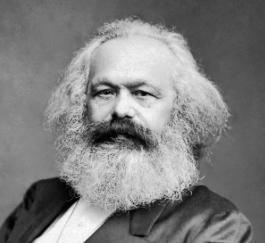
The country that is more developed industrially only shows, to the less developed, the image of its own future.
▼
Source
source
Author's prefaces to the First Edition.
6 months 2 weeks ago
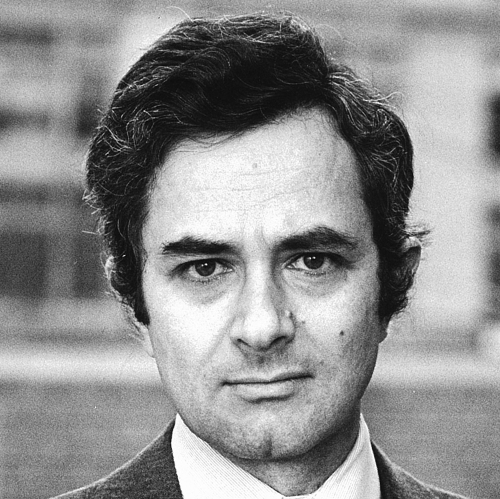
Common sense doesn't have the last word in ethics or anywhere else, but it has, as J. L. Austin said about language, the first word: it should be examined before it is discarded.
▼
Source
source
p. 166.

6 months 3 weeks ago
"They have an engine called the Press whereby the people are deceived."
▼
Source
source
Ch. 13 : They Have Pulled Down Deep Heaven on Their Heads
6 months 3 weeks ago
Not till then did his controllers allow him to suspect that death itself might not after all cure the illusion of being a soul-nay, might prove the entry into a world where that illusion raged infinite and unchecked. Escape for the soul, if not for the body, was offered him. He became able to know (and simultaneously refused the knowledge) that he had been wrong from the beginning, that souls and personal responsibility existed. He half saw: he wholly hated. The physical torture of the burning was not fiercer than his hatred of that.
▼
Source
source
Ch. 16 : Banquet at Belbury, section 6

7 months 1 week ago
We are all sprung from a heavenly seed.
▼
Source
source
Book II, line 991 (tr. Munro)
2 months 3 weeks ago
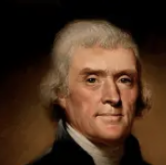
Were we directed from Washington when to sow and when to reap, we should soon want bread.
▼
Source
source
Autobiography (1821), reprinted in Basic Writings of Thomas Jefferson, ed. Philip S. Foner, New York: Wiley Book Company (1944} p. 464
4 months 4 weeks ago
In many cases it is a matter for decision and not a simple matter of fact whether x understands y; and so on.
6 months 3 weeks ago
It is arrogance in us to call frankness, fairness and chivalry "masculine" when we see them in a woman; it is arrogance in them, to describe a man's sensitiveness or tact or tenderness as "feminine".
5 months 3 days ago
If reason is both transcendent and immanent, then philosophy, as culture-bound reflection and argument about eternal questions, is both in time and eternity. We don't have an Archimedean point; we always speak the language of a time and place; but the rightness and wrongness of what we say is not just for a time and a place.
▼
Source
source
Why reason can't be naturalized

6 months 3 weeks ago
You will have seen that my brother died suddenly in Marseilles. I inherit from him a title, but not a penny of money, as he was bankrupt. A title is a great nuisance to me, and I am at a loss what to do, but at any rate I do not wish it employed in connection with any of my literary work. There is, so far as I know, only one method of getting rid of it, which is to be attainted of high treason, and this would involve my head being cut off on Tower Hill. This method seems to me perhaps somewhat extreme...
▼
Source
source
Letter to W. W. Norton, 11 March, 1931
6 months 3 weeks ago
Every man would like to be God, if it were possible; some few find it difficult to admit the impossibility.
▼
Source
source
Ch. 1: The Impulse to Power
CivilSimian.com created by AxiomaticPanic, CivilSimian, Kalokagathia