

7 months 2 weeks ago
If you reject absolutely any single sensation without stopping to discriminate with respect to that which awaits confirmation between matter of opinion and that which is already present, whether in sensation or in feelings or in any immediate perception of the mind, you will throw into confusion even the rest of your sensations by your groundless belief and so you will be rejecting the standard of truth altogether. If in your ideas based upon opinion you hastily affirm as true all that awaits confirmation as well as that which does not, you will not escape error, as you will be maintaining complete ambiguity whenever it is a case of judging between right and wrong opinion.

3 months 4 days ago
Himmler approved the idea of recruiting divisions of the Waffen-SS with volunteers from all nations under the banner of the struggle against Communist Russia and in defence of Europe and its civilisation. This was the restoration of the function that the Order of Teutonic Knights had in the beginning as guardian of the East and, at the same time, of the spirit that had animated the Freikorps, the voluntary groups that, on their own initiative, had fought against the Bolsheviks in the eastern regions and the Baltic countries after the end of the First World War. In the end, more than seventeen nations were represented in the Waffen-SS, often with their own complete divisions: French, Belgians, Dutch, Scandinavians, Ukrainians, Spaniards, even Swiss, with a total of about 800,000 men, of whom only a part came from the Germanic area.
5 months 3 weeks ago
Our whole past experience is continually in our consciousness, though most of it sunk to a great depth of dimness. I think of consciousness as a bottomless lake, whose waters seem transparent, yet into which we can clearly see but a little way.
▼
Source
source
Vol. VII, par. 547

3 months 2 weeks ago
The battling Reformer too is, from time to time, a needful and inevitable phenomenon. Obstructions are never wanting: the very things that were once indispensable furtherances become obstructions; and need to be shaken off, and left behind us,-a business often of enormous difficulty.
4 months 3 weeks ago
Man in the electronic age has no possible environment except the globe and no possible occupation except information-gathering.
5 months 1 week ago
If a young girl is being forced into a brothel she will not talk about her rights. In such a situation the word would sound ludicrously inadequate.
▼
Source
source
p. 63
2 months 3 weeks ago
Why then dost thou choose to act in the same way? and why dost thou not leave these agitations which are foreign to nature, to those who cause them and those who are moved by them? And why art thou not altogether intent upon the right way of making use of things which happen to thee? for then thou wilt use them well, and they will be material for thee. Only attend to thyself, and resolve to be a good man in every act which thou doest; and remember...
▼
Source
source
VII, 58
4 months 3 weeks ago
New media are new archetypes, at first disguised as degradations of older media.
▼
Source
source
Arts in society, Volume 3, 1964, p. 240
7 months 3 weeks ago
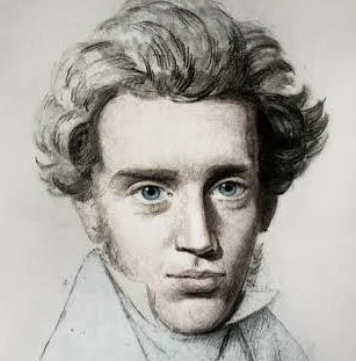
It is love that leniently and mercifully says: I forgive you everything-if you are forgiven only little, then it is because you love only little. Justice severely sets the boundary and says: No further! This is the limit. For you there is no forgiveness, and there is nothing more to be said.
5 months 1 week ago
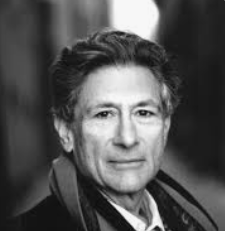
Where cruelty and injustice are concerned, hopelessness is submission, which I believe is immoral.
▼
Source
source
quoted in "Internal Exile" by Pankaj Mishra in The New Yorker, 2021
6 months 2 weeks ago
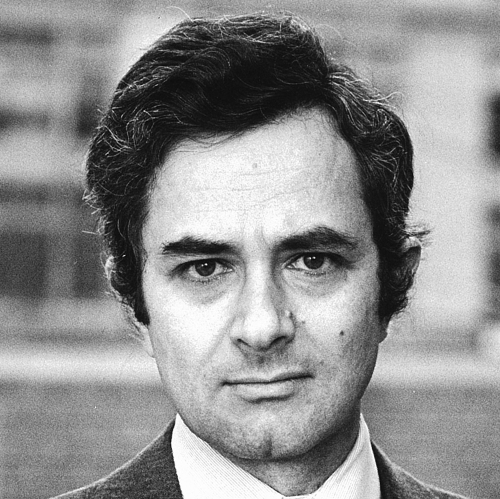
We assume that our own advances in objectivity are steps along a path that extends beyond them and beyond all our capacities. But even allowing unlimited time, or an unlimited number of generations, to take as many successive steps as we like, the process can never be completed. ... What is wanted is some way of making the most objective standpoint the basis of action.
▼
Source
source
pp. 128-129.
3 months 2 weeks ago
They indicate the saddest spiritual paralysis, and mere death-life of the souls of men: more godless theory, I think, was never promulgated in this Earth. A false man found a religion? Why, a false man cannot build a brick house!
2 months 3 weeks ago
It is a base thing for the countenance to be obedient and to regulate and compose itself as the mind commands, and for the mind not to be regulated and composed by itself.
▼
Source
source
VII, 37
6 months 3 weeks ago
The impulse to take life strivingly is indestructible in the race.
▼
Source
source
Ch. 21
3 months 1 week ago
But how much more highly do I think of these men! They can do these things, but decline to do them. To whom that ever tried have these tasks proved false? To what man did they not seem easier in the doing? Our lack of confidence is not the result of difficulty. The difficulty comes from our lack of confidence.
▼
Source
source
Also translated as: It is not because things are difficult that we do not dare, but because we do not dare, things are difficult. Verse 26
3 months 1 week ago
Very little of the great cruelty shown by men can really be attributed to cruel instinct. Most of it comes from thoughtlessness or inherited habit. The roots of cruelty, therefore, are not so much strong as widespread. But the time must come when inhumanity protected by custom and thoughtlessness will succumb before humanity championed by thought. Let us work that this time may come.
5 months 2 weeks ago
Thought must be judged by something that is not thought, by its effect on production or its impact on social conduct, as art today is being ultimately gauged in every detail by something that is not art, be it box-office or propaganda value.
▼
Source
source
describing the pragmatist view, p. 51.
7 months 3 weeks ago
The important thing isn't the soundness or otherwise of the argument, but for it to make you think.
3 months 1 week ago
Would you not think him an utter fool who wept because he was not alive a thousand years ago? And is he not just as much of a fool who weeps because he will not be alive a thousand years from now? It is all the same; you will not be, and you were not. Neither of these periods of time belongs to you.

6 months 2 weeks ago
To have a great man for an intimate friend seems pleasant to those who have never tried it; those who have, fear it.
▼
Source
source
Book I, epistle xviii, line 86
7 months 4 days ago
Truly man is a marvellously vain, diverse, and undulating object. It is hard to found any constant and uniform judgement on him.
▼
Source
source
Ch. 1. That Men by various Ways arrive at the same End (tr. Donald M. Frame)Cotton, rev. W. Hazlitt, 1842

6 months 4 weeks ago
Many of these were not prisoners of war, and redeemed from savage conquerors, as some plead; and they who were such prisoners, the English, who promote the war for that very end, are the guilty authors of their being so; and if they were redeemed, as is alleged, they would owe nothing to the redeemer but what he paid for them.
6 months 2 weeks ago
It is difficult to speak of the universal specifically.
▼
Source
source
Line 128
6 months 3 weeks ago
These preachers of beauty, which light the world with their admonishing smile.
▼
Source
source
p. 248 (Stars)
7 months 3 weeks ago
Forgetting when God does it in relation to sin, is the opposite of creating, since to create is to bring forth from nothing and to forget is to take back into nothing. What is hidden from my eyes, that I have never seen; but what is hidden behind my back, that I have seen. The one who loves forgives in this way; he forgives, he forgets, he blots out the sin, in love he turns toward the one he forgives; but when he turns toward him, he of course, cannot see what is lying behind his back.
5 months 2 weeks ago
The kingdom of heaven is like to a grain of mustard seed, which a man took, and sowed in his field: Which indeed is the least of all seeds: but when it is grown, it is the greatest among herbs, and becometh a tree, so that the birds of the air come and lodge in the branches thereof.
▼
Source
source
13:31-32 (KJV)
5 months 3 weeks ago
The more you live, the less useful it seems to have lived.
5 months 3 weeks ago
Tyranny is just what one can develop a taste for, since it so happens that man prefers to wallow in fear rather than to face the anguish of being himself.
5 months 3 weeks ago
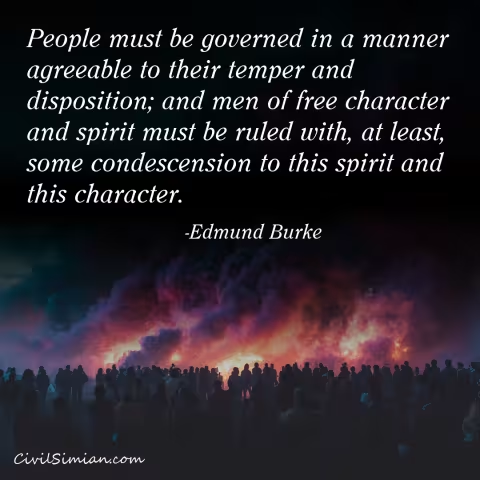
Fear is the antidote to boredom: the remedy must be stronger than the disease.
2 months 3 weeks ago
So then it is eternal and infinite and one and all alike.
7 months 3 days ago
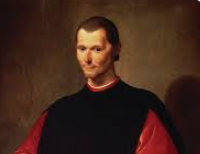
When evening comes, I return home and enter my study; on the threshold I take off my workday clothes, covered with mud and dirt, and put on the garments of court and palace. Fitted out appropriately, I step inside the venerable courts of the ancients, where, solicitously received by them, I nourish myself on that food that alone is mine and for which I was born; where I am unashamed to converse with them and to question them about the motives for their actions, and they, out of their human kindness, answer me. And for four hours at a time I feel no boredom, I forget all my troubles, I do not dread poverty, and I am not terrified by death. I absorb myself into them completely.
▼
Source
source
Letter to Francesco Vettori (10 December 1513), as translated by James Atkinson, in Prince Machiavelli (1976), p. 19
4 months 3 weeks ago
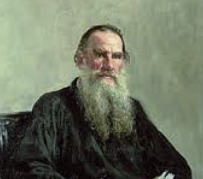
Several times I asked myself, "Can it be that I have overlooked something, that there is something which I have failed to understand? Is it not possible that this state of despair is common to everyone?" And I searched for an answer to my questions in every area of knowledge acquired by man. For a long time I carried on my painstaking search; I did not search casually, out of mere curiosity, but painfully, persistently, day and night, like a dying man seeking salvation. I found nothing.
▼
Source
source
Pt. I, ch. 5
4 months 3 weeks ago
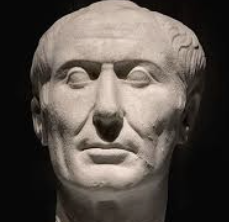
It is a bad plan that admits of no modification.
▼
Source
source
Maxim 469
3 months 1 week ago
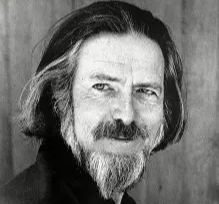
I have suggested that behind almost all myth lies the mono-plot of the game of hide-and-seek.
▼
Source
source
The Two Hands of God : The Myths of Polarity (1963), p. 29
6 months 3 weeks ago
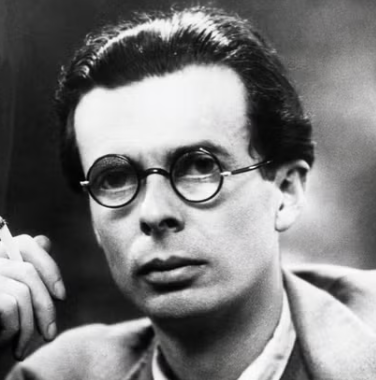
We have been given free will, in order that we may will our self-will out of existence and so come to live continuously in a 'state of grace.' All our actions must be directed, in the last analysis, to making ourselves passive in relation to the activity and the being of divine reality. We are, as it were, aeolian harps, endowed with the power either to expose themselves to the wind of the Spirit or to shut themselves away from it.
5 months 2 weeks ago
All metaphysical theories are inconclusively vulnerable to positivist attack.
▼
Source
source
Ch. 9, p. 127
4 months 3 weeks ago
The bow too tensely strung is easily broken.
▼
Source
source
Maxim 388
6 months 3 weeks ago
Could the activity of thinking as such, the habit of examining whatever happens to come to pass or to attract attention, regardless of results and specific content, could this activity be among the conditions that make men abstain from evil-doing?
▼
Source
source
p. 5

5 months 2 weeks ago
The free will, the actual motor of reason in society, necessarily creates wrong. The individual must clash with the social order that claims to represent his own will in its objective form. But the wrong and the 'avenging justice' that remedies it not only expresses a 'higher logical necessity,' but also prepare the transition to a higher social form of freedom, the transition from abstract right to morality. For, in committing a wrong, and in accepting punishment for his deed, the individual becomes conscious of the 'infinite subjectivity' of his freedom. He learns that he is free only as a private person.
▼
Source
source
P. 198
2 months 3 weeks ago
There are three relations [between thee and other things]: the one to the body which surrounds thee; the second to the divine cause from which all things come to all; and the third to those who live with thee.
▼
Source
source
VIII, 27

6 months 2 weeks ago
It is a sign of wisdom to be able to use parrhesia without falling into the garrulousness of athuroglossos... One of the problems... how to distinguish that which must be said from that which should be kept silent.
6 months 3 weeks ago
The totalitarian movements aim at and succeed in organizing masses-not classes, like the old interest parties of the Continental nation-states; not citizens with opinions about, interests in, the handling of public affairs, like the parties of Anglo-Saxon countries.
▼
Source
source
Part 3, Ch. 10
6 months 3 weeks ago
William James used to preach the "will-to-believe." For my part, I should wish to preach the "will-to-doubt." None of our beliefs are quite true; all at least have a penumbra of vagueness and error. What is wanted is not the will to believe, but the will to find out, which is the exact opposite.
▼
Source
source
Ch. 12: Free Thought and Official Propaganda
2 months 2 weeks ago
I am not an Atheist. I do not know if I can define myself as a Pantheist. The problem involved is too vast for our limited minds. May I not reply with a parable? The human mind, no matter how highly trained, cannot grasp the universe. We are in the position of a little child, entering a huge library whose walls are covered to the ceiling with books in many different tongues. The child knows that someone must have written those books. It does not know who or how. It does not understand the languages in which they are written. The child notes a definite plan in the arrangement of the books, a mysterious order, which it does not comprehend, but only dimly suspects. That, it seems to me, is the attitude of the human mind, even the greatest and most cultured, toward God. We see a universe marvelously arranged, obeying certain laws, but we understand the laws only dimly. Our limited minds cannot grasp the mysterious force that sways the constellations. I am fascinated by Spinoza's Pantheism. I admire even more his contributions to modern thought. Spinoza is the greatest of modern philosophers because he is the first philosopher who deals with the soul and the body as one, not as two separate things.
3 months 4 days ago
Instead of holding on to the Biblical view that we are made in the image of God, we come to realize that we are made in the image of the monkey.
▼
Source
source
p. 36
6 months 2 weeks ago
He who does wrong is more unhappy than he who suffers wrong.
CivilSimian.com created by AxiomaticPanic, CivilSimian, Kalokagathia