

5 months 2 weeks ago
Never since the heroic days of Greece has the world had such a sweet, just, boyish master.
▼
Source
source
"The British Character"
4 months 3 weeks ago
Speech structures the abyss of mental and acoustic space...it is a cosmic, invisible architecture of the human dark.
▼
Source
source
(p. 13)
6 months 3 weeks ago
Essentially, this war...is a great race-conflict, a conflict of Teuton and Slav, in which certain other nations, England, France and Belgium, have been led into cooperation with the Slav. ... The conflict of Germany and Russia has been produced not by this or that diplomatic incident, but by primitive passions expressing themselves in the temper of the two races.
▼
Source
source
War: The Offspring of Fear (1914), quoted in Ray Monk, Bertrand Russell: The Spirit of Solitude, 1872-1921 (1996), p. 373
3 months 3 weeks ago
There is only one purpose to which a whole society can be directed by a deliberate plan. That purpose is war, and there is no other.
▼
Source
source
Ch. V: "The Totalitarian Regimes", §7, p. 90
4 months 3 weeks ago
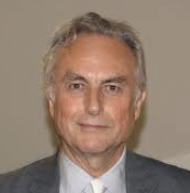
I'm not clever enough to be a physicist. When asked about why he chose to become a biologist.
▼
Source
source
UR Samtiden - Verklighetens magi 27 October 2012.
6 months 4 weeks ago
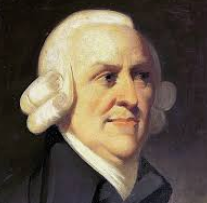
For in every country of the world, I believe, the avarice and injustice of princes and sovereign states, abusing the confidence of their subjects, have by degrees diminished the real quantity of metal, which had been originally contained in their coins.
▼
Source
source
Chapter IV, p. 34.
6 months 3 weeks ago
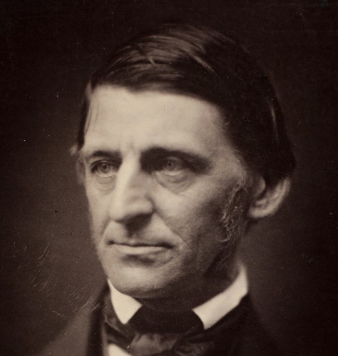
Things are pretty, graceful, rich, elegant, handsome, but, until they speak to the imagination, not yet beautiful.
▼
Source
source
Beauty
3 months 1 week ago
Avoid shame, but do not seek glory: nothing so expensive as glory.
▼
Source
source
Vol. I, ch. 4, pp. 134-135

3 months 2 weeks ago
What you see, yet can not see over, is as good as infinite.
▼
Source
source
Bk. II, ch. 1.
6 months 2 weeks ago
Becoming a vegetarian is not merely a symbolic gesture. Nor is it an attempt to isolate oneself from the ugly realities of the world, to keep oneself pure and so without responsibility for the cruelty and carnage all around. Becoming a vegetarian is a highly practical and effective step one can take toward ending both the killing of nonhuman animals and the infliction of suffering upon them.
▼
Source
source
Ch. 4: Becoming a Vegetarian
6 months 2 weeks ago
When he was asked what advantage had accrued to him from philosophy, his answer was, "The ability to hold converse with myself."
▼
Source
source
§ 4


5 months 1 week ago
Atheism ... in its philosophic aspect refuses allegiance not merely to a definite concept of God, but it refuses all servitude to the God idea, and opposes the theistic principle as such. Gods in their individual function are not half as pernicious as the principle of theism which represents the belief in a supernatural, or even omnipotent, power to rule the earth and man upon it. It is the absolutism of theism, its pernicious influence upon humanity, its paralyzing effect upon thought and action, which Atheism is fighting with all its power.
6 months 3 weeks ago
Here the institution that compels is the state, the only purpose of which is to protect individuals from one another and the whole from external enemies. Some German philosophasters of this mercenary age would like to twist it into an institution for education and edification in morality; in the background of this lurks the Jesuitical purpose of eliminating personal freedom and the individual's personal development in order to make him into a mere cog in a Chinese machine of state and religion. But this is the path by which in the past one has arrived at the inquisitions, burning of heretics, and religious wars; Frederick the Great's pledge, 'In my country, each shall be able to tend to his salvation in his own fashion', indicated that he never wanted to tread that path.
▼
Source
source
Part III, Ch. VI, p. 184
4 months 2 weeks ago
From the poetry of Lord Byron they drew a system of ethics, compounded of misanthropy and voluptuousness, a system in which the two great commandments were, to hate your neighbour, and to love your neighbour's wife.
▼
Source
source
p. 351
7 months 1 week ago
The dominion of bad men is hurtful chiefly to themselves who rule, for they destroy their own souls by greater license in wickedness; while those who are put under them in service are not hurt except by their own iniquity. For to the just all the evils imposed on them by unjust rulers are not the punishment of crime, but the test of virtue. Therefore the good man, although he is a slave, is free; but the bad man, even if he reigns, is a slave, and that not of one man, but, what is far more grievous, of as many masters as he has vices; of which vices when the divine Scripture treats, it says, For of whom any man is overcome, to the same he is also the bond-slave.
▼
Source
source
IV, 3 Variant translation: The good man, though a slave, is free; the wicked, though he reigns, is a slave, and not the slave of a single man, but — what is worse — the slave of as many masters as he has vices.
6 months 3 weeks ago
Machines are worshipped because they are beautiful and valued because they confer power; they are hated because they are hideous and loathed because they impose slavery.
▼
Source
source
Ch. 6: Machines and the Emotions
7 months 5 days ago
But plants, though they have not powers of perception, yet, as they have life, certainly approach very nearly to those things which are endowed with sentient faculties. What then is so completely insensible as stony substance? yet even in this, there appears to be a desire of union. Thus the loadstone attracts iron to it, and holds it fast in its embrace, when so attracted. Indeed, the attraction of cohesion, as a law of love, takes place throughout all inanimate nature.
5 months 2 weeks ago
The world is not divine sport, it is divine destiny. There is divine meaning in the life of the world, of man, of human persons, of you and of me. Creation happens to us, burns itself into us, recasts us in burning - we tremble and are faint, we submit. We take part in creation, meet the Creator, reach out to Him, helpers and companions.
6 months 3 weeks ago
I die adoring God, loving my friends, not hating my enemies, and detesting superstition.
▼
Source
source
Déclaration de Voltaire, note to his secretary, Jean-Louis Wagnière, 28 February 1778
6 months 2 weeks ago
I should not really object to dying if it were not followed by death.
▼
Source
source
"Death" (1970), p. 3 footnote.
6 months 3 weeks ago
People who originally have no means but are ultimately able to earn a great deal, through whatever talents they may possess, almost always come to think that these are permanent capital and that what they gain through them is interest. Accordingly, they do not put aside part of their earnings to form a permanent capital, but spend their money as fast as they earn it. But they are then often reduced to poverty because their earnings decrease or come to an end after their talent, which was of a transitory nature, is exhausted, as happens, for example, in the case of almost all the fine arts; or because it could be brought to bear only under a particular set of circumstances that has ceased to exist.
▼
Source
source
E. Payne, trans. (1974) Vol. 1, p. 348
6 months 2 weeks ago
Nihilism is not overcome by arguments or analyses; it is tamed by love and care. Any disease of the soul must be conquered by a turning of one's soul.
▼
Source
source
(p19)
4 months 2 weeks ago
It is our deliberate opinion that the French Revolution, in spite of all its crimes and follies, was a great blessing to mankind.
▼
Source
source
'Sir James Mackintosh', The Edinburgh Review (July 1835), quoted in T. B. Macaulay, Critical and Historical Essays Contributed to The Edinburgh Review, Vol. II (1843), p. 215
5 months 2 weeks ago
The truth is cruel, but it can be loved, and it makes free those who have loved it.
▼
Source
source
p. 107
2 months 3 weeks ago
I hope we shall... crush in it's birth the aristocracy of our monied corporations which dare already to challenge our government to a trial of strength and bid defiance to the laws of our country.
▼
Source
source
Letter to George Logan, 1816

7 months 1 week ago
I will speak in a low voice, just so as to let the judges hear me. For men are not wanting who would be glad to excite that people against me and against every eminent man; and I will not assist them and enable them to do so more easily.
▼
Source
source
Cicero, The Orations of Marcus Tullius Cicero; Translation by C.D. Yonge., 1856.
7 months 3 weeks ago
Concepts, like individuals, have their histories, and are just as incapable of withstanding the ravages of time as are individuals.
6 months 3 weeks ago
Politics is a science. You can demonstrate that you are right and that others are wrong.
▼
Source
source
Act 5, sc. 2
4 months 1 week ago
America is like a large, friendly dog in a very small room. Every time it wags its tail, it knocks over a chair!
▼
Source
source
In Quote: The Weekly Digest, vol. 23, no. 19 (4 May 1952) p. 16
6 months 3 weeks ago
What I hold fast to is not one proposition but a nest of propositions.
5 months 3 weeks ago
"Can any good come out of Nazareth?" This is always the question of the wiseacres and the knowing ones. But the good, the new, comes from exactly that quarter whence it is not looked for, and is always something different from what is expected. Everything new is received with contempt, for it begins in obscurity. It becomes a power unobserved.
▼
Source
source
As quoted in "Voices of the New Time" as translated by C. C. Shackford in The Radical Vol. 7 (1870), p. 329
4 months 3 weeks ago
A happy man or woman is a better thing to find than a five-pound note. He or she is a radiating focus of goodwill; and their entrance into a room is as though another candle had been lighted. We need not care whether they could prove the forty-seventh proposition; they do a better thing than that, they practically demonstrate the great Theorem of the Liveableness of Life.
▼
Source
source
An Apology for Idlers.

6 months 3 weeks ago
You could send your soul after the good you had expected, instead of turning it to the good you had got. You could refuse the real good; you could make the real fruit taste insipid by thinking of the other.
6 months 4 weeks ago
In manufactures, a very small advantage will enable foreigners to undersell our own workmen, even in the home market. It will require a very great one to enable them to do so in the rude produce of the soil. If the free importation of foreign manufactures were permitted, several of the home manufactures would probably suffer, and some of them, perhaps, go to ruin altogether, and a considerable part of the stock and industry at present employed in them, would be forced to find out some other employment. But the freest importation of the rude produce of the soil could have no such effect upon the agriculture of the country.
▼
Source
source
Chapter II
3 months 4 days ago
Warrior spirit is characterised by direct, clear and loyal relations, based on fidelity and honour and a sound instinct for the various dignities, which it can well distinguish: it opposes everything which is impersonal and trivial.
▼
Source
source
p. 117
5 months 1 week ago
It is the vital asserting itself, and in order to assert itself it creates, with the help of its enemy, the rational, a complete dogmatic structure, and this the Church defends against rationalism, against Protestantism, and against Modernism. The Church defends life. It stood up against Galileo, and it did right; for his discovery, in its inception and until it became assimilated to the general body of human knowledge, tended to shatter the anthropomorphic belief that the universe was created for man. It opposed Darwin, and it did right, for Darwinism tends to shatter our belief that man is an exceptional animal, created expressly to be eternalized. And lastly, Pius IX, the first Pontiff to be proclaimed infallible, declared he was irreconcilable with the so-called modern civilization. And he did right.
5 months 1 week ago
The unbeliever walks for a quadrillion miles, yet one moments of reality makes up for it.
▼
Source
source
Chapter Seven, The Great Synthesis…
2 months 3 weeks ago
The dead? But the dead have no rights. They are nothing; and nothing cannot own something. Where there is no substance, there can be no accident. This corporeal globe, and everything upon it, belong to its present corporeal inhabitants, during their generation. They alone have a right to direct what is the concern of themselves alone, and to declare the law of that direction; and this declaration can only be made by their majority. That majority, then, has a right to depute representatives to a convention, and to make the constitution what they think will be the best for themselves.
7 months 1 week ago
Who dismisses his adulterous wife and marries another woman, whereas his first wife still lives, remains perpetually in the state of adultery. Such a man does not any efficacious penance while he refuses to abandon the new wife. If he is a catechumen, he cannot be admitted to baptism, because his will remains rooted in the evil. If he is a (baptized) penitent, he cannot receive the (ecclesiastical) reconciliation as long as he does not break with his bad attitude.
▼
Source
source
De adulterinis coniugiis, 2, 16, in Bishop Athanasius Schneider, Reaction to Synod Door to communion for divorced & remarried officially kicked open, November 2nd, 2015
5 months 2 weeks ago
Artist and perceiver alike begin with what may be called a total seizure, an inclusive qualitative whole not yet articulated, not distinguished into members.
▼
Source
source
p. 199
3 months 1 week ago
God has given to all things their course and decided how high and how far they may go, not higher, not lower.

5 months 3 weeks ago
The skeptic is the least mysterious man in the world, and yet, starting from a certain moment, he no longer belongs to this world.
5 months 3 weeks ago
At the edge of life you feel that you are no longer master of the life within you, that subjectivity is an illusion, and that uncontrollable forces are seething inside you, evolving with no relation to a personal center or a definite, individual rhythm.
▼
Source
source
essay 2 - On not wanting to live
2 months 3 weeks ago
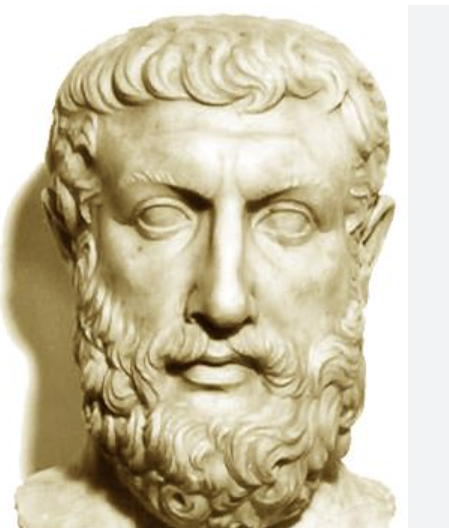
So then it is eternal and infinite and one and all alike.
2 months 3 weeks ago
It might be said to the agitator, "However convinced you were of the justice of your cause and the truth of your convictions, you ought not to have made a public attack upon any man's character until you had examined the evidence on both sides with the utmost patience and care." In the first place, let us admit that, so far as it goes, this view of the case is right and necessary; right, because even when a man's belief is so fixed that he cannot think otherwise, he still has a choice in the action suggested by it, and so cannot escape the duty of investigating on the ground of the strength of his convictions; and necessary, because those who are not yet capable of controlling their feelings and thoughts must have a plain rule dealing with overt acts.
6 months 4 weeks ago
Art may make a suit of clothes; but nature must produce a man.
▼
Source
source
Part I, Essay 15: The Epicurean
CivilSimian.com created by AxiomaticPanic, CivilSimian, Kalokagathia