

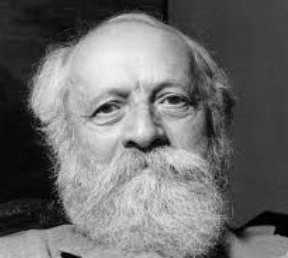
5 months 2 weeks ago
Egos appear by setting themselves apart from other egos.
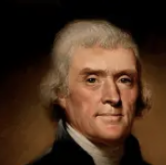
2 months 3 weeks ago
We are not to expect to be translated from despotism to liberty in a featherbed.
▼
Source
source
Letter to Gilbert du Motier, marquis de Lafayette
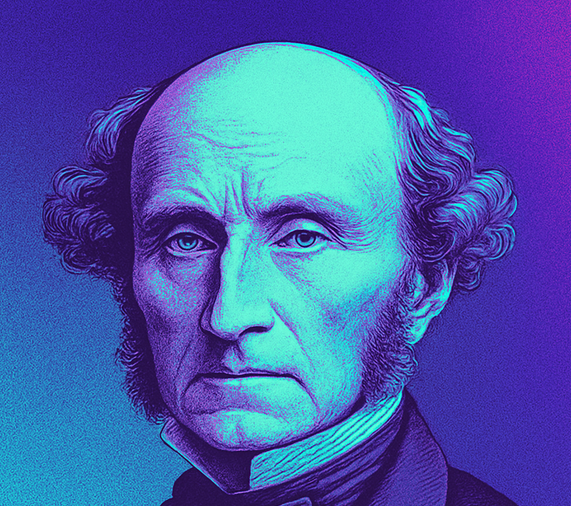
6 months 3 weeks ago
I am thus one of the very few examples, in this country, of one who has, not thrown off religious belief, but never had it...
▼
Source
source
(p. 43)

6 months 4 weeks ago
Much more naturally than you do: because flight is a much more natural consequence of fear than of hate. He doesn't flee men because he hates them, but because he is afraid of them. He doesn't flee them in order to harm them, but to try o escape the harm they wish to do to him. They, on the contrary, don't seek him through friendship, but through hate. They seek him and he flees from them just as in the wilderness of Africa, where there are few men and many tigers, the men flee the tigers, the men flee the tigers, and the tigers seek the men.
▼
Source
source
Second Dialogue; translated by Judith R. Bush, Christopher Kelly, Roger D. Masters
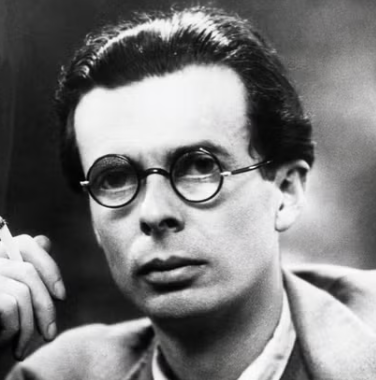
6 months 3 weeks ago
Brutes are merely brutal; men and women are capable of being devils and lunatics. They are no less capable of being fully human-even, occasionally, of being a bit more than fully human, of being saints, heroes and geniuses.
▼
Source
source
Introduction to You Are Not The Target by Laura Archera Huxley, 1963
7 months 3 weeks ago
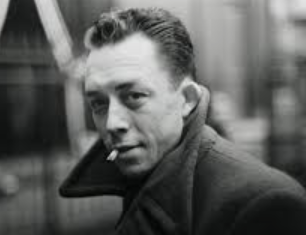
Query: How to contrive not to waste one's time? Answer: By being fully aware of it all the while. Ways in which this can be done: By spending one's days on an uneasy chair in a dentist's waiting room; by remaining on one's balcony all a Sunday afternoon; by travelling by the longest and least-convenient train routes, and of course standing all the way; by queueing at the box-office of theatres and then not booking a seat.
5 months 1 week ago
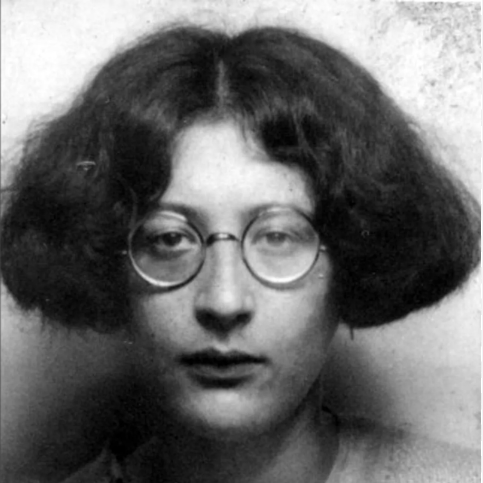
Art is the symbol of the two noblest human efforts: to construct and to refrain from destruction.
▼
Source
source
The Pre-War Notebook (1933-1939), published in First and Last Notebooks (1970) edited by Richard Rees

5 months 3 weeks ago
I could show, that the same faction has, in one reign, promoted popular seditions, and, in the next, been a patron of tyranny; I could show, that they have all of them betrayed the public safety at all times, and have very frequently with equal perfidy made a market of their own cause, and their own associates. I could show how vehemently they have contended for names, and how silently they have passed over things of the last importance.
5 months 1 week ago
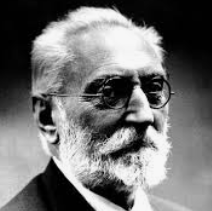
Ether is, in effect, a merely hypothetical entity, valuable only in so far as it explains that which by means of it we endeavor to explain - light, electricity, or universal gravitation - and only so far as these facts cannot be explained in any other way. In like manner the idea of God is also an hypothesis, valuable only in so far as it enables us to explain that which by means of it we endeavor to explain - the essence and existence of the Universe - and only so long as these cannot be explained in any other way. And since in reality we explain the Universe neither better nor worse with this idea than without it, the idea of God, the supreme petitio principii, is valueless.
6 months 4 weeks ago
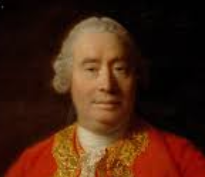
The more exquisite any good is, of which a small specimen is afforded us, the sharper is the evil, allied to it; and few exceptions are found to this uniform law of nature. The most sprightly wit borders on madness; the highest effusions of joy produce the deepest melancholy; the most ravishing pleasures are attended with the most cruel lassitude and disgust; the most flattering hopes make way for the severest disappointments. And, in general, no course of life has such safety (for happiness is not to be dreamed of) as the temperate and moderate, which maintains, as far as possible, a mediocrity, and a kind of insensibility, in every thing. As the good, the great, the sublime, the ravishing are found eminently in the genuine principles of theism; it may be expected, from the analogy of nature, that the base, the absurd, the mean, the terrifying will be equally discovered in religious fictions and chimeras.
▼
Source
source
Part XV - General corollary
6 months 3 weeks ago
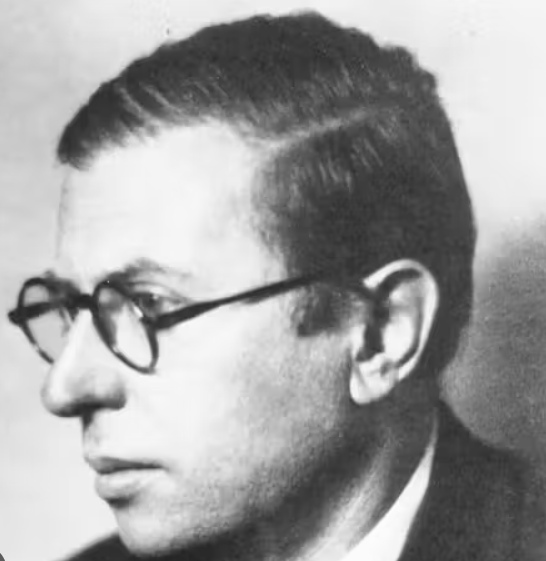
One is still what one is going to cease to be and already what one is going to become. One lives one's death, one dies one's life.
▼
Source
source
Book 2, "The Melodious Child Dead in Me"

6 months 3 weeks ago
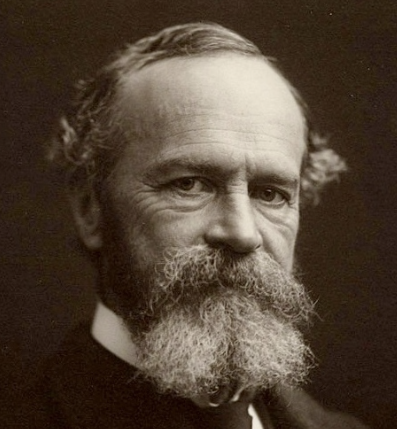
We are spinning our own fates, good or evil, and never to be undone. Every smallest stroke of virtue or of vice leaves its never so little scar. ...Nothing we ever do is, in strict scientific literalness, wiped out.
▼
Source
source
Ch. 4
7 months 2 weeks ago
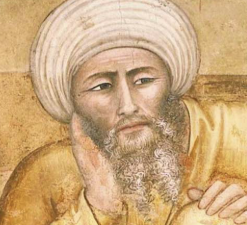
To master this instrument the religious thinker must make a preliminary study of logic, just as the lawyer must study legal reasoning. This is no more heretical in the one case than in the other. And logic must be learned from the ancient masters, regardless of the fact that they were not Muslims.
7 months 3 weeks ago
476 ... is usually taken as the date of the "fall of the Roman Empire." The date, however, is a false one. No one at this period of time considered that the Roman Empire had "fallen." Indeed, it still existed and was the most powerful realm in Europe. Its capital was at Constantinople and the Emperor was Zeno. It is only because we ourselves are culturally descended from the Roman west, that we tend to ignore the continued existence of the Roman Empire in the east.
2 months 3 weeks ago
Instead of funding issues of paper on the hypothecation of specific redeeming taxes (the only method of anticipating, in a time of war, the resources of times of peace, tested by the experience of nations), we are trusting to tricks of jugglers on the cards, to the illusions of banking schemes for the resources of the war, and for the cure of colic to inflations of more wind.
▼
Source
source
Letter to José Correia da Serra (1814) ME 14:224

2 months 3 weeks ago
There's nothing under the ground that's worthmore than the little layer of topsoil sitting on top of it.
2 months 3 weeks ago
But it will be asked, are we to have no banks? Are merchants and others to be deprived of the resource of short accommodations, found so convenient? I answer, let us have banks; but let them be such as are alone to be found in any country on earth, except Great Britain. There is not a bank of discount on the continent of Europe (at least there was not one when I was there) which offers anything but cash in exchange for discounted bills.
▼
Source
source
ME 13:277


5 months 1 week ago
Women crave for being loved, not for loving. They scream out at you for sympathy all day long, they are incapable of giving any in return, for they cannot remember your affairs long enough to do so... They cannot state a fact accurately to another, nor can that other attend to it accurately enough for it to become information. Now is not all this the result of want of sympathy?... I am sick with indignation at what wives and mothers will do of the most egregious selfishness. And people call it all maternal or conjugal affection, and think it pretty to say so. No, no, let each person tell the truth from their own experience.
▼
Source
source
Letter to Mary Clarke Mohl (13 Dec 1861), published in Florence Nightingale on Women, Medicine, Midwifery and Prostitution: Collected Works of Florence Nightingale (2005), Volume 8, edited by Lynn McDonald, p. 84
5 months 3 weeks ago
The illustrious archbishop of Cambray was of more worth than his chambermaid, and there are few of us that would hesitate to pronounce, if his palace were in flames, and the life of only one of them could be preserved, which of the two ought to be preferred ... Supposing the chambermaid had been my wife, my mother or my benefactor. This would not alter the truth of the proposition. The life of Fenelon would still be more valuable than that of the chambermaid; and justice, pure, unadulterated justice, would still have preferred that which was most valuable. Justice would have taught me to save the life of Fenelon at the expence of the other. What magic is there in the pronoun "my", to overturn the decisions of everlasting truth?
▼
Source
source
Vol.1, bk. 2, ch. 2
6 months 3 weeks ago
Somebody ought to make a historical study of the relations between theology and corporal punishment in childhood. I have a theory that, wherever little boys and girls are systematically flagellated, the victims grow up to think of God as - 'Wholly Other'... A people's theology reflects the state of its children's bottoms. Look at the Hebrews - enthusiastic child-beaters. And so were all good Christians in the Age of Faith. Hence Jehovah, hence Original Sin and the infinitely offended Father of Roman and Protestant orthodoxy. Whereas among Buddhists and Hindus education has always been nonviolent. No laceration of little buttocks - therefore Tat tvam asi, thou art That, mind from Mind is not divided.... Major premise: God is Wholly Other. Minor premise: man is totally depraved. Conclusion: Do to your children's bottoms what was done to yours, what your Heavenly Father has been doing to the collective bottom of humanity ever since the Fall: whip, whip, whip!

6 months 3 weeks ago
At present we are on the outside of the world, the wrong side of the door. We discern the freshness and purity of the morning, but they do not make us fresh and pure. We cannot mingle with the splendours we see. But all the leaves of the New Testament are rustling with the rumour that it will not always be so. Some day, God willing, we shall get in.

3 months 2 weeks ago
"A fair day's wages for a fair day's work": it is as just a demand as governed men ever made of governing. It is the everlasting right of man.
▼
Source
source
Bk. I, ch. 3.
3 months 2 weeks ago
We should say: 'Causes almost identical take almost the same time to produce almost the same effects.'
5 months 3 weeks ago
We are living in what the Greeks called the right time for a "metamorphosis of the gods," i.e. of the fundamental principles and symbols. This peculiarity of our time, which is certainly not of our conscious choosing, is the expression of the unconscious man within us who is changing. Coming generations will have to take account of this momentous transformation if humanity is not to destroy itself through the might of its own technology and science.
▼
Source
source
p 110
5 months 3 weeks ago
The Africans had that claim on our humanity which could not be resisted, whatever might have been advanced by an hon. gentleman in defence of the property of the planters.
▼
Source
source
Speech in the House of Commons (12 May 1789), quoted in The Parliamentary History of England, From the Earliest Period to the Year 1803, Vol. XXVIII (1816), column 98
4 months 4 weeks ago
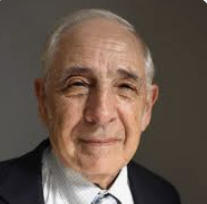
All of our conscious states, without exception, are caused by lower level neurobiological processes in the brain, and they are realized in the brain as higher level, or system features. It's about as mysterious as the liquidity of water, right? The liquidity is not an extra juice squirted out by the H2O molecules, it's a condition that the system is in; and just as the jar full of water can go from a liquid to solid, depending on the behavior of the molecules, so your brain can go from a state of being conscious to a state of being unconscious, depending on the behavior of the molecules. The famous mind body problem is that simple.
2 months 3 weeks ago
The result of your fifty or sixty years of religious reading in the four words: 'Be just and good,' is that in which all our enquiries must end.
▼
Source
source
Letter to John Adams

6 months 3 weeks ago
Let me have none of your Popish stuff! Get away with you, good morning.
▼
Source
source
Last words (June 1809), as quoted in The Fortnightly, vol. 25; vol. 31, p. 398
2 months 3 weeks ago
The good old Dominion, the blessed mother of us all.
▼
Source
source
"Thoughts on Lotteries", 1826
6 months 3 weeks ago
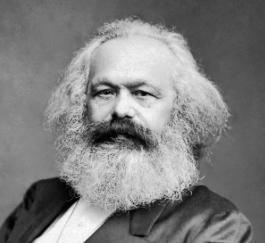
But, suppose, besides, that the making of the new machinery affords employment to a greater number of mechanics, can that be called compensation to the carpet makers, thrown on the streets?
▼
Source
source
Vol. I, Ch. 15, Section 6, pg. 479.
5 months 3 weeks ago
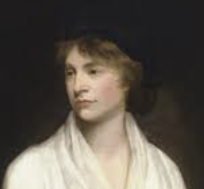
It may be confidently asserted that no man chooses evil because it is evil; he only mistakes it for happiness, the good he seeks. And the desire of rectifying these mistakes, is the noble ambition of an enlightened understanding, the impulse of feelings that Philosophy invigorates.
▼
Source
source
A Vindication of the Rights of Men
3 months 1 week ago
The one loves to do good, the other to do harm; the one to help even strangers, the other to attack even its dearest friends.
6 months 3 weeks ago
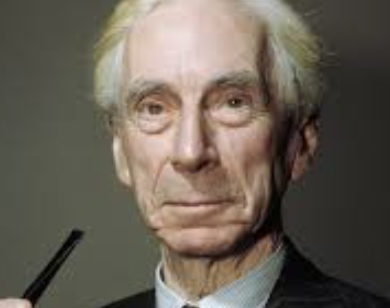
Perhaps the best hope for the future of mankind is that ways will be found of increasing the scope and intensity of sympathy.
2 months 3 weeks ago
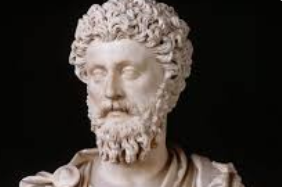
If...it be a thing external that causes thy grief, know, that it is not that properly that doth cause it, but thine own conceit and opinion concerning the thing: which thou mayest rid thyself of, when thou wilt.
▼
Source
source
VIII, 45
7 months 3 days ago
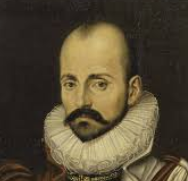
Of all human and ancient opinions concerning religion, that seems to me the most likely and most excusable, that acknowledged God as an incomprehensible power, the original and preserver of all things, all goodness, all perfection, receiving and taking in good part the honour and reverence that man paid him, under what method, name, or ceremonies soever
▼
Source
source
Ch. 12
5 months 3 weeks ago
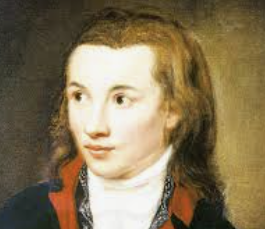
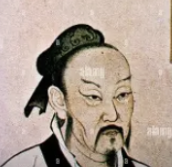
The true Poet is all-knowing; he is an actual world in miniature.
3 months 2 weeks ago
Benevolence is the tranquil habitation of man, and righteousness is his straight path.
▼
Source
source
Justice and Truth, no. 100
5 months 1 week ago
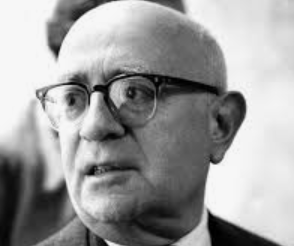
If one is to take Lulu's twelve-tone chord as the integral totality of complementary harmony, then Berg's allegorical genius proves itself within a historical perspective which makes the brain reel: just as Lulu in the world of total illusion longs for nothing but her murderer and finally finds him in that sound, so does all harmony of unrequited happiness long for its fatal chord as the cipher of fulfillment - twelve-tone music is not to be separated from dissonance. Fatal: because all dynamics come to a standstill within it without finding release. The law of complementary harmony already implies the end of the musical experience of time, as this was heralded in the dissociation of time according to Expressionistic extremes.
▼
Source
source
Philosophy of Modern Music (1973) as translated by Anne G. Mitchell and Wesley V. Blomster
6 months 3 weeks ago
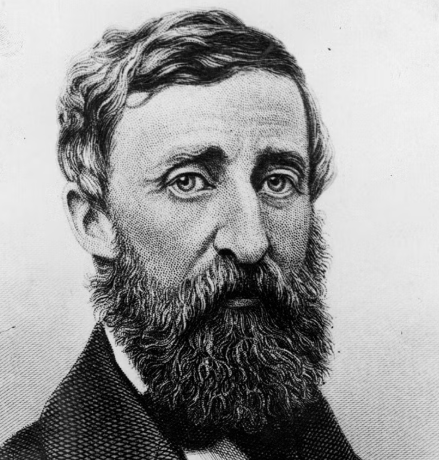
I take it for granted, when I am invited to lecture anywhere, - for I have had a little experience in that business, - that there is a desire to hear what I think on some subject, though I may be the greatest fool in the country, - and not that I should say pleasant things merely, or such as the audience will assent to; and I resolve, accordingly, that I will give them a strong dose of myself. They have sent for me, and engaged to pay for me, and I am determined that they shall have me, though I bore them beyond all precedent.
▼
Source
source
p. 484
2 months 3 weeks ago
Our century of war, militarism, and political terror has produced great - and successful - advocates of true peace, among whom Mohandas Gandhi and Martin Luther King, Jr., are the paramount examples. The considerable success that they achieved testifies to the presence, in the midst of violence, of an authentic and powerful desire for peace and, more important, of the proven will to make the necessary sacrifices.
6 months 3 weeks ago
If you die, I will lie down beside you and I will stay there until the end, without eating or drinking, you will rot in my arms and I will love you as carcass: for you love nothing if you do not love everything.
▼
Source
source
Act 10, sc. 2
6 months 4 weeks ago
The slaving Poor are incapable of any Principles: Gentlemen may be converted to true Principles, by Time and Experience. The middling Rank of Men have Curiosity and Knowledge enough to form Principles, but not enough to form true ones, or correct any Prejudices that they may have imbib'd: And 'tis among the middling Rank, that Tory Principles do at present prevail most in England.
▼
Source
source
Part I, Essay 9: Of The Parties of Great Britain; final lines of this essay in the 1741 and 1742 editions of Essays, Moral and Political, they were not included in later editions.
5 months 2 weeks ago
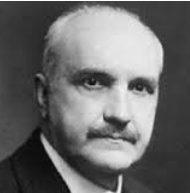
In proportion as a man's interests become humane and his efforts rational, he appropriates and expands a common life, which reappears in all individuals who reach the same impersonal level of ideas.
▼
Source
source
Ch. VIII: Ideal Society
7 months 4 days ago
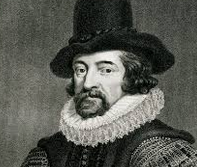
Only charity admitteth no excess. For so we see, aspiring to be like God in power, the angels transgressed and fell.
▼
Source
source
Book II, xxii
3 months 1 week ago
The old Romans had a custom which survived even into my lifetime. They would add to the opening words of a letter: "If you are well, it is well; I also am well." Persons like ourselves would do well to say. "If you are studying philosophy, it is well." For this is just what "being well" means. Without philosophy the mind is sickly.
2 months 3 weeks ago
There is no man so fortunate that there shall not be by him when he is dying some who are pleased with what is going to happen. Suppose that he was a good and a wise man, will there not be at least some one to say to himself, Let us at last breathe freely, being relieved from this schoolmaster? It is true that he was harsh to none of us, but I perceive that he tacitly condemns us.-This is what is said of a good man. But in our own case how many other things are there for which there are many who wish to get rid of us.
▼
Source
source
X, 36
5 months 2 weeks ago
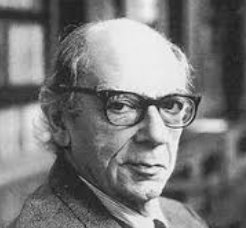
Few new truths have ever won their way against the resistance of established ideas save by being overstated.
▼
Source
source
As quoted in Communications and History : Theories of Knowledge, Media and Civilization (1988) by Paul Heyer, p. 125
3 months 3 days ago
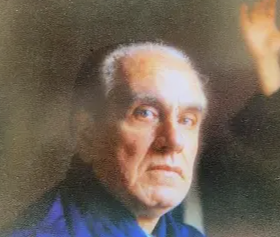
In dealing with relationships, not only man-to-man, but also State-to-State and race-to-race, it is necessary to be able to conceive again of that obedience which does not humiliate but exalts, that command or leadership which commits one to superiority and a precise responsibility.
▼
Source
source
p. 117
CivilSimian.com created by AxiomaticPanic, CivilSimian, Kalokagathia