

6 months 2 days ago
Even to have come forth is something, since I see that being able to conquer is placed in the hands of fate. However, there was in me, whatever I was able to do, that which no future century will deny to be mine, that which a victor could have for his own: Not to have feared to die, not to have yielded to any equal in firmness of nature, and to have preferred a courageous death to a noncombatant life.


6 months 3 weeks ago
No one ever told me that grief felt so like fear. First line.
2 months 3 weeks ago
All is ephemeral - fame and the famous as well.
▼
Source
source
IV, 35
3 months 1 week ago
The characteristic mark of this age of dictators, wars and revolutions is its anti-capitalistic bias. Most governments and political parties are eager to restrict the sphere of private initiative and free enterprise. It is an almost unchallenged dogma that capitalism is done for and that the coming of all-round regimentation of economic activities is both inescapable and highly desirable.

6 months 3 weeks ago
It is the duty of every man, so far as his ability extends, to detect and expose delusion and error.
▼
Source
source
The Theophilanthropist: Containing Critical, Moral, Theological and Literary Essays, in Monthly Numbers, p. 387
2 months 2 weeks ago
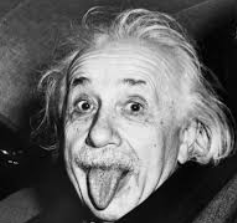
Life is like riding a bicycle. To keep your balance you must keep moving.
▼
Source
source
Letter to his son Eduard (5 February 1930), as quoted in Walter Isaacson, Einstein: His Life and Universe (2007), p. 367
7 months 2 weeks ago
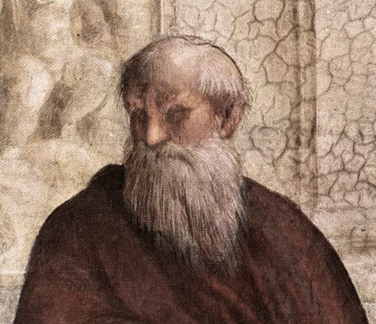
Withdraw into yourself and look. And if you do not find yourself beautiful yet, act as does the creator of a statue that is to be made beautiful: he cuts away here, he smoothes there, he makes this line lighter, this other purer. ... Cut away all that is excessive, straighten all that is crooked, bring light to all that is overcast, labor to make all one glow or beauty and never cease chiseling your statue, until there shall shine out on you from it the godlike splendor of virtue.
4 months 3 weeks ago
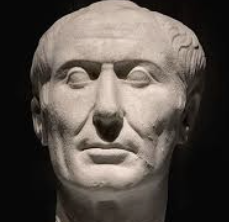
Either be silent or say something better than silence.
▼
Source
source
Maxim 960
4 months 3 weeks ago
Electric circuitry profoundly involves men with one another. Information pours upon us, instantaneously and continuously.
5 months 5 days ago
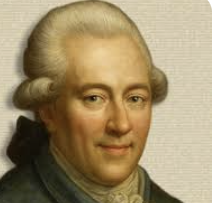
You believe that I run after the strange because I do not know the beautiful; no, it is because you do not know the beautiful that I seek the strange.
▼
Source
source
F160
7 months 3 days ago
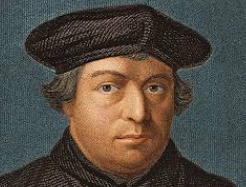
Faith ever says, "If Thou wilt," not "If Thou canst."
▼
Source
source
p. 241
2 months 3 weeks ago
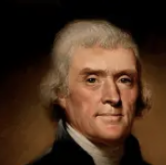
Never put off till tomorrow what you can do to-day.
5 months 1 week ago
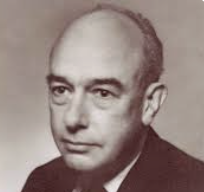
Logic chases truth up the tree of grammar.
▼
Source
source
Philosophy of Logic
2 months 2 weeks ago
We Jews have been too adaptable. We have been too eager to sacrifice our idiosyncrasies for the sake of social conformity. ... Even in modern civilization, the Jew is most happy if he remains a Jew.
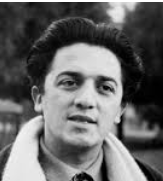
4 months 4 days ago
If I'm a cruel satirist at least I'm not a hyprocrite: I never judge what other people do. Neither a politician nor a priest, I never censor what others do. Neither a philospher nor a psychiatrist, I never bother trying to analyze or resolve my fears and neuroses.
▼
Source
source
"Hypocrisy"
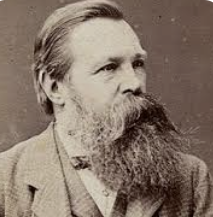
5 months 2 weeks ago
It is no longer a question anywhere of inventing interconnections from out of our brains, but of discovering them in the facts.
▼
Source
source
Ludwig Feuerbach and the End of Classical German Philosophy
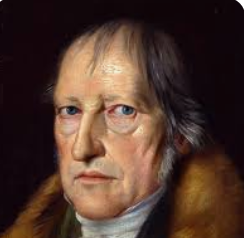
6 months 3 weeks ago
We assert then that nothing has been accomplished without interest on the part of the actors; and - if interest be called passion, inasmuch as the whole individuality, to the neglect of all other actual or possible interests and claims, is devoted to an object with every fibre of volition, concentrating all its desires and powers upon it - we may affirm absolutely that nothing great in the World has been accomplished without passion. Often abbreviated to: Nothing great in the World has been accomplished without passion. Variant translation: We may affirm absolutely that nothing great in the world has ever been accomplished without enthusiasm.
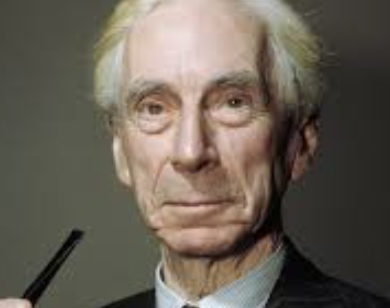
6 months 3 weeks ago
It is clear that thought is not free if the profession of certain opinions makes it impossible to earn a living.
▼
Source
source
Ch. 12: Free Thought and Official Propaganda
5 months 3 weeks ago
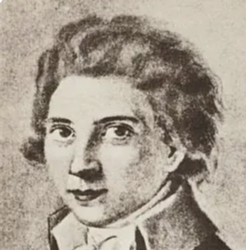
To live classically and to realize antiquity practically within oneself is the summit and goal of philology.
▼
Source
source
Philosophical Fragments, P. Firchow, trans. (1991) § 147
4 months 2 days ago
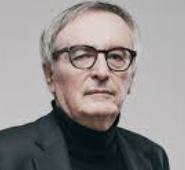
In a traditional reading eating the apple was the original sin; but, as Gnostics understood the story, the two primordial humans were right to eat the apple. The God that commanded them not to do so was not the true God but only a demiurge, a tyrannical underling exulting in its power, while the serpent came to free them from slavery. True, when they ate the apple Adam and Eve fell from grace. This was indeed the Fall of Man - a fall into the dim world of everyday consciousness. But the Fall need not be final. Having eaten its fill from the Tree of Knowledge, humankind can then rise into a state of conscious innocence. When this happens, Herr C. declares, it will be 'the final chapter in the history of the world'.
▼
Source
source
The Faith of Puppets: The Freedom of the Marionette (p. 8)
2 months 3 weeks ago
Timid men prefer the calm of despotism to the tempestuous sea of liberty.
▼
Source
source
Letter to his Italian friend, Philip Mazzei
6 months 3 weeks ago
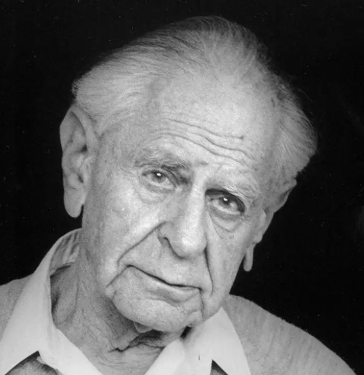
... the fight against suffering must be considered a duty, while the right to care for the happiness of others must be considered a privilege confined to the close circle of their friends. ... Pain, suffering, injustice, and their prevention, these are the eternal problems of public morals, the 'agenda' of public policy ...
▼
Source
source
Vol. 2, Ch. 24 "Oracular Philosophy and the Revolt against Reason"

6 months 3 weeks ago
In the vaunted works of Art The master stroke is Nature's part.
▼
Source
source
Art
2 months 3 weeks ago
Believing that the happiness of mankind is best promoted by the useful pursuits of peace, that on these alone a stable prosperity can be founded, that the evils of war are great in their endurance, and have a long reckoning for ages to come, I have used my best endeavors to keep our country uncommitted in the troubles which afflict Europe, and which assail us on every side. Letter to the Young Republicans of Pittsburg and its vicinities
▼
Source
source
2 December 1808
6 months 3 weeks ago
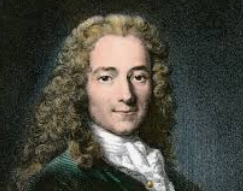
All mortals are equal; it is not their birth, But virtue itself that makes the difference.
▼
Source
source
Ériphyle Act II, scene I (1732); these lines were also later used in Voltaire's Mahomet, Act I, scene IV (1741)
6 months 3 weeks ago
Despotic government supports itself by abject civilization, in which debasement of the human mind, and wretchedness in the mass of the people, are the chief criterions. Such governments consider man merely as an animal; that the exercise of intellectual faculty is not his privilege; that he has nothing to do with the laws but to obey them; and they politically depend more upon breaking the spirit of the people by poverty, than they fear enraging it by desperation.
▼
Source
source
Means by Which the Fund Is to Be Created
6 months 2 weeks ago
People do not feel in any way ashamed or guilty about spending money on new clothes or a new car instead of giving it to famine relief. (Indeed, the alternative does not occur to them.) This way of looking at the matter cannot be justified. When we buy new clothes not to keep ourselves warm but to look "well-dressed" we are not providing for any important need. We would not be sacrificing anything significant if we were to continue to wear our old clothes, and give the money to famine relief. By doing so, we would be preventing another person from starving. It follows from what I have said earlier that we ought to give money away, rather than spend it on clothes which we do not need to keep us warm. To do so is not charitable, or generous. Nor is it the kind of act which philosophers and theologians have called "supererogatory" - an act which it would be good to do, but not wrong not to do. On the contrary, we ought to give the money away, and it is wrong not to do so.
6 months 3 weeks ago
A ruddy drop of manly blood The surging sea outweighs, The world uncertain comes and goes; The lover rooted stays.
▼
Source
source
Friendship
6 months 1 week ago
The most difficult thing in life is to know yourself.
▼
Source
source
Know thyself. As quoted in Diogenes Laërtius, The Lives and Opinions of Eminent Philosophers, I, 40 Variant
6 months 2 weeks ago
Burning in effigy. Kissing the picture of one's beloved... it aims at nothing at all; we just behave this way and then we feel satisfied.
▼
Source
source
Ch. 7 : Remarks on Frazer's Golden Bough, p. 123
7 months 2 weeks ago
It pertains to all men to know themselves and to learn self-control.
3 months 2 weeks ago
I have found a paper of mine among some others in which I call architecture 'petrified music.' Really there is something in this; the tone of mind produced by architecture approaches the effect of music.
▼
Source
source
Conversations with Eckermann (23 March 1829) - Often quoted as "Architecture is frozen music."
5 months 2 weeks ago
For it is not the bare Words, but the Scope of the writer that giveth true light, by which any writing is to bee interpreted; and they that insist upon single Texts, without considering the main Designe, can derive no thing from them clearly; but rather by casting atomes of Scripture, as dust before mens eyes, make everything more obscure than it is; an ordinary artifice of those who seek not the truth, but their own advantage.
▼
Source
source
The Third Part, Chapter 43, p. 331
7 months 4 weeks ago
We are, all of us, growing volcanoes that approach the hour of their eruption; but how near or distant that is, nobody knows not even God.
2 months 3 weeks ago
Whatever is in any way beautiful hath its source of beauty in itself, and is complete in itself; praise forms no part of it. So it is none the worse nor the better for being praised. Variant: That which is really beautiful has no need of anything.
▼
Source
source
(trans. George Long) IV, 20

5 months 3 weeks ago
How can you know if you are in the truth? The criterion is simple enough: if others make a vacuum around you, there is not a doubt in the world that you are closer to the essential than they are.

3 months 2 weeks ago
The final thing... the question of the nation, and the role of the nation in liberalism...There would seem to be a tension between liberalism's belief that all human beings enjoy... the same basic set of human rights, and the fact that we are divided up into nation states, in which the authority to enforce those rights is territorially limited. ...This contradiction can be bridged because... there is a liberal form of national identity which is not only possible, but... necessary if a liberal society is going to succeed.
▼
Source
source
23:22
7 months 3 weeks ago
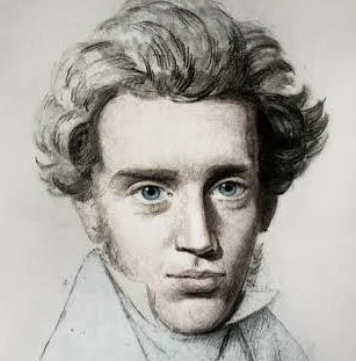
A man who for a long time has gone around hiding a secret becomes mentally deranged. At this point one would imagine that his secret would have to come out, but despite his derangement his soul still sticks to its hideout, and those around him become even more convinced that the false story he told to deceive them is the truth. He is healed of his insanity, knows everything that has gone on, and thereby perceives that nothing has been betrayed. Was this gratifying to him or not; he might wish to have disposed of his secret in his madness; it seems as if there were a fate which forced him to remain in his secret and would not let him go away from it. Or was it for the best, was there a guardian spirit who helped him keep his secret.
6 months 3 weeks ago
You don't have a soul. You are a soul. You have a body.
▼
Source
source
Commonly attributed to Mere Christianity, where it is not found. Earliest reference seems to be an unsourced attribution to George MacDonald in an 1892 issue of the Quaker periodical The British Friend.
6 months 3 weeks ago
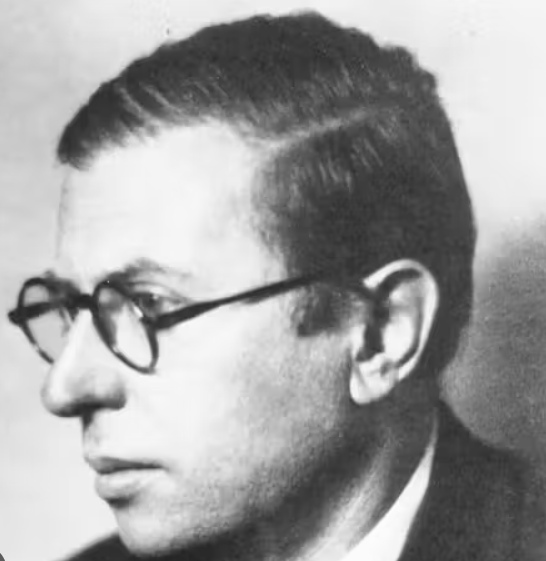
You must be afraid, my son. That is how one becomes an honest citizen.
▼
Source
source
Mother to her young son, Act 1

6 months 2 weeks ago
What is peddled about nowadays as philosophy, especially that of N.S. [National Socialism], but has nothing to do with the inner truth and greatness of that movement [namely the encounter between global technology and modern humanity] is nothing but fishing in that troubled sea of values and totalities.
▼
Source
source
Introduction to Metaphysics (1953) - a publication of lectures of 1935.
2 months 3 weeks ago
How does the light of a star set out and plunge into black eternity in its immortal course? The star dies, but the light never dies; such also is the cry of freedom. Out of the transient encounter of contrary forces which constitute your existence, strive to create whatever immortal thing a mortal may create in this world - a Cry. And this Cry, abandoning to the earth the body which gave it birth, proceeds and labors eternally.
11 months 1 day ago
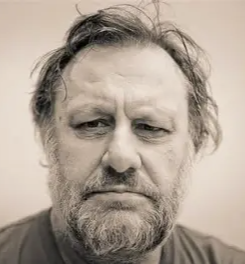
Tibetan prayer wheels: you write a prayer on a paper, put the rolled paper on a wheel, and turn it automatically, without thinking. In this way, the wheel itself is praying for me, instead of me - or more precisely, I myself am praying through the medium of the wheel. The beauty of it all is that in my psychological inferiority I can think about whatever I want, I can yield to the most dirty and obscene fantasies, and it does not matter because - to use a good old Stalinist expression - 'whatever I am thinking, objectively I am praying.'
3 months 6 days ago
Now I'm sure that most of you know the old story about the astronaut, who went far out into space, and was asked on his return whether he'd been to heaven and seen God. And he said: "Yes". And so they said to him: "Well, what about God?" And he said: "She's Black".
▼
Source
source
The Nature of God
4 months 4 weeks ago
I want to block some common misunderstandings about "understanding": In many of these discussions one finds a lot of fancy footwork about the word "understanding."
6 months 4 weeks ago
As the analysis of a substantial composite terminates only in a part which is not a whole, that is, in a simple part, so synthesis terminates only in a whole which is not a part, that is, the world.

CivilSimian.com created by AxiomaticPanic, CivilSimian, Kalokagathia