

6 months 3 weeks ago
For an author to write as he speaks is just as reprehensible as the opposite fault, to speak as he writes; for this gives a pedantic effect to what he says, and at the same time makes him hardly intelligible.
▼
Source
source
The Art of Literature

6 months 3 weeks ago
Most men do not feel in themselves the competence required for leading their group to victory, and therefore seek out a captain who appears to possess the courage and sagacity necessary for the achievement of supremacy. Even in religion this impulse appears. Nietzsche accused Christianity of inculcating a slave-morality, but ultimate triumph was always the goal. "Blessed are the meek, for they shall inherit the earth."
▼
Source
source
Ch. 2: Leaders and Followers
5 months 1 week ago
If one is to take Lulu's twelve-tone chord as the integral totality of complementary harmony, then Berg's allegorical genius proves itself within a historical perspective which makes the brain reel: just as Lulu in the world of total illusion longs for nothing but her murderer and finally finds him in that sound, so does all harmony of unrequited happiness long for its fatal chord as the cipher of fulfillment - twelve-tone music is not to be separated from dissonance. Fatal: because all dynamics come to a standstill within it without finding release. The law of complementary harmony already implies the end of the musical experience of time, as this was heralded in the dissociation of time according to Expressionistic extremes.
▼
Source
source
Philosophy of Modern Music (1973) as translated by Anne G. Mitchell and Wesley V. Blomster
5 months 2 weeks ago
Culture is on the horns of this dilemma: if profound and noble, it must remain rare, if common, it must become mean.
▼
Source
source
Ch. IV: The Aristocratic Ideal


3 months 2 weeks ago
Culture is a much better predictor of populist sentiment than economics. ...The average Trump voter in 2016 had a higher per capita income than the average Hillary Clinton voter, and if you look at the people in the January 6th riot, the vast majority... were comfortable middle class people with good jobs... There is a core... white working class base to Trumpism, but... a lot of the people that are aligned with that movement are there for cultural reasons. They really don't like the kind of identity politics that's being... put forward by the progressive left... A lot of Hispanic voters, for example, don't like socialism, and they don't like the fact that the Democrats are using the word socialism as if it's a perfectly normal set of economic choices.
▼
Source
source
51:36:00
5 months 2 weeks ago
Fifth, in what measure this unification acts, seems to be regulated only by special rules; or, at least, we cannot in our present knowledge say how far it goes. But it may be said that, judging by appearances, the amount of arbitrariness in the phenomenon of human minds is neither altogether trifling nor very prominent.

5 months 3 weeks ago
It was the case of common soldiers deserting from their officers, to join a furious, licentious populace. It was a desertion to a cause, the real object of which was to level all those institutions, and to break all those connexions, natural and civil, that regulate and hold together the community by a chain of subordination; to raise soldiers against their officers; servants against their masters; tradesmen against their customers; artificers against their employers; tenants against their landlords; curates against their bishops; and children against their parents. That this cause of theirs was not an enemy to servitude, but to society.
▼
Source
source
Speech in the House of Commons (9 February 1790), quoted in The Parliamentary History of England, From the Earliest Period to the Year 1803, Vol. XXVIII (1816), column 359
6 months 3 weeks ago
Formerly, it was held by philosophers and mathematicians alike that the proofs in Geometry depended on the figure; nowadays, this is known to be false. In the best books there are no figures at all. The reasoning proceeds by the strict rules of formal logic from a set of axioms laid down to begin with.
▼
Source
source
Ch. 5: Mathematics and the Metaphysicians

6 months 3 weeks ago
All who are not lunatics are agreed about certain things. That it is better to be alive than dead, better to be adequately fed than starved, better to be free than a slave. Many people desire those things only for themselves and their friends; they are quite content that their enemies should suffer. These people can only be refuted by science: Humankind has become so much one family that we cannot ensure our own prosperity except by ensuring that of everyone else. If you wish to be happy yourself, you must resign yourself to seeing others also happy.
▼
Source
source
"The Science to Save Us from Science," The New York Times Magazine, 3/19/1950

3 months 2 weeks ago
One comfort is, that Great Men, taken up in any way, are profitable company. We cannot look, however imperfectly, upon a great man, without gaining something by him. He is the living light-fountain, which it is good and pleasant to be near. The light which enlightens, which has enlightened the darkness of the world; and this not as a kindled lamp only, but rather as a natural luminary shining by the gift of Heaven; a flowing light-fountain, as I say, of native original insight, of manhood and heroic nobleness;-in whose radiance all souls feel that it is well with them.

5 months 1 week ago
The haste of day rules over the night as empty form.

7 months 3 weeks ago
The greatest danger, that of losing one's own self, may pass off as quietly as if it were nothing; every other loss, that of an arm, a leg, five dollars, a wife etc., is sure to be noticed.

5 months 3 weeks ago
Dying people often become childish.
▼
Source
source
Act II.

2 months 3 weeks ago
We cannot hope to be secure when our government has declared, by its readiness "to act alone," its willingness to be everybody's enemy.

5 months 2 weeks ago
To win a truly great life for the people of Israel, a great peace is necessary, not a fictitious peace, the dwarfish peace that is no more than a feeble intermission, but a true peace with the neighboring peoples, which alone can render possible a common development of this portion of the earth as the vanguard of the awakening Near East.
▼
Source
source
"Our Reply" (September 1945), as published in A Land of Two Peoples : Martin Buber on Jews and Arabs (1983) edited by Paul Mendes-Flohr, p. 178
2 months 3 weeks ago
The centuries are thick, dark waves that rise and fall, steeped in blood. Every moment is a gaping abyss. Gaze on the dark sea without staggering, confront the abyss every moment without illusion or impudence or fear. ... But this is not enough; take a further step: battle to give meaning to the confused struggles of man.
6 months 3 weeks ago
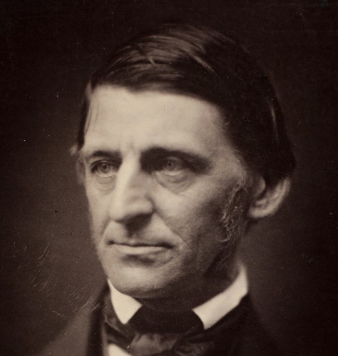
Fear not, then, thou child infirm, There's no god dare wrong a worm.
▼
Source
source
Compensation, st. 2
6 months 3 weeks ago
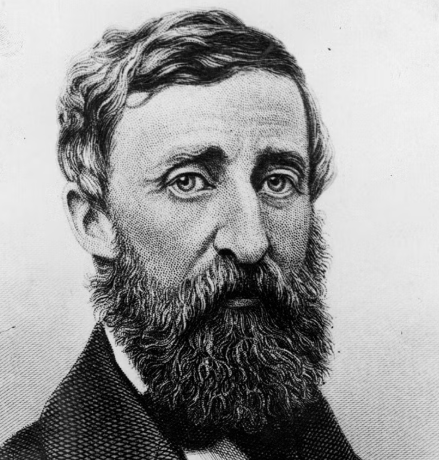
Truth, Goodness, Beauty - those celestial thrins, Continually are born; e'en now the Universe, With thousand throats, and eke with greener smiles, Its joy confesses at their recent birth.
▼
Source
source
June 14, 1838
7 months 2 weeks ago
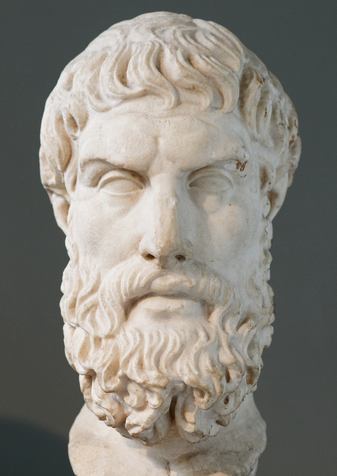
No pleasure is in itself evil, but the things which produce certain pleasures entail annoyances many times greater than the pleasures themselves.

5 months 2 weeks ago
Do not be afraid. I am the First and the Last, and the living one, and I became dead, but look! I am living forever and ever, and I have the keys of death and of the Grave.
▼
Source
source
Revelation 1:17-18, NWT

6 months 2 weeks ago
A law there is, an oracle of Doom, Of old enacted by the assembled gods, That if a Daemon-such as live for ages- Defile himself with foul and sinful murder, He must for seasons thrice ten thousand roam Far from the Blest; such is the path I tread, I too a wanderer and exile from heaven.
▼
Source
source
tr. Phillip H. De Lacy and Benedict Einarson. Cf. full quotation at Leonard p. 54-55 fr. 115, as paraphrased in Plutarch's Moralia
5 months 1 week ago
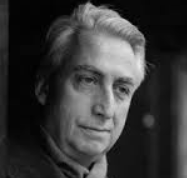
Encratic language (the language produced and spread under the protection of power) is statutorily a language of repetition; all official institutions of language are repeating machines: schools, sports, advertising, popular songs, news, all continually repeat the same structure, the same meaning, often the same words.
▼
Source
source
The Pleasure of the Text

2 months 3 weeks ago
Let those flatter who fear; it is not an American art. To give praise which is not due might be well from the venal, but would ill beseem those who are asserting the rights of human nature. They know, and will therefore say, that kings are the servants, not the proprietors of the people.


4 months 1 day ago
The modern world inherits the Christian view in which salvation is played out in history. In Christian myth human events follow a design known only to God; the history of humankind is an ongoing story of redemption. This is an idea that informs virtually all of western thought - not least when it is intensely hostile to religion. From Christianity onwards, human salvation would be understood (at least in the west) as involving movement through time. All modern philosophies in which history is seen as a process of human emancipation - whether through revolutionary change or incremental improvement - are garbled versions of this Christian narrative, itself a garbled version of the original message of Jesus.
▼
Source
source
The Faith of Puppets: The Revelation of Philip K. Dick (p. 60)
2 months 3 weeks ago
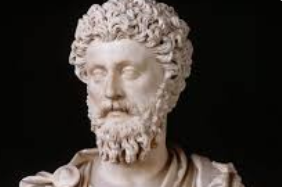
Everything is in a state of metamorphosis. Thou thyself art in everlasting change and in corruption to correspond; so is the whole universe.
▼
Source
source
Meditations. ix. 19.
4 months 3 weeks ago
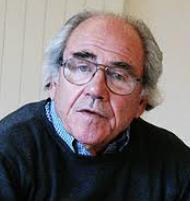
The end of history is, alas, also the end of the dustbins of history. There are no longer any dustbins for disposing of old ideologies, old regimes, old values. Where are we going to throw Marxism, which actually invented the dustbins of history? (Yet there is some justice here since the very people who invented them have fallen in.) Conclusion: if there are no more dustbins of history, this is because History itself has become a dustbin. It has become its own dustbin, just as the planet itself is becoming its own dustbin.
▼
Source
source
The Illusion of the End (1992) (L'Illision de la Fin) Tr. Chris Turner, 1994, Stanford University Press, ISBN 0804725012, p. 26, "The Event Strike"
5 months 3 weeks ago
Men without their choice derive benefits from that association; without their choice they are subjected to duties in consequence of these benefits; and without their choice they enter into a virtual obligation as binding as any that is actual. Look through the whole of life and the whole system of duties. Much the strongest moral obligations are such as were never the results of our option. I allow, that if no supreme ruler exists, wise to form, and potent to enforce, the moral law, there is no sanction to any contract, virtual or even actual, against the will of prevalent power. On that hypothesis, let any set of men be strong enough to set their duties at defiance, and they cease to be duties any longer.
▼
Source
source
p. 442
5 months 3 weeks ago
Revolution is like the daughters of Pelias: it cuts humanity to pieces in order to rejuvenate it.
▼
Source
source
Act II.
6 months 3 weeks ago
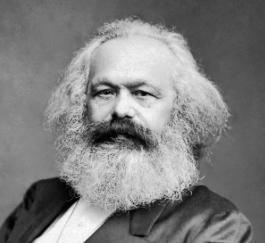
The law of gravity thus asserts itself when a house falls about our ears.
▼
Source
source
Vol. I, Ch. 1, Section 4, pg. 86.

6 months 2 weeks ago
Whoever cultivates the golden mean avoids both the poverty of a hovel and the envy of a palace.
▼
Source
source
Book II, ode x, line 5
6 months 3 weeks ago
Christianity taught only what the whole of Asia knew already long before and even better.
▼
Source
source
quoted in Londhe, S. (2008). A tribute to Hinduism: Thoughts and wisdom spanning continents and time about India and her culture. New Delhi: Pragun Publication.
2 months 3 weeks ago
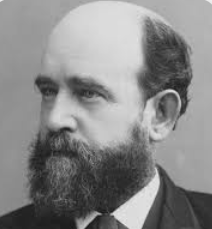
I care nothing for creeds. I am not concerned with any one's religious belief. But I would have men think for themselves. If we do not, we can only abandon one superstition to take up another, and it may be a worse one. It is as bad for a man to think that he can know nothing as to think he knows all. There are things which it is given to all possessing reason to know, if they will but use that reason. And some things it may be there are, that - as was said by one whom the learning of the time sneered at, and the high priests persecuted, and polite society, speaking through the voice of those who knew not what they did, crucified - are hidden from the wise and prudent and revealed unto babes.
▼
Source
source
Conclusion : The Moral of this Examination

7 months 1 week ago
For it still seemed to me that it is not we who sin, but some other nature sinned in us. And it gratified my pride to be beyond blame, and when I did anything wrong not to have to confess that I had done wrong. I loved to excuse my soul and to accuse something else inside me (I knew not what) but which was not I. But, assuredly, it was I, and it was my impiety that had divided me against myself. That sin then was all the more incurable because I did not deem myself a sinner.
▼
Source
source
A. Outler, trans. (Dover: 2002), Book 5, Chapter 10, p. 77
5 months 2 weeks ago
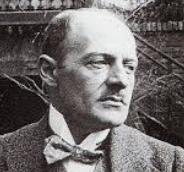
Ressentiment must therefore be strongest in a society like ours, where approximately equal rights (political and otherwise) or formal social equality, publicly recognized, go hand in hand with wide factual differences in power, property, and education.
▼
Source
source
L. Coser, trans. (1973), p. 50
6 months 3 weeks ago
I am sure that university life would be better, both intellectually and morally, if most university students had temporary childless marriages. This would afford a solution to the sexual urge neither restless nor surreptitious, neither mercenary nor casual, and of such a nature that it need not take up time which ought to be given to work.
▼
Source
source
"Sex in Education", p. 119-120
2 months 3 weeks ago
Whatever this is that I am, it is flesh and a little spirit and an intelligence. This that I am, whatever it be, is mere flesh and a little breathe and the ruling Reason, This Being of mine, whatever it really is, consists of a little flesh, a little breath, and the part which governs.
▼
Source
source
A little flesh, a little breath, and a Reason to rule all - that is myself. (Staniforth translation) II, 2

6 months 6 days ago
Cut not fire with a sword. Symbol 9 Variant translation: Poke not the fire with a sword.
▼
Source
source
As quoted in Short Sayings of Great Men: With Historical and Explanatory Notes (1882) by Samuel Arthur Bent, p. 455
4 months 3 weeks ago
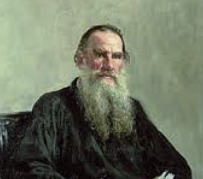
The attitude of the ruling classes to the laborers is that of a man who has felled his adversary to the earth and holds him down, not so much because he wants to hold him down, as because he knows that if he let him go, even for a second, he would himself be stabbed, for his adversary is infuriated and has a knife in his hand. And therefore, whether their conscience is tender or the reverse, our rich men cannot enjoy the wealth they have filched from the poor as the ancients did who believed in their right to it. Their whole life and all their enjoyments are embittered either by the stings of conscience or by terror.
▼
Source
source
Chapter V, Contradiction Between our Life and our Christian Conscience

5 months 2 weeks ago
Another parable put he forth unto them, saying, The kingdom of heaven is likened unto a man which sowed good seed in his field: But while men slept, his enemy came and sowed tares among the wheat, and went his way. But when the blade was sprung up, and brought forth fruit, then appeared the tares also. So the servants of the householder came and said unto him, Sir, didst not thou sow good seed in thy field? from whence then hath it tares? He said unto them, An enemy hath done this. The servants said unto him, Wilt thou then that we go and gather them up? But he said, Nay; lest while ye gather up the tares, ye root up also the wheat with them. Let both grow together until the harvest: and in the time of harvest I will say to the reapers, Gather ye together first the tares, and bind them in bundles to burn them: but gather the wheat into my barn.
▼
Source
source
13:24-30 (KJV)

4 months 1 week ago
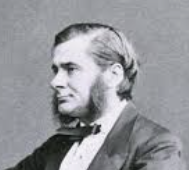
Social progress means a checking of the cosmic process at every step and the substitution for it of another, which may be called the ethical process; the end of which is not the survival of those who may happen to be the fittest, in respect of the whole of the conditions which obtain, but of those who are ethically the best.
5 months 2 weeks ago
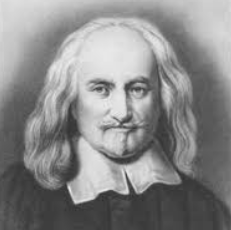
Of all passions, that which inclineth men least to break the laws is fear.
▼
Source
source
The Second Part, Chapter 27
CivilSimian.com created by AxiomaticPanic, CivilSimian, Kalokagathia