

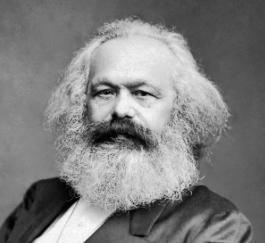
6 months 3 weeks ago
Reason has always existed, but not always in a rational form.
▼
Source
source
Letter from Marx to Arnold Ruge, September 1843
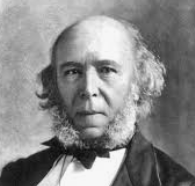
5 months 3 weeks ago
Every man may claim the fullest liberty to exercise his faculties compatible with the possession of like liberties by every other man.
▼
Source
source
Pt. II, Ch. 4 : Derivation of a First Principle, § 3
6 months 2 weeks ago
Philosophy unravels the knots in our thinking; hence its results must be simple, but its activity is as complicated as the knots that it unravels.
▼
Source
source
Ch. 9 : Philosophy, p. 183
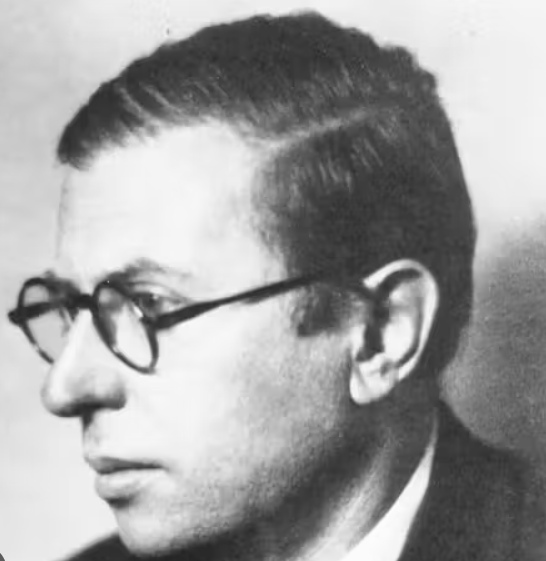
6 months 3 weeks ago
Yes, Lord, you are innocence itself: how could you conceive of Nothingness, you who are plenitude? Your gaze is light and transforms all into light: how could you know the half-light in my heart?
▼
Source
source
Act 3, sc. 6
6 months 4 weeks ago
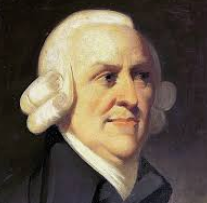
In manufactures, a very small advantage will enable foreigners to undersell our own workmen, even in the home market. It will require a very great one to enable them to do so in the rude produce of the soil. If the free importation of foreign manufactures were permitted, several of the home manufactures would probably suffer, and some of them, perhaps, go to ruin altogether, and a considerable part of the stock and industry at present employed in them, would be forced to find out some other employment. But the freest importation of the rude produce of the soil could have no such effect upon the agriculture of the country.
▼
Source
source
Chapter II
6 months 3 weeks ago
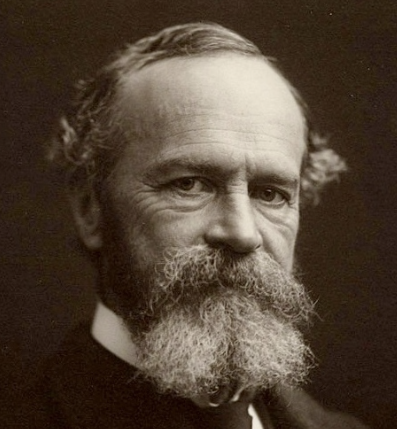
Religion...is a man's total reaction upon life.
▼
Source
source
Lecture II, "Circumscription of the Topic"
4 months 3 weeks ago
It is always the psychic and social grounds, brought into play by each medium or technology, that readjust the balance of the hemispheres and of human sensibilities into equilibrium with those grounds.
▼
Source
source
p. 82
5 months 2 weeks ago
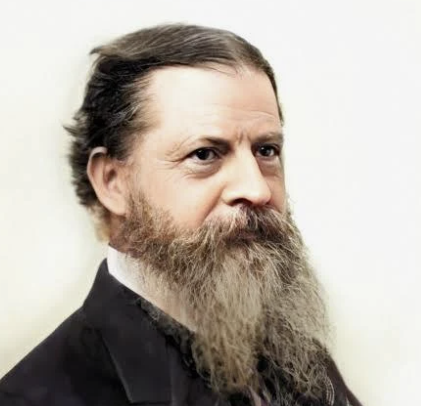
Few persons care to study logic, because everybody conceives himself to be proficient enough in the art of reasoning already. But I observe that this satisfaction is limited to one's own ratiocination and does not extend to that of other men. We come to the full possession of our power of drawing inferences the last of all our faculties, for it is not so much a natural gift as a long and difficult art.
▼
Source
source
Illustrations of the Logic of Science First Paper - The Fixation of Belief", in Popular Science Monthly, Vol. 12
5 months 2 weeks ago
Some words shall herein be capitalised when used, not as vernacular, but as terms defined. Thus an "idea" is the substance of an actual unitary thought or fancy; but "Idea," nearer Plato's idea of ἰδέα, denotes anything whose Being consists in its mere capacity for getting fully represented, regardless of any person's faculty or impotence to represent it.
▼
Source
source
I

5 months 2 weeks ago
In a single second we do away with all seconds; God himself could not do as much.
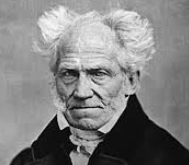
6 months 3 weeks ago
The word of man is the most durable of all material.
▼
Source
source
Vol. 2, Ch. 25, sect. 298
5 months 2 weeks ago
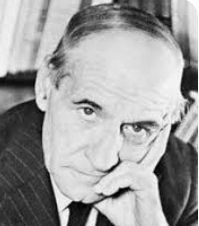
It is not a question of the mass-man being a fool. On the contrary, to-day he is more clever, has more capacity of understanding than his fellow of any previous period. But that capacity is of no use to him; in reality, the vague feeling that he possesses it seems only to shut him up more within himself and keep him from using it. Once for all, he accepts the stock of commonplaces, prejudices, fag-ends of ideas or simply empty words which chance has piled up within his mind, and with a boldness only explicable by his ingenuousness, is prepared to impose them everywhere.... Why should he listen if he has within him all that is necessary? There is no reason now for listening, but rather for judging, pronouncing, deciding. There is no question concerning public life, in which he does not intervene, blind and deaf as he is, imposing his "opinions."
▼
Source
source
Chap. VIII: The Masses Intervene In Everything, And Why Their Intervention Is Solely By Violence
5 months 3 weeks ago
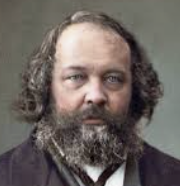
At the present time a serious, strong state can have but one sound foundation - military and bureaucratic centralization. Between a monarchy and the most democratic republic there is only one essential difference: in the former, the world of officialdom oppresses and robs the people for the greater profit of the privileged and propertied classes, as well as to line its own pockets, in the name of the monarch; in the latter, it oppresses and robs the people in exactly the same way, for the benefit of the same classes and the same pockets, but in the name of the people's will. In a republic a fictitious people, the "legal nation" supposedly represented by the state, smothers the real, live people. But it will scarcely be any easier on the people if the cudgel with which they are beaten is called the people's cudgel.

3 months 2 weeks ago
"Detect quacks"? Yes do, for Heaven's sake; but know withal the men that are to be trusted! Till we know that, what is all our knowledge; how shall we even so much as "detect"? For the vulpine sharpness, which considers itself to be knowledge, and "detects" in that fashion, is far mistaken. Dupes indeed are many: but, of all dupes, there is none so fatally situated as he who lives in undue terror of being duped.
3 months 2 weeks ago
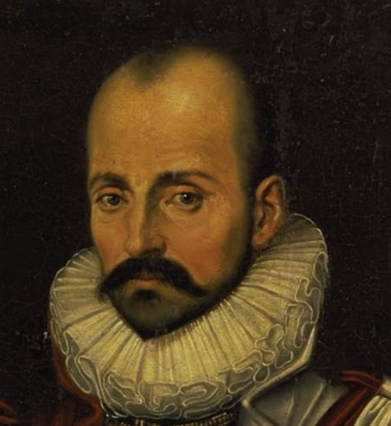
Friendship ... flourishes not so much by kindnesses as by sincerity.
▼
Source
source
Part 3
5 months 3 weeks ago
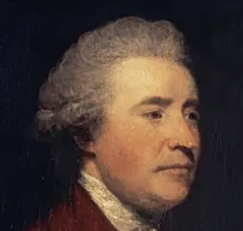
The Crown of Great Britain cannot, in my opinion, be too magnificent. Let us see some great public works set on foot; let it never be said, that the Commons of Great Britain failed in what they owe to the first Crown in the world. Looking up to royalty, I do say, it is the oldest and one of the best parts of our constitution. I wish it should look like royalty; that it should look like a King; like a King of Great Britain.
▼
Source
source
Speech in the House of Commons (28 February 1769)
4 months 1 week ago
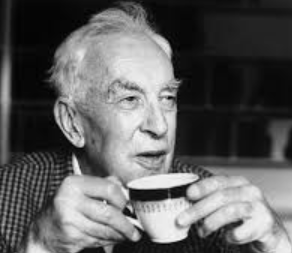
On this showing, the nature of the breakdowns of civilizations can be summed up in three points: a failure of creative power in the minority, an answering withdrawal of mimesis on the part of the majority, and a consequent loss of social unity in the society as a whole.
▼
Source
source
Vol. 4 (1955 ), part B, p. 6
7 months 2 days ago
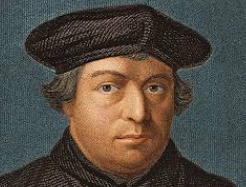
If you are a preacher of mercy, do not preach an imaginary but the true mercy. If the mercy is true, you must therefore bear the true, not an imaginary sin. God does not save those who are only imaginary sinners. Be a sinner, and let your sins be strong (sin boldly), but let your trust in Christ be stronger, and rejoice in Christ who is the victor over sin, death, and the world. We will commit sins while we are here, for this life is not a place where justice resides. We, however, says Peter (2. Peter 3:13) are looking forward to a new heaven and a new earth where justice will reign.
▼
Source
source
Letter 99, Paragraph 13. Erika Bullmann Flores, Tr. from: Dr. Martin Luther's Saemmtliche SchriftenDr. Johann Georg Walch Ed. (St. Louis: Concordia Publishing House, N.D.), Vol. 15, cols. 2585-2590.
3 months 2 weeks ago
Find in any country the Ablest Man that exists there; raise him to the supreme place, and loyally reverence him: you have a perfect government for that country; no ballot-box, parliamentary eloquence, voting, constitution-building, or other machinery whatsoever can improve it a whit.
7 months 3 days ago
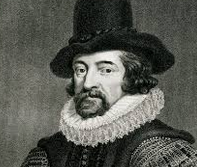
The beginning is from God: for the business which is in hand, having the character of good so strongly impressed upon it, appears manifestly to proceed from God, who is the author of good, and the Father of Lights. Now in divine operations even the smallest beginnings lead of a certainty to their end. And as it was said of spiritual things, "The kingdom of God cometh not with observation," so is it in all the greater works of Divine Providence; everything glides on smoothly and noiselessly, and the work is fairly going on "before men are aware that it has begun. Nor should the prophecy of Daniel be forgotten, touching the last ages of the world: -"Many shall go to and fro, and knowledge shall be increased;" clearly intimating that the thorough passage of the world (which now by so many distant voyages seems to be accomplished, or in course of accomplishment), and the advancement of the sciences, are destined by fate, that is, by Divine Providence, to meet in the same age.
▼
Source
source
Aphorism 93
5 months 2 weeks ago
The significance of God, cause, number, substance or soul consists, as James asserts, in nothing but the tendency of the given concept to make us act or think. If the world should reach a point at which it ceases to care not only about such metaphysical entities but also about murders perpetrated behind closed frontiers or simply in the dark, one would have to conclude that the concepts of such murders have no meaning, that they represent no 'distinct ideas' or truths, since they do not make any 'sensible difference to anybody.
▼
Source
source
describing the pragmatist view, pp. 46-47.
5 months 3 weeks ago
Nature too remains, so far as we have yet come, ever a frightful Machine of Death: everywhere monstrous revolution, inexplicable vortices of movement; a kingdom of Devouring, of the maddest tyranny; a baleful Immense: the few light-points disclose but a so much the more appalling Night, and terrors of all sorts must palsy every observer.
5 months 3 weeks ago
All religions are cruel, all founded on blood; for all rest principally on the idea of sacrifice - that is, on the perpetual immolation of humanity to the insatiable vengeance of divinity.
2 months 3 weeks ago
It is impossible to care for each other more or differently than we care for the earth. This last statement becomes obvious enough when it is considered that the earth is what we all have in common, that it is what we are made of and what we live from, and that we therefore cannot damage it without damaging those with whom we share it. But I believe it goes farther and deeper than that. There is an uncanny resemblance between our behavior toward each other and our behavior toward the earth. Between our relation to our own sexuality and our relation to the reproductivity of the earth, for instance, the resemblance is plain and strong. By some connection we do not recognize, the willingness to exploit one becomes the willingness to exploit the other.
▼
Source
source
The Unsettling of America (1977), Chapter Seven : The Body and the Earth
4 months 2 weeks ago
The ethical life... is maintained in being by a common culture, which also upholds the togetherness of society... Unlike the modern youth culture, a common culture sanctifies the adult state, to which it offers rites of passage.
▼
Source
source
"Idle Hands" (p. 127)
5 months 3 weeks ago
He was not merely a chip of the old Block, but the old Block itself.
▼
Source
source
On Pitt's First Speech (26 February 1781), from Wraxall's Memoirs, First Series, vol. i. p. 342
5 months 2 weeks ago
The development of the human mind has practically extinguished all feelings, except a few sporadic kinds, like sound, colors, smells, warmth, etc., which now appear to be disconnected and separate.


5 months 2 weeks ago
Being true is different from being taken as true, whether by one or by many or everybody, and in no case is it to be reduced to it. There is no contradiction in something's being true which everybody takes to be false. I understand by 'laws of logic' not psychological laws of takings-to-be-true, but laws of truth. ...If being true is thus independent of being acknowledged by somebody or other, then the laws of truth are not psychological laws: they are boundary stones set in an eternal foundation, which our thought can overflow, but never displace. It is because of this that they have authority for our thought if it would attain truth. They do not bear the relation to thought that the laws of grammar bear to language; they do not make explicit the nature of our human thinking and change as it changes.
▼
Source
source
Introduction, Tr. Montgomery Furth

2 months 3 weeks ago
It has always been denied by the republican party in this country, that the Constitution had given the power of incorporation to Congress. On the establishment of the Bank of the United States, this was the great ground on which that establishment was combated; and the party prevailing supported it only on the argument of its being an incident to the power given them for raising money.
▼
Source
source
Letter to Dr. Maese (1809) ME 12:231 : The Writings of Thomas Jefferson "Memorial Edition" (20 Vols., 1903-04)
7 months 2 weeks ago
The Master said, "Hard is it to deal with him, who will stuff himself with food the whole day, without applying his mind to anything good! Are there not gamesters and chess players? To be one of these would still be better than doing nothing at all.
6 months 3 weeks ago
The end of the human race will be that it will eventually die of civilization.
▼
Source
source
Civilization
3 months 5 days ago
You only have power over people so long as you don't take everything away from them. But when you've robbed a man of everything he's no longer in your power - he's free again.
▼
Source
source
Bobynin, in Ch. 17
6 months 3 weeks ago
The plain fact is that men's minds are built, as has been often said, in water-tight compartments. Religious after a fashion, they yet have many other things in them beside their religion, and unholy entanglements and associations inevitably obtain. The basenesses so commonly charged to religion's account are thus, almost all of them, not chargeable at all to religion proper, but rather to religion's wicked practical partner, the spirit of corporate dominion. And the bigotries are most of them in their turn chargeable to religion's wicked intellectual partner, the spirit of dogmatic dominion, the passion for laying down the law in the form of an absolutely closed-in theoretic system. The ecclesiastical spirit in general is the sum of these two spirits of dominion.
▼
Source
source
Lectures XIV and XV, "The Value of Saintliness"
5 months 2 weeks ago
If there was a God of sorrow, he would grow black heavy wings, to soar not for the skies, but for inferno.
6 months 3 weeks ago
Thus mathematics may be defined as the subject in which we never know what we are talking about, nor whether what we are saying is true.
▼
Source
source
Ch. 5: Mathematics and the Metaphysicians
6 months 3 weeks ago
Enthusiasm is supernatural serenity.
▼
Source
source
Pearls of Thought (1881) p. 74
5 months 1 week ago
I am the center of my universe, the center of the universe, and in my supreme anguish I cry with Michelet, "Mon moi, ils m'arrachent mon moi!" What is a man profited if he shall gain the world and lose his own soul? (Matt. xvi. 26).
5 months 2 weeks ago
I react like everyone else, even like those I most despise; but I make up for it by deploring every action I commit, good or bad.
7 months 3 weeks ago
Science doesn't purvey absolute truth. Science is a mechanism. It's a way of trying to improve your knowledge of nature. It's a system for testing your thoughts against the universe and seeing whether they match. And this works, not just for the ordinary aspects of science, but for all of life. I should think people would want to know that what they know is truly what the universe is like, or at least as close as they can get to it.
6 months 3 weeks ago
It is only by risking our persons from one hour to another that we live at all. And often enough our faith beforehand in an uncertified result is the only thing that makes the result come true.
▼
Source
source
"Is Life Worth Living?"
2 months 3 weeks ago
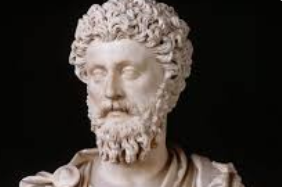
What is not good for the swarm is not good for the bee.
▼
Source
source
VI, 54
2 months 3 weeks ago
Art thy not content that thou hast done something conformable to thy nature, and dost thou seek to be paid for it? Just as if the eye demanded recompense for seeing, or the feet for walking. For as these members are formed for a particular purpose... so also is man formed by nature to acts of benevolence.
▼
Source
source
IX, 42

5 months 1 week ago
Since the war began, miles of paper and oceans of ink have been used to prove the barbarity, the cruelty, the oppression of Prussian militarism. Conservatives and radicals alike are giving their support to the Allies for no other reason than to help crush that militarism, in the presence of which, they say, there can be no peace or progress in Europe. But though America grows fat on the manufacture of munitions and war loans to the Allies to help crush Prussians the same cry is now being raised in America which, if carried into national action, would build up an American militarism far more terrible than German or Prussian militarism could ever be, and that because nowhere in the world has capitalism become so brazen in its greed and nowhere is the state so ready to kneel at the feet of capital.
3 months 2 weeks ago
To such a one, already filled with intellectual substance, and possessing what we may call the practical gold-bullion of human culture, it was an obvious improvement that he should be taught to speak it out of him on occasion; that he should carry a spiritual banknote producible on demand for what of "gold-bullion" he had, not so negotiable otherwise, stored in the cellars of his mind. A man, with wisdom, insight and heroic worth already acquired for him, naturally demanded of the schoolmaster this one new faculty, the faculty of uttering in fit words what he had. A valuable superaddition of faculty:-and yet we are to remember it was scarcely a new faculty; it was but the tangible sign of what other faculties the man had in the silent state.
6 months 2 weeks ago
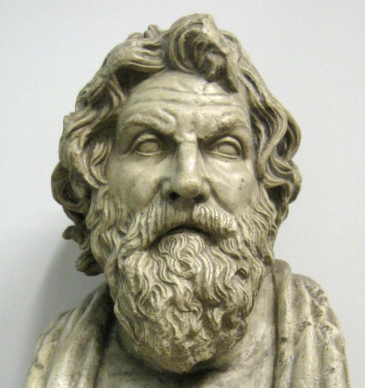
When he was asked what advantage had accrued to him from philosophy, his answer was, "The ability to hold converse with myself."
▼
Source
source
§ 4
4 months 3 weeks ago
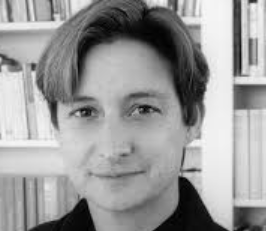
Violence as a tool is already operating in the world before anyone takes it up: that fact alone neither justifies nor discounts the use of the tool. What seems most important, however, is that the tool is already part of a practice, presupposing a world conducive to its use; that the use of the tool builds or rebuilds a specific kind of world, activating a sedimented legacy of use. When any of us commit acts of violence, we are, in and through those acts, building a more violent world.
▼
Source
source
p. 19
6 months 2 weeks ago
I would really like to slow down the speed of reading with continual punctuation marks. For I would like to be read slowly. (As I myself read.)
▼
Source
source
p. 77e
6 months 2 weeks ago
If I have exhausted the justifications, I have reached bedrock and my spade is turned. Then I am inclined to say: "This is simply what I do."
▼
Source
source
§ 217
6 months 3 weeks ago
No greater mistake can be made than to imagine that what has been written latest is always the more correct; that what is written later on is an improvement on what was written previously; and that every change means progress. Men who think and have correct judgment, and people who treat their subject earnestly, are all exceptions only. Vermin is the rule everywhere in the world: it is always at hand and busily engaged in trying to improve in its own way upon the mature deliberations of the thinkers.
CivilSimian.com created by AxiomaticPanic, CivilSimian, Kalokagathia