

5 months 1 week ago
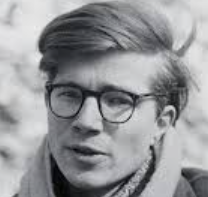
The heart, oddly enough, seems to be the essential organ concerned. When we are in a hurry or doing something we dislike, we clench the heart, exactly like clenching a fist, and nothing can get in. When we are filled with a sense of multiplicity and excitement we somehow 'open' the heart and allow reality to flow in. But in that state we only need to entertain the shadow of some unpleasant thought for it to close again. And human beings are so naturally prone to mistrust that it is hard to maintain the openness for very long. Children on the other hand find it easy to slip into states of wonder and delight when the heart finally opens so wide that the whole world seems magical. the 'trick' of the peak experience lies in this ability to relax out of our usual defensive posture and to 'open the heart'.
▼
Source
source
p. 360
7 months 3 days ago
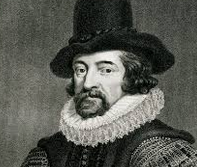
For man seeketh in society comfort, use, and protection: and they be three wisdoms of divers natures, which do often sever: wisdom of the behaviour, wisdom of business, and wisdom of state.
▼
Source
source
Book II, xxiii
2 months 3 weeks ago
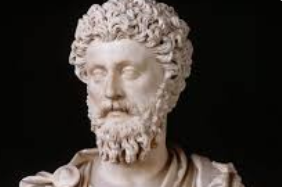
Let it not be in any man's power to say truly of thee that thou art not simple or that thou art not good; but let him be a liar whoever shall think anything of this kind about thee; and this is altogether in thy power.
▼
Source
source
X, 32
4 months 2 weeks ago
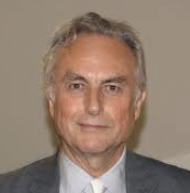
We are survival machines-robot vehicles blindly programmed to preserve the selfish molecules known as genes. This is a truth which still fills me with astonishment.
▼
Source
source
Preface to the first edition

4 months 2 weeks ago
The picture of modern philosophy as centered in epistemology and driven by the desire to ground our representations is so tenacious that some philosophers are prepared to bite the bullet and declare the effort simply wasted. Rorty, for example, finds it easier to reject modern philosophy altogether than to reject the standard accounts of its history. His narrative is more polemical than most, but it's a polemical version of the story told in most philosophy departments in the second half of the twentieth century. The story is one of tortuously decreasing interest. Philosophy, like some people, was prepared to accept boredom in exchange for certainty as it grew to middle age.
3 months 5 days ago
It was a basic Confucian principle that "it is man who makes truth great, not truth which makes man great." For this reason, "humanness" or "human-heartedness" (jen) was always felt to be superior to "righteousness" (i), since man himself is greater than any idea which he may invent. There are times when men's passions are much more trustworthy than their principles.
▼
Source
source
p. 29

3 months 3 weeks ago
Human nature is evil, and goodness is caused by intentional activity.
▼
Source
source
Quoted in: Fayek S. Hourani (2012) Daily Bread for Your Mind and Soul, p. 336
6 months 2 weeks ago
As iron is eaten away by rust, so the envious are consumed by their own passion.
▼
Source
source
§ 5
6 months 4 weeks ago
Hatred and anger are the greatest poison to the happiness of a good mind.
▼
Source
source
Section II, Chap. III.

2 months 3 weeks ago
Never trouble another for what you can do yourself.
3 months 5 days ago
There slowly grew up in me an unshakable conviction that we have no right to inflict suffering and death on another living creature unless there is some unavoidable necessity for it, and that we ought all of us to feel what a horrible thing it is to cause suffering and death out of mere thoughtlessness. And this conviction has influenced me only more and more strongly with time. I have grown more and more certain that at the bottom of our heart we all think this, and that we fail to acknowledge it because we are afraid of being laughed at by other people as sentimentalists, though partly also because we allow our best feelings to get blunted. But I vowed that I would never let my feelings get blunted, and that I would never be afraid of the reproach of sentimentalism.
▼
Source
source
p. 275

5 months 2 weeks ago
"Where do you get those superior airs of yours?" "I've managed to survive, you see, all those nights when I wondered: am I going to kill myself at dawn?"
7 months 2 days ago
This return of Republics back to their principles also results from the simple virtue of one man, without depending on any law that excites him to any execution: none the less, they are of such influence and example that good men desire to imitate him, and the wicked are ashamed to lead a life contrary to those examples.
▼
Source
source
Book 3, Ch. 1

6 months 3 weeks ago
I had better never see a book than to be warped by its attraction clean out of my own orbit, and made a satellite instead of a system. The one thing in the world, of value, is the active soul.
▼
Source
source
par. 15

5 months 2 weeks ago
"I am like a broken puppet whose eyes have fallen inside." This remark of a mental patient weighs more heavily than a whole stack of works on introspection.

7 months 1 week ago
The best books are those, which those who read them believe they themselves could have written.
5 months 2 weeks ago
Whoever abhors the name and fancies that he is godless - when he addresses with his whole devoted being the Thou of his life that cannot be restricted by any other, he addresses God.
5 months 4 weeks ago
Are we not madder than those first inhabitants of the plain of Sennar? We know that the distance separating the earth from the sky is infinite, and yet we do not stop building our tower.
▼
Source
source
No. 4
5 months 3 weeks ago
The meaning and design of a problem seem not to lie in its solution, but in our working at it incessantly.
▼
Source
source
p. 103

4 months 1 week ago
We are either going to have a future where women lead the way to make peace with the Earth or we are not going to have a future at all.
▼
Source
source
Quoted in "Woman power to the fore," by R.S. Binuraj, The Hindu
4 months 3 weeks ago
Although meaningless in a tribal context, numbers and statistics assume mythic and magical qualities of infallibility in literate societies.
▼
Source
source
(p. 114)

5 months 2 weeks ago
He that is not with me is against me: and he that gathereth not with me scattereth.
▼
Source
source
Luke 11:23 (KJV)
3 months 2 weeks ago
A modern philosopher who has never once suspected himself of being a charlatan must be such a shallow mind that his work is probably not worth reading.
▼
Source
source
Metaphysical Horror
6 months 3 weeks ago
Our inventions are wont to be pretty toys, which distract our attention from serious things. They are but improved means to an unimproved end, an end which it was already but too easy to arrive at.
▼
Source
source
pp. 60-61
4 months 3 weeks ago
All these people talk so eloquently about getting back to good old-fashioned values. Well, as an old poop I can remember back to when we had those old-fashioned values, and I say let's get back to the good old-fashioned First Amendment of the good old-fashioned Constitution of the United States-and to hell with the censors! Give me knowledge or give me death!
▼
Source
source
As quoted in "An Interview with Kurt Vonnegut, Jr., Carey Horwitz, Library Journal, Apr. 15, 1973: 1131
5 months 3 weeks ago
These principles it is necessary strictly to attend to, because they will serve much to explain the whole course both of government and real property, wherever the German nations obtained a settlement; the whole of their government depending for the most part upon two principles in our nature,-ambition, that makes one man desirous, at any hazard or expense, of taking the lead amongst others; and admiration, which makes others equally desirous of following him from the mere pleasure of admiration, and a sort of secondary ambition, one of the most universal passions among men. These two principles, strong both of them in our nature, create a voluntary inequality and dependence.
▼
Source
source
An Essay towards an Abridgment of English History (1757-c. 1763), quoted in The Works of the Right Honourable Edmund Burke, Vol. VI (1856), p. 282
7 months 3 weeks ago
A person can perhaps succeed in hiding his sins from the world, he can perhaps be foolishly happy that he succeeds, or yet, a little more honest, admit that it is a deplorable weakness and cowardliness that he does not have the courage to become open-but a person cannot hide his sins from himself.
4 months 3 weeks ago
If a poor person envies a rich person, he is no better than the rich person.
▼
Source
source
p. 89
2 months 2 weeks ago
I do not think that religion is the most important element. We are held together rather by a body of tradition, handed down from father to son, which the child imbibes with his mother's milk. The atmosphere of our infancy predetermines our idiosyncrasies and predilections.

7 months 2 days ago
To an atheist all writings tend to atheism: he corrupts the most innocent matter with his own venom.
▼
Source
source
Ch. 12
6 months 2 weeks ago
It is worth observing, how we feel ourselves affected in reading the characters of Cæsar, and Cato, as they are so finely drawn and contrasted in Salust. In one, the ignoscendo, largiundo; in the other, nil largiundo. In one, the miseris perfugium; in the other, malis perniciem. In the latter we have much to admire, much to reverence, and perhaps something to fear; we respect him, but we respect him at a distance. The former makes us familiar with him; we love him, and he leads us whither he pleases.
▼
Source
source
Edmund Burke, A Philosophical Enquiry into the Origin of Our Ideas of the Sublime and Beautiful (2nd ed. 1759), pp. 206-207
3 months 2 days ago
Isolated material particles are abstractions, their properties being definable and observable only through their interaction with other systems.
▼
Source
source
"Atomic Physics and the Description of Nature"

6 months 2 weeks ago
Do you count your birthdays with gratitude?
▼
Source
source
Book II, epistle ii, line 210
2 months 3 weeks ago
God is imperiled. He is not almighty, that we may cross our hands, waiting for certain victory. He is not all-holy, that we may wait trustingly for him to pity and to save us. Within the province of our ephemeral flesh all of God is imperiled. He cannot be saved unless we save him with our own struggles; nor can we be saved unless he is saved. We are one. From the blind worm in the depths of the ocean to the endless arena of the Galaxy, only one person struggles and is imperiled: You. And within your small and earthen breast only one thing struggles and is imperiled: the Universe.
2 months 3 weeks ago
How much time he gains who does not look to see what his neighbor says or does or thinks, but only at what he does himself, to make it just and holy.
▼
Source
source
IV, 18

2 months 3 weeks ago
When common words are appropriated as technical terms, their meaning may be modified, and must be rigorously fixed.
5 months 2 weeks ago
Understanding being nothing else, but conception caused by Speech.
▼
Source
source
The First Part, Chapter 4, p. 17
5 months 2 weeks ago
Music is everything. God himself is nothing more than an acoustic hallucination.

5 months 1 week ago
The STATE IDEA, the authoritarian principle, has been proven bankrupt by the experience of the Russian Revolution. If I were to sum up my whole argument in one sentence I should say: The inherent tendency of the State is to concentrate, to narrow, and monopolize all social activities; the nature of revolution is, on the contrary, to grow, to broaden, and disseminate itself in ever-wider circles. In other words, the State is institutional and static; revolution is fluent, dynamic. These two tendencies are incompatible and mutually destructive. The State idea killed the Russian Revolution and it must have the same result in all other revolutions, unless the libertarian idea prevail.
2 months 3 weeks ago
From Antisthenes: It is royal to do good and be abused.
▼
Source
source
VII, 36
7 months 2 days ago
The way of the world is to make laws, but follow custom.
3 months 1 week ago
As the liberal sees it, the task of the state consists solely and exclusively in guaranteeing the protection of life, health, liberty, and private property against violent attacks. Everything that goes beyond this is an evil. A government that, instead of fulfilling its task, sought to go so far as actually to infringe on personal security of life and health, freedom, and property would, of course, be altogether bad.
▼
Source
source
Ch. 1 : The Foundations of Liberal Policy § 11. The Limits of Governmental Activity

7 months 1 week ago
The verdict of the world is conclusive.
▼
Source
source
III, 24
6 months 3 weeks ago
Serious occupation is labor that has reference to some want.
▼
Source
source
Pt. I, sec. 2, ch. 1
4 months 2 weeks ago
But if you can breed cattle for milk yield, horses for running speed, and dogs for herding skill, why on Earth should it be impossible to breed humans for mathematical, musical or athletic ability? Objections such as "these are not one-dimensional abilities" apply equally to cows, horses and dogs and never stopped anybody in practice. I wonder whether, some 60 years after Hitler's death, we might at least venture to ask what the moral difference is between breeding for musical ability and forcing a child to take music lessons. Or why it is acceptable to train fast runners and high jumpers but not to breed them. I can think of some answers, and they are good ones, which would probably end up persuading me. But hasn't the time come when we should stop being frightened even to put the question? From the Afterword, The Herald
▼
Source
source
Glasgow, Scotland, 20 November 2006
4 months 1 week ago
We shall have to share out the fruits of technology among the whole of mankind. The notion that the direct and immediate producers of the fruits of technology have a proprietary right to these fruits will have to be forgotten. After all, who is the producer? Man is a social animal, and the immediate producer has been helped to produce by the whole structure of society, beginning with his own education.
▼
Source
source
Surviving the Future (1971; Oxford UP, 1972) p. 95
CivilSimian.com created by AxiomaticPanic, CivilSimian, Kalokagathia