

7 months 3 weeks ago
Unpleasant, even dangerous, qualities can be found in every nation and every individual: it is cruel to demand that the Jew be an exception. In him, these qualities may even be dangerous and revolting to an unusual degree; and perhaps the young stock-exchange Jew is altogether the most disgusting invention of mankind.
6 months 4 weeks ago
There is not a negro from the coast of Africa who does not, in this respect, possess a degree of magnanimity which the soul of his sordid master is too often scarce capable of conceiving. Fortune never exerted more cruelly her empire over mankind, than when she subjected those nations of heroes to the refuse of the jails of Europe, to wretches who possess the virtues neither of the countries which they come from, nor of those which they go to, and whose levity, brutality, and baseness, so justly expose them to the contempt of the vanquished.
▼
Source
source
Chap. II.
6 months 3 weeks ago
The hearing ear is always found close to the speaking tongue.
▼
Source
source
Race
4 months 3 weeks ago
Despite the fact that the doctors treated him, bled him, and gave him medicines to drink, he recovered.
▼
Source
source
[sometimes quoted as "Though the doctors treated him, let his blood, and gave him medications to drink, he nevertheless recovered."] Bk. XV, ch. 12


7 months 1 week ago
The mind itself, its love [of itself] and its knowledge [of itself] are a kind of trinity.
▼
Source
source
(Cambridge: 2002), Book 9, Chapter 4, Section 4, p. 27


7 months 3 weeks ago
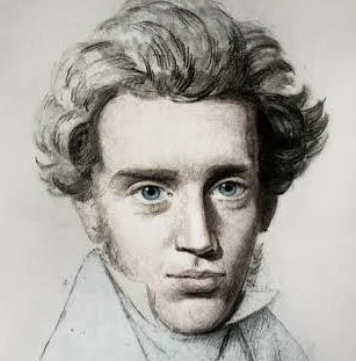
There are many people who reach their conclusions about life like schoolboys; they cheat their master by copying the answer out of a book without having worked out the sum for themselves.

5 months 1 week ago
It reminds us that a man driven to desire to possess a certain female is a highly purposive individual. We have already noted that evolution tends to mark time when individuals have no reason to evolve. The same applies to individuals; they may be talented and intelligent, and yet waste their lives because they somehow lack the motivation to make use of these faculties. The best piece of luck that can befall any individual is to have a strong sense of purpose.
▼
Source
source
p. 225
5 months 6 days ago
Chronic boredom - compensated or uncompensated - constitutes one of the major psychopathological phenomena in contemporary technotronic society, although it is only recently that it has found some recognition.
▼
Source
source
p. 273
6 months 3 weeks ago
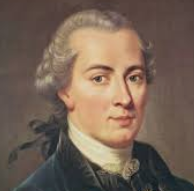
Suicide evokes revulsion with horror, because everything in nature seeks to preserve itself: a damaged tree, a living body, an animal; and in man, then, is freedom, which is the highest degree of life, and constitutes the worth of it, to become now a principium for self-destruction? This is the most horrifying thing imaginable. For anyone who has already got so far as to be master, at any time, over his own life, is also master over the life of anyone else; for him, the door stands open to every crime, and before he can be seized he is ready to spirit himself away out of the world. So suicide evokes horror, in that a man thereby puts himself below the beasts. We regard a suicide as a carcase, whereas we feel pity for one who meets his end through fate.
▼
Source
source
Part II, p. 146
4 months 3 weeks ago
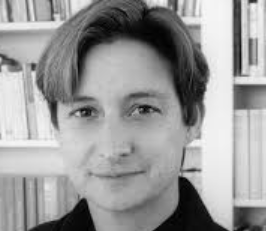
We do not have to love one another to be obligated to build a world in which all lives are sustainable. The right to persist can only be understood as a social right, as the subjective instance of a social and global obligation we bear toward one another.
▼
Source
source
p. 64
5 months 1 week ago
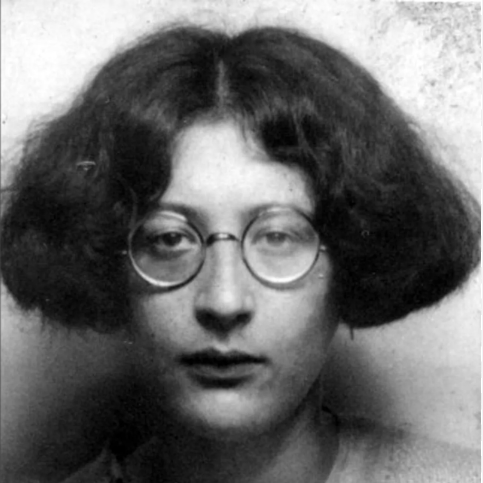
There is a certain kind of morality which is even more alien to good and evil than amorality is.
▼
Source
source
"The responsibility of writers," p. 169
3 months 2 weeks ago
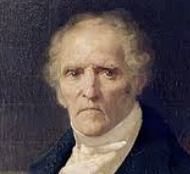
The Turks teach women that they have no souls, and are unworthy to enter paradise. The French would persuade them that they have no intellects, and are not made to engage in mental labors, and to tread the paths of art and science.
▼
Source
source
The Theory of Social Organization
7 months 3 weeks ago
"My field," said Goethe, "is time." That is indeed the absurd speech. What, in fact, is the Absurd Man? He who, without negating it, does nothing for the eternal. Not that nostalgia is foreign to him. But he prefers his courage and his reasoning. The first teaches him to live without appeal and to get along with what he has; the second informs him of his limits. Assured of his temporally limited freedom, of his revolt devoid of future, and of his mortal consciousness, he lives out his adventure within the span of his lifetime.
6 months 3 weeks ago
Diet, injections, and injunctions will combine, from a very early age, to produce the sort of character and the sort of beliefs that the authorities consider desirable, and any serious criticism of the powers that be will become psychologically impossible. Even if all are miserable, all will believe themselves happy, because the government will tell them that they are so.

6 months 2 weeks ago
The principles of ethics come from our own nature as social, reasoning beings.
▼
Source
source
Chapter 6, A New Understanding Of Ethics, p. 149
6 months 3 weeks ago
To this I answer: That force is to be opposed to nothing, but to unjust and unlawful force. Whoever makes any opposition in any other case, draws on himself a just condemnation, both from God and man...
▼
Source
source
Second Treatise of Government, Ch. XVIII, sec. 204

7 months 1 week ago
Superstition is now in her turn cast down and trampled underfoot, whilst we by the victory are exalted high as heaven.
▼
Source
source
Book I, lines 78-79 (tr. W. H. D. Rouse)
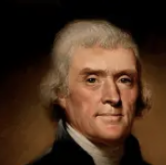
2 months 3 weeks ago
I allow nothing for losses by death, but, on the contrary, shall presently take credit four per cent. per annum, for their increase over and above keeping up their own numbers.
▼
Source
source
On his profits from slavery as quoted in The Dark Side of Thomas Jefferson, by Henry Wiencek, Smithsonian Magazine,

6 months 2 weeks ago
It was an important moment. The old partners of the spectacle of punishment, the body and the blood, gave way. A new character came of the scene, masked. It was the end of a certain kind of tragedy; comedy began, with shadow play, faceless voices, impalpable entities. The apparatus of punitive justice must now bite into this bodiless reality.
▼
Source
source
pp. 17
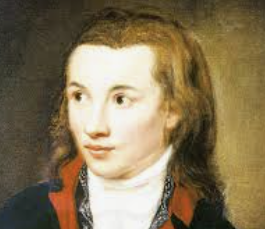
5 months 3 weeks ago
There is but one Temple in the World; and that is the Body of Man. Nothing is holier than this high form. Bending before men is a reverence done to this Revelation in the Flesh. We touch Heaven, when we lay our hand on a human body. Variant translation: There is but one temple in the Universe and that is the Body of Man.
▼
Source
source
As inscribed on the Library of Congress, quoted in Handbook of the New Library of Congress (1897) by Herbert Small, p. 53
6 months 3 weeks ago
Nature does nothing in vain, and in the use of means to her goals she is not prodigal. Her giving to man reason and the freedom of the will which depends upon it is clear indication of her purpose. Man accordingly was not to be guided by instinct, not nurtured and instructed with ready-made knowledge; rather, he should bring forth everything out of his own resources.
▼
Source
source
Third Thesis
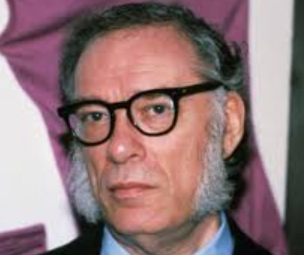
7 months 3 weeks ago
It seems to be almost an invariable rule that as real power declines, the symbols of power multiply and intensify in compensation.
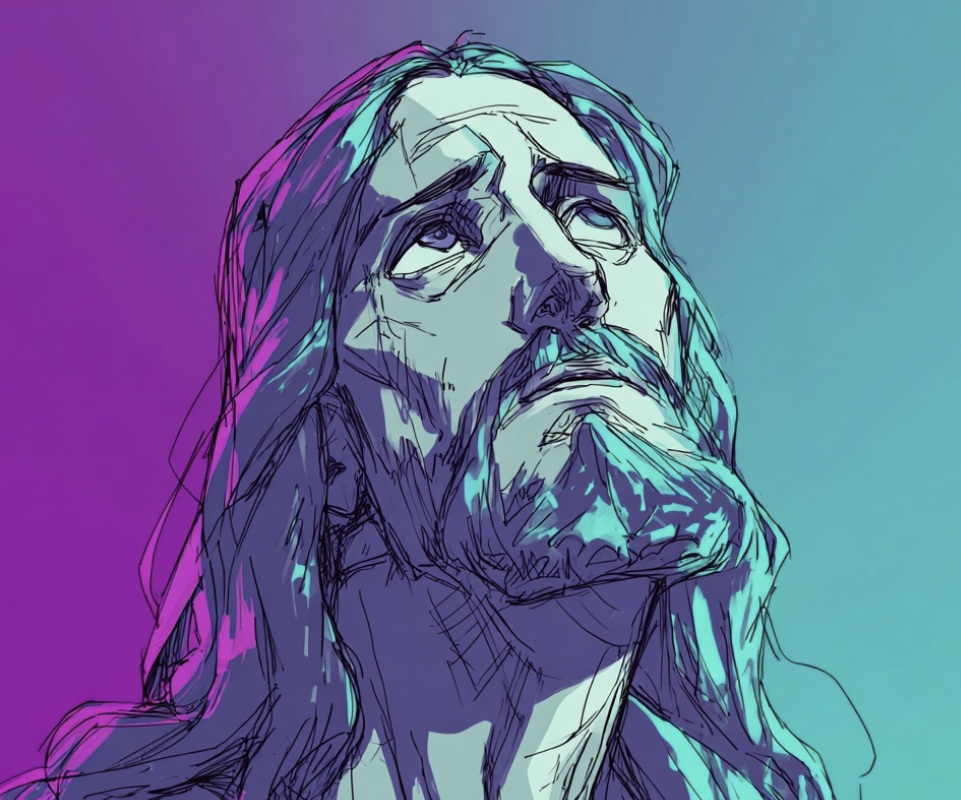
5 months 2 weeks ago
His master was angry, and delivered him to the torturers until he should pay all that was due to him. "So My heavenly Father also will do to you if each of you, from his heart, does not forgive his brother his trespasses."
▼
Source
source
18:34-35

6 months 3 weeks ago
What we call Man's power over Nature turns out to be a power exercised by some men over other men with Nature as its instrument.

5 months 2 weeks ago
All my life, I have lived with the feeling that I have been kept from my true place. If the expression "metaphysical exile" had no meaning, my existence alone would afford it one.
2 months 3 weeks ago
The most beautiful monuments of Athens belong to the century of Pericles. In Rome, what writers were produced under the Republic? Only Plautus and Terence. Lucretius, Sallust, and Cicero saw the Republic die. Then came the century of Augustus when the nation was all that it could be by way of talents. The arts, in general, need a king; they only flourish under the influence of sceptres. Even in Greece, the only country where they flourished in the milieu of a republic, Lysippos and Apelles worked for Alexander. Aristotle owed to Alexander's generosity the means to compose his history of animals; and, after the death of this monarch, the poets, scholars, and artists went to look for protection and rewards in the courts of his successors.
▼
Source
source
p. 179
5 months 1 week ago
I believe government, organized authority, or the State is necessary only to maintain or protect property and monopoly. It has proven efficient in that function only. As a promoter of individual liberty, human well-being and social harmony, which alone constitute real order, government stands condemned by all the great men of the world...I believe - indeed, I know - that whatever is fine and beautiful in the human expresses and asserts itself in spite of government, and not because of it.
5 months 6 days ago
I believe that the fundamental alternative for man is the choice between "life" and "death"; between creativity and destructive violence; between reality and illusions; between objectivity and intolerance; between brotherhood-independence and dominance-submission.
2 months 2 weeks ago
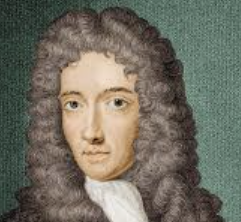
I find that even Eminent Writers (such as Raymund Lully, Paracelsus, and others) do so abuse the termes they employ, that as they will now and then give divers things one name, so they will oftentimes give one thing, many Names; and some of them (perhaps) such, as do much more properly signifie some Distinct Body of another kind; nay even in Technical Words or Termes of Art, they refrain not from this Confounding Liberty; but will, as I have Observ'd call the same Substance, sometimes the Sulphur, and Sometimes the Mercury, of a Body.
6 months 3 weeks ago
Those truly natural wants, which reason alone, without some other help, is not able to fence against, nor keep from disturbing us. The pains of sickness and hurts, hunger, thirst, and cold, want of sleep and rest or relaxation of the part weary'd with labour, are what all men feel and the best dispos'd minds cannot but be sensible of their uneasiness; and therefore ought, by fit applications, to seek their removal, though not with impatience, or over great haste, upon the first approaches of them, where delay does not threaten some irreparable harm. The pains that come from the necessities of nature, are monitors to us to beware of greater mischiefs, which they are the forerunner of; and therefore they must not be wholly neglected, and strain'd too far. But yet the more children can be inur'd to hardships of this kind, by a wise care to make them stronger in body and mind, the better it will be for them.
▼
Source
source
Sec. 107
6 months 3 weeks ago
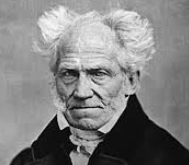
The animals are much more content with mere existence than we are; the plants are wholly so; and man is so according to how dull and insensitive he is. The animal's life consequently contains less suffering but also less pleasure than the human's, the direct reason being that on the one hand it is free from care and anxiety and the torments that attend them, but on the other is without hope and therefore has no share in that anticipation of a happy future which, together with the enchanting products of the imagination which accompany it, is the source of most of our greatest joys and pleasures. The animal lacks both anxiety and hope because its consciousness is restricted to what is clearly evident and thus to the present moment: the animal is the present incarnate.
▼
Source
source
Vol. 2 "On the Suffering of the World" as translated in Essays and Aphorisms (1970), as translated by R. J. Hollingdale
6 months 3 weeks ago
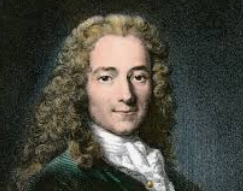
To hold a pen is to be at war.
▼
Source
source
Letter to Jeanne-Grâce Bosc du Bouchet, comtesse d'Argental (4 October 1748)

2 months 2 weeks ago
It's not about telling people how to be, outside of supporting ideals that teach us what to avoid.
6 months 3 weeks ago
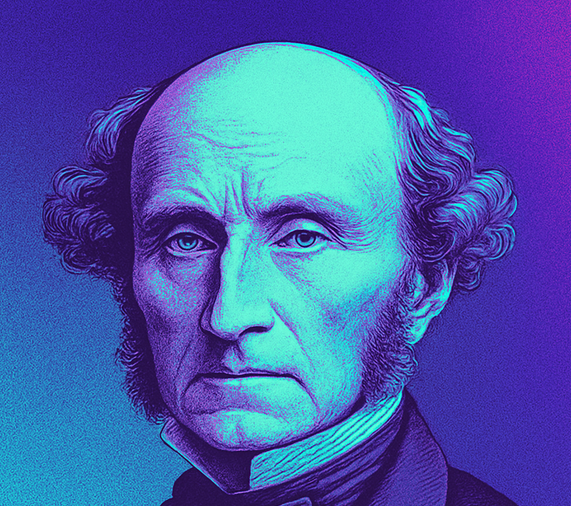
In a really equal democracy, every or any section would be represented, not disproportionately, but proportionately. ... Unless they are, there is not equal government, but a government of inequality and privilege: one part of the people rule over the rest: there is a part whose fair and equal share of influence in the representation is withheld from them, contrary to all just government, but, above all, contrary to the principle of democracy, which professes equality as its very root and foundation.
▼
Source
source
Ch. VII: Of True and False Democracy; Representation of All, and Representation of the Majority only (p. 248)

2 months 3 weeks ago
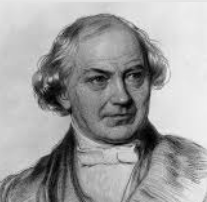
The distinction of Fact and Theory is only relative. Brute animals have a practical knowledge of relations of space and force; but they have no knowledge of Geometry or Mechanicks.
4 months 3 weeks ago
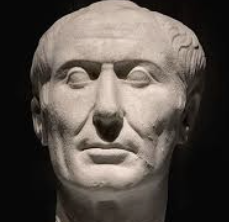
Fortune is like glass-the brighter the glitter, the more easily broken.
▼
Source
source
Maxim 280
4 months 2 weeks ago
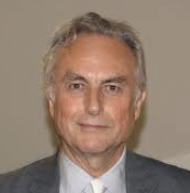
I am very conscious that you can't condemn people of an earlier era by the standards of ours. Just as we don't look back at the 18th and 19th centuries and condemn people for racism in the same way as we would condemn a modern person for racism, I look back a few decades to my childhood and see things like caning, like mild pedophilia, and can't find it in me to condemn it by the same standards as I or anyone would today.
▼
Source
source
Giles Whittell, "The world according to Richard Dawkins" (2013-09-07), The Times
3 months 3 weeks ago
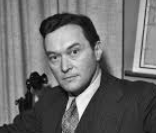
A large plural society cannot be governed without recognizing that, transcending its plural interests, there is a rational order with a superior common law.
▼
Source
source
pp. 106-107

6 months 6 days ago
Order thyself so, that thy Soul may always be in good estate; whatsoever become of thy body.

5 months 3 days ago
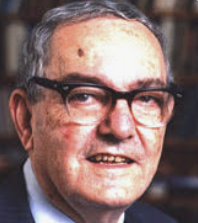
We are organization watchers in our role as citizens. Increasing attention has been fixed in recent years upon the functioning of society's organizations: its large corporations and its governments. Hence this could also be described as a book for Everyman-for it proposes a way of thinking about organizational issues that concern us all.
▼
Source
source
Simon (1975, p. ix); As cited in Stefano Franchi(2006) "Herbert simon, anti-philosopher." Computing and Philosophy. p. 34.
CivilSimian.com created by AxiomaticPanic, CivilSimian, Kalokagathia