


2 months 3 weeks ago
Let us not limit the resources of nature; they are infinite, especially when reinforced by great art.
4 months 1 week ago
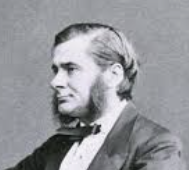
Not far from the invention of fire... we must rank the invention of doubt.
▼
Source
source
Collected Essays vol 6, viii; quoted in T. H. Huxley: Scientist, Humanist, and Educator (1950) by Cyril Bibby, p. 257

7 months 1 week ago
Though absent from our eyes, Christ our Head is bound to us by love. Since the whole Christ is Head and body, let us so listen to the voice of the Head that we may also hear the body speak.He no more wished to speak alone than He wished to exist alone, since He says: Behold, I am with you all days, unto the consummation of the world (Matt. 28:20). If He is with us, then He speaks in us, He speaks of us, and He speaks through us; and we too speak in Him.
▼
Source
source
pp. 420-421
5 months 2 weeks ago
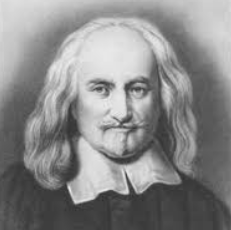
For Appetite with an opinion of attaining, is called HOPE.
7 months 3 days ago
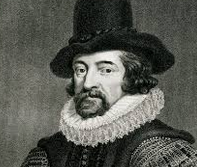
States as great engines move slowly.
▼
Source
source
Book II

5 months 1 week ago
The point I wish to make is that I became aware that we discipline our minds to see only certain aspects of the world; life is complicated, and we need all our wits about us to deal with its complexities. There would be no great point in having second sight or thaumaturgic powers for most of us. But it is worth observing that they can generally be developed where needed.
▼
Source
source
p. 240
6 months 3 weeks ago
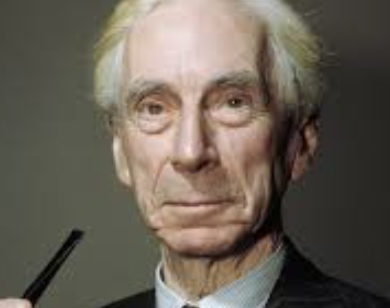
Even when the experts all agree, they may well be mistaken.
▼
Source
source
A Fresh Look at Empiricism: 1927-42 (1996), p. 281
5 months 3 weeks ago
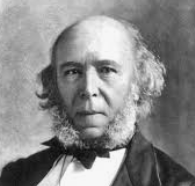
Unlike private enterprise which quickly modifies its actions to meet emergencies - unlike the shopkeeper who promptly finds the wherewith to satisfy a sudden demand - unlike the railway company which doubles its trains to carry a special influx of passengers; the law-made instrumentality lumbers on under all varieties of circumstances at its habitual rate. By its very nature it is fitted only for average requirements, and inevitably fails under unusual requirements.
▼
Source
source
Vol. 3, Ch. VII, Over-Legislation
4 months 4 weeks ago
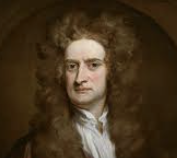
To every action there is always opposed an equal reaction; or, the mutual actions of two bodies upon each other are always equal, and directed to contrary parts.
▼
Source
source
Laws of Motion, III
6 months 2 weeks ago
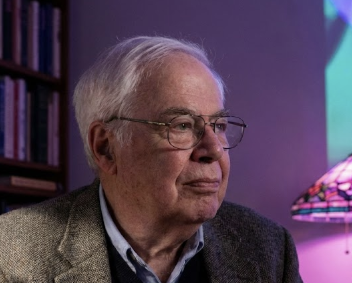
Contemporary intellectuals have given up the Enlightenment assumption that religion, myth, and tradition can be opposed to something ahistorical, something common to all human beings qua human.

7 months 2 days ago
For my own part, I may desire in general to be other than I am; I may condemn and dislike my whole form, and beg of Almighty God for an entire reformation, and that He will please to pardon my natural infirmity: but I ought not to call this repentance, methinks, no more than the being dissatisfied that I am not an angel or Cato. My actions are regular, and conformable to what I am and to my condition; I can do no better; and repentance does not properly touch things that are not in our power; sorrow does.. I imagine an infinite number of natures more elevated and regular than mine; and yet I do not for all that improve my faculties, no more than my arm or will grow more strong and vigorous for conceiving those of another to be so.
▼
Source
source
Ch. 2

7 months 1 week ago
In each separate thing that you do consider the matters which come first, and those which follow after, and only then approach the thing itself.
▼
Source
source
Book III, ch. 15, 1 (= Enchiridion 29, 1).



6 months 2 weeks ago
If beings are grasped as will to power, the "should" which is supposed to hang suspended over them, against which they might be measured, becomes superfluous. If life itself is will to power, it is itself the ground, principium, of valuation. Then a "should" does not determine being. Being determines a "should." "When we talk of values we are speaking under the inspiration or optics of life: life itself compels us to set up values; life itself values through us whenever we posit values."
▼
Source
source
(VIII, 89) p. 32

5 months 3 weeks ago
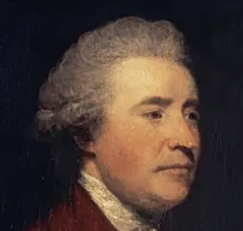
The Revolution and Hanover succession had been objects of the highest veneration to the old Whigs. They thought them not only proofs of the sober and steady spirit of liberty which guided their ancestors; but of their wisdom and provident care of posterity.-The modern Whigs have quite other notions of these events and actions. They do not deny that Mr. Burke has given truly the words of the acts of parliament which secured the succession, and the just sense of them. They attack not him but the law.
▼
Source
source
p. 436
7 months 1 week ago
We are He, since we are His body and since He was made man in order to be our Head.
▼
Source
source
p.432

5 months 2 weeks ago
I want to proclaim a truth that would forever exile me from among the living. I know only the conditions but not the words that would allow me to formulate it.
6 months 2 weeks ago
What is peddled about nowadays as philosophy, especially that of N.S. [National Socialism], but has nothing to do with the inner truth and greatness of that movement [namely the encounter between global technology and modern humanity] is nothing but fishing in that troubled sea of values and totalities.
▼
Source
source
Introduction to Metaphysics (1953) - a publication of lectures of 1935.

6 months 3 weeks ago
There is no more mistaken path to happiness than worldliness, revelry, high life.
▼
Source
source
Our Relation to Others, § 24
6 months 3 weeks ago
As the brain-changes are continuous, so do all these consciousnesses melt into each other like dissolving views. Properly they are but one protracted consciousness, one unbroken stream.
▼
Source
source
Ch. 9

6 months 1 week ago
There is one story left, one road: that it is. And on this road there are very many signs that, being, is uncreated and imperishable, whole, unique, unwavering, and complete.
▼
Source
source
Frag. B 8.1-4, quoted by Simplicius, Commentary on the Physics, 144
3 months 2 weeks ago
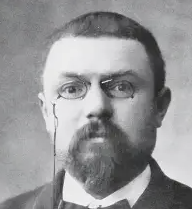
Behold... the only... rule we can follow: when a phenomenon appears... as the cause of another, we regard it as anterior. ...Therefore by cause... we define time; but...how do we recognize which is the cause and which the effect? We assume... the anterior fact, the antecedent, is the cause of the... consequent. It is then by time that we define cause. ...Shall we escape from this vicious circle?

5 months 2 weeks ago
What is marvelous is that each day brings us a new reason to disappear.
6 months 4 weeks ago
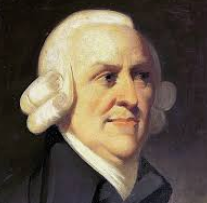
When national debts have once been accumulated to a certain degree, there is scarce, I believe, a single instance of their having been fairly and completely paid. The liberation of the public revenue, if it has ever been brought about at all, has always been brought about by bankruptcy; sometimes by an avowed one, but always by a real one, though frequently by a pretend payment.
▼
Source
source
Chapter III, Part V, p. 1012.

3 months 2 weeks ago
World,-this man is not a slave with thee! None of thy promotions is necessary for him. His place is with the stars of Heaven: to thee it may be momentous, to him it is indifferent, whether thou place him in the lowest hut, or forty feet higher at the top of thy stupendous high tower, while here on Earth. The joys of Earth that are precious, they depend not on thee and thy promotions. Food and raiment, and, round a social hearth, souls who love him, whom he loves: these are already his. He wants none of thy rewards;
7 months 3 weeks ago
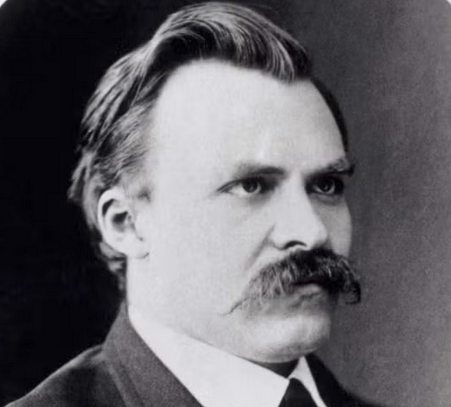
Knowledge more than a Means. Also without this passion I refer to the passion for knowledge, science would be furthered: science has hitherto increased and grown up without it. The good faith in science, the prejudice in its favour, by which States are at present dominated (it was even the Church formerly), rests fundamentally on the fact that the absolute inclination and impulse has so rarely revealed itself in it, and that science is regarded not as a passion, but as a condition and an "ethos." Indeed, amour-plaisir of knowledge (curiosity) often enough suffices, amour-vanity suffices, and habituation to it, with the afterthought of obtaining honour and bread; it even suffices for many that they do not know what to do with a surplus of leisure, except to continue reading, collecting, arranging, observing and narrating; their "scientific impulse" is their ennui.
5 months 1 week ago
We all observe that the reality of sexual intercourse is far from perfect; yet this does not convince us that sex is a greatly overrated occupation. Every time a man glimpses a pretty girl pulling up her stocking, he catches a glimpse of what might be called the "primal sexual vision." It is unfortunate that there seems to be a certain disparity between this primal vision and most ordinary sexual experience. But it dances in front of us like a will-o'-the-wisp, luring us into tormented effort. It can lead novelists to write novels, poets to write poems, and musicians to write symphonies.
▼
Source
source
p. 39
6 months 3 weeks ago
In its widest possible sense, however, a man's Self is the sum total of all that he can call his, not only his body and his psychic powers, but his clothes and his house, his wife and children, his ancestors and friends, his reputation and works, his lands and horses, and yacht and bank-account. All these things give him the same emotions. If they wax and prosper, he feels triumphant; if they dwindle and die away, he feels cast down.
▼
Source
source
Ch. 10
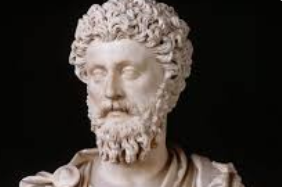
2 months 3 weeks ago
Observe always that everything is the result of a change, and get used to thinking that there is nothing Nature loves so well as to change existing forms and to make new ones like them.
▼
Source
source
IV, 36
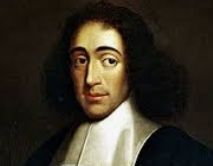
6 months 4 weeks ago
Nature offers nothing that can be called this man's rather than another's ; but, under nature, everything belongs to all - that is, they have authority to claim it for themselves. But, under dominion, where it is by common law determined what belongs to this man, and what to that, he is called just who has a constant will to render to every man his own, but he, unjust who strives, on the contrary, to make his own that which belongs to another.
▼
Source
source
Ch. 2, Of Natural Right

2 months 3 weeks ago
Never spend your money before you have it.
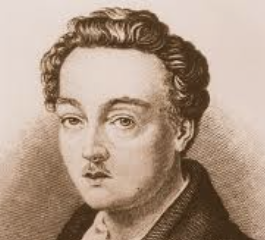
5 months 3 weeks ago
The life of the wealthy is one long Sunday.

6 months 3 weeks ago
My friend Professor Tolkien asked me the very simple question, "What class of men would you expect to be most preoccupied with, and most hostile to, the idea of escape?" and gave the obvious answer: jailers.
▼
Source
source
"On Science Fiction". Of Other Worlds: Essays and Stories. Houghton Mifflin Harcourt (2002). p. 67.
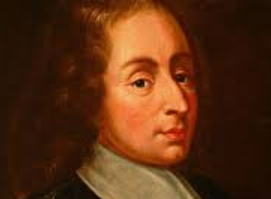
7 months 1 week ago
It is not among extraordinary and fantastic things that excellence is to be found, of whatever kind it may be. We rise to attain it and become removed from it: it is oftenest necessary to stoop for it.
3 months 5 days ago
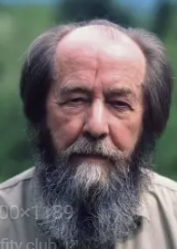
And the simple step of a simple courageous man is not to partake in falsehood, not to support false actions! Let THAT enter the world, let it even reign in the world - but not with my help. But writers and artists can achieve more: they can CONQUER FALSEHOOD! In the struggle with falsehood art always did win and it always does win! Openly, irrefutably for everyone! Falsehood can hold out against much in this world, but not against art. And no sooner will falsehood be dispersed than the nakedness of violence will be revealed in all its ugliness - and violence, decrepit, will fall.
5 months 6 days ago
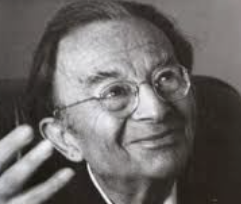
The revolutionary and critical thinker is in a certain way always outside of his society while of course he is at the same time also in it. That he is in it is obvious, but why is he outside it? First, because he is not brainwashed by the ruling ideology, that is to say, he has an extraordinary kind of independence of thought and feeling; hence he can have a greater objectivity than the average person has. There are many emotional factors too. And certainly I do not mean to enter here into the complex problem of the revolutionary thinker. But it seems to me essential that in a certain sense he transcends his society. You may say he transcends it because of the new historical developments and possibilities he is aware of, while the majority still think in traditional terms.
4 months 2 weeks ago
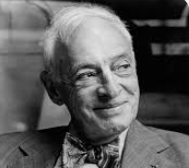
The principles of Western liberalism seem no longer to lend themselves to effective action. Deprived of the expressive power, we are awed by it, have a hunger for it, and are afraid of it. Thus we praise the gray dignity of our soft-spoken leaders, but in our hearts we are suckers for passionate outbursts, even when those passionate outbursts are hypocritical and falsely motivated.
▼
Source
source
"Literary Notes on Khrushchev" (1961), p. 36
6 months 3 weeks ago
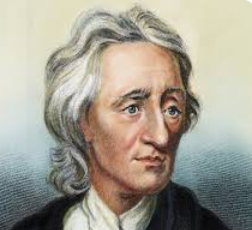
Beating is the worst, and therefore the last means to be us'd in the correction of children, and that only in the cases of extremity, after all gently ways have been try'd, and proved unsuccessful; which, if well observ'd, there will very seldom be any need of blows.
▼
Source
source
Sec. 84
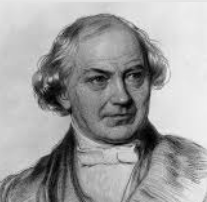
2 months 3 weeks ago
The Plan of the System, may aim at a Natural or an Artificial System. But no classes can be absolutely artificial, for if they were, no assertions could be made concerning them.
3 months 1 week ago
It is the safest to be moderately base - to be flexible in shame, and to be always ready for what is generous, good, and just, when anything is to be gained by virtue.
▼
Source
source
"Catholics", published in The Edinburgh Review (1827). See The Works of the Rev. Sydney Smith. 2. 1859. p. 134.
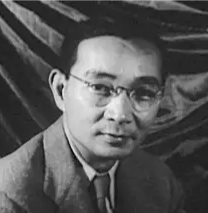
3 months 2 days ago
The greatest ideal that man can aspire to is not to be a show-case of virtue, but just to be a genial, likable and reasonable human being.
▼
Source
source
p. 242
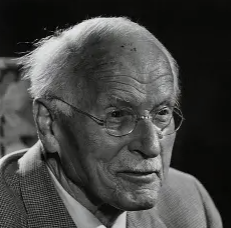
5 months 2 weeks ago
If there is anything that we wish to change in the child, we should first examine it and see whether it is not something that could better be changed in ourselves.
▼
Source
source
p. 285
6 months 3 weeks ago
Every time a man is begotten and born, the clock of human life is wound up anew to repeat once more its same old tune that has already been played innumerable times, movement by movement and measure by measure, with insignificant variations.
▼
Source
source
Vol. I, Ch. 4, The World As Will: Second Aspect, as translated by Eric F. J. Payne (1958) p. 322
3 months 2 weeks ago
A million blockheads looking authoritatively into one man of what you call genius, or noble sense, will make nothing but nonsense out of him and his qualities, and his virtues and defects, if they look till the end of time. He understands them, sees what they are; but that they should understand him, and see with rounded outline what his limits are,-this, which would mean that they are bigger than he, is forever denied them. Their one good understanding of him is that they at last should loyally say, "We do not quite understand thee; we perceive thee to be nobler and wiser and bigger than we, and will loyally follow thee."
CivilSimian.com created by AxiomaticPanic, CivilSimian, Kalokagathia