

6 months 3 weeks ago
I wish to write such rhymes as shall not suggest a restraint, but contrariwise the wildest freedom.
▼
Source
source
June 27, 1839
4 months 3 weeks ago
A noble spirit finds a cure for injustice in forgetting it.
▼
Source
source
Maxim 441

7 months 2 days ago
Virtue refuses facility for her companion ... the easy, gentle, and sloping path that guides the footsteps of a good natural disposition is not the path of true virtue. It demands a rough and thorny road.
▼
Source
source
Ch. 11. Of Cruelty (tr. Donald M. Frame)
6 months 3 weeks ago
In order to make myself recognized by the Other, I must risk my own life. To risk one's life, in fact, is to reveal oneself as not-bound to the objective form or to any determined existence - as not-bound to life.
▼
Source
source
p. 237, 1998 edition
6 months 3 weeks ago
Men being, as has been said, by nature, all free, equal and independent, no one can be put out of this estate, and subjected to the political power of another, without his own consent.
▼
Source
source
Second Treatise of Government, Ch. VIII, sec. 95

5 months 4 weeks ago
The surface of American society is covered with a layer of democratic paint, but from time to time one can see the old aristocratic colours breaking through.
▼
Source
source
Chapter II.
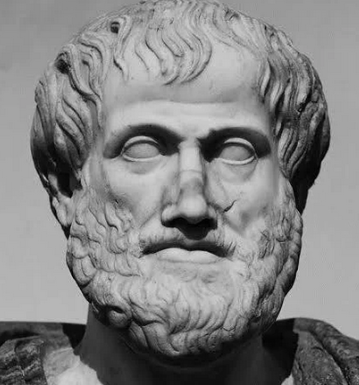
7 months 3 weeks ago
It is simplicity that makes the uneducated more effective than the educated when addressing popular audiences.
4 months 1 week ago
Let us have "sweet girl graduates" by all means. They will be none the less sweet for a little wisdom; and the "golden hair" will not curl less gracefully outside the head by reason of there being brains within.
▼
Source
source
Emancipation - Black and White

6 months 2 weeks ago
Anger is a momentary madness so control your passion or it will control you.
▼
Source
source
Book I, epistle ii, line 62
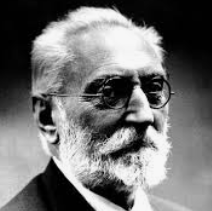
5 months 1 week ago
The real sin - perhaps it is a sin against the Holy Ghost for which there is no remission - is the sin of heresy, the sin of thinking for oneself. The saying has been heard before now, here in Spain, that to be a liberal - that is, a heretic - is worse than being an assassin, a thief, or an adulterer. The gravest sin is not to obey the Church, whose infallibility protects us from reason.
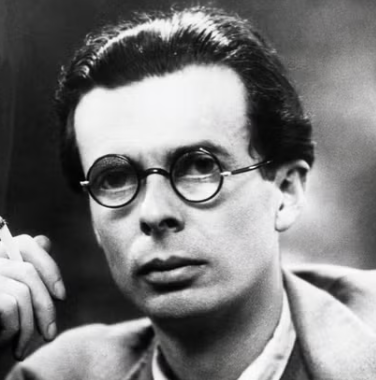
6 months 3 weeks ago
The original scriptures of most religions are poetical and unsystematic. Theology, which generally takes the form of a reasoned commentary on the parables and aphorisms of the scriptures, tends to make its appearance at a later stage of religious history. The Bhagavad-Gita occupies an intermediate position between scripture and theology; for it combines the poetical qualities of the first with the clear-cut methodicalness of the second... one of the clearest and most comprehensive summaries of the Perennial Philosophy ever to have been made. Hence its enduring value, not only for Indians, but for all mankind.
5 months 3 weeks ago
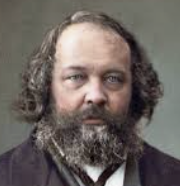
All exercise of authority perverts, and submission to authority humiliates.
▼
Source
source
As quoted in Michael Bakunin (1937), E.H. Carr, p. 453
6 months 2 weeks ago
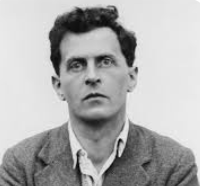
A hero looks death in the face, real death, not just the image of death. Behaving honourably in a crisis doesn't mean being able to act the part of a hero well, as in the theatre, it means being able to look death itself in the eye. For an actor may play lots of different roles, but at the end of it all he himself, the human being, is the one who has to die.
▼
Source
source
p. 50e
6 months 3 weeks ago
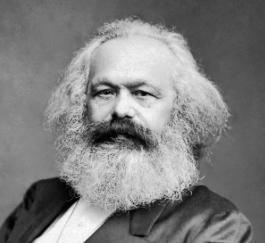
As a beast of toil an ox is fixed capital. If he is eaten, he no longer functions as an instrument of labour, nor as fixed capital either.
▼
Source
source
Vol. II, Ch. VIII, p. 163.

7 months 1 week ago
To the divine providence it has seemed good to prepare in the world to come for the righteous good things, which the unrighteous shall not enjoy; and for the wicked evil things, by which the good shall not be tormented. But as for the good things of this life, and its ills, God has willed that these should be common to both; that we might not too eagerly covet the things which wicked men are seen equally to enjoy, nor shrink with an unseemly fear from the ills which even good men often suffer. There is, too, a very great difference in the purpose served both by those events which we call adverse and those called prosperous. For the good man is neither uplifted with the good things of time, nor broken by its ills; but the wicked man, because he is corrupted by this world's happiness, feels himself punished by its unhappiness.
▼
Source
source
I, 8
5 months 2 weeks ago
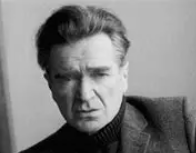
With success and a literary career one becomes an unquestioning part of the mechanism, whereas the only truly important years are those in which one is unknown.
6 months 3 weeks ago
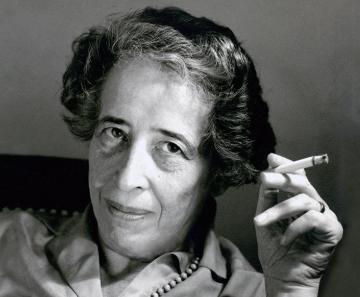
Thinking withdraws radically and for its own sake from this world and its evidential nature, whereas science profits from a possible withdrawal for the sake of specific results.
▼
Source
source
p. 56
4 months 1 week ago
My convictions, positive and negative, on all the matters of which you speak, are of long and slow growth and are firmly rooted. But the great blow which fell on me seemed to stir them to their foundation, and had I lived a couple of centuries earlier I could have fancied a devil scoffing at me and them - and asking me what profit it was to have stripped myself of the hopes and consolations of the mass of mankind? To which my only reply was and is - Oh devil! Truth is better than much profit. I have searched over the grounds of my belief, and if wife and child and name and fame were all to be lost to me one after the other as the penalty, still I will not lie.
4 months 1 week ago
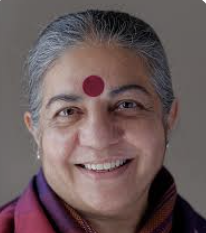
The business of grabbing and money-making, through a violent extractive economy that the 1% have built, is burdening the earth and humanity with unbearable and non-sustainable costs, and has brought us to the brink of extinction. We do not have to escape from the earth; we have to escape from the illusions that enslave our minds and make extinction look inevitable.
4 months 2 weeks ago
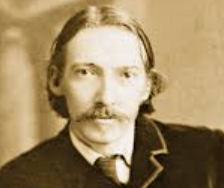
To be overwise is to ossify; and the scruple-monger ends by standing stockstill.
▼
Source
source
314
2 months 3 weeks ago
Architecture worth great attention. As we double our numbers every 20 years we must double our houses. Besides we build of such perishable materials that one half of our houses must be rebuilt in every space of 20 years. So that in that term, houses are to be built for three fourths of our inhabitants. It is then among the most important arts: and it is desireable to introduce taste into an art which shews so much.
▼
Source
source
Hints to Americans travelling in Europe, letter to John Rutledge, Jr. (June 19, 1788); in The Papers of Thomas Jefferson, ed. Julian P. Boyd (1956), vol. 13, p. 269
6 months 3 weeks ago
Let us read, and let us dance; these two amusements will never do any harm to the world.

6 months 2 weeks ago
Most of the texts... preserved from this period come from writers... either... affiliated with the aristocratic party, or... distrustful of democratic or radically democratic institutions.
4 months 2 weeks ago
The principles of Western liberalism seem no longer to lend themselves to effective action. Deprived of the expressive power, we are awed by it, have a hunger for it, and are afraid of it. Thus we praise the gray dignity of our soft-spoken leaders, but in our hearts we are suckers for passionate outbursts, even when those passionate outbursts are hypocritical and falsely motivated.
▼
Source
source
"Literary Notes on Khrushchev" (1961), p. 36
5 months 1 week ago
The conflicts that tear society apart resemble the distinction between the concept and the particular facts subordinated to it. ... Whatever refuses to abide by the unity imposed by the principle of dominion manifests itself not as something indifferent to that principle, but as an infringement of logic: as a contradiction.
▼
Source
source
p. 169
2 months 3 weeks ago
We were laboring under a dropsical fulness of circulating medium. Nearly all of it is now called in by the banks, who have the regulation of the safety-valves of our fortunes, and who condense and explode them at their will. Lands in this State cannot now be sold for a year's rent; and unless our Legislature have wisdom enough to effect a remedy by a gradual diminution only of the medium, there will be a general revolution of property in this state.
▼
Source
source
Letter to John Adams (7 November 1819) ME 15:224 : The Writings of Thomas Jefferson "Memorial Edition" (20 Vols., 1903-04) edited by Andrew A. Lipscomb and Albert Ellery Bergh, Vol. 15, p. 224
4 months 2 weeks ago
Decisive actions are often taken in a moment and without any conscious deliverance from the rational parts of man.
▼
Source
source
The Rajah's Diamond, Story of the Young Man in Holy Orders.
6 months 3 weeks ago
It is easy to see that the existing generation are conspiring with a beneficence, which, in its working for coming generations, sacrifices the passing one, which infatuates the most selfish men to act against their private interest for the public welfare. We build railroads, we know not for what or for whom; but one thing is certain, that we who build will receive the very smallest share of benefit. Benefit will accrue; they are essential to the country, but that will be felt not until we are no longer countrymen. We do the like in all matters: - 'Man's heart the Almighty to the Future setBy secret and inviolable springs.'
6 months 3 weeks ago
Truth is a shining goddess, always veiled, always distant, never wholly approachable, but worthy of all the devotion of which the human spirit is capable.
▼
Source
source
Fact and Fiction (1961), Part II, Ch. 10: "University Education", p. 153
7 months 2 days ago
Man is certainly stark mad; he cannot make a worm, and yet he will be making gods by dozens.
▼
Source
source
Book II, Ch. 12. Apology for Raimond Sebond
3 months 4 days ago
To gaze up from the ruins of the oppressive present towards the stars is to recognise the indestructible world of laws, to strengthen faith in reason, to realise the "harmonia mundi" that transfuses all phenomena, and that never has been, nor will be, disturbed.
▼
Source
source
From the Author's Preface to Third Edition
7 months 2 weeks ago
Being in humaneness is good. If we select other goodness and thus are far apart from humaneness, how can we be the wise? The opening phrase of this chapter after which the chapter is named in Chinese.
2 months 3 weeks ago
A little reflection will show us that every belief, even the simplest and most fundamental, goes beyond experience when regarded as a guide to our actions. ... Even the fundamental "I am," which cannot be doubted, is no guide to action until it takes to itself "I shall be," which goes beyond experience. The question is not, therefore, "May we believe what goes beyond experience?" for this is involved in the very nature of belief; but "How far and in what manner may we add to our experience in forming our beliefs?"
2 months 3 weeks ago
Today I escaped from anxiety. Or no, I discarded it, because it was within me, in my own perceptions-not outside.
▼
Source
source
(Hays translation) IX, 13
6 months 3 weeks ago
The propagandist's purpose is to make one set of people forget that certain other sets of people are human.
▼
Source
source
"Words and Behaviour", The Olive Tree, 1936
3 months 2 weeks ago
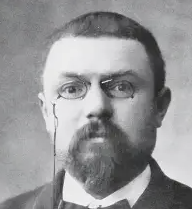
Mathematics have a triple aim. They must furnish an instrument for the study of nature. But that is not all: they have a philosophic aim and, I dare maintain, an esthetic aim. They must aid the philosopher to fathom the notions of number, of space, of time. And above all, their adepts find therein delights analogous to those given by painting and music. They admire the delicate harmony of numbers and forms; they marvel when a new discovery opens to them an unexpected perspective; and has not the joy they thus feel the esthetic character, even though the senses take no part therein? Only a privileged few are called to enjoy it fully, it is true, but is not this the case for all the noblest arts?This is why I do not hesitate to say that mathematics deserve to be cultivated for their own sake, and the theories inapplicable to physics as well as the others. Even if the physical aim and the esthetic aim were not united, we ought not to sacrifice either.
▼
Source
source
Ch. 5: Analysis and Physics
7 months 2 days ago
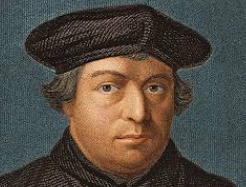
The blame rests with the government. Why do they not put adulterers to death? Then I would not need to give such advice. Between two evils one is always the lesser, in this case allowing the adulterer to remarry in a distant land in order to avoid fornication . . .
5 months 3 weeks ago
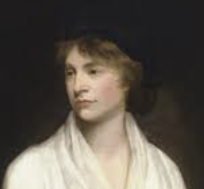
Nothing could be more natural than the developement of the passions, nor more striking than the views of the human heart. What delicate struggles! and uncommonly pretty turns of thought!
▼
Source
source
Mary: A Fiction
4 months 3 weeks ago
The coverage is the war. If there were no coverage, there'd be no war. Yes, the newsmen and the mediamen around the world are actually the fighters, not the soldiers anymore.
4 months 3 weeks ago
Only the truth and its expression can establish that new public opinion which will reform the ancient obsolete and pernicious order of life; and yet we not only do not express the truth we know, but often even distinctly give expression to what we ourselves regard as false. If only free men would not rely on that which has no power, and is always fettered - upon external aids; but would trust in that which is always powerful and free - the truth and its expression!
▼
Source
source
Ch. 17

4 months 3 weeks ago
4 ways: Agnosticism, Relativism, Amorality, Morality.
1) I don't know. 2) Everybody is different. 3) Do whatever you can. 4) Do what you should.
6 months 3 weeks ago
The imagination is always restless and suggests a variety of thoughts, and the will, reason being laid aside, is ready for every extravagant project; and in this State, he that goes farthest out of the way, is thought fittest to lead, and is sure of most followers: And when Fashion hath once Established, what Folly or craft began, Custom makes it Sacred, and 'twill be thought impudence or madness, to contradict or question it. He that will impartially survey the Nations of the World, will find so much of the Governments, Religion, and Manners brought in and continued amongst them by these means, that they will have but little Reverence for the Practices which are in use and credit amongst Men.
▼
Source
source
First Treatise of Government
6 months 3 weeks ago
A third illusion haunts us, that a long duration, as a year, a decade, a century, is valuable. But an old French sentence says, "God works in moments," - "En peu d'heure Dieu labeure." We ask for long life, but 't is deep life, or grand moments, that signify. Let the measure of time be spiritual, not mechanical. Life is unnecessarily long. Moments of insight, of fine personal relation, a smile, a glance, - what ample borrowers of eternity they are! Life culminates and concentrates; and Homer said, "The Gods ever give to mortals their appointed share of reason only on one day."
▼
Source
source
Works and Days

6 months 3 weeks ago
I have always - at least, ever since I can remember - had a kind of longing for death. Psyche
6 months 3 weeks ago
Natural science is throughout either a pure or an applied doctrine of motion.
▼
Source
source
Preface, Tr. Bax, 1883
CivilSimian.com created by AxiomaticPanic, CivilSimian, Kalokagathia