This is how I feel about universality. It's a final description of what is. It will be realized eventually....even if resisted, avoided or obstructed....


Much must also be withdrawn into oneself: for a well-composed conversation of differences disturbs and renews the affections, and infuriates whatever is weak in the mind and has not been cared for...Loneliness will cure the hatred of the crowd, the boredom of solitude will be cured by the crowd.... A certain dullness and languor of the mind is born from constant toil....Nor would the desire of men so much tend to this, unless play and fun had a kind of natural voluptuousness. The frequent use of which will relieve all the weight of the soul and all the vigor.For sleep is also necessary for refreshment, but if you continue it day and night, death will result.
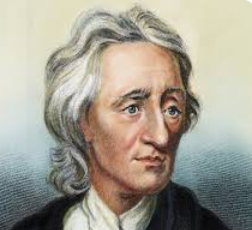
I am sure, zeal or love for truth can never permit falsehood to be used in the defence of it.
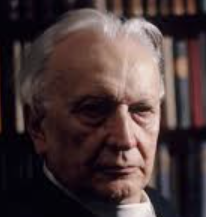
We cannot avoid conflict, conflict with society, other individuals and with oneself. Conflicts may be the sources of defeat, lost life and a limitation of our potentiality but they may also lead to greater depth of living and the birth of more far-reaching unities, which flourish in the tensions that engender them.
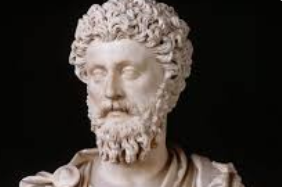
Consider thyself to be dead, and to have completed thy life up to the present time; and live according to nature the remainder which is allowed thee. Variant: Think of yourself as dead. You have lived your life. Now, take what's left and live it properly.
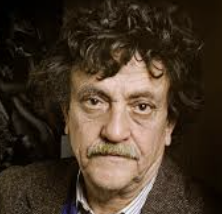
What froze me was the fact that I had absolutely no reason to move in any direction. What had made me move through so many dead and pointless years was curiosity. Now even that flickered out.
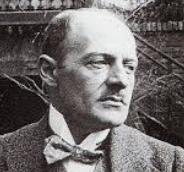
Even after his conversion, the true 'apostate' is not primarily committed to the positive contents of his new belief and to the realization of its aims. He is motivated by the struggle against the old belief and lives on for its negation. The apostate does not affirm his new convictions for their own sake; he is engaged in a continuous chain of acts of revenge against his own spiritual past. In reality he remains a captive of this past, and the new faith is merely a handy frame of reference for negating and rejecting the old. As a religious type, the apostate is therefore at the opposite pole from the 'resurrected,' whose life is transformed by a new faith which is full of intrinsic meaning and value.

All this of Liberty and Equality, Electoral suffrages, Independence and so forth, we will take, therefore, to be a temporary phenomenon, by no means a final one. Though likely to last a long time, with sad enough embroilments for us all, we must welcome it, as the penalty of sins that are past, the pledge of inestimable benefits that are coming.
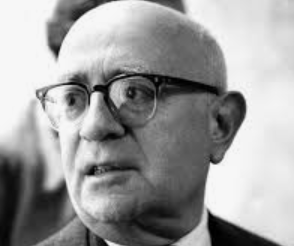
The phrase, the world wants to be deceived, has become truer than had ever been intended. People are not only, as the saying goes, falling for the swindle; if it guarantees them even the most fleeting gratification they desire a deception which is nonetheless transparent to them. They force their eyes shut and voice approval, in a kind of self-loathing, for what is meted out to them, knowing fully the purpose for which it is manufactured. Without admitting it they sense that their lives would be completely intolerable as soon as they no longer clung to satisfactions which are none at all.

Ambition is a drug that makes its addicts potential madmen.
Think not so much of what thou hast not as of what thou hast: but of the things which thou hast, select the best, and then reflect how eagerly they would have been sought, if thou hadst them not. At the same time, however, take care that thou dost not, through being so pleased with them, accustom thyself to overvalue them, so as to be disturbed if ever thou shouldst not have them.
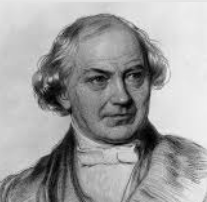
When a series of progressive numbers is given as the result of observation, it may generally be reduced to law by combinations of arithmetical and geometrical progressions. A true formula for a progressive series of numbers cannot commonly be obtained from a narrow range of observations.
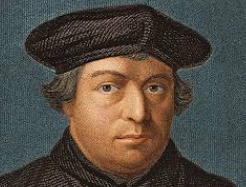
Faith is born and preserved in us by preaching why Christ came, what he brought and gave to us, and the benefits we obtain when we receive him. This happens when Christian liberty - which he gives to us - is rightly taught and we are told in what way as Christians we are all kings and priests and therefore lords of all.
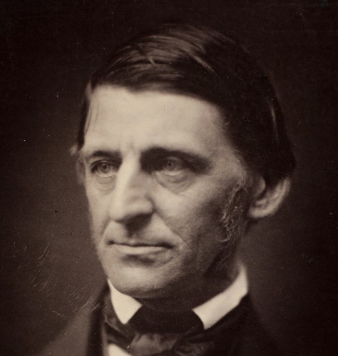
Too busy with the crowded hour to fear to live or die.
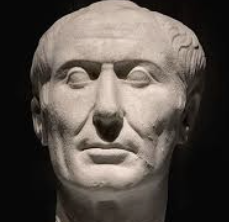
Prosperity makes friends, adversity tries them.
...that to expect a bad person not to harm others is like expecting fig trees not to secrete juice, babies not to cry, horses not to neigh-the inevitable not to happen.
Heretics cannot themselves appear good unless they depict the Church as evil, false, and mendacious. They alone wish to be esteemed as the good, but the Church must be made to appear evil in every respect.
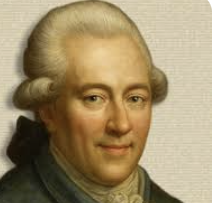
If all else fails, the character of a man can be recognized by nothing so surely as by a jest which he takes badly.
The wrinkles of a nation are as visible as those of an individual.
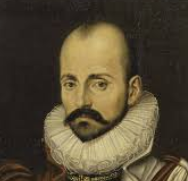
There is, nevertheless, a certain respect and a general duty of humanity that ties us, not only to beasts that have life and sense, but even to trees and plants.
Science does not know its debt to imagination.
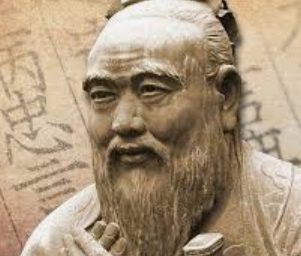
If the Superior Man is not serious, then he will not inspire awe in others. If he is not learned, then he will not be on firm ground. He takes loyalty and good faith to be of primary importance, and has no friends who are not of equal (moral) caliber. When he makes a mistake, he doesn't hesitate to correct it.
Of all that makes us suffer, nothing - so much as disappointment - gives us the sensation of at last touching Truth.
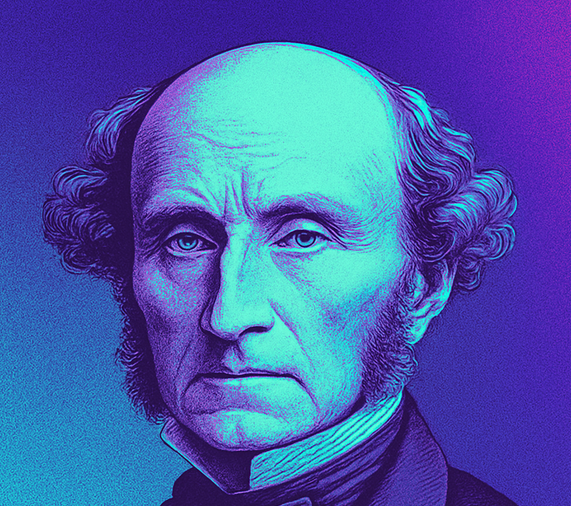
I needed to be made to feel that there was real, permanent happiness in tranquil contemplation. Wordsworth taught me this, not only without turning away from, but with a greatly increased interest in the common feelings and common destiny of human beings.

Every intrusion of the spirit that says, "I'm as good as you" into our personal and spiritual life is to be resisted just as jealously as every intrusion of bureaucracy or privilege into our politics. Hierarchy within can alone preserve egalitarianism without. Romantic attacks on democracy will come again. We shall never be safe unless we already understand in our hearts all that the anti-democrats can say, and have provided for it better than they. Human nature will not permanently endure flat equality if it is extended from its proper political field into the more real, more concrete fields within. Let us wear equality; but let us undress every night.
The truth can wait, for she lives a long life.
You have demanded of me, Novatus, that I should write how anger may be soothed, and it appears to me that you are right in feeling especial fear of this passion, which is above all others hideous and wild: for the others have some alloy of peace and quiet, but this consists wholly in action and the impulse of grief, raging with an utterly inhuman lust for arms, blood and tortures, careless of itself provided it hurts another, rushing upon the very point of the sword, and greedy for revenge even when it drags the avenger to ruin with itself.
The human tendency to regard little things as important has produced very many great things. G 46 Variant translation: The inclination of people to consider small things as important has produced many great things.
Since the Devil is the adversary of Christ he should occupy a position equivalent to his and be the Son of God as well. Satan would be the first Son of God and Christ the second.

What is Mysticism? Is it not the attempt to draw near to God, not by rites or ceremonies, but by inward disposition? Is it not merely a hard word for " The Kingdom of Heaven is within"? Heaven is neither a place nor a time. There might be a Heaven not only here but now. It is true that sometimes we must sacrifice not only health of body, but health of mind (or, peace) in the interest of God; that is, we must sacrifice Heaven. But "thou shalt be like God for thou shalt see Him as He is": this may be here and now, as well as there and then. And it may be for a time - then lost - then recovered - both here and there, both now and then.
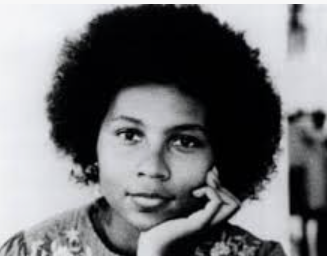
As a black woman interested in feminist movement, I am often asked whether being black is more important than being a woman; whether feminist struggle to end sexist oppression is more important than the struggle to racism or vice versa. All such questions are rooted in competitive either/or thinking, the belief that the self is formed in opposition to an other. ... Most people are socialized to think in terms of opposition rather than compatibility. Rather than seeing anti-racist work as totally compatible with working to end sexist oppression, they often see them as two movements competing for first place.
To recognize a difficulty is not to solve it.
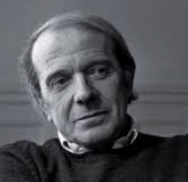
Second, we make no distinction between man and nature: the human essence of nature and the natural essence of man become one within nature in the form of production or industry, just as they do within the life of man as a species. Industry is then no longer considered from the extrinsic point of view of utility, but rather from the point of view of its fundamental identity with nature as production of man and by man.
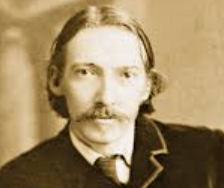
In anything fit to be called by the name of reading, the process itself should be absorbing and voluptuous; we should gloat over a book, be rapt clean out of ourselves, and rise from the perusal, our mind filled with the busiest, kaleidoscopic dance of images, incapable of sleep or of continuous thought. The words, if the book be eloquent, should run thenceforward in our ears like the noise of breakers, and the story, if it be a story, repeat itself in a thousand coloured pictures to the eye.

The most defenseless tenderness and the bloodiest of powers have a similar need of confession. Western man has become a confessing animal.
Whatever we may think or affect to think of the present age, we cannot get out of it; we must suffer with its sufferings, and enjoy with its enjoyments; we must share in its lot, and, to be either useful or at ease, we must even partake its character.
A gifted noble people; a people of wild strong feelings, and of iron restraint over these: the characteristic of noble-mindedness, of genius.
There was a time when religion was kept secret from popular belief within the mystery cults like a holy fire, sharing a common sanctuary with philosophy. The legends of antiquity name the earliest philosophers as the originators of these mystery cults, from which the most enlightened among the later philosophers, notably Plato, liked to educe their divine teachings. At that time philosophers still had the courage and the right to discuss the singly great themes, the only ones worthy of philosophizing and rising above common knowledge.
There is no work so mean, but it would amply serve me to furnish me with sustenance.
At the end of reasons comes persuasion.
Every substance is as a world apart, independent of everything else except God.
To reckon on anything at all, here or elsewhere, is to afford proofs that we are still burdened with chains. The reprobate aspires to paradise; this aspiration disparages, compromises him. To be free is to rid yourself forever of the notion of reward, it is to expect nothing of men or gods, it is to renounce not only this world and all worlds but salvation itself-it is to destroy even the notion of it, that chain among chains.
CivilSimian.com created by AxiomaticPanic, CivilSimian, Kalokagathia