

3 months 1 week ago
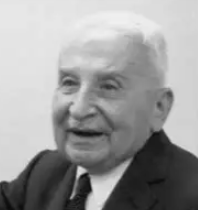
Inflation is an increase in the quantity of money without a corresponding increase in the demand for money, i.e., for cash holdings.
▼
Source
source
The Free Market and Its Enemies, speech to the Foundation for Economic Education
5 months 2 weeks ago
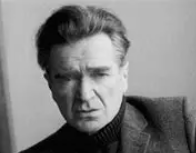
So long as man is protected by madness he functions and flourishes, but when he frees himself from the fruitful tyranny of fixed ideas, he is lost, ruined.
4 months 1 day ago
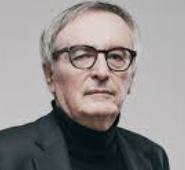
Might there not be a connection between the attempt to eradicate religion and the loss of freedom? It is unlikely that Mao, who launched his assault on the people and culture of Tibet with the slogan "Religion is poison," would have agreed that his atheist world-view had no bearing on his policies.
4 months 3 weeks ago
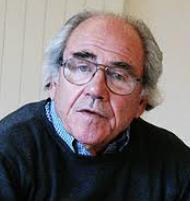
For it is with the same imperialism that present-day simulators try to make the real, all of the real, coincide with their simulation models.
▼
Source
source
"The Precession of Simulacra," pp. 1-2
2 months 3 weeks ago
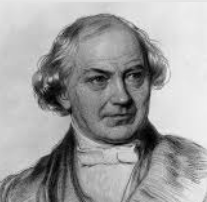
'When two equal weights are supported on the middle point between them, the pressure on the fulcrum is equal to the sum of the weights.'
2 months 2 weeks ago
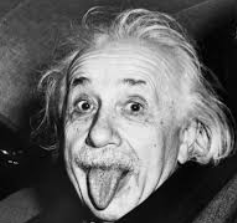
The only justification for our concepts and system of concepts is that they serve to represent the complex of our experiences; beyond this they have no legitimacy. I am convinced that the philosophers have had a harmful effect upon the progress of scientific thinking in removing certain fundamental concepts from the domain of empiricism, where they are under our control, to the intangible heights of the a priori. For even if it should appear that the universe of ideas cannot be deduced from experience by logical means, but is, in a sense, a creation of the human mind, without which no science is possible, nevertheless the universe of ideas is just as little independent of the nature of our experience as clothes are of the form of the human body. This is particularly true of our concepts of time and space, which physicists have been obliged by the facts to bring down from the Olympus of the a priori in order to adjust them and put them in a serviceable condition.
5 months 6 days ago
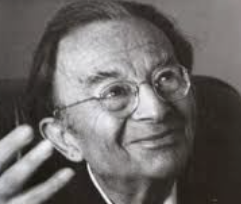
I believe that man is the product of natural evolution that is born from the conflict of being a prisoner and separated from nature, and from the need to find unity and harmony with it.
7 months 1 week ago
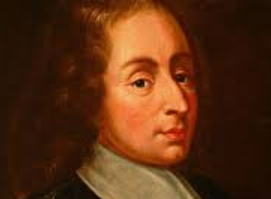
The mind must not be forced; artificial and constrained manners fill it with foolish presumption, through unnatural elevation and vain and ridiculous inflation, instead of solid and vigorous nutriment.

3 months 2 weeks ago
Man, little as he may suppose it, is necessitated to obey superiors. He is a social being in virtue of this necessity; nay he could not be gregarious otherwise. He obeys those whom he esteems better than himself, wiser, braver; and will forever obey such; and even be ready and delighted to do it.
3 months 1 week ago
Liberty of the people is not my liberty!
▼
Source
source
Cambridge 1995, p. 190

5 months 4 weeks ago
The debates of that great assembly are frequently vague and perplexed, seeming to be dragged rather than to march, to the intended goal. Something of this sort must, I think, always happen in public democratic assemblies.
▼
Source
source
Book One, Chapter XXI.

4 months 1 week ago
Lost time was like a run in a stocking. It always got worse.
▼
Source
source
The Steep Ascent

6 months 2 weeks ago
The perfect disciplinary apparatus would make it possible for a single haze to see everything constantly. A central point would be both the source of light illuminating everything, and a locus of convergence for everything that must be known: a perfect eye that nothing would escape and a centre towards which all gazes would be turned.
▼
Source
source
Part Three, The Means of Correct Training

3 months 2 weeks ago
Misery which, through long ages, had no spokesman, no helper, will now be its own helper and speak for itself.
5 months 2 weeks ago
The more remote and unreal the personal mother is, the more deeply will the son's yearning for her clutch at his soul, awakening that primordial and eternal image of the mother for whose sake everything that embraces, protects, nourishes, and helps assumes maternal form, from the Alma Mater of the university to the personification of cities, countries, sciences and ideals.
▼
Source
source
"Paracelsus as a Spiritual Phenomenon" (1942) In CW 13: Alchemical Studies P.47
5 months 1 week ago
The huge laugh is a most extreme expression of freedom.
5 months 6 days ago
I believe that none can "save" his fellow man by making a choice for him. To help him, he can indicate the possible alternatives, with sincerity and love, without being sentimental and without illusion. The knowledge and awareness of the freeing alternatives can reawaken in an individual all his hidden energies and put him on the path to choosing respect for "life" instead of for "death."
3 months 2 weeks ago
But among all the discoveries and corrections probably none has resulted in a deeper influence on the human spirit than the doctrine of Copernicus.... Possibly mankind has never been demanded to do more, for considering all that went up in smoke as a result of realizing this change: a second Paradise, a world of innocence, poetry and piety: the witness of the senses, the conviction of a poetical and religious faith. No wonder his contemporaries did not wish to let all this go and offered every possible resistance to a doctrine which in its converts authorized and demanded a freedom of view and greatness of thought so far unknown indeed not even dreamed of.
▼
Source
source
Zur Farbenlehre, Materialien zur Geschichte der Farbenlehre (1810), Frankfurt am Main, 1991, Seite 666.
2 months 3 weeks ago
The Christian priesthood, finding the doctrines of Christ levelled to every understanding, and too plain to need explanation, saw in the mysticism of Plato, materials with which they might build up an artificial system, which might, from its indistinctness, admit everlasting controversy, give employment for their order, and introduce it to profit, power and pre-eminence. The doctrines which flowed from the lips of Jesus himself are within the comprehension of a child ; but thousands of volumes have not yet explained the Platonisms engrafted on them; and for this obvious reason, that nonsense can never be explained.
▼
Source
source
Letter to John Adams (5 July 1814).
6 months 3 weeks ago
The best life is the one in which the creative impulses play the largest part and the possessive impulses the smallest.
3 months 2 weeks ago
All great peoples are conservative; slow to believe in novelties; patient of much error in actualities; deeply and forever certain of the greatness that is in law, in custom once solemnly established, and now long recognized as just and final.

6 months 2 weeks ago
Those in the crossing must in the end know what is mistaken by all urging for intelligibility: that every thinking of being, all philosophy, can never be confirmed by "facts," ie, by beings. Making itself intelligible is suicide for philosophy. Those who idolize "facts" never notice that their idols only shine in a borrowed light. They are also meant not to notice this; for thereupon they would have to be at a loss and therefore useless. But idolizers and idols are used wherever gods are in flight and so announce their nearness.
▼
Source
source
Contributions to Philosophy (From Enowning) [Beitrage Zur Philosophie (Vom Ereignis)], notes of 1936-1938, as translated by Parvis Emad and Kenneth Maly

3 months 2 weeks ago
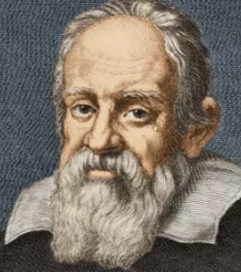
Names and attributes must be accommodated to the essence of things, and not the essence to the names, since things come first and names afterwards.
▼
Source
source
As quoted in Discoveries and Opinions of Galileo (1957) by Stillman Drake, p. 92
5 months 1 week ago
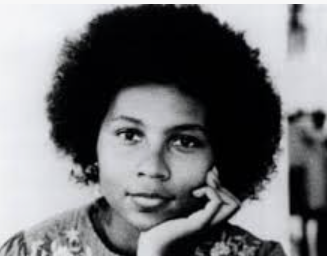
When I first read The Wretched of the Earth I heard a new history spoken-the voice of the decolonised subject raised in resistance. That voice . . . articulated a yearning for freedom that was so intense and a quality of emotional hunger that was so fierce that it was overwhelming. Dying into the text, I abandoned and forgot myself. The lust for freedom in those pages awakened and resurrected me.
▼
Source
source
Gender and Decolonization in the Congo (2010) ISBN 978-0-230-11040-3
5 months 1 week ago
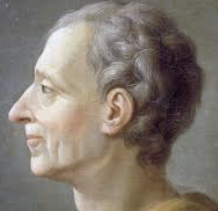
A man should be mourned at his birth, not at his death.
▼
Source
source
No. 40. (Usbek writing to Ibben)
4 months 2 weeks ago
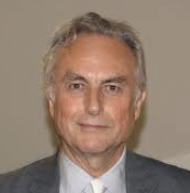
Maybe somewhere in some other galaxy there is a super-intelligence so colossal that from our point of view it would be a god. But it cannot have been the sort of God that we need to explain the origin of the universe, because it cannot have been there that early.
6 months 3 weeks ago
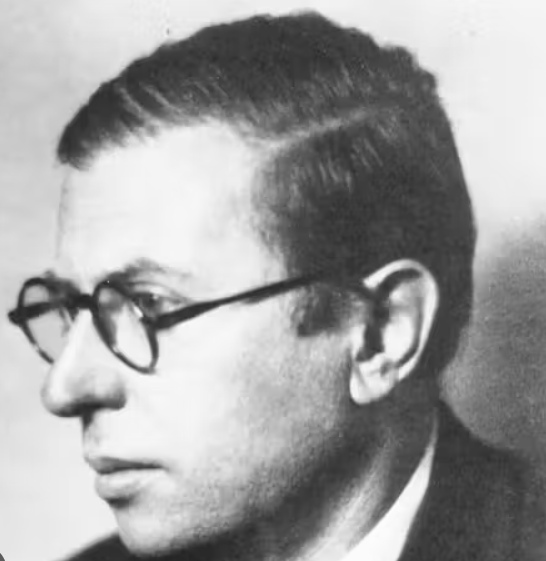
It is freedom, it is particularity, it is solitude that we are aiming at, and not Evil for its own sake.
▼
Source
source
p. 179
3 months 2 weeks ago
The science of the age, in short, is physical, chemical, physiological; in all shapes mechanical. Our favourite Mathematics, the highly prized exponent of all these other sciences, has also become more and more mechanical. Excellence in what is called its higher departments depends less on natural genius than on acquired expertness in wielding its machinery. Without undervaluing the wonderful results which a Lagrange or Laplace educes by means of it, we may remark, that their calculus, differential and integral, is little else than a more cunningly-constructed arithmetical mill; where the factors, being put in, are, as it were, ground into the true product, under cover, and without other effort on our part than steady turning of the handle. We have more Mathematics than ever; but less Mathesis.
6 months 2 weeks ago
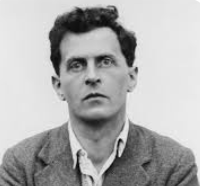
But if you say: "How am I to know what he means, when I see nothing but the signs he gives?" then I say: "How is he to know what he means, when he has nothing but the signs either?"
▼
Source
source
§ 504
7 months 2 weeks ago
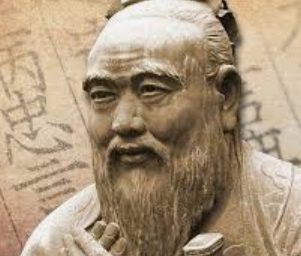
When we see men of worth, we should think of equaling them; when we see men of a contrary character, we should turn inwards and examine ourselves.
6 months 3 weeks ago
Monsieur ... I do not believe in God; his existence has been disproved by Science. But in the concentration camp, I learned to believe in men.
2 months 3 weeks ago
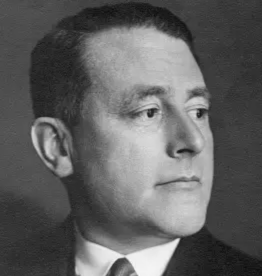
The essence of liberalism is negotiation, a cautious half measure, in the hope that the definitive dispute, the decisive bloody battle, can be transformed into a parliamentary debate and permit the decision to be suspended forever in an everlasting discussion.
4 months 3 weeks ago
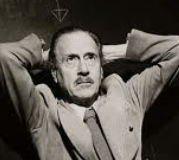
The reader is the content of any poem or of the language he employs, and in order to use any of these forms, he must put them on.
▼
Source
source
"Roles, Masks, and Performances", New Literary History, Vol. 2, No. 3, Performances in Drama, the Arts, and Society (Spring, 1971), p. 520
5 months 3 weeks ago
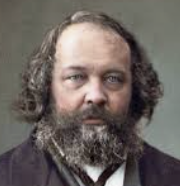
There is but one way to bring about the triumph of liberty, of justice, and of peace in Europe's international relations, to make civil war impossible between the different peoples who make up the European family; and that is the formation of the United States of Europe.
5 months 3 weeks ago
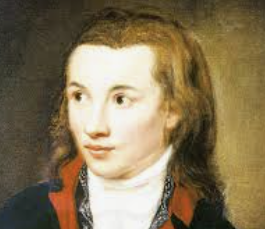
There is but one Temple in the World; and that is the Body of Man. Nothing is holier than this high form. Bending before men is a reverence done to this Revelation in the Flesh. We touch Heaven, when we lay our hand on a human body. Variant translation: There is but one temple in the Universe and that is the Body of Man.
▼
Source
source
As inscribed on the Library of Congress, quoted in Handbook of the New Library of Congress (1897) by Herbert Small, p. 53
2 months 3 weeks ago
I believe the Indian then to be in body and mind equal to the white man.
6 months 2 weeks ago
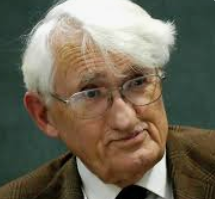
All affected can accept the consequences and the side effects that [the norm's] general observance can be anticipated to have for the satisfaction of everyone's interests, and the consequences are preferred to those of known alternative possibilities for regulation.
▼
Source
source
p. 65
5 months 3 weeks ago
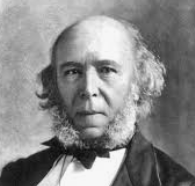
Morality knows nothing of geographical boundaries, or distinctions of race.
▼
Source
source
Pt. IV, Ch. 30 : General Considerations
2 months 3 weeks ago
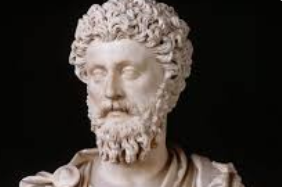
Nothing can come out of nothing, any more than a thing can go back to nothing.
▼
Source
source
IV, 4
3 months 2 weeks ago
A great man shows his greatness by the way he treats little men.
5 months 6 days ago
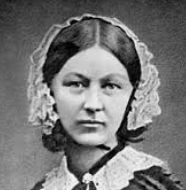
The progressive world is necessarily divided into two classes - those who take the best of what there is and enjoy it - those who wish for something better and try to create it. Without these two classes the world would be badly off. They are the very conditions of progress, both the one and the other. Were there none who were discontented with what they have, the world would never reach anything better.
2 months 3 weeks ago
The Sensations are the 'Objective', the Ideas the 'Subjective' part of every act of perception or knowledge.
5 months 2 weeks ago
Ennui is the echo in us of time tearing itself apart.
4 months 3 days ago
The existence of the mind-independent environment beyond one's world-simulation is a theoretical inference, not an empirical observation.
▼
Source
source
Postscript to review of Michael Lockwood's Mind, Brain and the Quantum, BLTC Research, Dec. 2016
6 months 3 weeks ago
The immediate aim of the Communists is the same as that of all the other proletarian parties: Formation of the proletariat into a class, overthrow of the bourgeois supremacy, conquest of political power by the proletariat.
▼
Source
source
Section 2 paragraph 7.
CivilSimian.com created by AxiomaticPanic, CivilSimian, Kalokagathia