

6 months 2 weeks ago
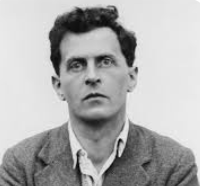
You must always be puzzled by mental illness. The thing I would dread most, if I became mentally ill, would be your adopting a common sense attitude; that you could take it for granted that I was deluded.
▼
Source
source
Conversation of 1947 or 1948
6 months 3 weeks ago
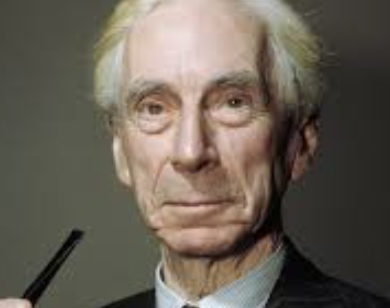
It is likely that America will be more important during the next century or two, but after that it may well be the turn of China.
▼
Source
source
Letter to Rachel Gleason Brooks, May 5, 1930
3 months 1 week ago
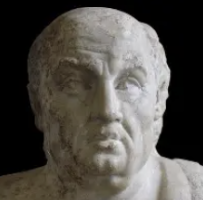
Would you really know what philosophy offers to humanity? Philosophy offers counsel.

6 months 2 weeks ago
The critique of the highest values hitherto does not simply refute them or declare them invalid. It is rather a matter of displaying their origins as impositions which must affirm precisely what ought to be negated by the values established.
▼
Source
source
p. 26
6 months 1 day ago
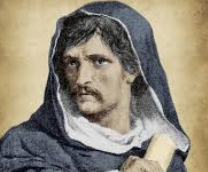
It is proof of a base and low mind for one to wish to think with the masses or majority, merely because the majority is the majority. Truth does not change because it is, or is not, believed by a majority of the people.
▼
Source
source
Included as a quotation in The Great Quotations (1977) by George Seldes, p. 35
3 months 1 week ago
We are weak, watery beings standing in the midst of unrealities; therefore let us turn our minds to the things that are everlasting.
5 months 4 weeks ago
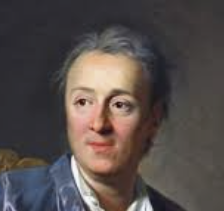
Africans are always vicious... mostly inclined to lasciviousness, vengeance, theft and lies.
▼
Source
source
As quoted in David Johnson, 'Representing the Cape "Hottentots"
6 months 1 day ago
For nature is not merely present, but is implanted within things, distant from none; naught is distant from her except the false, and that which existed never and nowhere-nullity. And while the outer face of things changeth so greatly, there flourisheth the origin of being more intimately within all things than they themselves. The fount of all kinds, Mind, God, Being, One, Truth, Destiny, Reason, Order.
▼
Source
source
VIII 10 as translated by Dorothea Waley Singer
5 months 2 weeks ago
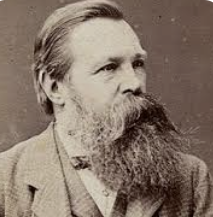
Industry controlled by society as a whole, and operated according to a plan, presupposes well-rounded human beings, their faculties developed in balanced fashion, able to see the system of production in its entirety.
7 months 3 weeks ago
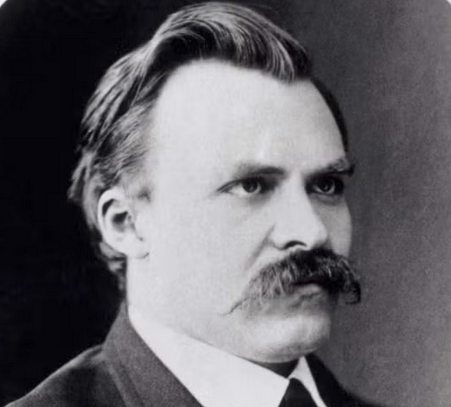
To what extent can truth endure incorporation? That is the question; that is the experiment.
5 months 3 weeks ago
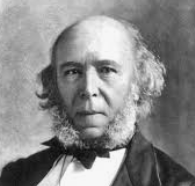
Throughout all organic nature there is at work a modifying influence of the kind... as the cause, these specific differences: an influence which, though slow in its action, does, in time, if the circumstances demand it, produce marked changes-an influence, which to all appearance, would produce in the millions of years, and under the great varieties of condition which geological records imply, any amount of change.

6 months 2 weeks ago
The years as they pass plunder us of one thing after another.
▼
Source
source
Book II, epistle ii, line 55
7 months 1 week ago
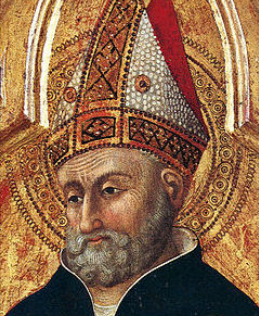
Since love grows within you, so beauty grows. For love is the beauty of the soul.
6 months 3 weeks ago
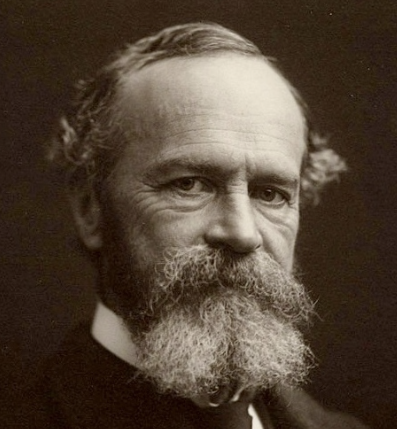
Modern transcendental idealism, Emersonianism, for instance, also seems to let God evaporate into abstract Ideality. Not a deity in concreto, not a superhuman person, but the immanent divinity in things, the essentially spiritual structure of the universe, is the object of the transcendentalist cult. In that address of the graduating class at Divinity College in 1838 which made Emerson famous, the frank expression of this worship of mere abstract laws was what made the scandal of the performance.
▼
Source
source
Lecture II, "Circumscription of the Topic"
10 months 4 weeks ago
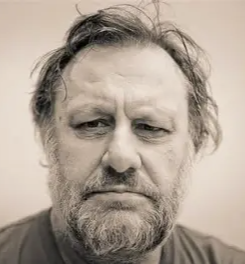
What is at stake here is precisely the problem of the fulfillment of desire: when we encounter in reality an object which has all the properties of the fantasized object of desire, we are nevertheless necessarily somewhat disappointed; we experience a certain this is not it; it becomes evident that the finally found real object is not the reference of desire even though it possesses all the required properties.
4 months 3 weeks ago
African audiences cannot accept our passive consumer role in the presence of film.
▼
Source
source
(p. 44)

6 months 3 weeks ago
Nothing is yet in its true form.
5 months 2 weeks ago
It is not politics that can bring true liberty to the soul; that must be achieved, if at all, by philosophy;
▼
Source
source
"The Irony of Liberalism"
5 months 1 week ago
The art of progress is to preserve order amid change, and to preserve change amid order.
5 months 2 weeks ago
The process of aging can only be fruitful and satisfactory if the important transitions are accompanied by free resignation, by the renunciation of the values proper to the preceding stage of life. Those spiritual and intellectual values which remain untouched by the process of aging, together with the values of the next stage of life, must compensate for what has been lost. Only if this happens can we cheerfully relive the values of our past in memory, without envy for the young to whom they are still accessible. If we cannot compensate, we avoid and flee the "tormenting" recollection of youth, thus blocking our possibilities of understanding younger people. At the same time we tend to negate the specific values of earlier stages. No wonder that youth always has a hard fight to sustain against the ressentiment of the older generation.
▼
Source
source
L. Coser, trans. (1973), pp. 62-63
4 months 3 weeks ago
Truth is ... one approach to the attainment of the good, but in and of itself, it is neither the good nor the beautiful ... Socrates, Pascal, and others regarded knowledge of the truth with regard to purposeless objects as incongruous with the good ... by exposing deception, truth destroys illusion, which is the principle attribute of beauty.
7 months 1 week ago
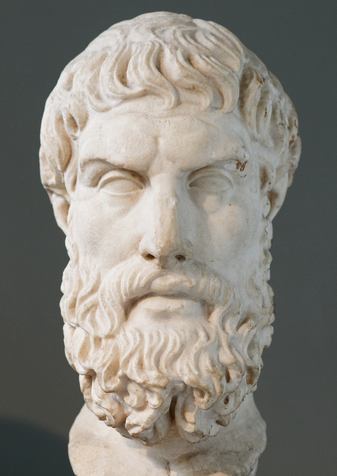
Sobriety, as opposed to inebriety and gluttony, is of admirable use in teaching men that nature is satisfied with a little, and enabling them to content themselves with simple and frugal fare.
6 months 3 weeks ago
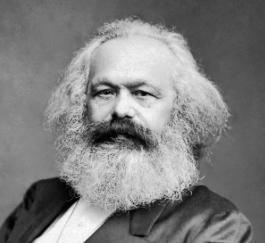
Ideas do not exist separately from language.
▼
Source
source
Notebook I, The Chapter on Money, p. 83.
6 months 3 weeks ago
It is freedom, it is particularity, it is solitude that we are aiming at, and not Evil for its own sake.
▼
Source
source
p. 179
6 months 4 weeks ago
In such a chain, too, or succession of objects, each part is caused by that which preceded it, and causes that which succeeds it. Where then is the difficulty? But the WHOLE, you say, wants a cause. I answer, that the uniting of these parts into a whole, like the uniting of several distinct countries into one kingdom, or several distinct members into one body, is performed merely by an arbitrary act of the mind, and has no influence on the nature of things. Did I show you the particular causes of each individual in a collection of twenty particles of matter, I should think it very unreasonable, should you afterwards ask me, what was the cause of the whole twenty. This is sufficiently explained in explaining the cause of the parts.
▼
Source
source
Cleanthes to Demea, Part IX
5 months 1 week ago
The vitality of thought is in adventure. Ideas won't keep. Something must be done about them. When the idea is new, its custodians have fervor, live for it, and, if need be, die for it.
▼
Source
source
p. 100; Ch. 12, April 28, 1938.
5 months 2 weeks ago
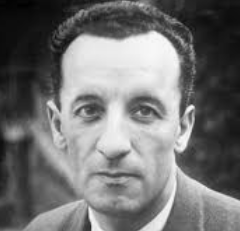
By becoming the pure subject who knows the world objectively, man ultimately realizes that absolute consciousness with respect to which the body and individual existence are no longer anything but objects; death is deprived of meaning. Reduced to the status of object of consciousness, the body could not be conceived as an intermediary between "things" and the consciousness which knows them.
▼
Source
source
p. 204
5 months 2 weeks ago
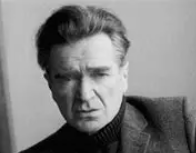
Better to be an animal than a man, an insect than an animal, a plant than an insect, and so on. Salvation? Whatever diminishes the kingdom of consciousness and compromises its supremacy.
2 months 2 weeks ago
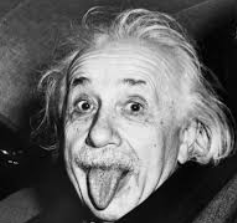
The meaning of relativity has been widely misunderstood. Philosophers play with the word, like a child with a doll. Relativity, as I see it, merely denotes that certain physical and mechanical facts, which have been regarded as positive and permanent, are relative with regard to certain other facts in the sphere of physics and mechanics. It does not mean that everything in life is relative and that we have the right to turn the whole world mischievously topsy-turvy.
7 months 1 week ago
My mother spoke of Christ to my father, by her feminine and childlike virtues, and, after having borne his violence without a murmur or complaint, gained him at the close of his life to Christ.
▼
Source
source
Reported in Josiah Hotchkiss Gilbert, Dictionary of Burning Words of Brilliant Writers (1895), p. 351
3 months 5 days ago
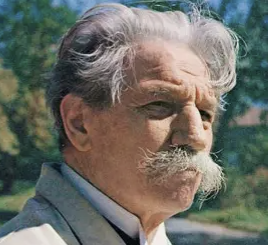
The disastrous feature of our civilization is that it is far more developed materially than spiritually. Its balance is disturbed ... Now come the facts to summon us to reflect. They tell us in terribly harsh language that a civilization which develops only on its material side, and not in the sphere of the spirit ... heads for disaster.
3 months 1 week ago
But the wise man knows that all things are in store for him. Whatever happens, he says: "I knew it."
5 months 3 weeks ago
Evolution is definable as a change from an incoherent homogeneity to a coherent heterogeneity, accompanying the dissipation of motion and integration of matter.
▼
Source
source
Pt. II, The Knowable; Ch. XV, The Law of Evolution (continued)
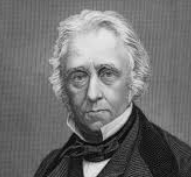
4 months 1 week ago
A man possessed of splendid talents, which he often abused, and of a sound judgment, the admonitions of which he often neglected; a man who succeeded only in an inferior department of his art, but who in that department succeeded pre-eminently.
▼
Source
source
p. 231
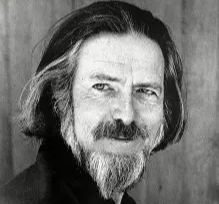
3 months 5 days ago
Zen does not confuse spirituality with thinking about God while one is peeling potatoes. Zen spirituality is just to peel the potatoes. Paraphrase of original text which reads "It does not confuse spirituality with thinking about God while one is peeling potatoes. Zen spirituality is just to peel the potatoes.
▼
Source
source
The Way of Zen, Pt. 2, Ch. 2
3 months 1 week ago
To animals not only human virtues but even human vices are forbidden: their whole constitution, mental and bodily, is unlike that of human beings...they possess intellect, the greatest attribute of all, but in a rough and inexact condition. It is, consequently, able to grasp those visions and semblances which rouse it to action, but only in a cloudy and indistinct fashion. Their impulses and outbreaks are violent, and that they do not feel fear, anxieties, grief, or anger, but some semblances of these feelings: wherefore they quickly drop them and adopt the converse of them: they graze after showing the most vehement rage and terror, and after frantic bellowing and plunging they straightaway sink into quiet sleep.
3 months 5 days ago
But what we've got going wrong is we've got a kind of bifurcation in cultural development:You take your classified telephone directory, and open up "Churches", and have a ruler in your hand. And you will find that the longest space is occupied by authoritarian, Bible-banging churches. And these people are barbarians, who take the written word of the Bible literally. Because they need terribly, they have a personal need, for something to depend on. ... The government realizes that there is a very large number of people like that; and therefore, to keep their votes, they have to pander to those kind of people. And these are the boys who never grew up; they always need Papa. ... The trouble is that the boys who need Papa, are violent. They have the guns. And they are the types of people who like to be soldiers, policemen-tough guys. And therefore they have a great deal of power.
▼
Source
source
Interviewed on Les Hixon's show "In The Spirit" on WBAI New York
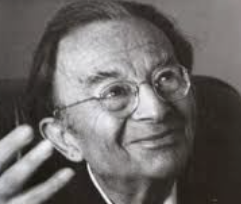
5 months 6 days ago
In spite of the universalistic spirit of the monotheistic Western religions and of the progressive political concepts that are expressed in the idea "that all men are created equal," love for mankind has not become a common experience. Love for mankind is looked upon as an achievement which, at best, follows love for an individual or as an abstract concept to be realized only in the future. But love for man cannot be separated from love for one individual. To love one person productively means to be related to his human core, to him as representing mankind. Love for one individual, in so far as it is divorced from love for man, can refer only to the superficial and to the accidental; of necessity it remains shallow.
▼
Source
source
Ch. 2
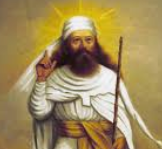
6 months 2 weeks ago
With a foolish man make no dispute.
5 months 1 week ago
By reducing any quality to quantity, myth economizes intelligence: it understands reality more cheaply.
▼
Source
source
p. 153
6 months 3 weeks ago
I have therefore found it necessary to deny knowledge in order to make room for faith.

6 months 2 weeks ago
I would rather discover one cause than gain the kingdom of Persia.
▼
Source
source
Freeman (1948), p. 155
6 months 3 weeks ago
Give all to love; Obey thy heart; Friends, kindred, days, Estate, good fame, Plans, credit, and the muse; Nothing refuse.
▼
Source
source
Give All to Love, st. 1

5 months 1 week ago
I have said that, in a sense, the parasites were a 'shadow' of man's cowardice and passivity. Their strength could increase in an atmosphere of defeat and panic, for it fed on human fear. In that case, the best way to combat them was to change the atmosphere to one of strength and purpose.
▼
Source
source
p. 188
2 months 3 weeks ago
The 'Logic of Induction' consists in stating the Facts and the Inference in such a manner, that the evidence of the Inference is manifest; just as the Logic of Deduction consists in stating the Premises and the Conclusion in such a manner that the Evidence of the Conclusion is manifest.
4 months 3 weeks ago
We now live in a technologically prepared environment that blankets the earth itself. The humanly contrived environment of electric information and power has begun to take precedence over the old environment of "nature." Nature, as it were, begins to be the content of our technology.
▼
Source
source
p. 276
6 months 3 weeks ago
Every one knows that there are no real forests in England. The deer in the parks of the great are demurely domestic cattle, fat as London alderman.
▼
Source
source
Vol. I, Ch. 27, pg. 803.
5 months 1 week ago
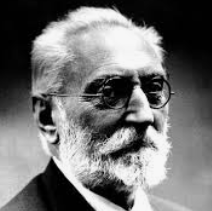
The work of charity, of the love of God, is to endeavor to to liberate God from brute matter, to endeavor to give consciousness to everything, to spiritualize or universalize everything; it is to dream that the very rocks may find a voice and work in accordance with the spirit of this dream; it is to dream that everything that exists may become conscious, that the Word may become life.

2 months 3 weeks ago
We know enough of our own history by now to be aware that people exploit what they have merely concluded to be of value, but they defend what they love. To defend what we love we need a particularizing language, for we love what we particularly know.
3 months 4 days ago
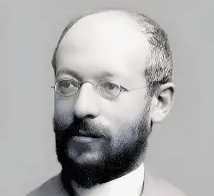
The most profound reason... why the metropolis conduces to the urge for the most individual personal existence... appears to me to be the following: the development of modern culture is characterized by the preponderance of what one may call the "objective spirit" over the "subjective spirit."
▼
Source
source
p. 421 as cited in: Kenneth Allan (2009) Explorations in Classical Sociological Theory: Seeing the Social World. p. 212
CivilSimian.com created by AxiomaticPanic, CivilSimian, Kalokagathia