
6 months 2 weeks ago
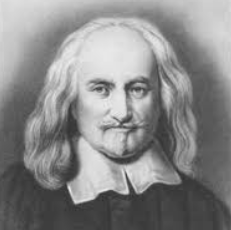
At the core of Hobbes’s theory of political authority is the provision of security. “The end of Obedience is Protection,” Hobbes insists in chapter 21 of Leviathan. The Obligation of Subjects to the Soveraign, is understood to last as long, and no longer, than the power lasteth, by which he is able to protect them.” This is because “the right men have by Nature to protect themselves, when none else can protect them, can by no Covenant be relinquished.”6 The king’s rightful authority is rooted in his capacity to protect his subjects. As a result, their obligation to obey him, unqualified as it is while it lasts, expires with the king’s ability to protect them.Hobbes spelled this out even more perspicaciously in his discussion of conquest—with clear implications for what was at stake in the Engagement controversy. A person is conquered not by being slain or imprisoned. (In the latter case “he is still an Enemy, and may save himself if hee can.”) Rather, “he that upon promise of Obedience, hath his Life and Liberty allowed him, is then Conquered, and a Subject; and not before.” The long and short of it was that once Parliament had replaced the king as protector of the people of England, they owed Parliament their unqualified allegiance. Engagement was therefore legitimate. Indeed, in the circumstances after 1649, it was obligatory. And it would follow, a fortiori, that should Parliament lose the capacity to provide protection, then the obligation to Engage would cease as well.In this way, Hobbes could counsel Charles’s supporters to promise allegiance to Parliament, but they could do it in a manner that would not compromise their ability to support the king in the event of a restoration. As it turned out, making this move alienated Hobbes from many royalists—even though he offered them a doctrine that promised to get them out of a tight spot and hedge their bets for the future. Their attachment, it seems, was to Charles himself, or at least to the institution of the monarchy.
▼
Source
source
Ian Shapiro, "Introduction: Reading Hobbes Today", in Thomas Hobbes, Leviathan (Yale University Press, 2010)
CivilSimian.com created by AxiomaticPanic, CivilSimian, Kalokagathia