
1 week 2 days ago
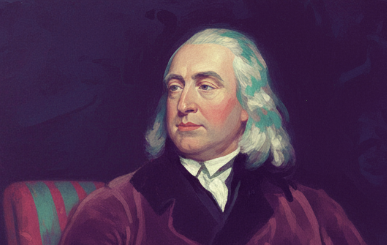
Bentham impressed upon his countrymen the notion that existing institutions were not to be taken for granted, but to be judged by their results, and perpetually readjusted so as to produce "the greatest happiness of the greatest number." He did not invent that useful formula, which he had taken from Priestley, but he drove it into men's minds, and by reiterating it for half a century with a thousand different applications, he undermined the easy acceptance of chartered inefficiency and corruption, characteristic of the eighteenth century. Parliamentary, municipal, scholastic, ecclesiastical, economic reform all sprang from the spirit of Bentham’s perpetual inquiry, "what is the use of it?"—his universal shibboleth, that proved in the end the real English antidote to Jacobinism. The weakness of his system, even in the realm of politics, was the mechanical nature of its psychology, which misrepresented the multiform workings of the human mind.
▼
Source
source
G. M. Trevelyan, British History in the Nineteenth Century (1782–1901) (1922), p. 182
CivilSimian.com created by AxiomaticPanic, CivilSimian, Kalokagathia