
1 week 2 days ago
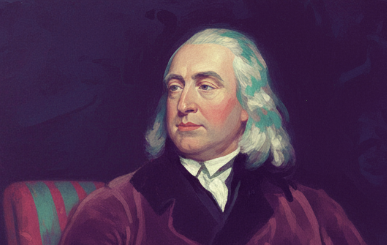
It would be difficult to find a better instance of that favourite maxim of our grandfathers that "the pen is mightier than the sword," than the effect upon British institutions of the uneventful life of Jeremy Bentham, a shy recluse of unimpressive speech and appearance, who was so little of a politician that even in 1817 he was not prosecuted for publishing his highly "seditious" Reform Catechism in favour of household suffrage. Born in 1748, and dying in 1832 just when his principles were beginning to invade the seats of power, he was never the man of the moment, but his influence was a force in history during more than a hundred years. As early as 1776...young Bentham's Fragment on Government also appeared. It challenged the legal doctrine of the age, sanctioned by Blackstone himself, that law was a fixed and authoritative science and the British Constitution perfect. Bentham, on the other hand, proclaimed both law and politics to be perpetual experiments in the means of promoting "utility" or happiness.
▼
Source
source
G. M. Trevelyan, British History in the Nineteenth Century (1782–1901) (1922), pp. 181-182
CivilSimian.com created by AxiomaticPanic, CivilSimian, Kalokagathia