
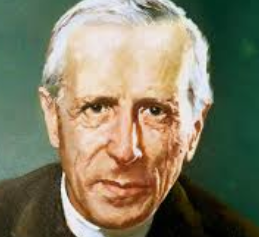
3 months 3 weeks ago
At the heart of our universe, each soul exists for God, in our Lord.
▼
Source
The Divinisation of Our Activities, p. 56
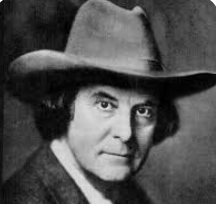
3 months 3 weeks ago
A friend is someone who knows all about you and still loves you.
▼
Source
Attributed to Hubbard on social media, but this sentiment is also reflected in biblical teachings, such as Proverbs 17:17, which states, “A friend loves at all times”.

3 months 3 weeks ago
The methods of logical procedure are very different in ancient and modem logic, but behind all difference is the construction of a universally valid order of thought, neutral with respect to material content. Long before technological man and technological nature emerged as the objects of rational control and calculation, the mind was made susceptible to abstract generalization. Terms which could be organized into a coherent logical system, free from contradiction or with manageable contradiction, were separated from those which could not. Distinction was made between the universal, calculable, “objective” and the particular, incalculable, subjective dimension of thought.
▼
Source
pp. 137-138
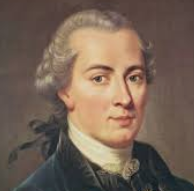
3 months 3 weeks ago
There will always be some people who think for themselves, even among the self-appointed guardians of the great mass who, after having thrown off the yoke of immaturity themselves, will spread about them the spirit of a reasonable estimate of their own value and of the need for every man to think for himself.
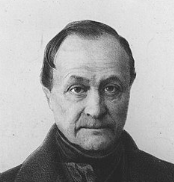
3 months 3 weeks ago
To understand a science it is necessary to know its history.
▼
Source
A Course of Positive Philosophy (1832 - 1842) [Six volumes]
3 months 3 weeks ago
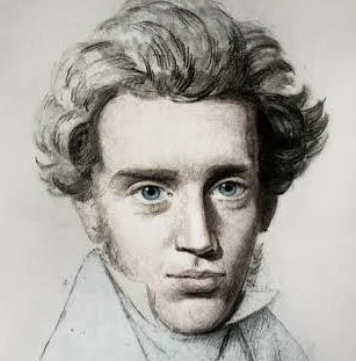
Magister Adler was deeply moved by something higher, but now when he wants to express his thoughts in words, wants to communicate, he confuses the subjective with the objective, his altered subjective state with an external event, the dawning of a light upon him with the coming into existence of something new outside him, the falling of the veil from his eyes with his having had a revelation. Subjectively his emotion is carried to the extreme; he wants to select the most powerful expression to describe it and by means of a mental deception grasps the objective qualification: having had a revelation.
▼
Source
The Book of Adler, by Søren Kierkegaard, Hong 1998 p. 117
3 months 3 weeks ago
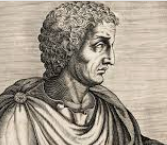
All men possess in their bodies a poison which acts upon serpents; and the human saliva, it is said, makes them take to flight, as though they had been touched with boiling water. The same substance, it is said, destroys them the moment it enters their throat.
▼
Source
Book VII, sec. 15.
3 months 3 weeks ago
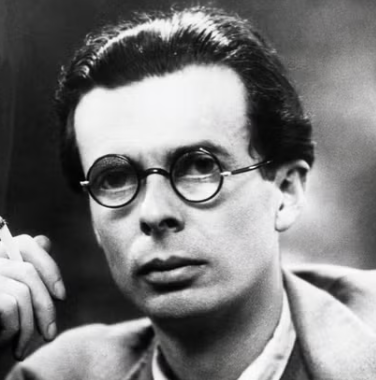
Proverbs are always platitudes until you have personally experienced the truth of them.
▼
Source
[http://books.google.com/books?lr=&id=iy0SkXPxsF8C&q=%22Proverbs+are+always+platitudes+until+you+have+personally+experienced+the+truth+of+them%22&pg=PA207#v=onepage Part IV: America],Jesting Pilate: The Diary of a Journey, (1926)
3 months 3 weeks ago
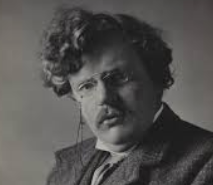
When fishes flew and forests walked And figs grew upon thorn,Some moment when the moon was blood Then surely I was born. With monstrous head and sickening cry And ears like errant wings, The devil’s walking parody On all four-footed things.
▼
Source
"The Donkey", sts. 1 and 2. The Wild Knight, and Other Poems (1900)
3 months 3 weeks ago
Newton... (after having remarked that geometry only requires two of the mechanical actions which it postulates, namely, to describe a straight line and a circle) says: geometry is proud of being able to achieve so much while taking so little from extraneous sources. One might say of metaphysics, on the other hand: it stands astonished, that with so much offered it by pure mathematics it can effect so little. In the meantime, this little is something which mathematics indispensably requires in its application to natural science, which, inasmuch as it must here necessarily borrow from metaphysics, need not be ashamed to allow itself to be seen in company with the latter.
▼
Source
Preface, Tr. Bax (1883) citing Isaac Newton's Principia
3 months 3 weeks ago
If thou shalt aspire after the glorious acts of men, thy working shall be accompanied with compunction and strife, and thy remembrance followed with distaste and upbraidings; and justly doth it come to pass towards thee, O man, that since thou, which art God's work, doest him no reason in yielding him well-pleasing service, even thine own works also should reward thee with the like fruit of bitterness.
▼
Source
Of The Works Of God and Man
3 months 3 weeks ago
If God stops a man on the road, and calls him with a revelation and sends him armed with divine authority among men, they say to him; from whom dost thou come? He answers: from God. But now God cannot help his messenger physically like a king, who gives him soldiers or policemen, or his ring or his signature, which is known to all; in short, God cannot help men by providing them with physical certainty that an Apostle is an Apostle-which would, moreover, be nonsense. Even miracles, if the Apostle has that gift, give no physical certainty; for the miracle is the object of faith.
▼
Source
p. 95
3 months 3 weeks ago
There is the growth of applied science, the increased interest in the control and reconstruction of nature, accompanied by a decline in the practice of meditation or the vocation of the intellectual life.
▼
Source
[describing the historical causes of the modern tendency to make intellect the servant of alien interests]
3 months 3 weeks ago
As I have already urged, the practice of that which is ethically best—what we call goodness or virtue—involves a course of conduct which in all respects is opposed to that which leads to success in the cosmic struggle for existence. In place of ruthless self-assertion, it demands self-restraint; in place of thrusting aside or treading down all competitors, it requires that the individual shall not merely respect, but shall help his fellows; its influence is directed not so much to the survival of the fittest as to the fitting of as many as possible to survive. It repudiates the gladiatorial theory of existence. It demands that each man who enters into the enjoyment of the advantages of a polity shall be mindful of his debt to those who have laboriously constructed it, and shall take heed that no act of his weakens the fabric in which he has been permitted to live. Laws and moral precepts are directed to the end of curbing the cosmic process, and reminding the individual of his duty to the community, to the protection and influence of which he owes, if not existence itself, at least the life of something better than a brutal savage. (Evolution and Ethics, pp. 81-82.)
▼
Source
Quoted by Swami Abhedananda, in [http://www.gutenberg.org/ebooks/7377 Vedanta Philosophy: Five Lectures on Reincarnation,] III. Evolution and Reincarnation. (1907)
3 months 3 weeks ago
There is in Islam a paradox which is perhaps a permanent menace. The great creed born in the desert creates a kind of ecstasy out of the very emptiness of its own land, and even, one may say, out of the emptiness of its own theology. [...] A void is made in the heart of Islam which has to be filled up again and again by a mere repetition of the revolution that founded it. There are no sacraments ; the only thing that can happen is a sort of apocalypse, as unique as the end of the world ; so the apocalypse can only be repeated and the world end again and again. There are no priests ; and yet this equality can only breed a multitude of lawless prophets almost as numerous as priests. The very dogma that there is only one Mahomet produces an endless procession of Mahomets.
▼
Source
[https://archive.org/stream/kitchener00chesuoft#page/7/mode/2up Lord Kitchener] (1917), pp. 7–8

3 months 3 weeks ago
The chief requirement of the good life... is to live without any image of oneself.
▼
Source
The Bell (1958), ch. 9; 2001, p. 119.
3 months 3 weeks ago
He [Jesus] claims that not the observance of outer civil or statutory churchly duties but the pure moral disposition of the heart alone can make man well-pleasing to God (Matthew V, 20-48); … that injury done one’s neighbor can be repaired only through satisfaction rendered to the neighbor himself, not through acts of divine worship (V, 24). Thus, he says, does he intend to do full justice to the Jewish law (V, 17); whence it is obvious that not scriptural scholarship but the pure religion of reason must be the law’s interpreter, for taken according to the letter, it allowed the very opposite of all this. Furthermore, he does not leave unnoticed, in his designations of the strait gate and the narrow way, the misconstruction of the law which men allow themselves in order to evade their true moral duty, holding themselves immune through having fulfilled their churchly duty (VII, 13). He further requires of these pure dispositions that they manifest themselves also in works (VII, 16) and, on the other hand, denies the insidious hope of those who imagine that, through invocation and praise of the Supreme Lawgiver in the person of His envoy, they will make up for their lack of good works and ingratiate themselves into favor (VII, 21). Regarding these works he declares that they ought to be performed publicly, as an example for imitation (V, 16), and in a cheerful mood, not as actions extorted from slaves (VI, 16); and that thus, from a small beginning in the sharing and spreading of such dispositions, religion, like a grain of seed in good soil, or a ferment of goodness, would gradually, through its inner power, grow into a kingdom of God (XIII, 31-33).
▼
Source
Book IV, Part 1, Section 1, “The Christian religion as a natural religion”
3 months 3 weeks ago
We are wont to call that human reasoning which we apply to Nature the anticipation of Nature (as being rash and premature) and that which is properly deduced from things the interpretation of Nature.
3 months 3 weeks ago
It is love that leniently and mercifully says: I forgive you everything-if you are forgiven only little, then it is because you love only little. Justice severely sets the boundary and says: No further! This is the limit. For you there is no forgiveness, and there is nothing more to be said. P. 172
3 months 3 weeks ago
I'm using myself as a typical 20th century model as I'm trying to make sense out of the world around me … typical in the sense of being one of the damn good models around these days. I am typical in the sense that ...a lot of people are on the same wave length as me. I get fan mail from people that are absolutely stunned that there's somebody else besides themselves who thinks this way. So, we're a minority, but there are a lot of us. On a planet this overcrowded, a minority can have a few million numbers. … More scientific than religious. More open than dogmatic. More optimistic than pessimistic. More future oriented than past oriented. And more humorous than serious. I really dread serious people. Especially serious, dogmatic people. I regard them as sort of what Reich called the emotional plague. I regard them as very dangerous.
▼
Source
[http://www.wilhelmreichinhell.com/rawonreich.htm "Robert Anton Wilson on Wilhelm Reich" (March 1995)]
3 months 3 weeks ago
Speed, it seems to me, provides the one genuinely modern pleasure.
▼
Source
Wanted, A New Pleasure
3 months 3 weeks ago
Now it has appeared to me unfair that humanity should be engaged perpetually in calling all those things bad which have been good enough to make other things better, in everlastingly kicking down the ladder by which it has climbed. It has appeared to me that progress should be something else besides a continual parricide; therefore I have investigated the dust-heaps of humanity, and found a treasure in all of them. I have found that humanity is not incidentally engaged, but eternally and systematically engaged, in throwing gold into the gutter and diamonds into the sea.
▼
Source
"Introduction"
3 months 3 weeks ago
I see myself as Rhoda, not Mary Tyler Moore.
▼
Source
Not Iris Murdoch, but the actress and comedian Rosie O'Donnell. See George Mair Rosie O'Donnell: Her True Story (1997) p. 81.
3 months 3 weeks ago
Good and strong will. Mechanism must precede science (learning). Also in morals and religion? Too much discipline makes one narrow and kills proficiency. Politeness belongs, not to discipline, but to polish, and thus comes last.
▼
Source
Part III : Selection on Education from Kant's other Writings, Ch. I Pedagogical Fragments, # 9
3 months 3 weeks ago
Again, we should notice the force, effect, and consequences of inventions, which are nowhere more conspicuous than in those three which were unknown to the ancients; namely, printing, gunpowder, and the compass. For these three have changed the appearance and state of the whole world; first in literature, then in warfare, and lastly in navigation: and innumerable changes have been thence derived, so that no empire, sect, or star, appears to have exercised a greater power and influence on human affairs than these mechanical discoveries.
▼
Source
Aphorism 129
3 months 3 weeks ago
I will not by suppression, or by performing tricks, try to produce the impression that the ordinary Christianity in the land and the Christianity of the New Testament are alike.
▼
Source
"What Do I Want?"
3 months 3 weeks ago
The current rampages of territorial-emotional pugnacity sweeping this planet are not just another civilization failing … They are the birth-pangs of a cosmic Prometheus rising out of the long nightmare of domesticated primate history.
▼
Source
Ch. 5 : Dickens & Joyce : The Two-Circuit Dialectic, p. 90
3 months 3 weeks ago
Because machines could be made progressively more and more efficient, Western man came to believe that men and societies would automatically register a corresponding moral and spiritual improvement. Attention and allegiance came to be paid, not to Eternity, but to the Utopian future. External circumstances came to be regarded as more important than states of mind about external circumstances, and the end of human life was held to be action, with contemplation as a means to that end. These false and historically, aberrant and heretical doctrines are now systematically taught in our schools and repeated, day in, day out, by those anonymous writers of advertising copy who, more than any other teachers, provide European and American adults with their current philosophy of life. And so effective has been the propaganda that even professing Christians accept the heresy unquestioningly and are quite unconscious of its complete incompatibility with their own or anybody else's religion.
3 months 3 weeks ago
No man encouraged his characters so much as Dickens. "I am an affectionate father," he says, "to every child of my fancy." He was not only an affectionate father, he was an overindulgent father. The children of his fancy are spoilt children. They shake the house like heavy and shouting schoolboys; they smash the story to pieces like so much furniture.
▼
Source
Ch 1: "The Dickens Period"
3 months 3 weeks ago
Einstein has not — as you sometimes hear — given the lie to Kant’s deep thoughts on the idealization of space and time; he has, on the contrary, made a large step towards its accomplishment.
▼
Source
Erwin Schrödinger, [https://archive.org/details/WhatIsLife_201708/page/n166/Mind and Matter] (1967)
3 months 3 weeks ago
Pithy sentences are like sharp nails which force truth upon our memory.
▼
Source
As quoted in A Dictionary of Thoughts : Being a Cyclopedia of Laconic Quotations (1908) by Tryon Edwards, p. 338
3 months 3 weeks ago
Science is a system of statements based on direct experience, and controlled by experimental verification. Verification in science is not, however, of single statements but of the entire system or a sub-system of such statements.
▼
Source
p. 42
3 months 3 weeks ago
To see ourselves as others see us is a most salutary gift. Hardly less important is the capacity to see others as they see themselves.
▼
Source
Page 159
3 months 3 weeks ago
The world will never starve for want of wonders; but only for want of wonder.
▼
Source
Ch. I: "Tremendous Trifles"
3 months 3 weeks ago
The pit of a theatre is the one place where the tears of virtuous and wicked men alike are mingled.

3 months 3 weeks ago
There is little in common between the organised parading of madness in the eighteenth century and the freedom with which madness came to the fore during the Renaissance. The earlier age had found it everywhere, an integral element of each experience, both in images and in real life dangers. During the classical period, it was also on public view, but behind bars. When it manifested itself it was at a carefully controlled distance, under the watchful eye of a reason that denied all kinship with it, and felt quite unthreatened by any hint of resemblance. Madness had become a thing to be observed, no longer the monster within, but an animal moved by strange mechanisms, more beast than man, where all humanity had long since disappeared.
▼
Source
Part One: 5. The Insane

3 months 3 weeks ago
Kirk's understanding of conservatism was so unique, idiosyncratic, transcendental, elitist, and in certain respects premodern and European, that it bore little resemblance to political conservatism in the United States. Conservative Mind successfully launched an intellectual challenge to postwar liberalism, but the variety of conservatism Kirk preferred found few takers, even within the American Right.
▼
Source
Drew Maciag, review of Bradley J. Birzer’s Russell Kirk: American Conservatism (2015) in The Journal of American History 103#4 (March 2017)
3 months 3 weeks ago
At this point we find ourselves confronted by a very disquieting question: Do we really wish to act upon our knowledge?
▼
Source
Chapter 12 (p. 116)
3 months 3 weeks ago
For there is good news yet to hear and fine things to be seen, Before we go to Paradise by way of Kensal Green.
▼
Source
Ch. XXI: "The Road to Roundabout" ("The Rolling English Road", l. 23)
3 months 3 weeks ago
We are not so absurd as to propose that the teacher should not set forth his own opinions as the true ones and exert his utmost powers to exhibit their truth in the strongest light. To abstain from this would be to nourish the worst intellectual habit of all, that of not finding, and not looking for, certainty in any teacher. But the teacher himself should not be held to any creed; nor should the question be whether his own opinions are the true ones, but whether he is well instructed in those of other people, and, in enforcing his own, states the arguments for all conflicting opinions fairly.
▼
Source
"Civilization," London and Westminster Review (April 1836)
3 months 3 weeks ago
The infant runs toward it with its eyes closed, the adult is stationary, the old man approaches it with his back turned.
▼
Source
"Death"
3 months 3 weeks ago
This dysfunction of power was related to a central excess: what might be called the monarchical 'super-power', which identified the right to punish with the personal power of the sovereign.
▼
Source
Chapter Two, pp.80

3 months 3 weeks ago
Time is beginning to flow again.
▼
Source
Raimon (Raymond) to Regina, p. 17
3 months 3 weeks ago
The big commercial concerns of to-day are quite exceptionally incompetent. They will be even more incompetent when they are omnipotent.
▼
Source
p. 23
3 months 3 weeks ago
Whatever crushes individuality is despotism, by whatever name it may be called, and whether it professes to be enforcing the will of God or the injunctions of men.
▼
Source
Ch. III: Of Individuality, As One of the Elements of Well-Being
3 months 3 weeks ago
All poetry is misrepresentation
▼
Source
An Aphorism attributed to him according to John Stuart Mill (see Mill's essay On Bentham and Coleridge in Utilitarianism edt. by Mary Warnock p. 123).
3 months 3 weeks ago
The pastorate was formed against a sort of intoxication of religious behavior, examples of which are found throughout the Middle East in the second, third, and fourth centuries, and to which certain Gnostic sects in particular bear striking and indisputable testimony. In at least some of these Gnostic sects, in fact, the identification of matter with evil, and as absolute evil, obviously entailed certain consequences. This might be, for example, a kind of vertigo or enchantment provoked by a sort of unlimited asceticism that could lead to suicide: freeing oneself from matter as quickly as possible. There is also the idea, the theme, of destroying matter through the exhaustion of the evils it contains, of committing every possible sin, going to the very end of the domain of evil opened up by matter, and thus destroying matter. Let us sin, then, and sin to infinity. There is also the theme of the nullification of the world of the law, to destroy which one must first destroy the law, that is to say, break every law. One must respond to every law established by the world, or by the powers of the world, by violating it, systematically breaking the law and in effect, overthrowing the reign of the one who created the world.
▼
Source
Lecture 8 (1 March 1978), p. 195
3 months 3 weeks ago
To "catch" a husband is an art; to "hold" him is a job.
▼
Source
Bk. 2, part 5, Ch. 1: The Married Woman, p. 468
3 months 3 weeks ago
A man must love a thing very much if he not only practices it without any hope of fame and money, but even practices it without any hope of doing it well.
▼
Source
As quoted in Alan L. Mackay, The Harvest of a Quiet Eye: A Selection of Scientific Quotations (1977), p. 34
3 months 3 weeks ago
I deny that anyone knows, or can know, the nature of the two sexes, as long as they have only been seen in their present relation to one another. If men had ever been found in society without women, or women without men, or if there had been a society of men and women in which the women were not under the control of the men, something might have been positively known about the mental and moral differences which may be inherent in the nature of each. What is now called the nature of women is an eminently artificial thing — the result of forced repression in some directions, unnatural stimulation in others.
▼
Source
Ch. 1
CivilSimian.com created by AxiomaticPanic, CivilSimian, Kalokagathia