
3 months 3 weeks ago
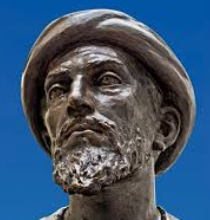
The portion of the materia prima which is... is endowed with the intellectual faculty, possesses a special property by which each individual, according to the degree of his perfection, is enabled to manage, to calculate, and to discover what is conducive both to the temporary existence of the individual and to the preservation of the species. All other movements... by the individual members of the species are due to accident; they are not, according to Aristotle, the result of rule and management... Aristotle sees no difference between the falling of a leaf or a stone and the death of the good and noble people in the ship; nor does he distinguish between the destruction of a multitude of ants by an ox depositing on them his excrement and the death of worshippers killed by the fall of the house when its foundations give way.
▼
Source
Ch.17
3 months 3 weeks ago
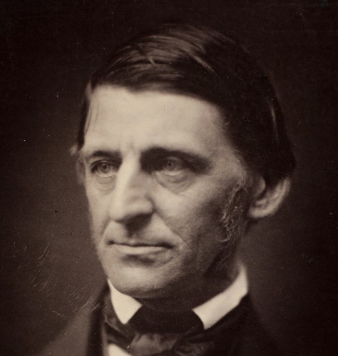
Nothing can be preserved that is not good.
▼
Source
Books
3 months 3 weeks ago
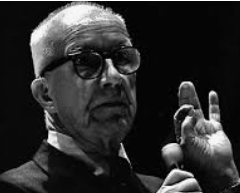
War is obsolete. It could never have been done before. Only ten years ago... technology reached the point where it could be done. Since then the invisible technological-capability revolution has made it ever easier so to do.
3 months 3 weeks ago
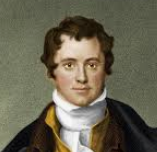
Have and at all justified the hope that they would facilitate the means of procuring the comforts and conveniences of life? I have not the time... to attempt to follow the many changes in the metallurgy of the metals of the alkalis of the past century. Let me... show how the matter stands at the end of a hundred years.

3 months 3 weeks ago
Without Justice, no realm may prosper.
3 months 3 weeks ago
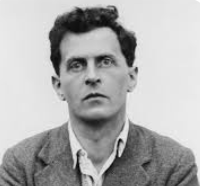
A tautology's truth is certain, a proposition's possible, a contradiction's impossible. (Certain, possible, impossible: here we have the first indication of the scale that we need in the theory of probability.) (4.464)
▼
Source
Original German: Die Wahrheit der Tautologie ist gewiss, des Satzes möglich, der Kontradiktion unmöglich
3 months 3 weeks ago
Actions are divided as regards their object into four classes; they are either purposeless, unimportant, or vain, or good.
▼
Source
Ch.25
3 months 3 weeks ago
Language is a city to the building of which every human being brought a stone; yet he is no more to be credited with the grand result than the acaleph which adds a cell to the coral reef which is the basis of the continent.
▼
Source
Quotation and Originality
3 months 3 weeks ago
I do not look upon human beings as good or bad. I don't think of my feet as a right foot and a wrong foot. ... I am a student of the effectiveness of the technological evolution in its all unexpected alterations of the preoccupations of humanity and in its all unexpected alterings of human behaviors and prospects.
3 months 3 weeks ago
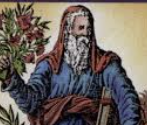
If the potential of every number is in the monad, then the monad would be intelligible number in the strict sense, since it is not yet manifesting anything actual, but everything conceptually together in it.
▼
Source
On the Monad
3 months 3 weeks ago
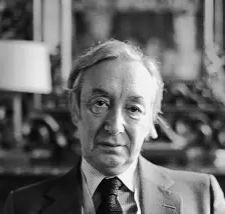
He was the antithesis of the philosopher of mystery and intimation, and he was not tempted to technicality. He lived assertively and was vain and cocksure — at some cost to his philosophical reputation, since other philosophers were as human in their judgements on him. He was also honest, humane, and more or less on the Left in politics. He liked society, was a man of many women, came to be self-judging, and after some sadness died bravely, on 27 June 1989.
▼
Source
Ted Honderich, in [http://www.ucl.ac.uk/~uctytho/AyerbyTH.html "A. J. Ayer's Philosophy and its Greatness"], his introduction to A. J. Ayer : Writings on Philosophy (2004).
3 months 3 weeks ago
Materials are indifferent, but the use which we make of them is not a matter of indifference.
▼
Source
Book II, ch. 5, § 1
3 months 3 weeks ago
I have often admired the mystical way of Pythagoras, and the secret Magic of numbers.
▼
Source
Thomas Browne, in Religio Medici (1642), Section 12
3 months 3 weeks ago
The seeds of heavenly bodies are deposited and cared for in the Milky Way, from which they emanate in swarms of comets that travel a ;long time and ordinarily gravitate towards various suns before becoming fixed in orbit.
▼
Source
L'attraction passioneé
3 months 3 weeks ago
Frazer is much more savage than most of his savages, for they are not as far removed from the understanding of spiritual matter as a twentieth-century Englishman. His explanations of primitive practices are much cruder than the meaning of these practices themselves.
▼
Source
Ch. 7 : Remarks on Frazer's Golden Bough, p. 131
3 months 3 weeks ago
Almighty God the Father is the one who can be prayed to, and prayed to for help, both for eternal life and – above all – for the needs and desires of this earthly life. It is therefore not surprising that religions continue to thrive, particularly in those parts of the world and among those sections of the population that feel the harshness of existence most acutely. In this sense, Karl Marx's old definition of religion as the opium of the people and the groaning of the oppressed creature is still valid, and is necessarily expressed precisely through the image of Almighty God the Father. The picture is completely different among the educated classes. Since the Enlightenment, since the days of Reimarus and Lessing, historical criticism and philological analysis have destroyed that image, as they have dismantled the supernatural claim of the Bible, the foundation of that image throughout our world, through Judaism, Christianity, and Islam. From this perspective, God is truly dead, as in Nietzsche's famous passage, and the fact that businesspeople have not noticed this does not detract from the fact itself: the biblical God died the moment people realized that they themselves had constructed his image.
3 months 3 weeks ago
Heroism feels and never reasons and therefore is always right.
▼
Source
Heroism
3 months 3 weeks ago
Those who, like the present writer, never had the privilege of meeting Sidgwick can infer from his writings, and still more from the characteristic philosophic merits of such pupils of his as McTaggart and Moore, how acute and painstaking a thinker and how inspiring a teacher he must have been. Yet he has grave defects as a writer which have certainly detracted from his fame. His style is heavy and involved, and he seldom allowed that strong sense of humour, which is said to have made him a delightful conversationalist, to relieve the uniform dull dignity of his writing. He incessantly refines, qualifies, raises objections, answers them, and then finds further objections to the answers. Each of these objections, rebuttals, rejoinders, and surrejoinders is in itself admirable, and does infinite credit to the acuteness and candour of the author. But the reader is apt to become impatient; to lose the thread of the argument: and to rise from his desk finding that he has read a great deal with constant admiration and now remembers little or nothing. The result is that Sidgwick probably has far less influence at present than he ought to have, and less than many writers, such as Bradley, who were as superior to him in literary style as he was to them in ethical and philosophical acumen. Even a thoroughly second-rate thinker like T. H. Green, by diffusing a grateful and comforting aroma of ethical "uplift", has probably made far more undergraduates into prigs than Sidgwick will ever make into philosophers.
▼
Source
From Five Types of Ethical Theory (1930)
3 months 3 weeks ago
Most men's conscience, habits, and opinions are borrowed from convention and gather continual comforting assurances from the same social consensus that originally suggested them.
▼
Source
Ch. VIII: Ideal Society
3 months 3 weeks ago
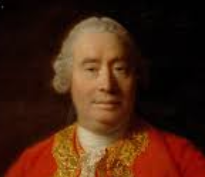
Next to the ridicule of denying an evident truth, is that of taking much pains to defend it; and no truth appears to me more evident, than that beasts are endow'd with thought and reason as well as men. The arguments are in this case so obvious, that they never escape the most stupid and ignorant.
▼
Source
Part 3, Section 16
3 months 3 weeks ago
It is the act of an ill-instructed man to blame others for his own bad condition; it is the act of one who has begun to be instructed, to lay the blame on himself; and of one whose instruction is completed, neither to blame another, nor himself. (5) [tr. George Long (1888)].
3 months 3 weeks ago
According to the account of Proclus (Book II. c. 4 ), Pythagoras was the first who gave to Geometry the form of a deductive science, by shewing the connexion of the geometrical truths then known, and their dependence on certain first principles. ...The traditionary account, that Pythagoras was the founder of scientific mathematics, is in some degree, supported by the statement of Diogenes Laertius, that he was chiefly occupied with the consideration of the properties of number, weight, and extension, besides music and astronomy. The passage of Cicero (De Nat. Deor. III. 36) may be referred to as evidence that later writers were unable to give any precise account of the mathematical discoveries of Pythagoras. To Pythagoras, however, is attributed the discovery of some of the most important elementary properties contained in the first book of Euclid's Elements. The very important truth contained in Prop. 47, Book I. is also ascribed to Pythagoras. ...Proclus attributes to him the discovery of that right-angled triangle, the three sides of which are respectively 3, 4, and 5 units. To Pythagoras also belongs the discovery, that there are only three kinds of regular polygons which can be placed so as to fill up the space round a point; namely, six equilateral triangles, four squares, and three regular hexagons. Proclus attributes to him the doctrine of incommensurables, and the discovery of the five regular solids, which, if not due to Pythagoras, originated in his school. In Astronomy he is reputed to have held, that the Sun is the centre of the system, and that the planets revolve round it. This has been called, from his name, the Pythagorean System, which was revived by Copernicus, A.D.1541, and proved by Newton.
▼
Source
Robert Potts, [https://books.google.com/books?id=GLZjAAAAcAAJ&pg=PR3 Euclid's Elements of Geometry] (1845) Introduction pp. iii-iv
3 months 3 weeks ago
If I have exhausted the justifications, I have reached bedrock and my spade is turned. Then I am inclined to say: "This is simply what I do."
▼
Source
§ 217
3 months 3 weeks ago
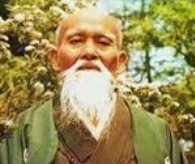
Kicking leaves you momentarily on one foot, and for that moment you are in a very weak position. If you were to be swept off your feet, you would be finished. This is why lifting your feet off the ground is crazy.
▼
Source
As quoted in Aikido Shugyo (1991) by Gōzō Shioda, p. 79
3 months 3 weeks ago
In order to learn the important lessons in life, one must each day surmount to fear.
▼
Source
There are ongoing disputes on who should receive credit for this quote. The earliest match that could be found was in an article published by Los Angeles Times in 1936, which attributed the quote to Elbert Hubbard, but the evidence was weak as he died in
3 months 3 weeks ago
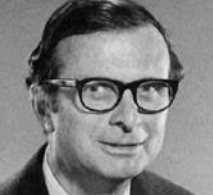
The problem of systems improvement is the problem of the 'ethics of the whole system'.
▼
Source
p. 4
3 months 3 weeks ago
There is no cure for birth and death save to enjoy the interval.
▼
Source
"War Shrines"
3 months 3 weeks ago
In vain, therefore, should we pretend to determine any single event, or infer any cause or effect, without the assistance of observation and experience.
▼
Source
§ 4.11
3 months 3 weeks ago
Scholastic skeptics, as well as ignorant materialists, have greatly amused themselves for the last two centuries over the absurdities attributed to Pythagoras by his biographer, Iamblichus. The Samian philosopher is said to have persuaded a she-bear to give up eating human flesh; to have forced a white eagle to descend to him from the clouds, and to have subdued him by stroking him gently with the hand, and by talking to him. On another occasion, Pythagoras actually persuaded an ox to renounce eating beans, by merely whispering in the animal's ear! (Iamblichus: "De Vita Pythag.") Oh, ignorance and superstition of our forefathers, how ridiculous they appear in the eyes of our enlightened generations! Let us, however, analyze this absurdity. Every day we see unlettered men, proprietors of strolling menageries, taming and completely subduing the most ferocious animals, merely by the power of their irresistible will... Every one has either witnessed or heard of the seemingly magical power of some mesmerizers and psychologists. They are able to subjugate their patients for any length of time. Regazzoni, the mesmerist who excited such wonder in France and London, has achieved far more extraordinary feats than what is above attributed to Pythagoras. Why, then, accuse the ancient biographers of such men as Pythagoras and Apollonius of Tyana of either wilful misrepresentation or absurd superstition?
▼
Source
p.284.
3 months 3 weeks ago
Reading the Socratic dialogues one has the feeling: what a frightful waste of time! What's the point of these arguments that prove nothing and clarify nothing?
▼
Source
p. 14e
3 months 3 weeks ago
When an opponent comes forward, move in and greet him; if he wants to pull back, send him on his way.
3 months 3 weeks ago
Emerson's prose is full of poetry, and his poems are light and air. ... His modes of expression, like his epithets, are imaginative.
▼
Source
Edmund Clarence Stedman, Poets of America (1885), pp. 134 & 164
3 months 3 weeks ago
I am often inclined to put the implementation questions first, ie, "Can anything be changed?" Should the implementation question not accompany the whole process from its very beginning to its very end?
▼
Source
C. West Churchman (1979, p. 21) as cited in: Interfaces (1982) Vol 12, p. 12
3 months 3 weeks ago
I leave you but the sound of many a wordIn mocking echoes haply overheard,I sang to heaven. My exile made me free,from world to world, from all worlds carried me.
▼
Source
[http://www.poemhunter.com/poem/the-poet-s-testament/ The Poet's Testament]
3 months 3 weeks ago
It is, therefore, a just political maxim, that every man must be supposed a knave: Though at the same time, it appears somewhat strange, that a maxim should be true in politics, which is false in fact. But to satisfy us on this head, we may consider, that men are generally more honest in their private than in their public capacity, and will go greater lengths to serve a party, than when their own private interest is alone concerned. Honour is a great check upon mankind: But where a considerable body of men act together, this check is, in a great measure, removed; since a man is sure to be approved of by his own party, for what promotes the common interest; and he soon learns to despise the clamours of adversaries.
▼
Source
Part I, Essay 6: Of The Independency of Parliament; first line often paraphrased as "It is a just political maxim, that every man must be supposed a knave."
3 months 3 weeks ago
Religion is, as it were, the calm bottom of the sea at its deepest point, which remains calm however high the waves on the surface may be.
▼
Source
p. 53e

3 months 3 weeks ago
Why must I forever lose, forever forgo profit that is my due,Sunk in the gloom of evenings past, no plans for the morrow pursue.Why must I all attentive be to the nightingale's lament?Friend, am I as dumb as a flower? Must I remain silent?My theme makes me bold, makes my tongue more eloquent.Dust be in my mouth, against Allah I make complaint.
▼
Source
[https://archive.org/details/ShikwaJawabIShikwaIqbalsDialogueWithAllahTrKhushwantSinghIqbal Shikwa and Jawab-i-Shikwa (Complaint and Answer): Iqbal's Dialogue with Allah], translated by Khushwant Singh, p. 28. | Variant:"Why would I become a loss-causer,
3 months 3 weeks ago
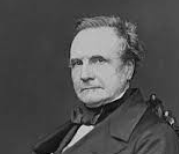
The Church has been reproached with endeavouring to appropriate to itself all those professorships in our Universities which are connected with science: it is however certain that the larger portion of these ill-remunerated offices have been filled by clergymen.
▼
Source
p. 225
3 months 3 weeks ago
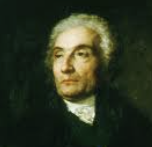
Too many French scholars were the principal authors of the Revolution, too many approved and gave their support so long as the Revolution, like Tarquinius' sceptre, struck down only the tallest heads. Like so many others, they said, It is impossible to make a great revolution without incurring misfortunes. But when a philosopher justifies evil by the end in view, when he says in his heart, Let there be a hundred thousand murders, provided we are free, and Providence replies, I accept your offer, but you must be included in the number, where is the injustice?
▼
Source
Chapter II, pp. 9–10
3 months 3 weeks ago
In a word, CLEANTHES, a man who follows your hypothesis is able perhaps to assert, or conjecture, that the universe, sometime, arose from something like design: but beyond that position he cannot ascertain one single circumstance; and is left afterwards to fix every point of his theology by the utmost license of fancy and hypothesis. This world, for aught he knows, is very faulty and imperfect, compared to a superior standard; and was only the first rude essay of some infant deity, who afterwards abandoned it, ashamed of his lame performance: it is the work only of some dependent, inferior deity; and is the object of derision to his superiors: it is the production of old age and dotage in some superannuated deity; and ever since his death, has run on at adventures, from the first impulse and active force which it received from him. You justly give signs of horror, DEMEA, at these strange suppositions; but these, and a thousand more of the same kind, are CLEANTHES's suppositions, not mine. From the moment the attributes of the Deity are supposed finite, all these have place. And I cannot, for my part, think that so wild and unsettled a system of theology is, in any respect, preferable to none at all.
▼
Source
Philo to Demea, Part V
3 months 3 weeks ago
He was like an atomic bomb, a tornado — people don't appreciate that.
▼
Source
W. A. Hijab, a student of Wittgenstein, as quoted in Autism and Creativity : Is there a link between autism in men and exceptional ability? (2004) by Michael Fitzgerald, p. 93

3 months 3 weeks ago
The history of human thought recalls the swinging of a pendulum which takes centuries to swing. After a long period of slumber comes a moment of awakening. Then thought frees herself from the chains with which those interested — rulers, lawyers, clerics — have carefully enwound her. She shatters the chains. She subjects to severe criticism all that has been taught her, and lays bare the emptiness of the religious political, legal, and social prejudices amid which she has vegetated. She starts research in new paths, enriches our knowledge with new discoveries, creates new sciences. But the inveterate enemies of thought — the government, the lawgiver, and the priest — soon recover from their defeat. By degrees they gather together their scattered forces, and remodel their faith and their code of laws to adapt them to the new needs.
▼
Source
[http://dwardmac.pitzer.edu/anarchist_Archives/kropotkin/AM/anarchist_moralitytc.html Anarchist Morality] (1890)
3 months 3 weeks ago
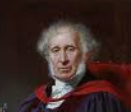
Jesus will take me safe trough... I shall see Jesus, who created all things, Jesus, who made the worlds; I shall see Him as He is;... Yes; I have had the Light for many years, and Oh! how bright it is! I feel SO SAFE, SO SATISFIED.
▼
Source
His last words, as quoted in The Home Life of Sir David Brewster (2010), by his daughter, Margaret Maria Gordon. Cambridge University Press. Chapter XXI.
3 months 3 weeks ago
Wherever an altar is found, there civilization exists.
▼
Source
Original text:Partout où vous verrez un autel, là se trouve la civilisation. | "Second Dialogue," p. 44
3 months 3 weeks ago
As man does not live in a solitary state, habits and feeling develop within him which are useful for the preservation of society and the propagation of the race. Without social feelings and usages life in common would have been absolutely impossible. It is not law which has established them; they are anterior to all law. Neither is it religion which has ordained them; they are anterior to all religions. They are found amongst all animals living in society. They are spontaneously developed by the new nature of things, like those habits in animals which men call instinct. They spring from a process of evolution, which is useful, and, indeed, necessary, to keep society together in the struggle it is forced to maintain for existence.
▼
Source
II

3 months 3 weeks ago
Thales said there was no difference between life and death. "Why, then," said some one to him, "do not you die?" "Because," said he, "it does make no difference."
▼
Source
Thales, 9.
3 months 3 weeks ago
Maistre attached the highest importance to the ‘philosophy of style,’ and averred that he who knew not how to write was incapable of metaphysics. The violence that pervades his thought and rhetoric is a response to the primal experience of the ‘terrible truth of evil,’ while his style incarnates his sense of the mystery of history. By conveying his thought in what Baudelaire called ‘rockets,’ Maistre provoked his readers into a state of fascination and shock.
▼
Source
Carolina Armenteros, "Epilogue: the forced inhabitant of history" in The New Enfant du Siècle: Joseph de Maistre as a Writer (2010), p. 101–102
3 months 3 weeks ago
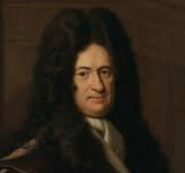
The love of God consists in an ardent desire to procure the general welfare, and reason teaches me that there is nothing which contributes more to the general welfare of mankind than the perfection of reason.
▼
Source
Closing sentence of the Preface to the general science (1677) (in P. Wiener (ed.), Leibniz Selections, Macmilland Press Ltd, 1951).
3 months 3 weeks ago
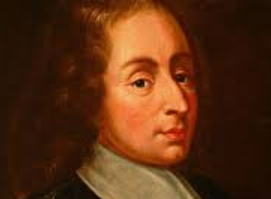
Whilst in speaking of human things, we say that it is necessary to know them before we can love them...the saints on the contrary say in speaking of divine things that it is necessary to love them in order to know them, and that we only enter truth through charity.
3 months 3 weeks ago
To apply oneself to great inventions, starting from the smallest beginnings, is no task for ordinary minds; to divine that wonderful arts lie hid behind trivial and childish things is a conception for superhuman talents.
CivilSimian.com created by AxiomaticPanic, CivilSimian, Kalokagathia