
3 months 3 weeks ago
Look round this universe. What an immense profusion of beings, animated and organised, sensible and active! You admire this prodigious variety and fecundity. But inspect a little more narrowly these living existences, the only beings worth regarding. How hostile and destructive to each other! How insufficient all of them for their own happiness! How contemptible or odious to the spectator! The whole presents nothing but the idea of a blind Nature, impregnated by a great vivifying principle, and pouring forth from her lap, without discernment or parental care, her maimed and abortive children!
▼
Source
Philo to Cleanthes, Part XI
3 months 3 weeks ago
I began by asking whether Wittgenstein was a spiritual genius. That question really has two parts: was he the spiritually sublime individual – the ‘saint’ – people often said he was? And did he know how to be such an individual, whether or not he was one himself? I think the answer must be no to both questions. His vanity, emotional solipsism and coldness put him well outside the category of the saint; and his engineering (or surgical) approach to his spiritual condition seems to me wrongly conceived, embodying as it does a deep mistake of ethical attention. But a better question might be this: given his nature, did he live a noble and ethically distinguished life? (He clearly lived an impressive and remarkable one.) Here I think we must do him the courtesy of taking him at his word and not allow our natural sentimentality about great men to get in the way of hearing what he actually says about himself. Of Moore's reputation for saintly childlike innocence, Wittgenstein remarked: ‘I can’t understand that, unless it’s also to a child’s credit. For you aren’t talking of the innocence a man has fought for, but of an innocence which comes from a natural absence of temptation.’ If we take seriously Wittgenstein's own repeated assessment of himself as ‘rotten’ and ‘indecent’, as having a ‘wicked heart’ – in whatever way these epithets were meant – then it becomes clear why he regarded his life as a mighty struggle with himself, and what he had to overcome to achieve the moral standing he did. His peculiar greatness comes from that agonising battle between his natural hubris and the humility he craved, between his compulsive devotion to himself and his willed concern for others. The singularity of his spiritual achievement consists in this strained amalgamation of aggressive megalomania and abject self-mortification. Somehow this battle brought something spiritually valuable into the world that had not been there before: an ability, we might say, to attend religiously to the face of another human being – but to do so as if this were the strangest and most impossible thing in the world to achieve.
▼
Source
Colin McGinn, "My Wicked Heart", London Review of Books (22 November 1990)

3 months 3 weeks ago
You know how I always believe in the future … Without disorder, the revolution is impossible; knowing that, I did not lose hope, and I do not lose it now.
▼
Source
Letter to a friend (November 1920), as quoted in Peter Kropotkin : From Prince to Rebel (1990) by George Woodcock and Ivan Avakumovic, p. 428
3 months 3 weeks ago
Trained in a less severe school than that of geometry and physics, his reasonings are almost always loose and inconclusive. His generalizations seem to have been reached before he had obtained the materials upon which he rests them: His facts, though frequently new and interesting, are often little more than conjectures; and the grand phenomena of the world of life, and instinct, and reason, which other minds have woven into noble and elevating truths, have thus become in Mr. Darwin's hands the basis of a dangerous and degrading speculation.
▼
Source
Referring to Charles Darwin
3 months 3 weeks ago
The first among the sciences is that of statesmanship. That cannot be learnt in academies. No great minister, from Suger to Richelieu, ever occupied himself with physics or mathematics. The genius of the natural sciences makes impossible that other kind of genius, which is a talent unto itself.
▼
Source
"Eighth Dialogue," p. 297–298
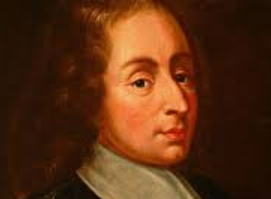
3 months 3 weeks ago
In order to enter into a real knowledge of your condition, consider it in this image: A man was cast by a tempest upon an unknown island, the inhabitants of which were in trouble to find their king, who was lost; and having a strong resemblance both in form and face to this king, he was taken for him, and acknowledged in this capacity by all the people.
3 months 3 weeks ago
Take any work on astronomy of the last century, or the beginning of ours. You will no longer find in it, it goes without saying, our tiny planet placed in the center of the universe. But you will meet at every step the idea of a central luminary — the sun — which by its powerful attraction governs our planetary world. From this central body radiates a force guiding the course of the planets, and maintaining the harmony of the system. Issued from a central agglomeration, planets have, so to say, budded from it; they owe their birth to this agglomeration; they owe everything to the radiant star that represents it still: the rhythm of their movements, their orbits set at wisely regulated distances, the life that animates them and adorns their surfaces. And when any perturbation disturbs their course and makes them deviate from their orbits, the central body re-establishes order in the system; it assures and perpetuates its existence.This conception, however, is also disappearing as the other one did. After having fixed all their attention on the sun and the large planets, astronomers are beginning to study now the infinitely small ones that people the universe. And they discover that the interplanetary and interstellar spaces are peopled and crossed in all imaginable directions by little swarms of matter, invisible, infinitely small when taken separately, but all-powerful in their numbers.

3 months 3 weeks ago
Solon gave the following advice: "Consider your honour, as a gentleman, of more weight than an oath. Never tell a lie. Pay attention to matters of importance."
▼
Source
Solon, 12.
3 months 3 weeks ago
[Maistre] fulminated as a littérateur, even as a grammarian, and his frenzies not only failed to diminish his passion for the correct and elegant formulation but augmented it even more. An epileptic temperament infatuated with the trifles of the Word: trances and boutades, convulsions and bagatelles, grace and a foaming mouth – everything combined to compose a pamphleteering universe at whose heart he harried ‘error’ with blows of invective, those ultimatums of impotence.
▼
Source
Emil Cioran, "Joseph de Maistre: An Essay on Reactionary Thought" in Anathemas and Admirations (1987), p. 70
3 months 3 weeks ago
A doubtful balance is made between truth and pleasure, and... the knowledge of one and the feeling of the other stir up a combat the success of which is very uncertain, since, in order to judge of it, it would be necessary to know all that passes in the innermost spirit of the man, of which man himself is scarcely ever conscious.
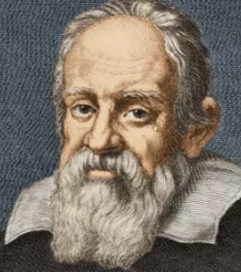
3 months 3 weeks ago
The sun, with all those planets revolving around it and dependent on it, can still ripen a bunch of grapes as if it had nothing else in the universe to do.
▼
Source
Loose paraphrase of Salviati on [http://law2.umkc.edu/faculty/projects/ftrials/galileo/dialogue3.html Day 3]: "For when the sun draws up some vapors here, or warms a plant there, it draws these and warms this as if it had nothing else to do. Even in ripen

3 months 3 weeks ago
Transcendence constitutes selfhood.
▼
Source
Essence of Ground (1929)
3 months 3 weeks ago
The State is only one of the forms assumed by society in the course of history. Why then make no distinction between what is permanent and what is accidental?
▼
Source
I
3 months 3 weeks ago
There is a written and an unwritten law. The one by which we regulate our constitutions in our cities is the written law; that which arises from customs is the unwritten law.
▼
Source
Plato, 51.
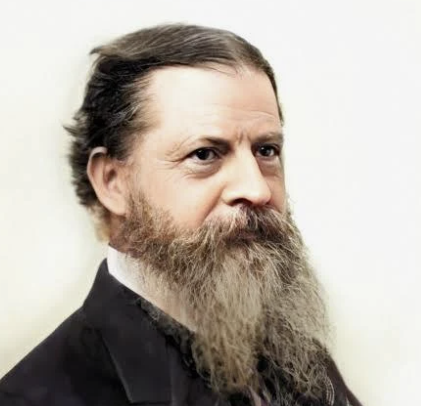
3 months 3 weeks ago
Now, to say that a lot of objects is finite, is the same as to say that if we pass through the class from one to another we shall necessarily come round to one of those individuals already passed; that is, if every one of the lot is in any one-to-one relation to one of the lot, then to every one of the lot some one is in this same relation.
3 months 3 weeks ago
Man infinitely surpasses man.
▼
Source
Pope Paul VI, [http://www.vatican.va/content/paul-vi/en/encyclicals/documents/hf_p-vi_enc_26031967_populorum.html
3 months 3 weeks ago
For anyone who at the end of Western philosophy can and must still question philosophically, the decisive question is no longer merely “What basic character do beings manifest?” or “How may the being of beings be characterized?” but “What is this ‘being’ itself?” The decisive question is that of “the meaning of being,” not merely that of the being of beings.
▼
Source
p. 18
3 months 3 weeks ago
While science devotes its chief attention to industrial pursuits, a limited number of lovers of nature and a legion of workers... unknown to posterity have created of late a quite new agriculture, as superior to modern farming, as farming is superior to the old three fields system of our ancestors. Science seldom guided them, and sometimes misguided... they proceeded in the empirical way; but... they have opened a new field of experimental research for the physiology of plants. They have created a totally new agriculture. They smile when we boast about the rotation system having permitted us to take from the field one crop every year, or four crops every three years, because their ambition is to have 6 and 9 crops from the very same plot of land during the twelve months. They do not understand our talk about good and bad soils because they make the soils themselves, and make it in such quantities as to be compelled yearly to sell some of it: otherwise it would raise up the level of their gardens by half an inch every year. They aim at cropping not 5 or 6 tons of grass on the acre, as we do, but from 50 to 100 tons of various vegetables on the same space; not £5 worth of hay but £100 worth of vegetables, of the plainest description, cabbage and carrots, and more than £200 worth under intensive horticultural treatments. This is where agriculture is going now.
3 months 3 weeks ago
When asked what he would take to let a man give him a blow on the head, he said, "A helmet."
▼
Source
Diogenes, 6.

3 months 3 weeks ago
Reason and Revolution, Hegel and the Rise of Social Theory, Herbert Marcuse, London Routledge & Kegan Paul LTD 2nd edition 1941, reprinted 1955
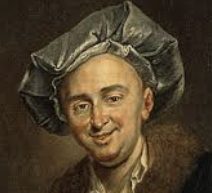
3 months 3 weeks ago
The human body is a machine which winds its own springs.
3 months 3 weeks ago
In the case of colors, there is a tridimensional spread of feelings. Originally all feelings may have been connected in the same way, and the presumption is that the number of dimensions was endless. For development essentially involves a limitation of possibilities. But given a number of dimensions of feeling, all possible varieties are obtainable by varying the intensities of the different elements.
3 months 3 weeks ago
The Preservationist holds that, to save others from suffering truly serious losses, like the loss of life or limb, often it's wrong to lie, and to cheat, and to steal, even though nobody will ever suffer much from your doing any of that. By contrast, the Liberationist holds that, when necessary to lessen serious suffering, then, provided nobody suffers seriously in consequence of your so doing, it's always morally good to do all those unruly things and more.
▼
Source
p. 13
3 months 3 weeks ago
Just step aside for me to enjoy the sunshine.
▼
Source
Actually said by his namesake Diogenes of Sinope, when asked by Alexander the Great if there was anything he wanted. | Plutarch, Parallel Lives, "Alexander", ch. 14, section 4.
3 months 3 weeks ago
Sociology does not ‘negate’ philosophy, in the sense of taking over the hidden content of philosophy and carrying it into social theory and practice, but sets itself up as a realm apart from philosophy, with a province and truth of its own. Comte is rightly held to be the inaugurator of this separation between philosophy and sociology. P. 375
3 months 3 weeks ago
The last chapter... bears the title, " Narratives which prove that all Ideas are derived from the Senses." ...Everywhere the consequence is drawn that only the education he receives through the senses makes man man, and gives him what we call the soul, while no development of the mind from within outwards ever takes place.
3 months 3 weeks ago
Philosophy, as I understand the word, is a positive theoretical science, and a science in an early stage of development. As such it has no more to do with belief than any other science. Indeed, I am bound to confess that it is at present in so unsettled a condition, that if the ordinary theorems of molecular physics and of archaeology are but the ghosts of beliefs, then to my mind, the doctrines of the philosophers are little better than the ghosts of ghosts. I know this is an extremely heretical opinion.
▼
Source
Lecture II : The Universal Categories, §3. Laws: Nominalism, CP 5.61
3 months 3 weeks ago
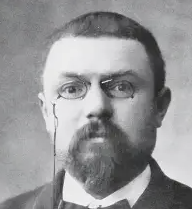
One evening, contrary to my custom, I drank black coffee and could not sleep. Ideas rose in crowds; I felt them collide until pairs interlocked, so to speak, making a stable combination. But the next morning ... I had only to write out the results, which took but a few hours. ... Just at this time I left Caen, where I was then living, to go on a geological excursion under the auspices of the school of mines. The changes of travel made me forget my mathematical work. Having reached Coutances, we entered an omnibus to go some place or other. At the moment when I put my foot on the step the idea came to me, without anything in my former thoughts seeming to have paved the way for it, that the transformations I had used to define the Fuchsian functions were identical with those of non-Euclidean geometry. I did not verify the idea; I should not have had time, as, upon taking my seat in the omnibus, I went on with a conversation already commenced, but I felt a perfect certainty. On my return to Caen, for conscience’ sake I verified the result at my leisure. ... Most striking at first is this appearance of sudden illumination, a manifest sign of long, unconscious prior work. The rôle of this unconscious work in mathematical invention appears to me incontestable ... Often when one works at a hard question, nothing good is accomplished at the first attack. Then one takes a rest, longer or shorter, and sits down anew to the work. During the first half-hour, as before, nothing is found, and then all of a sudden the decisive idea presents itself to the mind.
▼
Source
Poincaré, Henri. "Mathematical creation." The Monist (1910): 321-335. Translated from the French by George Bruce Halsted.
3 months 3 weeks ago
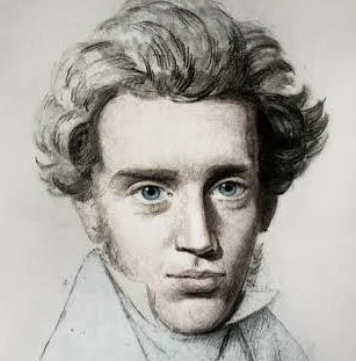
In vain do individual great men seek to mint new concepts and to set them in circulation — it is pointless. They are used for only a moment, and not by many, either, and they merely contribute to making the confusion even worse, for one idea seems to have become the fixed idea of the age: to get the better of one's superior. If the past may be charged with a certain indolent self-satisfaction in rejoicing over what it had, it would indeed be a shame to make the same charge against the present age (the minuet of the past and the gallop of the present). Under a curious delusion, the one cries out incessantly that he has surpassed the other, just as the Copenhageners, with philosophic visage, go out to Dyrehausen "in order to see and observe," without remembering that they themselves become objects for the others, who have also gone out simply to see and observe. Thus there is the continuous leap-frogging of one over the other — "on the basis of the immanent negativity of the concept", as I heard a Hegelian say recently, when he pressed my hand and made a run preliminary to jumping. — When I see someone energetically walking along the street, I am certain that his joyous shout, "I am coming over," is to me — but unfortunately I did not hear who was called (this actually happened); I will leave a blank for the name, so everyone can fill in an appropriate name.
▼
Source
Journals IA 328, 1835
3 months 3 weeks ago
The refraction of light agrees with the grand principle that Nature always uses the simplest means to accomplish its effects. From this principle, can be derived whenever light passes from one medium to another, the ratio of the sine of the angle of refraction to the sine of the angle of refraction equals the inverse ratio of the speeds at which light moves in each medium.But this "budget", this expense of action that Nature minimizes in the refraction of light, is it also minimized in the direct propagation and reflection of light? Yes, it always has the smallest possible value.
3 months 3 weeks ago
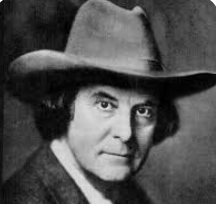
I AM an Anarchist. All good men are Anarchists. All cultured, kindly men; all gentlemen; all just men are Anarchists. Jesus was an Anarchist. A Monarchist is one who believes a monarch should govern. A Plutocrat believes in the rule of the rich. A Democrat holds that the majority should dictate. An Aristocrat thinks only the wise should decide; while an Anarchist does not believe in government at all. Richard Croker is a Monarchist; Mark Hanna a Plutocrat; Cleveland a Democrat; Cabot Lodge an Aristocrat; William Penn, Henry D. Thoreau, Bronson Alcott and Walt Whitman were Anarchists. An Anarchist is one who minds his own business. An Anarchist does not believe in sending warships across wide oceans to kill brown men, and lay waste rice fields, and burn the homes of people who are fighting for liberty. An Anarchist does not drive women with babes at their breasts and other women with babes unborn, children and old men into the jungle to be devoured by beasts or fever or fear, or die of hunger, homeless, unhouseled and undone. Destruction, violence, ravages, murder, are perpetrated by statute law.
3 months 3 weeks ago
The tangible source of exploitation disappears behind the façade of objective rationality.
▼
Source
p. 32
3 months 3 weeks ago
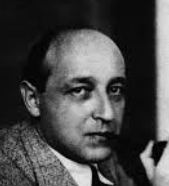
A modern theory of knowledge which takes account of the relational as distinct from the merely relative character of all historical knowledge must start with the assumption that there are spheres of thought in which it is impossible to conceive of absolute truth existing independently of the values and position of the subject and unrelated to the social context. Even a god could not formulate a proposition on historical subjects like 2 x 2 = 4, for what is intelligible in history can be formulated only with reference to problems and conceptual constructions which themselves arise in the flux of historical experience.
3 months 3 weeks ago
Beyond doubt ... he was one of the most original minds of the later nineteenth century and certainly the greatest American thinker ever.
▼
Source
Bertrand Russell, Wisdom of the West (1959), p. 276
3 months 3 weeks ago
Have we really the right to speak of the cause of a phenomenon?
3 months 3 weeks ago
The tyrant dies and his rule is over; the martyr dies and his rule begins.
▼
Source
1848
3 months 3 weeks ago
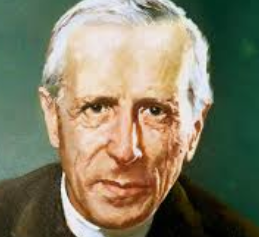
If THIS book is to be properly understood, it must be read not as a work on metaphysics, still less as a... theological essay, but purely and simply as a scientific treatise.
3 months 3 weeks ago
I have no perfect panacea for human ills. And even if I had I would not attempt to present a system of philosophy between the soup and fish, but this much I will say: The distinctively modern custom of marital bundling is the doom of chivalry and death of passion. It wears all tender sentiment to a napless warp, and no wonder is it that the novelist, without he has a seared and bitter heart, hesitates to follow the couple beyond the church door. There is no greater reproach to our civilization than the sight of men joking the boy whose heart is pierced by the first rays of a life-giving sun, or of our expecting a girl to blush because she is twice God's child today she was yesterday.
▼
Source
p. 57
3 months 3 weeks ago
The people are led to find in the productive apparatus the effective agent of thought and action to which their personal thought and action can and must be surrendered. And in this transfer, the apparatus also assumes the role of a moral agent. Conscience is absolved by reification.
▼
Source
p. 79
3 months 3 weeks ago
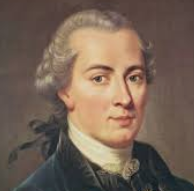
Phenomena of the external sense are examined and set forth in physics; those of the internal sense in empirical psychology. Pure mathematics considers space in geometry and time in pure mechanics. To these is to be added a certain concept, intellectual to be sure in itself, but whose becoming actual in the concrete requires the auxiliary notions of time and space in the successive addition and simultaneous juxtaposition of separate units, which is the concept of number treated in arithmetic.
3 months 3 weeks ago
The question is asked in ignorance, by one who does not even know what can have led him to ask it.
▼
Source
Preface
3 months 3 weeks ago
Nevertheless, among all the temptations I will have to resist today. There would be the temptation of memory: to recount what was for me, and for those of my generation who shared it during a whole lifetime. The experience of Marxism. The quasi-paternal figure of Marx, the way it fought in us with other filiations, the reading of texts and the interpretation of a world in which the Marxist inheritance was-and still remains, and so it will remain-absolutely and thoroughly determinate. One need not be a Marxist or a communist in order to accept this obvious fact. We all live in a world, some would say a culture, that still bears, at an incalculable depth, the mark of this inheritance, whether in a directly visible fashion or not.
▼
Source
Injunctions of Marx
3 months 3 weeks ago
All the communions of a life-time are one communion.All the communions of all men now living are one communion.All the communions of all men, present, past and future, are one communion.
▼
Source
The Divine Milieu, p. 124
3 months 3 weeks ago
Soon shall thy arm, Uɴᴄᴏɴǫᴜᴇʀ'ᴅ Sᴛᴇᴀᴍ! afarDrag the slow barge, or drive the rapid car;Or on wide-waving wings expanded bearThe flying-chariot through the fields of air.—Fair crews triumphant, leaning from above,Shall wave their fluttering kerchiefs as they move;Or warrior-bands alarm the gaping crowd,And armies shrink beneath the shadowy cloud.
▼
Source
[Steam Power], The Botanic Garden (1791), Part i, Canto i, ll. 289-296.
3 months 3 weeks ago
To the degree to which they correspond to the given reality, thought and behavior express a false consciousness, responding to and contributing to the preservation of a false order of facts. And this false consciousness has become embodied in the prevailing technical apparatus which in turn reproduces it.
▼
Source
p. 145
3 months 3 weeks ago
In man (as the only rational creature on earth) those natural capacities which are directed to the use of his reason are to be fully developed only in the race, not in the individual.
▼
Source
Second Thesis
3 months 3 weeks ago
The object of all true Philosophy is to frame a system which shall comprehend human life under every aspect, social as well as individual. It embraces, therefore, the three kinds of phenomena of which our life consists, Thoughts, Feelings, and Actions.
▼
Source
p. 9
3 months 3 weeks ago
You have surely noticed among schoolboys, that the one that is regarded by all as the boldest is the one who has no fear of his father, who dares to say to the others, "Do you think I am afraid of him?" On the other hand, if they sense that one of their number is actually and literally afraid of his father, they will readily ridicule him a little. Alas, in men's fear-ridden rushing together into a crowd (for why indeed does a man rush into a crowd except because he is afraid!) there, too, it is a mark of boldness not to be afraid, not even of God. And if someone notes that there is an individual outside the crowd who is really and truly afraid – not of the crowd, but of God, he is sure to be the target of some ridicule. The ridicule is usually glossed over somewhat and it is said: a man should love God.Yes, to be sure, God knows that man's highest consolation is that God is love and that man is permitted to love Him. But let us not become too forward, and foolishly, yes, blasphemously, dismiss the tradition of our fathers, established by God Himself: that really and truly a man should fear God. This fear is known to the man who is himself conscious of being an individual, and thereby is conscious of his eternal responsibility before God.
▼
Source
Søren Kierkegaard, Purity of Heart, 1847 Steere translation p. 196-197
3 months 3 weeks ago
The 'state' on the modern conception is a legally defined term which refers, at the level of substance, to a state power that possesses both internal and external sovereignty, at the spatial level over a clearly delimited terrain (the state territory) and at the social level over the totality of members (the body of citizens or the people). State power constitutes itself in the forms of positive law, and the people is the bearer of the legal order whose jurisdiction is restricted to the state territory. In political usage, the concepts 'nation' and 'people' have the same extension. But in addition to its legal definition, the term 'nation' has the connotation of a political community shaped by common descent, or at least by a common language, culture, and history. A people becomes a 'nation' in this historical sense only in the concrete form of a particular form of life.
▼
Source
Habermas (1998) The Inclusion of the Other: Studies in Political Theory. Ciaran Cronin and Pablo De Greiff, eds. Cambridge, MA: The MIT Press.
3 months 3 weeks ago
Always act in such a way as to secure the love of your neighbour.
▼
Source
Book XVIII, sec. 44.
CivilSimian.com created by AxiomaticPanic, CivilSimian, Kalokagathia