
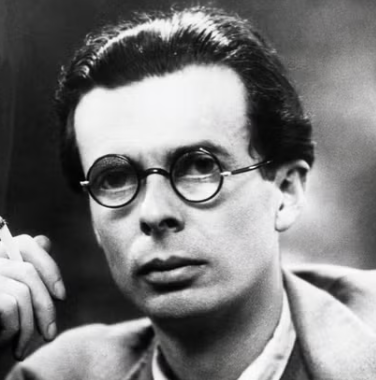
3 months 3 weeks ago
The propagandist's purpose is to make one set of people forget that certain other sets of people are human.
▼
Source
"Words and Behaviour", The Olive Tree (1936)
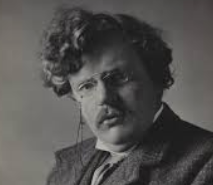
3 months 3 weeks ago
The centre of every man's existence is a dream. Death, disease, insanity, are merely material accidents, like toothache or a twisted ankle. That these brutal forces always besiege and often capture the citadel does not prove that they are the citadel.
▼
Source
Twelve Types (1903) "Sir Walter Scott"
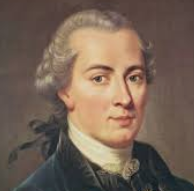
3 months 3 weeks ago
Criticism alone can sever the root of materialism, fatalism, atheism, free-thinking, fanaticism, and superstition, which can be injurious universally; as well as of idealism and skepticism, which are dangerous chiefly to the Schools, and hardly allow of being handed on to the public.
▼
Source
B xxxiv
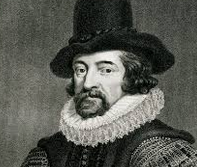
3 months 3 weeks ago
For all knowledge and wonder (which is the seed of knowledge) is an impression of pleasure in itself.
▼
Source
Book I, i, 3
3 months 3 weeks ago
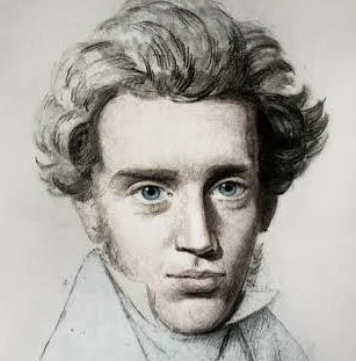
Out of love, God becomes man. He says: Here you see what it is to be a human being; but he adds: Take care, for I am also God — blessed is he who takes no offense at me.
▼
Source
As translated by Howard V. Hong and EdnaH. Hong (1980) | Variant translation; Out of love, God becomes man. He says: "See, here is what it is to be a human being." | p. 161
3 months 3 weeks ago
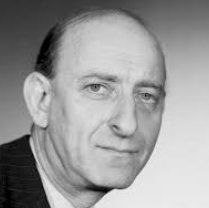
The optimism of the Left was created and maintained by a strong feeling: admiration for the power of reason, certainty that the application of science to industry would revolutionise the order of human society and the condition of its individual members. The ancestral aspiration towards human brotherhood was united with faith in practical science in order to inspire either nationalism or socialism or both.
▼
Source
The Opium of Intellectuals (1955), Conclusion: The End of the Ideological Age?
3 months 3 weeks ago
The more powerful and original a mind, the more it will incline towards the religion of solitude.
3 months 3 weeks ago
It is terrible to contemplate how few politicians are hanged.
▼
Source
In The Cleveland Press (1 March 1921)
3 months 3 weeks ago
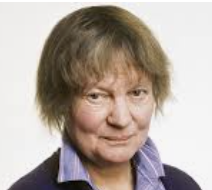
Being good is just a matter of temperament in the end.
▼
Source
The Nice and the Good (1968), ch. 14, p. 127. | Murdoch attributed this opinion to her character Kate Gray. It was not her own.
3 months 3 weeks ago
The universal and lasting establishment of peace constitutes not merely a part, but the whole final purpose and end of the science of right as viewed within the limits of reason.
3 months 3 weeks ago
The cause and root of nearly all evils in the sciences is this — that while we falsely admire and extol the powers of the human mind we neglect to seek for its true helps.
▼
Source
Aphorism 9
3 months 3 weeks ago
My dear reader, read aloud, if possible! If you do so, allow me to thank you for it: if you not only do it yourself, if you also influence others to do it, allow me to thank each one of them, and you again and again! (Preface)
3 months 3 weeks ago
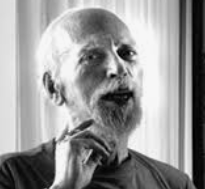
I don't believe anything, but I have many suspicions.
▼
Source
[http://www.rawilson.com/thoughts.html "RAW Thoughts" at rawilson.com]
3 months 3 weeks ago
The Ideal Man of the eighteenth century was the Rationalist; of the seventeenth, the Christian Stoic; of the Renaissance, the Free Individual; of the Middle Ages, the Contemplative Saint. And what is our Ideal Man? On what grand and luminous mythological figure does contemporary humanity attempt to model itself? The question is embarrassing. Nobody knows. And, in spite of all the laudable efforts of the Institute for Intellectual Co-operation to fabricate an acceptable Ideal Man for the use of Ministers of Education, nobody, I suspect, will know until such time as a major poet appears upon the scene with the unmistakable revelation. Meanwhile, one must be content to go on piping up for reason and realism and a certain decency.
▼
Source
p. 5
3 months 3 weeks ago
There is a road from the eye to the heart that does not go through the intellect. Men do not quarrel about the meaning of sunsets; they never dispute that the hawthorn says the best and wittiest thing about the spring.
▼
Source
"A Defence of Heraldry"
3 months 3 weeks ago
I am an investigator by inclination. I feel a great thirst for knowledge and an impatient eagerness to advance, also satisfaction at each progressive step. There was a time when I thought that all this could constitute the honor of humanity, and I despised the mob, which knows nothing about it. Rousseau set me straight. This dazzling excellence vanishes; I learn to honor men, and would consider myself much less useful than common laborers if I did not believe that this consideration could give all the others a value, to establish the rights of humanity.
▼
Source
Part III : Selection on Education from Kant's other Writings, Ch. I Pedagogical Fragments, # 55
3 months 3 weeks ago
My Lord St. Albans said that Nature did never put her precious jewels into a garret four stories high, and therefore that exceeding tall men had ever very empty heads.
▼
Source
No. 17
3 months 3 weeks ago
Probably the strongest influence on Buber's concept of realization, however, was the existentialist philosophy of Soren Kierkegaard. In Kierkegaard's earlier works are found the germ of some of Buber's most important early and later ideas: the direct relation between the individual and God in which the individual addresses God as 'Thou,' the insecure and exposed state of every individual as an individual, the concept of the 'knight of faith' who cannot take shelter in the universal but must constantly risk all in the concrete uniqueness of each new situation, the necessity of becoming a true person before going out to relation, and the importance of realizing one's belief in one's life. These similarities plus Buber's own treatment of Kierkegaard in his mature works make it clear that Kierkegaard is one of the most important single influences on Buber's thought.
▼
Source
Maurice S Friedman, [https://catalog.hathitrust.org/Record/010613987 Buber: a life in dialogue] 1956 p. 35
3 months 3 weeks ago
Many tribal peoples have both all-male and all-female secret societies, which help maintain the cultural values or reality tunnel. Freemasonry is certainly the largest, and probably the oldest, and still the most controversial of the all-male secret societies surviving in our world. No two scholars can even agree on how old it is, much less on how "good" or "evil" it is. … Although Masonry is often denounced as either a political or religious "conspiracy", Freemasons are forbidden to discuss either politics or religion within the lodge. Gary Dryfoos of the Massachusetts Institute of technology, who maintains, always stresses these points and also offers personal testimony that after many years as a Mason, including high ranks, he has not yet been asked to engage in pagan or Satanic rituals or plot for any reason for or against any political party. The more rabid anti-Masons, of course, dismiss such testimony as flat lies. The enemies of Masonry, who are usually Roman Catholics or Fundamentalist Protestants, insist that the rites of the order contain "pagan" elements, e.g., the Yule festival, the Spring Solstice festival, the dead-and-resurrected martyr (Jesus, allegedly historical, to Christians; Hiram, admittedly allegorical, to Masons). All these and many other elements in Christianity and Masonry have a long prehistory in paganism, as documented in the 12 volumes of Sir James George Frazer's Golden Bough. The major offense of Masonry to orthodox churches is that it, like our First Amendment, encourages equal tolerance for all religions, and this tends, somewhat, to lessen dogmatic allegiance to any one religion. Those who insist you must accept their dogma fervently and renounce all others as devilish errors, correctly see this Masonic tendency as inimitable to their faith.
▼
Source
Freemasonry, p. 187; in the final sentence here, inimitable perhaps should be "inimicable"
3 months 3 weeks ago
Facts are ventriloquists' dummies. Sitting on a wise man's knee they may be made to utter words of wisdom; elsewhere, they say nothing, or talk nonsense, or indulge in sheer diabolism.
▼
Source
"Bruno Rontini"
3 months 3 weeks ago
Round the birth of "Pickwick" broke one of those literary quarrels that were too common in the life of Dickens.... He turned people into mortal enemies whom he might have turned very easily into immortal jokes.
▼
Source
Ch 4: "The Pickwick Papers"
3 months 3 weeks ago
Today, at any leading American university, a Kant, with all his dithering about God, freedom, and immortality, or even a Hume, wouldn't survive a year in graduate school, much less get hired as an instructor.
▼
Source
Tom Wolfe, In the Land of the Rococo Marxists, Harpers, June 2000
3 months 3 weeks ago
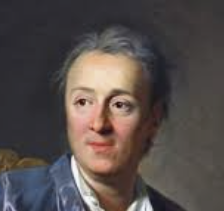
There is no moral precept that does not have something inconvenient about it.
▼
Source
As quoted in Dictionary of Foreign Quotations (1980) by Mary Collison, Robert L. Collison, p. 235

3 months 3 weeks ago
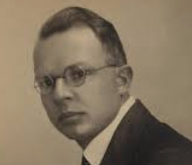
Do not ask who I am and do not ask me to remain the same: leave it to our bureaucrats and our police to see that our papers are in order. At least spare us their morality when we write.
▼
Source
The Archaeology of Knowledge (1972), tr. A. M. Sheridan Smith (New York: Pantheon)
3 months 3 weeks ago
After the new forms are introduced into the language, it is possible to formulate with their help internal questions and possible answers to them. A question of this kind may be either empirical or logical; accordingly a true answer is either factually true or analytic.
▼
Source
Ch. 3. What does acceptance of a kind of entities mean?
3 months 3 weeks ago
You can do everything with bayonets except sit on them. If you want to preserve your power indefinitely you have to get the consent of the ruled. And this they will do partly by drugs as I foresaw in "Brave new World", and partly by these new techniques of propaganda. They will do it by bypassing the sort of rational side of man and appealing to his subconscious, and his deeper emotions, and his physiology, even, and so making him actually love his slavery. I mean I think this is the danger that actually people may be, in some ways, happy under the new regime. But they will be happy in situations when they oughtn't be happy.
3 months 3 weeks ago
"I swear to you, then," said MacIan, after a pause. "I swear to you that nothing shall come between us. I swear to you that nothing shall be in my heart or in my head till our swords clash together. I swear it by the God you have denied, by the Blessed Lady you have blasphemed; I swear it by the seven swords in her heart. I swear it by the Holy Island where my fathers are, by the honour of my mother, by the secret of my people, and by the chalice of the Blood of God." The atheist drew up his head. "And I," he said, "give my word."
▼
Source
Part II: "The Religion of the Stipendiary Magistrate", last paragraphs
3 months 3 weeks ago
Every man has his dignity. I'm willing to forget mine, but at my own discretion and not when someone else tells me to.
3 months 3 weeks ago
In the tragedies of the early seventeenth century, madness too provided the dénouement, but it did so in liberating the truth. It still opened onto language, to a renewed form of speech, that of explanation and of the real regained. The most it could ever be was the penultimate moment of tragedy. Not the closing moment, as in Andromaque, where no truth appears, other than, in Delirium, the truth of a passion that finds its fullest, most perfect expression in madness.
▼
Source
Part Two: 2. The Transcendence of Delirium
3 months 3 weeks ago
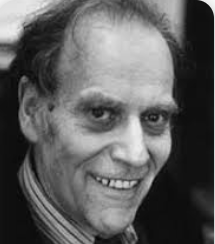
Asked to prove a questioner's existence, Morgenbesser shot back, "Who's asking?"
▼
Source
[https://web.archive.org/web/20040821091507/http://daily.nysun.com/Repository/getmailfiles.asp?Style=OliveXLib:ArticleToMail&Type=text/html&Path=NYS/2004/08/03&ID=Ar01400 Remembering Sidney Morgenbesser,] by Gary Shapiro in 'The New York Sun' 3 August 200
3 months 3 weeks ago
Somebody ought to make a historical study of the relations between theology and corporal punishment in childhood. I have a theory that, wherever little boys and girls are systematically flagellated, the victims grow up to think of God as - 'Wholly Other'... A people's theology reflects the state of its children's bottoms. Look at the Hebrews - enthusiastic child-beaters. And so were all good Christians in the Age of Faith. Hence Jehovah, hence Original Sin and the infinitely offended Father of Roman and Protestant orthodoxy. Whereas among Buddhists and Hindus education has always been nonviolent. No laceration of little buttocks - therefore Tat tvam asi, thou art That, mind from Mind is not divided.... Major premise: God is Wholly Other. Minor premise: man is totally depraved. Conclusion: Do to your children's bottoms what was done to yours, what your Heavenly Father has been doing to the collective bottom of humanity ever since the Fall: whip, whip, whip!
3 months 3 weeks ago
Talk about the pews and steeples And the cash that goes therewith!But the souls of Christian peoples... Chuck it, Smith!
▼
Source
Antichrist, or the Reunion of Christendom
3 months 3 weeks ago
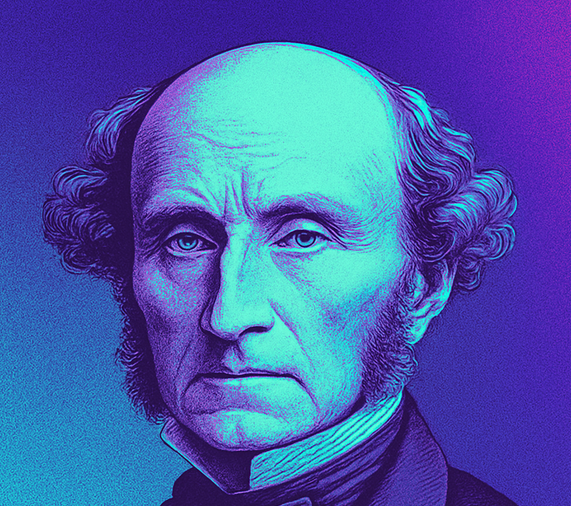
There are but few points in which the English, as a people, are entitled to the moral pre-eminence with which they are accustomed to compliment themselves at the expense of other nations: but, of these points, perhaps the one of greatest importance is, that the higher classes do not lie, and the lower, though mostly habitual liars, are ashamed of lying. To run any risk of weakening this feeling, a difficult one to create, or, when once gone, to restore, would be a permanent evil too great to be incurred for so very temporary a benefit as the ballot would confer, even on the most exaggerated estimate necessity.
▼
Source
[https://en.wikisource.org/wiki/Thoughts_on_Parliamentary_Reform Thoughts on Parliamentary Reform] (1859), pp. 48–49
3 months 3 weeks ago
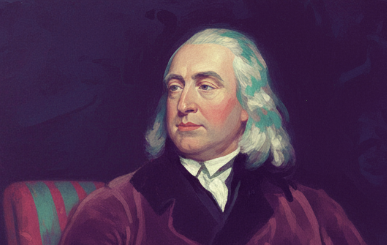
Create all the happiness you are able to create: remove all the misery you are able to remove. Every day will allow you to add something to the pleasure of others, or to diminish something of their pains. And for every grain of enjoyment you sow in the bosom of another, you shall find a harvest in your own bosom; while every sorrow which you pluck out from the thoughts and feelings of a fellow creature shall be replaced by beautiful peace and joy in the sanctuary of your soul.
▼
Source
Advice to a young girl (22 June 1830)
3 months 3 weeks ago
If ever anybody dedicated his whole life to the "enthusiasm for truth and justice" — using this phrase in the good sense — it was Diderot.
▼
Source
Friedrich Engels in Diderot: Interpreter of Nature (London: 1937)
3 months 3 weeks ago
Above the punitive city hangs this iron spider; and the criminal who is to be thus crucified by the new law is parricide.
▼
Source
Chapter Three, The Gentle Way in Punishment

3 months 3 weeks ago
He had not applauded, he had remained seated, but he had looked at her steadily. From the depths of eternity he had looked at her and Rosalind became immortal. If I could believe him, she thought, if only I could believe him!
▼
Source
P. 30
3 months 3 weeks ago
Say that a thing is so, according to the Pope or the Bible, and it will be dismissed as a superstition without examination. But preface your remark merely with "they say" or "don't you know that?" or try (and fail) to remember the name of some professor mentioned in some newspaper; and the keen rationalism of the modern mind will accept every word you say.
3 months 3 weeks ago
For my own part, not believing in universal selfishness, I have no difficulty in admitting that Communism would even now be practicable among the elite of mankind, and may become so among the rest.
3 months 3 weeks ago
My intention was not to deal with the problem of truth, but with the problem of the truth-teller, or of truth telling... Who is able to tell the truth, about what, with what consequences, and with what relations to power. ...With the question of the importance of telling the truth, knowing who is able to tell the truth, and knowing why we should tell the truth, we have the roots of what we could call the 'critical' tradition in the West.
3 months 3 weeks ago
The humanity of tomorrow will be living in its flesh and in its conscious liberty; that time will be its present and it will in turn prefer it. New relations of flesh and sentiment of which we have no conception will arise between the sexes; already, indeed, there have appeared between men and women friendships, rivalries, complicities, comradeships — chaste or sensual — which past centuries could not have conceived.
3 months 3 weeks ago
When people stop believing in God, they don't believe in nothing — they believe in anything.
▼
Source
This quotation actually comes from page 211 of Émile Cammaerts' book The Laughing Prophet: The Seven Virtues and G. K. Chesterton (1937) in which he quotes Chesterton as having Father Brown say, in "The Oracle of the Dog" (1923): "It's the first effect of
3 months 3 weeks ago
There is room in the world, no doubt, and even in old countries, for a great increase of population, supposing the arts of life to go on improving, and capital to increase. But even if innocuous, I confess I see very little reason for desiring it. The density of population necessary to enable mankind to obtain, in the greatest degree, all the advantages both of co-operation and of social intercourse, has, in all the most populous countries, been attained. If the earth must lose that great portion of its pleasantness which it owes to things that the unlimited increase of wealth and population would extirpate from it, for the mere purpose of enabling it to support a larger but not a better or a happier population, I sincerely hope, for the sake of posterity, that they will be content to be stationary, long before necessity compels them to it..
▼
Source
Book IV, Chapter VI, §3, p. 516
3 months 3 weeks ago
Foucault has a very good discussion of what the theory of crime—modern economic theory of crime and punishment—has to say. I didn't have much to disagree with him. I think he was accurate on what it has to say. He goes also into a theory of formation of laws, which I had a lot of sympathy with as well.
▼
Source
Gary Becker, in “Becker on Ewald on Foucault on Becker” (May 9, 2012)

3 months 3 weeks ago
Whence come wars, and fighting, and factions? whence but from the body and the lusts of the body? For wars are occasioned by the love of money, and money has to be acquired for the sake and in service of the body; and in consequence of all these things, the time which ought to be given to philosophy is lost.

3 months 3 weeks ago
Being good is the same as being a philosopher. If you obey your father, you will follow the will of a man; if you choose the philosopher's life, the will of God. It is plain, therefore, that your duty lies in the pursuit of philosophy.
▼
Source
Fragment 16 "What is the best provision for old age," in Moral Exhortation (1986), p. 32
3 months 3 weeks ago
My father's moral inculcations were at all times mainly those of the "Socratici viri;" justice, temperance (to which he gave a very extended application), veracity, perseverance, readiness to encounter pain and especially labour; regard for the public good; estimation of persons according to their merits, and of things according to their intrinsic usefulness; a life of exertion in contradiction to one of self-indulgent sloth. These and other moralities he conveyed in brief sentences, uttered as occasion arose, of grave exhortation, or stern reprobation and contempt.But though direct moral teaching does much, indirect does more; and the effect my father produced on my character, did not depend solely on what he said or did with that direct object, but also, and still more, on what manner of man he was.
▼
Source
([https://archive.org/details/autobiography01mill/page/47/mode/1up p. 47])
3 months 3 weeks ago
Is it not altogether absurd that, under actual circumstances, the average man does not feel spontaneously, and without being preached at, an ardent enthusiasm for those sciences and the related ones of biology?… Every day furnishes a new invention which this average man utilises. Every day produces a new anesthetic or vaccine from which this average man benefits. … How is it, nevertheless, that there is no sign of the masses imposing on themselves any sacrifice of money or attention in order to endow science more worthily? Far from this being the case, the post-war period has converted the man of science into a new social pariah.
▼
Source
Chap.IX: The Primitive and the Technical
3 months 3 weeks ago
Then I heard someone who had a book of Anaxagoras, as he said, out of which he read that the mind was the disposer and cause of all... and I said to myself: If mind is the disposer, mind will dispose all for the best, and put each particular in the best place; and I argued that if anyone desired to find out the cause of the generation or destruction of anything, he must find out what state of being or suffering or doing was best for that thing, and therefore a man had only consider the best for himself and others, and then he would also know the worse, for that the same science comprised both.
3 months 3 weeks ago
In order for music to free itself, it will have to pass over to the other side — there where territories tremble, where the structures collapse, where the ethoses get mixed up, where a powerful song of the earth is unleashed, the great ritornelles that transmutes all the airs it carries away and makes return.
▼
Source
from Essays Critical and Clinical, p. 104.
CivilSimian.com created by AxiomaticPanic, CivilSimian, Kalokagathia