
3 months 3 weeks ago
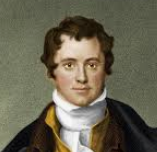
The delight which Mr Davy experienced when he first saw the minute globules of ' (the new metal) burst through the crust of potash, and take fire as they entered the atmosphere, was witnessed by his relative and assistant Mr . 'He could not contain his joy—he actually danced about the room in ecstatic delight, and some little time was required for him to compose himself sufficiently to continue the experiment.'

3 months 3 weeks ago
Be not hasty to speak; nor slow to hear!
3 months 3 weeks ago
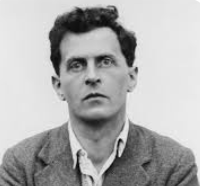
The world is the totality of facts, not things. (1.1)
▼
Source
Original German: Die Welt ist die Gesamtheit der Tatsachen, nicht der Dinge
3 months 3 weeks ago
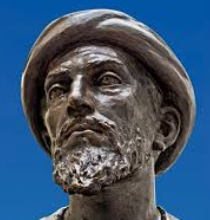
Eliphas never abandoned his belief that the fate of man is the result of justice, that we do not know all our shortcomings for which we are punished, nor the way how we incur the punishment through them.
▼
Source
Ch.23
3 months 3 weeks ago
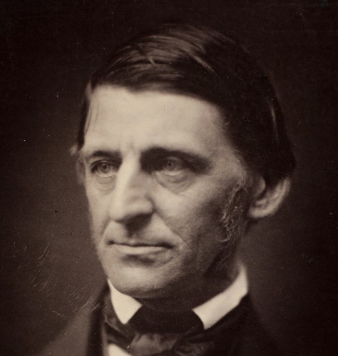
Next to the originator of a good sentence is the first quoter of it.
▼
Source
Quotation and Originality
3 months 3 weeks ago
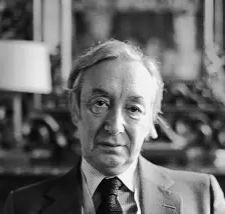
Science... the ways it does its calculating that approximately nobody going in at a basic level can gain any sense of the whole.

3 months 3 weeks ago
It is irreverent to the Gods to give you this demonstration, but for your sakes it shall be done.
▼
Source
As quoted in The Lives of the Sophists by Eunapius
3 months 3 weeks ago
The problem of induction is, roughly speaking, the problem of finding a way to prove that certain empirical generalizations which are derived from past experience will hold good also in the future. There are only two ways of approaching this problem on the assumption that it is a genuine problem, and it is easy to see that neither of them can lead to its solution.
▼
Source
p. 49.

3 months 3 weeks ago
For human beings, the measure of every action is the impression of the senses.
▼
Source
Book I, ch. 28, § 10
3 months 3 weeks ago
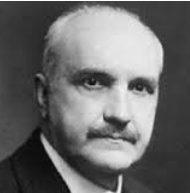
It seems probable that the early Greeks were largely indebted to the Phoenicians for their knowledge of practical arithmetic or the art of calculation, and perhaps also learnt from them a few properties of numbers. It may be worthy of note that Pythagoras was a Phoenician; and according to Herodotus, but this is more doubtful, Thales was also of that race.
▼
Source
W. W. Rouse Ball, A Short Account of the History of Mathematics (1905)
3 months 3 weeks ago
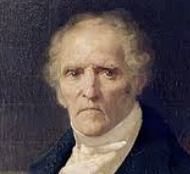
Nothing is more opposed to concord than the present condition of the domestic and salaried classes. By reducing this poor multitude to a condition very like slavery, civilization, on the rebound, imposes chains upon those who seem to dominate. Thus notables do not dare to amuse themselves openly at times when the people suffer from poverty. The rich are subject to individual as well as collective servitude. A wealthy man is often the slave of his valets. However in harmony the valet himself enjoys complete independence, while the rich are served with an assiduity and a devotion of which one sees not a trace in civilization.
▼
Source
Oeuvres completetes de Charles Fourier
3 months 3 weeks ago
I must plunge into the water of doubt again and again.
▼
Source
Ch. 7 : Remarks on Frazer's Golden Bough, p. 119
3 months 3 weeks ago
Maimonides, the great Jewish theologian and historian, who at one time was almost deified by his countrymen and afterward treated as a heretic, remarks, that the more absurd and void of sense the Talmud seems the more sublime is the secret meaning. This learned man has successfully demonstrated that the Chaldean Magic, the science of Moses and other learned thaumaturgists was wholly based on an extensive knowledge of the various and now forgotten branches of natural science. Thoroughly acquainted with all the resources of the vegetable, animal, and mineral kingdoms, experts in occult chemistry and physics, psychologists as well as physiologists, why wonder that the graduates or adepts instructed in the mysterious sanctuaries of the temples, could perform wonders, which even in our days of enlightenment would appear supernatural? It is an insult to human nature to brand magic and the occult science with the name of imposture. To believe that for so many thousands of years, one-half of mankind practiced deception and fraud on the other half, is equivalent to saying that the human race was composed only of knaves and incurable idiots. Where is the country in which magic was not practised? At what age was it wholly forgotten? p. 19
▼
Source
H. P. Blavatsky in Isis Unveiled: A Master-Key to the Mysteries of Ancient and Modern Science and Theology (1877)
3 months 3 weeks ago
For what avail the plough or sail, Or land or life, if freedom fail?
▼
Source
Boston
3 months 3 weeks ago
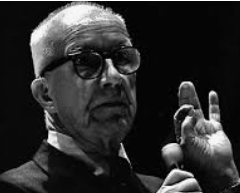
I have learned never to reject one of Fuller's outrageous statements without careful consideration, and even hesitated to call "Sum of angels around each vertex" in the rough manuscript a misprint. The truth has usually turned out far stranger than Buckminster Fuller!
▼
Source
Arthur Lee Loeb, in his [http://www.rwgrayprojects.com/synergetics/intro/preface.html Preface to Synergetics (1975)]
3 months 3 weeks ago
To call war the soil of courage and virtue is like calling debauchery the soil of love.
▼
Source
Ch. III: Industry, Government, the peasants
3 months 3 weeks ago
The data that can bear on the confirmation of perceptual hypotheses includes, in the general case, considerably less than the organism may know.
▼
Source
p. 69
3 months 3 weeks ago
I thought that I was the only historian, that had at once neglected present power, interest, and authority, and the cry of popular prejudices; and as the subject was suited to every capacity, I expected proportional applause. But miserable was my disappointment: I was assailed by one cry of reproach, disapprobation, and even detestation; English, Scotch, and Irish, Whig and Tory, churchman and sectary, freethinker and religionist, patriot and courtier, united in their rage against the man, who had presumed to shed a generous tear for the fate of Charles I and the Earl of Strafford.
▼
Source
'My Own Life' (1776), quoted in David Hume, Essays: Moral, Political, and Literary (1741–1777), ed. Eugene Miller (1985), p. xxxvii
3 months 3 weeks ago
Let not that which in the case of another is contrary to nature become an evil for you; for you are born not to be humiliated along with others, nor to share in their misfortunes, but to share in their good fortune. If, however, someone is unfortunate, remember that his misfortune concerns himself. For God made all mankind to be happy, to be serene.
▼
Source
Book III, ch. 24, §. 1
3 months 3 weeks ago
Ah, Pythagoras' metempsychosis, were that true,This soul should fly from me, and I be changedUnto some brutish beast!All beasts are happy, for when they die,Their souls are soon dissolved in elements;But mine must live still to be plagued in hell.
▼
Source
Christopher Marlowe, spoken by Faust in Marlowe's play Doctor Faustus (c. 1593)
3 months 3 weeks ago
What we do is to bring words back from their metaphysical to their everyday use.
▼
Source
§ 116

3 months 3 weeks ago
Disobedience, when it is not criminally but morally, religiously, or politically motivated, is almost always a collective act, and it is justified by the values of the collectivity and the mutual engagements of its members.
▼
Source
"The Obligation to Disobey," Ethics, Vol. 77, No. 3 (April 1967), p. 163
3 months 3 weeks ago
Skepticism is slow suicide.
▼
Source
p. 240
3 months 3 weeks ago
How can we design improvement in large systems without understanding the whole system, and if the answer is that we cannot, how is it possible to understand the whole system?
▼
Source
C. West Churchman, Challenge to Reason (1968), p. 2; cited in '" C. West Churchman — 75 years" by Werner Ulrich, in Systems Practice (December 1988), Volume 1, Issue 4, p. 341-350
3 months 3 weeks ago
Persons who feel themselves to be exiles in this world—and what noble mind, from Empedocles down, has not had that feeling?—are mightily inclined to believe themselves citizens of another.
▼
Source
pp. 39-40
3 months 3 weeks ago
This avidity alone, of acquiring goods and possessions for ourselves and our nearest friends, is insatiable, perpetual, universal, and directly destructive of society.
▼
Source
Part 2, Section 2
3 months 3 weeks ago
It is difficult to imagine any thing more instructive, and more pregnant with matter for salutary reflection, than the contrast presented to us by the character and system of action of Pythagoras on the one hand, and those of the great enquirers of the last two centuries, for example, Bacon, Newton and Locke, on the other. Pythagoras probably does not yield to any one of these in the evidences of true intellectual greatness. In his school, in the followers he trained resembling himself, and in the salutary effects he produced on the institutions of the various republics of Magna Graecia and Sicily, he must be allowed greatly to have excelled them. His discoveries of various propositions in geometry, of the earth as a planet, and of the solar system as now universally recognised, clearly stamp him a genius of the highest order. Yet this man, thus enlightened and philanthropical, established his system of proceeding upon narrow and exclusive principles, and conducted it by methods of artifice, quackery and delusion. One of his leading maxims was, that the great and fundamental truths to the establishment of which he devoted himself, were studiously to be concealed from the vulgar, and only to be imparted to a select few, and after years of the severest noviciate and trial. He learned his earliest lessons of wisdom in Egypt after this method, and he conformed through life to the example which had thus been delivered to him. The severe examination that he made of the candidates previously to their being admitted into his school, and the years of silence that were then prescribed to them, testify this. He instructed them by symbols, obscure and enigmatical propositions, which they were first to exercise their ingenuity to expound. The authority and dogmatical assertions of the master were to remain unquestioned; and the pupils were to fashion themselves to obsequious and implicit submission, and were the furthest in the world from being encouraged to the independent exercise of their own understandings. There was nothing that Pythagoras was more fixed to discountenance, than the communication of the truths upon which he placed the highest value, to the uninitiated. It is not probable therefore that he wrote any thing: all was communicated orally, by such gradations, and with such discretion, as he might think fit to adopt and to exercise. Such were some of the main causes that have made his efforts perishable, and the lustre which should have attended his genius in a great degree transitory and fugitive. He was probably much under the influence of a contemptible jealousy, and must be considered as desirous that none of his contemporaries or followers should eclipse their master. -->
3 months 3 weeks ago
387. [I believe it might interest a philosopher, one who can think himself, to read my notes. For even if I have hit the mark only rarely, he would recognize what targets I had been ceaselessly aiming at.]

3 months 3 weeks ago
Techniques employ four qualities that reflect the nature of our world. Depending on the circumstance, you should be: hard as a diamond, flexible as a willow, smooth-flowing like water, or as empty as space.
3 months 3 weeks ago
There is no man living to whom, as a writer, so many of us feel and thankfully acknowledge so great an indebtedness for ennobling impulses.
▼
Source
James Russell Lowell, My Study Windows (1871), "Emerson, the Lecturer"
3 months 3 weeks ago
We must face the reality that the enemies offer: what's really happening in the human world is politics, or morality, or religion, or aesthetics. This confrontation with reality is totally different from the rational approach, because the reality of the enemies cannot be conceptualized, approximated, or measured.
▼
Source
p. 53
3 months 3 weeks ago
I was still “at the church door”. Yet in belief, in the clarification of my philosophy, I had taken an important step. I no longer wavered between alternative views of the world, to be put on or taken off like alternative plays at the theatre. I now saw that there was only one possible play, the actual history of nature and of mankind, although there might well be ghosts among the characters and soliloquies among the speeches. Religions, all religions, and idealistic philosophies, all idealistic philosophies, were the soliloquies and the ghosts. They might be eloquent and profound. Like Hamlet's soliloquy they might be excellent reflective criticisms of the play as a whole. Nevertheless they were only parts of it, and their value as criticisms lay entirely in their fidelity to the facts, and to the sentiments which those facts aroused in the critic.
▼
Source
p. 169
3 months 3 weeks ago
The universal propensity to believe in invisible, intelligent power, if not an original instinct, being at least a general attendant of human nature, may be considered as a kind of mark or stamp, which the divine workman has set upon his work; and nothing surely can more dignify mankind, than to be thus selected from all other parts of the creation, and to bear the image or impression of the universal Creator. But consult this image, as it appears in the popular religions of the world. How is the deity disfigured in our representations of him! What caprice, absurdity, and immorality are attributed to him! How much is he degraded even below the character, which we should naturally, in common life, ascribe to a man of sense and virtue!
▼
Source
Part XV - General corollary
3 months 3 weeks ago
[T]he most striking result of the Greeks' faith that the world could be understood in terms of rational principles was the invention of abstract mathematics. The most grandiose ambition they conceived was to explain all the properties of Nature in arithmetical terms alone. This was the aim of the Pythagoreans... [T]hey... knew that the phenomena of the Heavens recurred in a cyclical manner; and... discovered ...that the sound of a vibrating string ...is simply related to the length ...and its 'harmonics' always go with simple fractional lengths. ...[S]ince the Pythagoreans were a religious brotherhood... they thought that this search would lead to more than explanations alone. If one discovered the mathematical harmonies in things, one should... discover how to put oneself in harmony with Nature. ...[T]hey had ...positive grounds for thinking that both astronomy and acoustics were at the bottom arithmetical; and the study of simple fractions was called 'music' right down until the late Middle Ages.
▼
Source
, , The Fabric of the Heavens: The Development of Astronomy and Dynamics (1962) Ch. 2 The Invention of Theory.
3 months 3 weeks ago
The way you use the word "God" does not show whom you mean — but, rather, what you mean.
▼
Source
p. 50e

3 months 3 weeks ago
Heart – “It is absolutely certain that God does exist.”Head – “But, my dear boy! Existence is one of my categories, and you have no right to use it.”Heart – “So much the better, my Aristotle!”
▼
Source
[http://www.allamaiqbal.com/poet/prose/english/stray.pdf Stray Reflections]
3 months 3 weeks ago
The triumph of the industrial arts will advance the cause of civilization more rapidly than its warmest advocates could have hoped, and contribute to the permanent prosperity and strength of the country far more than the most splendid victories of successful war.
▼
Source
p. xii-xiii; Cited in: Samuel Smiles [http://books.google.com/books?id=5trBcaXuazgC&pg=PA104 Industrial biography; iron-workers and tool-makers], (1864) p. 104

3 months 3 weeks ago
As long as the aristocracy is healthy, the name of the sovereign sacred to it, and it loves the monarchy passionately, the State is unshakeable, whatever be the qualities of the king. But once it loses its greatness, its pride, its energy, its faith, the spirit withdraws, the monarchy is dead, and its cadaver is left to the worms.
▼
Source
p. 127
3 months 3 weeks ago
Any question of philosophy ... which is so obscure and uncertain, that human reason can reach no fixed determination with regard to it; if it should be treated at all; seems to lead us naturally into the style of dialogue and conversation.
▼
Source
Pamphilus to Hermippus, Prologue
3 months 3 weeks ago
It seems to me that, in every culture, I come across a chapter headed Wisdom. And then I know exactly what is going to follow: Vanity of vanities, all is vanity.
▼
Source
Conversation of 1934

3 months 3 weeks ago
The fiction of an ideal language composed of pure atomic statements is as metaphysical as the fiction of Laplace's 'spirit'. Scientific language, with its ever growing equipment of systematic symbol formations, can by no means be regarded as an approximation to such an ideal language.
▼
Source
p. 91

3 months 3 weeks ago
It is not easy to devise a cure for such a state of things (the declining taste for science). The most obvious remedy is to provide the educated classes with a series of works on popular and practical science, freed from mathematical symbols and technical terms, written in simple and perspicuous language, and illustrated by facts and experiments which are level to the capacity of ordinary minds.
▼
Source
in a review of William Herschel's A Treatise on Sound, Quarterly Review, Vol. 44, No. 88 (January-February 1831), [https://archive.org/details/sim_quarterly-review-1809_january-february-1831_44/page/476/mode/2up,M1 p. 476]. | also quoted by Brewster himse
3 months 3 weeks ago
Never have nations been civilized, except by religion.
▼
Source
XXXIII, p. 99
3 months 3 weeks ago
Hume, from whose fascinating narrative the great mass of the reading public are still contented to take their opinions, hated religion so much that he hated liberty for having been allied with religion, and has pleaded the cause of tyranny with the dexterity of an advocate, while affecting the impartiality of a judge.
▼
Source
Thomas Babington Macaulay, 'Milton', The Edinburgh Review (August 1825), quoted in Thomas Babington Macaulay, Critical and Historical Essays, Contributed to The Edinburgh Review, Vol. I (1843), p. 31

3 months 3 weeks ago
In existing States a fresh law is looked upon as a remedy for evil. Instead of themselves altering what is bad, people begin by demanding a law to alter it. … In short, a law everywhere and for everything! A law about fashions, a law about mad dogs, a law about virtue, a law to put a stop to all the vices and all the evils which result from human indolence and cowardice. We are so perverted by an education which from infancy seeks to kill in us the spirit of revolt, and to develop that of submission to authority; we are so perverted by this existence under the ferrule of a law, which regulates every event in life — our birth, our education, our development, our love, our friendship — that, if this state of things continues, we shall lose all initiative, all habit of thinking for ourselves. Our society seems no longer able to understand that it is possible to exist otherwise than under the reign of law, elaborated by a representative government and administered by a handful of rulers. And even when it has gone so far as to emancipate itself from the thralldom, its first care has been to reconstitute it immediately. "The Year I of Liberty" has never lasted more than a day, for after proclaiming it men put themselves the very next morning under the yoke of law and authority.
▼
Source
I

3 months 3 weeks ago
If in the guise of philosophers, they [declaim speeches] with a view to their own profit and reputation, and not to improve you, that indeed is shocking. For it is as if a physician when visiting patients should disregard their treatment and their restoration to health, and should bring them flowers and courtesans and perfume.
▼
Source
Discourse 32, J. Cohoon and H. Crosby, trans. (1940), p. 181
3 months 3 weeks ago
Christianity is the religion of Europe, it is mingled with all our institutions, it is the hand of this religion that fashioned these new nations of Europe. The cross is on all the crowns, all the codes begin with its symbol. The kings are anointed, the priests are magistrates, the priesthood is an order, the empire is sacred, the religion is civil. The two powers are merged; each lends the other part of its strength, and, despite the quarrels that have divided these two sisters, they cannot live separated.
▼
Source
"Reflections on Protestantism in its Relations with Sovereignty," 1798, Œuvre critique, 8:64–5.

3 months 3 weeks ago
As regards the objection that possibles are independent of the decrees of God I grant it of actual decrees (although the Cartesians do not at all agree to this), but I maintain that the possible individual concepts involve certain possible free decrees; for example, if this world was only possible, the individual concept of a particular body in this world would involve certain movements as possible, it would also involve the laws of motion, which are the free decrees of God; but these, also, only as possibilities. Because, as there are an infinity of possible worlds, there are also an infinity of laws, certain ones appropriate to one; others, to another, and each possible individual of any world involves in its concept the laws of its world.
▼
Source
(May, 1686) as quoted in George R. Montgomery, Tr., "Correspondence between Leibniz and Arnauld," [https://books.google.com/books?id=5-IeAQAAMAAJ Leibniz: Discourse on metaphysics; correspondence with Arnauld, and Monadology] (1916) VIII, p. 108

3 months 3 weeks ago
The source of the errors of these two sects, is in not having known that the state of man at the present time differs from that of his creation; so that the one, remarking some traces of his first greatness and being ignorant of his corruption, has treated nature as sound and without need of redemption, which leads him to the height of pride; whilst the other, feeling the present wretchedness and being ignorant of the original dignity, treats nature as necessarily infirm and irreparable, which precipitates it into despair of arriving at real good, and thence into extreme laxity.
3 months 3 weeks ago
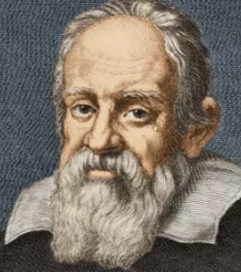
Nature … is inexorable and immutable; she never transgresses the laws imposed upon her, or cares a whit whether her abstruse reasons and methods of operation are understandable to men. For that reason it appears that nothing physical which sense-experience sets before our eyes, or which necessary demonstrations prove to us, ought to be called in question (much less condemned) upon the testimony of biblical passages which may have some different meaning beneath their words. For the Bible is not chained in every expression to conditions as strict as those which govern all physical effects; nor is God any less excellently revealed in Nature's actions than in the sacred statements of the Bible.
CivilSimian.com created by AxiomaticPanic, CivilSimian, Kalokagathia