

3 months 3 weeks ago
One Step Forward, Two Steps Backward, written by Lenin, an outstanding member of the Iskra group, is a methodical exposition of the ideas of the ultra-centralist tendency in the Russian movement. The viewpoint presented with incomparable vigor and logic in this book, is that of pitiless centralism.
3 months 3 weeks ago
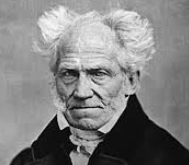
If a person is stupid, we excuse him by saying that he cannot help it; but if we attempted to excuse in precisely the same way the person who is bad, we should be laughed at.
▼
Source
E. Payne, trans., vol. 2, p. 230

3 months 3 weeks ago
It is trifling to believe in what you do or in what others do. You should avoid simulacra and even "realities"; you should take up a position external to everything and everyone, drive off or grind down your appetites, live, according to a Hindu adage, with as few desires as a "solitary elephant.

3 months 3 weeks ago
It is really, as Coleridge I think said of something else, like reading a story by flashes of lightning!
▼
Source
Francis Jeffrey, [http://carlyleletters.dukejournals.org/cgi/content/full/9/1/lt-18370530-TC-JAC-01#FN4 letter to Carlyle] (30 May 1837) on The French Revolution. This is often repeated as stating that Carlyle's style is “like reading history by flashes o
3 months 3 weeks ago
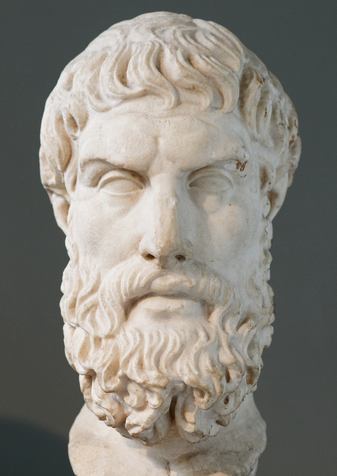
Natural justice is a symbol or expression of usefulness, to prevent one person from harming or being harmed by another.
▼
Source
Variant: Natural justice is a pledge of reciprocal benefit, to prevent one man from harming or being harmed by another.
3 months 3 weeks ago
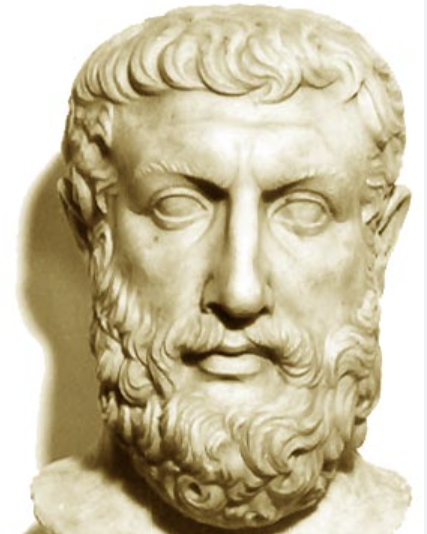
One of Parmenides' merits is to have been the first philosopher who strove to handle general concepts like "being", "not-being", "knowing", "unity", "identity", in their systematic connection.
▼
Source
Willem Jacob Verdenius, in Parmenides (1964), p. 2
3 months 3 weeks ago
To beautify life is to give it an object.
▼
Source
On Oscar Wilde (1882)
3 months 3 weeks ago
Do not unjustly eat what the water has given up, and do not desire as food the flesh of slaughtered animals, Or the white (milk) of mothers who intended its pure draught for their young, not for noble ladies. And do not grieve the unsuspecting birds by taking their eggs; for injustice is the worst of crimes. And spare the honey which the bees get betimes by their industry from the flowers of fragrant plants; For they did not store it that it might belong to others, nor did they gather it for bounty and gifts. I washed my hands of all this; and would that I had perceived my way ere my temples grew hoar!
▼
Source
1. 232, 8
3 months 3 weeks ago
Of things said without any combination, each signifies either substance or quantity or qualification or a relative or where or when or being-in-a-position or having or doing or being affected. To give a rough idea, examples of substance are man, horse; of quantity: four-foot, five-foot; of qualification: white, grammatical; of a relative: double, half, larger; of where: in the Lyceum, in the market-place; of when: yesterday, last-year; of being-in-a-position: is-lying, is sitting; of having: has-shoes-on, has-armour-on; of doing: cutting, burning; of being-affected: being-cut, being-burned.
▼
Source
1b25-2a10; (tr.), 1984-1995
3 months 3 weeks ago
Mankind is composed of two sorts of men — those who love and create, and those who hate and destroy.
▼
Source
"Letter to a Cuban Farmer" (1893)
3 months 3 weeks ago
We find ourselves on the brink of a decision, a decision to break with the arcana of the one and the multiple in which philosophy is born and buried, phoenix of its own sophistic consumption.
▼
Source
Meditation One: The One and the Multiple: a priori conditions of any possible ontology
3 months 3 weeks ago
It is difficult, if not impossible, to define the limit of our reasonable desires in respect of possessions.
▼
Source
E. Payne, trans. (1974) Vol. 1, p. 346
3 months 3 weeks ago
Say what we will, death is the best thing nature has found to please everyone. With each of us, everything vanishes, everything stops forever. What an advantage, what an abuse! Without the least effort on our part, we own the universe, we drag it into our own disappearance. No doubt about it, dying is immoral...
3 months 3 weeks ago
Poor David Hume is dying very fast, but with great cheerfulness and good humour and with more real resignation to the necessary course of things then any whining Christian ever dyed with pretended resignation to the will of God.
▼
Source
Letter to Alexander Wedderburn 14 August 1776. The Correspondence of Adam Smith edited by E.C. Mossner and Ian Simpson Ross, 2nd edition, Oxford University Press 1986. [https://www.ac.edu.au/custom-utils/download-count/target_address=http://apps.acu.edu.a
3 months 3 weeks ago
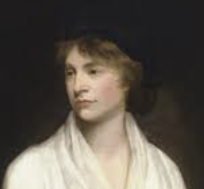
Good habits, imperceptibly fixed, are far preferable to the precepts of reason; but, as this task requires more judgment than generally falls to the lot of parents, substitutes must be sought for, and medicines given, when regimen would have answered the purpose much better. I believe those who examine their own minds, will readily agree with me, that reason, with difficulty, conquers settled habits, even when it is arrived at some degree of maturity: why then do we suffer children to be bound with fetters, which their half-formed faculties cannot break. In writing the following work, I aim at perspicuity and simplicity of style; and try to avoid those unmeaning compliments, which slip from the tongue, but have not the least connexion with the affections that should warm the heart, and animate the conduct. By this false politeness, sincerity is sacrificed, and truth violated; and thus artificial manners are necessarily taught. For true politeness is a polish, not a varnish; and should rather be acquired by observation than admonition.
▼
Source
Original Stories from Real Life; with Conversations Calculated to Regulate the Affections, and Form the Mind to Truth and Goodness (1788; 1791)
3 months 3 weeks ago
Sound is the motion of that which is able to be moved, after the manner in which those things are moved, that rebound from smooth bodies, when any one strikes them. Not every thing... sounds... but it is necessary, that the body which is struck should be equable, that the air may collectively rebound, and be shaken. The differences, however, of bodies which sound, are manifested in the sound, which is in energy; for, as colours are not perceived without light, so neither are the sharp and the flat perceived without sound. But these things are asserted metaphorically, from those which pertain to the touch; for the sharp moves the sense much in a short time, but the flat a little in a long time. The sharp, therefore, is not rapid, and the flat slow; but such a motion is produced of the one, on account of celerity, and of the other on account of slowness, that, also, which is perceived in the touch, appears to be analogous to the acute and obtuse, for the acute, as it were, stings; but the obtuse, as it were, impels: because the one moves in a short, but the other in a long time. Hence it happens that the one is swift but the other slow. Let it therefore be thus determined concerning sound.
▼
Source
Book II: On the soul; In: Aristotle (1808). Works, Vol. 4. p. 62 (412a-424b)
3 months 3 weeks ago
Everything that divides men, everything that specified, separates or pens them, is a sin against humanity.

3 months 3 weeks ago
The very idea of a Christian political theology is problematic. If human beings are only transitorily on earth, and earth is but a vale of tears through which we must pass on our way to paradise, earthly politics loses almost all value. Life in the polis cannot be the good life for man, since fulfillment lies in the hereafter; here below, we must prepare for eternity. Earthly happiness for rational persons consists in whatever confidence they may entertain about the life hereafter. This “abstentionist” vision is in some ways at odds with the involvement of Christ in the everyday life of the community in which he spent his short life.
3 months 3 weeks ago
The animals are much more content with mere existence than we are; the plants are wholly so; and man is so according to how dull and insensitive he is. The animal’s life consequently contains less suffering but also less pleasure than the human’s, the direct reason being that on the one hand it is free from care and anxiety and the torments that attend them, but on the other is without hope and therefore has no share in that anticipation of a happy future which, together with the enchanting products of the imagination which accompany it, is the source of most of our greatest joys and pleasures. The animal lacks both anxiety and hope because its consciousness is restricted to what is clearly evident and thus to the present moment: the animal is the present incarnate.
▼
Source
Vol. 2 "On the Suffering of the World" as translated in Essays and Aphorisms (1970), as translated by R. J. Hollingdale
3 months 3 weeks ago
"Neither this world, nor the next, nor happiness are for the being abandoned to doubt." — This point in the Gita is my death sentence.
3 months 3 weeks ago
To take an example, therefore, from a very trifling manufacture, but one in which the division of labour has been very often taken notice of, the trade of a pin-maker: a workman not educated to this business (which the division of labour has rendered a distinct trade, nor acquainted with the use of the machinery employed in it (to the invention of which the same division of labour has probably given occasion), could scarce, perhaps, with his utmost industry, make one pin in a day, and certainly could not make twenty. But in the way in which this business is now carried on, not only the whole work is a peculiar trade, but it is divided into a number of branches, of which the greater part are likewise peculiar trades. One man draws out the wire; another straights it; a third cuts it; a fourth points it; a fifth grinds it at the top for receiving the head; to make the head requires two or three distinct operations; to put it on is a peculiar business; to whiten the pins is another; it is even a trade by itself to put them into the paper; and the important business of making a pin is, in this manner, divided into about eighteen distinct operations, which, in some manufactories, are all performed by distinct hands, though in others the same man will sometimes perform two or three of them. I have seen a small manufactory of this kind, where ten men only were employed, and where some of them consequently performed two or three distinct operations. But though they were very poor, and therefore but indifferently accommodated with the necessary machinery, they could, when they exerted themselves, make among them about twelve pounds of pins in a day. There are in a pound upwards of four thousand pins of a middling size. Those ten persons, therefore, could make among them upwards of forty-eight thousand pins in a day. Each person, therefore, making a tenth part of forty-eight thousand pins, might be considered as making four thousand eight hundred pins in a day. But if they had all wrought separately and independently, and without any of them having been educated to this peculiar business, they certainly could not each of them have made twenty, perhaps not one pin in a day; that is, certainly, not the two hundred and fortieth, perhaps not the four thousand eight hundredth, part of what they are at present capable of performing, in consequence of a proper division and combination of their different operations.
▼
Source
Chapter I, p. 8-9.
3 months 3 weeks ago
Till society is very differently constituted, parents, I fear, will still insist on being obeyed, because they will be obeyed, and constantly endeavour to settle that power on a Divine right, which will not bear the investigation of reason.
▼
Source
Ch. 11
3 months 3 weeks ago
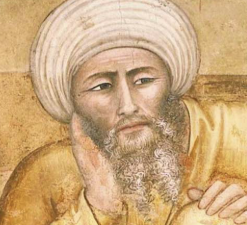
Philosophers do not claim that God does not know particulars; they rather claim that He does not know them the way humans do. God knows particulars as their Creator whereas humans know them as a privileged creations of God might know them.
▼
Source
Attributed to Averroes in Voices of Islam: Voices of change (2007) by Vincent J. Cornell, p. 35
3 months 3 weeks ago
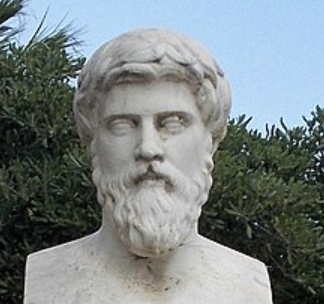
Perseverance is more prevailing than violence; and many things which cannot be overcome when they are together, yield themselves up when taken little by little.
▼
Source
Sertorius 16 (Tr. Dryden and Clough)

3 months 3 weeks ago
While it is much preferable to anarchy, government cannot abolish the evils of the human condition. At any time the state is only one of the forces that shape human behaviour, and its power is never absolute. At present, fundamentalist religion and organized crime, ethnic-national allegiances and market forces all have the ability to elude the control of government, sometimes to overthrow or capture it. States are at the mercy of events as much as any other human institution, and over the longer course of history all of them fail. As Spinoza recognized, there is no reason to think the cycle of order and anarchy will ever end. Secular thinkers find this view of human affairs dispiriting, and most have retreated to some version of the Christian view in which history is a narrative of redemption. The most common of these narratives are theories of progress, in which the growth of knowledge enables humanity to advance and improve its condition. Actually, humanity cannot advance or retreat, for humanity cannot act: there is no collective entity with intentions or purposes, only ephemeral struggling animals each with its own passions and illusions. The growth of scientific knowledge cannot alter this fact. Believers in progress – whether social democrats or neo-conservatives, Marxists, anarchists or technocratic Positivists – think of ethics and politics as being like science, with each step forward enabling further advances in future. Improvement in society is cumulative, they believe, so that the elimination of one evil can be followed by the removal of others in an open-ended process. But human affairs show no sign of being additive in this way: what is gained can always be lost, sometimes –as with the return of torture as an accepted technique in war and government – in the blink of an eye. Human knowledge tends to increase, but humans do not become any more civilized as a result. They remain prone to every kind of barbarism, and while the growth of knowledge allows them to improve their material conditions, it also increases the savagery of their conflicts.
▼
Source
Post-Apocalypse: After Secularism (pp. 264-5)
3 months 3 weeks ago
If there is some end of the things we do, which we desire for its own sake, clearly this must be the good. Will not knowledge of it, then, have a great influence on life? Shall we not, like archers who have a mark to aim at, be more likely to hit upon what we should? If so, we must try, in outline at least, to determine what it is.
▼
Source
Book I§2 1094a.18
3 months 3 weeks ago
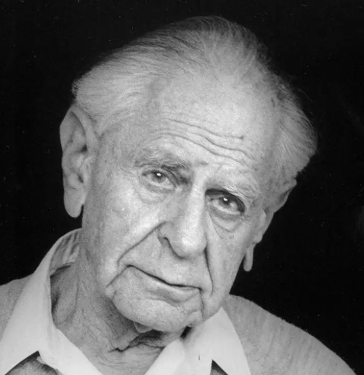
Appealing to his [Einstein's] way of expressing himself in theological terms, I said: If God had wanted to put everything into the universe from the beginning, He would have created a universe without change, without organisms and evolution, and without man and man's experience of change. But he seems to have thought that a live universe with events unexpected even by Himself would be more interesting than a dead one.
▼
Source
As quoted in Omnipotence and Other Theological Mistakes by Charles Hartshorne (1984)
3 months 3 weeks ago
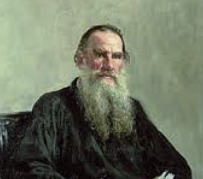
There can be only one permanent revolution — a moral one; the regeneration of the inner man. How is this revolution to take place? Nobody knows how it will take place in humanity, but every man feels it clearly in himself. And yet in our world everybody thinks of changing humanity, and nobody thinks of changing himself.
▼
Source
"Three Methods Of Reform" in Pamphlets : Translated from the Russian (1900) as translated by Aylmer Maude, p. 29 | Variant: Everyone thinks of changing the world, but no one thinks of changing himself. | As quoted in The Artist's Way at Work : Riding the
3 months 3 weeks ago
There is happiness in duty, although it may not seem so. To fulfill one's duty elevates the soul to a state of constant sweetness. Love is the bond between men, the way to teach and the center of the world.

3 months 3 weeks ago
It is both humiliating and humbling to discover that a single generation after the events that constructed me as a public personality, I am remembered as a hairdo.
▼
Source
"Afro Images: Politics, Fashion, and Nostalgia" Critical Inquiry. Vol. 21, No. 1 (Autumn, 1994), pp. 37-39, 41-43 and 45.
3 months 3 weeks ago
Men of learning are those who have read the contents of books. Thinkers, geniuses, and those who have enlightened the world and furthered the race of men, are those who have made direct use of the book of the world.
▼
Source
[http://ebooks.adelaide.edu.au/s/schopenhauer/arthur/essays/chapter8.html "Thinking for Oneself"]
3 months 3 weeks ago
We live in the false as long as we have not suffered. But when we begin to suffer, we enter the truth only to regret the false.
3 months 3 weeks ago
People of the same trade seldom meet together, even for merriment and diversion, but the conversation ends in a conspiracy against the public, or in some contrivance to raise prices. It is impossible indeed to prevent such meetings, by any law which either could be executed, or would be consistent with liberty or justice. But though the law cannot hinder people of the same trade from sometimes assembling together, it ought to do nothing to facilitate such assemblies; much less to render them necessary.
▼
Source
Chapter X, Part II, p. 152.
3 months 3 weeks ago
To one that promised to give him hardy cocks that would die fighting, "Prithee," said Cleomenes, "give me cocks that will kill fighting."
▼
Source
61 Cleomenes
3 months 3 weeks ago
For a consistent naturalist science can only be a refinement of animal exploration, a practice humans have devised for finding their way in the bit of the universe in which they have so far survived. Instead of thinking of science as a law-seeking activity, we can think of it as a tool humans use to cope with a world they will never understand.
▼
Source
Sweet Morality (p. 224)
3 months 3 weeks ago
It is simplicity that makes the uneducated more effective than the educated when addressing popular audiences.
▼
Source
Book II, 1395b.27
3 months 3 weeks ago
... the attempt to make heaven on earth invariably produces hell. It leads to intolerance. It leads to religious wars, and to the saving of souls through the inquisition. And it is, I believe, based on a complete misunderstanding of our moral duties. It is our duty to help those who need help; but it cannot be our duty to make others happy, since this does not depend on us, and since it would only too often mean intruding on the privacy of those towards whom we have such amiable intentions.
▼
Source
Vol. 2, Ch. 24 "Oracular Philosophy and the Revolt against Reason"
3 months 3 weeks ago
A king is history's slave.
▼
Source
Bk. IX, ch. 1
3 months 3 weeks ago
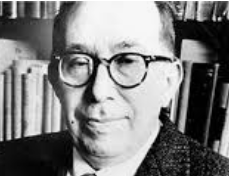
The kingdom is Yours, and You will reign in glory for all eternity. As it is written in Your Torah: "The Lord shall reign for ever and ever." And it is said: " And the Lord shall be King over all the earth: on that day the Lord shall be One, and His name One." No nobler dream was ever dreamt. It is surely nobler to be a victim of the most noble dream than to profit from a sordid reality and to wallow in it. Dream is akin to aspiration. And aspiration is a kind of divination of an enigmatic vision. And an enigmatic vision in the emphatic sense is the perception of the ultimate mystery, of the truth of the ultimate mystery. The truth of the ultimate mystery — the truth that there is an ultimate mystery, that being is radically mysterious — cannot be denied even by the unbelieving Jew of our age. That unbelieving Jew of our age, if he has any education, is ordinarily a positivist, a believer in Science, if not a positivist without any education.
▼
Source
Commenting upon the Aleinu prayer, in "Why We Remain Jews" (1962)
3 months 3 weeks ago
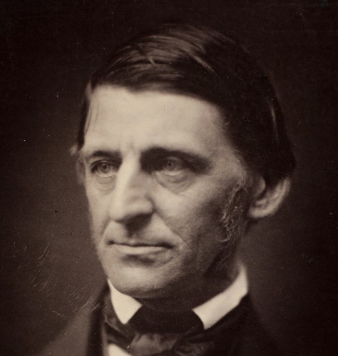
Everything intercepts us from ourselves.
▼
Source
1833
3 months 3 weeks ago
Judged by the evolving nineteenth-century ideology of femininity, which emphasized women’s roles as nurturing mothers and gentle companions and housekeepers for their husbands, Black women were practically anomalies.
3 months 3 weeks ago
Melancholy redeems this universe, and yet it is melancholy that separates us from it.
3 months 3 weeks ago
We do not, however, reckon that trade disadvantageous which consists in the exchange of the hard-ware of England for the wines of France;and yet hard-ware is a very durable commodity, and were it not for this continual exportation, might too be accumulated for ages together, to the incredible augmentation of the pots and pans of the country. But it readily occurs that the number of such utensils is in every country necessarily limited by the use which there is for them;that it would be absurd to have more pots and pans than were necessary for cooking the victuals usually consumed there;and that if the quantity of victuals were to increase, the number of pots and pans would readily increase along with it, apart of the increased quantity of victuals being employed in purchasing them, or in maintaining an additional number of workman whose business it was to make them.
▼
Source
Chapter I, p. 471.
3 months 3 weeks ago
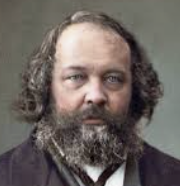
Freemasonry, in its development, in its growing power at first and later in its decadence, represented in a way the development, power, and moral and intellectual decadence of the bourgeoisie. Today, fallen to the sad position of a senile old intriguer, it is a useless, sometimes malevolent and always ridiculous nullity, whereas, before 1830 and especially before 1793, having gathered together at its core, with very few exceptions, all the minds of the elite, the most ardent hearts, the proudest spirits, the most audacious personalities, it had constituted an active powerful, and truly beneficial institution. It was the energetic incarnation and implementation of the humanitarian ideal of the eighteenth century. All those great principles of liberty, equality, and fraternity, of reason and human justice, elaborated theoretically at first by the philosophy of that century, became in the hands of the Freemasons practical dogmas and the foundations of a new moral and political program, the soul of a gigantic enterprise of demolition and reconstruction. In that epoch, Freemasonry was nothing less than the universal conspiracy of the revolutionary bourgeoisie against the feudal monarchical and divine tyranny. It was the International of the bourgeoisie.
▼
Source
"Letter to the Comrades of the International Workingmen's Association of Locle and Cheau-de-Fonds", (1869)
3 months 3 weeks ago
History is a process of rebarbarization. A people made vigorous by arduous physical conditions of life, and driven by the increasing exigencies of survival, leaves its native habitat, moves down upon a less vigorous people, conquers, displaces, or absorbs it. Habits of resolution and activity developed in a less merciful environment now rapidly produce an economic surplus; and part of the resources so accumulated serve as capital in a campaign of imperialist conquest. The growing surplus generates a leisure class, scornful of physical activity and adept in the arts of luxury. Leisure begets speculation; speculation dissolves dogma and corrodes custom, develops sensitivity of perception and destroys decision of action. Thought, adventuring in a labyrinth of analysis, discovers behind society the individual; divested of its normal social function it turns inward and discovers the self. The sense of common interest, of commonwealth, wanes; there are no citizens now, there are only individuals. From afar another people, struggling against the forces of an obdurate environment, sees here the cleared forests, the liberating roads, the harvest of plenty, the luxury of leisure. It dreams, aspires, dares, unites, invades. The rest is as before. Rebarbarization is rejuvenation. The great problem of any civilization is how to rejuvenate itself without rebarbarization.
3 months 3 weeks ago
There is another accusation which irritates me on Plutarch's behalf: it is where Bodin says that Plutarch showed good faith in his parallels between Roman and Roman or Greek and Greek but not between Roman and Greek. Witness, he says, Demosthenes and Cicero; Cato and Aristides; Sylla and Lysander; Marcellus and Pelopidas; Pompey and Agesilaus, reckoning as he does that he favoured the Greeks by matching them so unfairly. That is precisely to attack what is most excellent and commendable in Plutarch: for in those parallel lives (which are the most admirable part of his works and to my mind the one he took most pleasure in) the faithfulness and purity of his judgements equals their weight and profundity. He is a philosopher who teaches us what virtue is.
▼
Source
Michel de Montaigne, 'In defence of Seneca and Plutarch', The Complete Essays, translated by M. A. Screech (1991; 2003), p. 822
3 months 3 weeks ago
Humans kill one another – and in some cases themselves – for many reasons, but none is more human than the attempt to make sense of their lives. More than the loss of life, they fear loss of meaning.
▼
Source
In the Puppet Theatre: Roof Gardens, Feathers and Human Sacrifice (p. 87)
3 months 3 weeks ago
Justice is of two kinds, justice in distribution and justice in rectification. ... Aristotle thinks primarily of setting things straight, and denies that rectificatory justice contains an element of 'tit for tat'.
▼
Source
Alan Ryan, Introduction in Justice (1993) edited by Alan Ryan
3 months 3 weeks ago
I assert(1) There is no method of discovering a scientific theory.(2) There is no method of ascertaining the truth [i.e., verification] of a scientific hypothesis...(3) There is no method of ascertaining whether a hypothesis is 'probable', in the sense of the probability calculus.
3 months 3 weeks ago
I thought: "I am perishing of cold and hunger, and here is a man thinking only of how to clothe himself and his wife, and how to get bread for themselves. He cannot help me. When the man saw me he frowned and became still more terrible, and passed me by on the other side. I despaired, but suddenly I heard him coming back. I looked up, and did not recognize the same man: before, I had seen death in his face; but now he was alive, and I recognized in him the presence of God.
CivilSimian.com created by AxiomaticPanic, CivilSimian, Kalokagathia