
3 months 3 weeks ago
We are born believing. A man bears beliefs as a tree bears apples.
▼
Source
Worship
3 months 3 weeks ago
Technology paces industry, but there's a long lag in the process. Industry paces economics. It changes the tools, a great ecological change. And in that manner we come finally to everyday life. The politician is someone who deals in man's problems of adjustment. To ask a politician to lead us is to ask the tail of a dog to lead the dog.
▼
Source
"The Designers and the Politicians" (1962), later published in Beyond Left & Right : Radical Thought for Our Times (1968) by Richard Kostelanetz, p. 368
3 months 3 weeks ago
When you say that if I deny, that the operations of seeing, hearing, attending, wishing, &c., can be ascribed to God, or that they exist in him in any eminent fashion, you do not know what sort of God mine is ; I suspect that you believe there is no greater perfection than such as can be explained by the aforesaid attributes. I am not astonished ; for I believe that, if a triangle could speak, it would say, in like manner, that God is eminently triangular, while a circle would say that the divine nature is eminently circular. Thus each would ascribe to God its own attributes, would assume itself to be like God, and look on everything else as ill-shaped. The briefness of a letter and want of time do not allow me to enter into my opinion on the divine nature, or the questions you have propounded. Besides, suggesting difficulties is not the same as producing reasons. That we do many things in the world from conjecture is true, but that our redactions are based on conjecture is false. In practical life we are compelled to follow what is most probable ; in speculative thought we are compelled to follow truth. A man would perish of hunger and thirst, if he refused to eat or drink, till he had obtained positive proof that food and drink would be good for him. But in philosophic reflection this is not so. On the contrary, we must take care not to admit as true anything, which is only probable. For when one falsity has been let in, infinite others follow. Again, we cannot infer that because sciences of things divine and human are full of controversies and quarrels, therefore their whole subject-matter is uncertain ; for there have been many persons so enamoured of contradiction, as to turn into ridicule geometrical axioms.
▼
Source
[http://oll.libertyfund.org/?option=com_staticxt&staticfile=show.php%3Ftitle=1711&chapter=144218&layout=html&Itemid=27 Letter 56 (60), to Hugo Boxel (1674)]
3 months 3 weeks ago
No explanation is required for Holy Writing. Whoso speaks truly is full of eternal life, and wonderfully related to genuine mysteries does his Writing appear to us, for it is a Concord from the Symphony of the Universe.

3 months 3 weeks ago
Number is the ruler of forms and ideas, and the cause of gods and daemons.
▼
Source
As quoted in Life of Pythagoras (c. 300) by Iamblichus of Chalcis, as translated by Thomas Taylor (1818) | Variants: | Number rules the universe. | As quoted in The Story of a Number (1905) by E. Maor; also in Comic Sections (1993) by Desmond MacHale
3 months 3 weeks ago
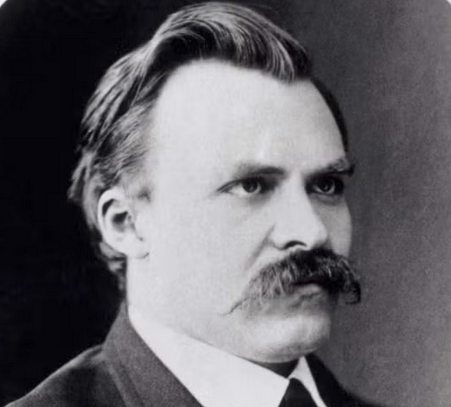
This is the antinomy: Insofar as we believe in morality we pass sentence on existence.
▼
Source
Sec. 6 (Notebook W II 2. Autumn 1887, KGW VIII, 2.237, KSA 12.571 [citations are to Nietzsche's manuscripts by archival code, and the page numbers in which the entire section can be found transcribed therefrom, in the hardcover and softcover historical-cr
3 months 3 weeks ago
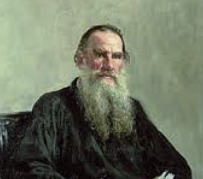
In life, in true life, there can be nothing better than what is. Wanting something different than what is, is blasphemy.
▼
Source
p. 209
3 months 3 weeks ago
God cannot be compared to anything. Note this.
▼
Source
Ch.7
3 months 3 weeks ago
United States! the ages plead, — Present and Past in under-song, — Go put your creed into your deed, Nor speak with double tongue.
▼
Source
Ode, st. 5
3 months 3 weeks ago
I live on Earth at present, and I don't know what I am. I know that I am not a category. I am not a thing — a noun. I seem to be a verb, an evolutionary process — an integral function of the universe.
▼
Source
I Seem to Be a Verb (1970)
3 months 3 weeks ago
The repose of sleep refreshes only the body. It rarely sets the soul at rest. The repose of the night does not belong to us. It is not the possession of our being. Sleep opens within us an inn for phantoms. In the morning we must sweep out the shadows.
▼
Source
Ch. 2, sect. 3
3 months 3 weeks ago
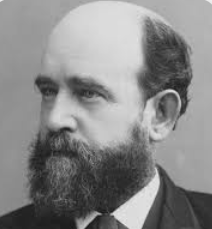
Those who are most to be considered, those for whose help the struggle must be made, if labor is to be enfranchised, and social justice won, are those least able to help or struggle for themselves, those who have no advantage of property or skill or intelligence, — the men and women who are at the very bottom of the social scale. In securing the equal rights of these we shall secure the equal rights of all. Hence it is, as Mazzini said, that it is around the standard of duty rather than around the standard of self-interest that men must rally to win the rights of man. And herein may we see the deep philosophy of Him who bade men love their neighbors as themselves. In that spirit, and in no other, is the power to solve social problems and carry civilization onward.
▼
Source
Ch. 21 : Conclusion
3 months 3 weeks ago
There is, properly speaking, no Misfortune in the world. Happiness and Misfortune stand in continual balance. Every Misfortune is, as it were, the obstruction of a stream, which, after overcoming this obstruction, but bursts through with the greater force.
3 months 3 weeks ago
Eat not the heart.
▼
Source
Symbol 30; explained in the edition used here: "This Symbol signifies that it is not proper to divulse the union and consent of the universe. And still further it signifies this, Be not envious, but philanthropic and communicative; and from this it exhort
3 months 3 weeks ago
Merchant and pirate were for a long period one and the same person. Even today mercantile morality is really nothing but a refinement of piratical morality.
3 months 3 weeks ago
If I could kill him and create a new person exactly the same as he is now, I would do so happily.
▼
Source
Sophia Tolstaya, The Diaries of Sophia Tolstoy, trans. Cathy Porter (Random House, 1985), 16 December 1862.
3 months 3 weeks ago
The error of the ignorant goes so far as to say that God's power is insufficient, because he has given to this Universe the properties which they imagine cause these great evils, and which do not help all evil-disposed persons to obtain the evil which they seek, and to bring their evil souls to the aim of their desires, though these, as we have shown, are really without limit.
▼
Source
Ch.12
3 months 3 weeks ago
The ornament of a house is the friends who frequent it.
▼
Source
Domestic Life
3 months 3 weeks ago
Truth is cosmically total: synergetic. Verities are generalized principles stated in semimetaphorical terms. Verities are differentiable. But love is omniembracing, omnicoherent, and omni-inclusive, with no exceptions. Love, like synergetics, is nondifferentiable, i.e., is integral.
▼
Source
[http://www.rwgrayprojects.com/synergetics/s10/p0520.html#1005.50 1005.54]
3 months 3 weeks ago
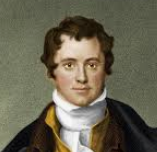
The moment after, I began to respire 20 quarts of unmingled nitrous oxide. A thrilling, extending from the chest to the extremities, was almost immediately produced. I felt a sense of tangible extension highly pleasurable in every limb; my visible impressions were dazzling, and apparently magnified, I heard distinctly every sound in the room and was perfectly aware of my situation. By degrees, as the pleasurable sensations increased, I last all connection with external things; trains of vivid visible images rapidly passed through my mind, and were connected with words in such a manner, as to produce perceptions perfectly novel. I existed in a world of newly connected and newly modified ideas. I theorised — I imagined that I made discoveries. When I was awakened from this semi-delirious trance by Dr. Kinglake, who took the bag from my mouth, indignation and pride were the first feelings produced by the sight of the persons about me. My emotions were enthusiastic and sublime; and for a minute I walked round the room, perfectly regardless of what was said to me. As I recovered my former state of mind, I felt an inclination to communicate the discoveries I had made during the experiment. I endeavoured to recall the ideas, they were feeble and indistinct; one collection of terms, however, presented itself: and with the most intense belief and prophetic manner, I exclaimed to Dr Kinglake, "Nothing exists but thoughts!—the universe is composed of impressions, ideas, pleasures and pains!"
▼
Source
Researches, Chemical and Philosophical: Chiefly Concerning Nitrous Oxide, Or Dephlogisticated Nitrous Air, and Its Respiration (London: J. Johnson, 1800) pp. 487-489 [https://books.google.com/books?id=jhUAAAAAQAAJ&pg=PA487#v=onepage&q&f=true]
3 months 3 weeks ago
Patience cometh by the grace of the Soul.
3 months 3 weeks ago
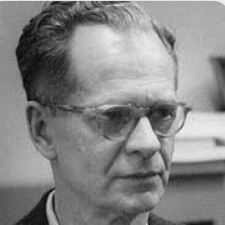
Many instructional arrangements seem "contrived", but there is nothing wrong with that. It is the teacher's function to contrive conditions under which students learn. Their relevance to a future usefulness need not be obvious. It is a difficult assignment. The conditions the teacher arranges must be powerful enough to compete with those under which the student tends to behave in distracting ways.
▼
Source
"Free and Happy Student" in The Phi Delta Kappan (September 1973); later published in Reflections on Behaviorism and Society (1978)
3 months 3 weeks ago
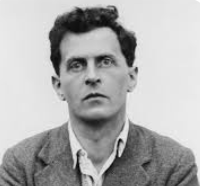
One of the most difficult of the philosopher's tasks is to find out where the shoe pinches.
▼
Source
p. 61
3 months 3 weeks ago
I do not ascribe to God ignorance of anything or any kind of weakness; I hold that Divine Providence is related and closely connected with the intellect, because Providence can only proceed from an intelligent being, from a being that is itself the most perfect Intellect. Those creatures, therefore, which receive part of that intellectual influence, will become subject to the action of Providence in the same proportion as they are acted upon by the intellect. This theory is in accordance with reason and with the teaching of the Scripture, whilst the other theories previously mentioned either exaggerate Divine Providence of detract from it.
▼
Source
Ch.17
3 months 3 weeks ago
This world belongs to the energetic.
▼
Source
Resources
3 months 3 weeks ago
The synergetic integral of the totality of principles is God, whose sum-total behavior in pure principle is beyond our comprehension and is utterly mysterious to us, because as humans — in pure principle — we do not and never will know all the principles.

3 months 3 weeks ago
Any one thing in the creation is sufficient to demonstrate a Providence to an humble and grateful mind.
▼
Source
Book I, ch. 16, § 7.
3 months 3 weeks ago
Virtue is harmony.
▼
Source
This is often published as a direct quote of Pythagoras, but seems to be derived from the account of Diogenes Laertius of Pythagorean doctrines, where he simply describes the statement as a precept of his followers. In the translation of C. D. Yonge (1853
3 months 3 weeks ago
Scepticism is not irrefutable, but obviously nonsensical, when it tries to raise doubts where no questions can be asked. For doubt can exist only where a question exists, a question only where an answer exists, and an answer only where something can be said. (6.51)
3 months 3 weeks ago
How great is the usefulness of every precept that delivers us from this great error, and leads us back to the true faith: that God, the Creator of all things, rules the Universe; that He must be served, loved, and feared, and not those imaginary deities. According to this faith we approach the true God, and obtain His favour without having recourse to burdensome means; for nothing else is required but to love and fear Him; this is the aim in serving God, as will be shown. Comp. "And now, Israel, what doth the Lord thy God require of thee but to fear the Lord?" &c. (Deut. x. 12)
▼
Source
Ch.29
3 months 3 weeks ago
The bitterest tragic element in life to be derived from an intellectual source is the belief in a brute Fate or Destiny.
▼
Source
"The Tragic", p. 217. From The Dial (April 1844) p. 515
3 months 3 weeks ago
The courage to cooperate or initiate are based entirely on the truth, the whole truth, and nothing but the truth as the divine mind within you tells you the truth is. It really does require a courage and a self-disciplining to go along with that truth.

3 months 3 weeks ago
Scholastic skeptics, as well as ignorant materialists, have greatly amused themselves for the last two centuries over the absurdities attributed to Pythagoras by his biographer, Iamblichus. The Samian philosopher is said to have persuaded a she-bear to give up eating human flesh; to have forced a white eagle to descend to him from the clouds, and to have subdued him by stroking him gently with the hand, and by talking to him. On another occasion, Pythagoras actually persuaded an ox to renounce eating beans, by merely whispering in the animal's ear! (Iamblichus: "De Vita Pythag.") Oh, ignorance and superstition of our forefathers, how ridiculous they appear in the eyes of our enlightened generations! Let us, however, analyze this absurdity. Every day we see unlettered men, proprietors of strolling menageries, taming and completely subduing the most ferocious animals, merely by the power of their irresistible will... Every one has either witnessed or heard of the seemingly magical power of some mesmerizers and psychologists. They are able to subjugate their patients for any length of time. Regazzoni, the mesmerist who excited such wonder in France and London, has achieved far more extraordinary feats than what is above attributed to Pythagoras. Why, then, accuse the ancient biographers of such men as Pythagoras and Apollonius of Tyana of either willful misrepresentation or absurd superstition?
▼
Source
H. P. Blavatsky, Isis Unveiled: A Master-Key to the Mysteries of Ancient and Modern Science and Theology, p.284 (1877)
3 months 3 weeks ago
Show me someone who is ill and yet happy, in danger and yet happy, dying and yet happy, exiled and yet happy. Show me such a person; by the gods, how greatly I long to see a Stoic!
▼
Source
Book II, ch. 19, § 24.
3 months 3 weeks ago
Nor need you question but that Pythagoras a long time before he found the demonstration for which he offered the Hecatomb, had been certain, that the square of the side subtending the right angle in a rectangle triangle, was equal to the square of the other two sides: and the certainty of the conclusion conduced not a little to the investigating of the demonstration, understanding me alwayes to mean in demonstrative Sciences.
▼
Source
Galileo Galilei, Dialogue Concerning the Two Chief World Systems (1632) as quoted in the Salusbury translation, The Systeme of the World: in Four Dialogues (1661) p. 38
3 months 3 weeks ago
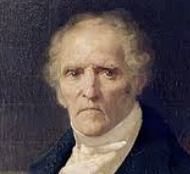
There was very little that prevented the vandalism of 1793 from suddenly producing a second revolution as marvelous as the first was horrible. The whole human race was approaching its release; the civilized, barbarian, and savage order would have disappeared forever if the Convention, which trampled down all prejudices, had not bowed down before the only one that had to be destroyed, the institution of marriage.
▼
Source
Charles Fourier: The Visionary and His World, J. Beecher (1986), p. 304-5
3 months 3 weeks ago
What is troubling us is the tendency to believe that the mind is like a little man within.
▼
Source
Remarks to John Wisdom, quoted in Zen and the Work of WIttgenstein by Paul Weinpaul in The Chicago Review Vol. 12, (1958), p. 70
3 months 3 weeks ago
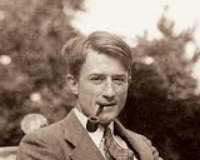
By one road or another, by conviction, by its supposed inevitability, by its alleged success, or even quite unreflectively, almost all politics today have become Rationalist or near-Rationalist.
3 months 3 weeks ago
Nature is too thin a screen; the glory of the One breaks in everywhere.
▼
Source
p. 182
3 months 3 weeks ago
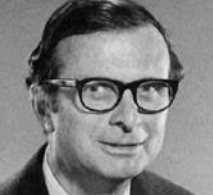
Scientists whose work has no clear, practical implications would want to make their decisions considering such things as: the relative worth of (1) more observations, (2) greater scope of his conceptual model, (3) simplicity, (4) precision of language, (5) accuracy of the probability assignment.
▼
Source
p. 248 as cited in: Douglas, H.E. (2009) Science, Policy, and the Value-Free Ideal
3 months 3 weeks ago
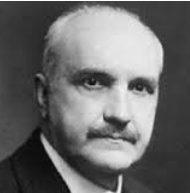
Perhaps the only true dignity of man is his capacity to despise himself.
3 months 3 weeks ago
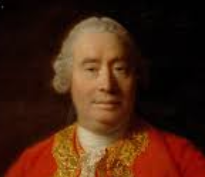
No quality of human nature is more remarkable, both in itself and in its consequences, than that propensity we have to sympathize with others, and to receive by communication their inclinations and sentiments, however different from, or even contrary to our own. This is not only conspicuous in children, who implicitly embrace every opinion propos'd to them; but also in men of the greatest judgment and understanding, who find it very difficult to follow their own reason or inclination, in opposition to that of their friends and daily companions. To this principle we ought to ascribe the great uniformity we may observe in the humours and turn of thinking of those of the same nation; and ’tis much more probable, that this resemblance arises from sympathy, than from any influence of the soil and climate, which, tho’ they continue invariably the same, are not able to preserve the character of a nation the same for a century together. A good-natur'd man finds himself in an instant of the same humour with his company; and even the proudest and most surly take a tincture from their countrymen and acquaintance. A chearful countenance infuses a sensible complacency and serenity into my mind; as an angry or sorrowful one throws a sudden dump upon me. Hatred, resentment, esteem, love, courage, mirth and melancholy; all these passions I feel more from communication than from my own natural temper and disposition. So remarkable a phaenomenon merits our attention, and must be trac'd up to its first principles.
▼
Source
Part 1, Section 11
3 months 3 weeks ago
The first and most necessary topic in philosophy is that of the use of moral theorems, such as, "We ought not to lie;" the second is that of demonstrations, such as, "What is the origin of our obligation not to lie;" the third gives strength and articulation to the other two, such as, "What is the origin of this is a demonstration." For what is demonstration? What is consequence? What contradiction? What truth? What falsehood? The third topic, then, is necessary on the account of the second, and the second on the account of the first. But the most necessary, and that whereon we ought to rest, is the first. But we act just on the contrary. For we spend all our time on the third topic, and employ all our diligence about that, and entirely neglect the first. (51).
3 months 3 weeks ago
It is very important to note that some 2,500 years ago at the least Pythagoras went from Samos to the Ganges to learn geometry…But he would certainly not have undertaken such a strange journey had the reputation of the Brahmins' science not been long established in Europe…
▼
Source
Voltaire, Riding the Indian Tiger, William Nobrega and Ashish Sinha. Quoted from Gewali, Salil (2013). Great Minds on India. New Delhi: Penguin Random House. Also in Sushama Londhe, [https://www.google.com/books/edition/A_Tribute_to_Hinduism/G3AMAQAAMAAJ?
3 months 3 weeks ago
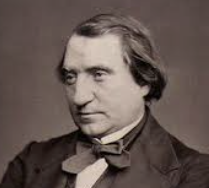
We aspire not to equality but to domination. Countries inhabited by foreign races must become again countries of serfs, farm laborers, and factory workers. The goal is not to suppress inequities, but, rather, to amplify them and to make of them a matter of course.
▼
Source
as translated by Asselin Charles, in "Colonial Discourse Since Christopher Columbus," Journal of Black Studies, Vol. 26, No. 2 (November 1995), p. 147
3 months 3 weeks ago
What has to be accepted, the given, is — so one could say — forms of life.
▼
Source
Pt II, p. 226 of the 1968 English edition
3 months 3 weeks ago
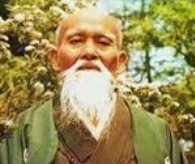
One does not need buildings, money, power, or status to practice the Art of Peace. Heaven is right where you are standing, and that is the place to train.
3 months 3 weeks ago
No member of a crew is praised for the rugged individuality of his rowing.
▼
Source
Widely misattributed to Emerson on the Internet, this quote is actually taken from Alfred North Whitehead's essay "Harvard: The Future" (The Atlantic Monthly, September 1936.)
3 months 3 weeks ago
There are no experts in the systems approach.
▼
Source
p. 232
3 months 3 weeks ago
Skepticism is the chastity of the intellect, and it is shameful to surrender it too soon or to the first comer: there is nobility in preserving it coolly and proudly through long youth, until at last, in the ripeness of instinct and discretion, it can be safely exchanged for fidelity and happiness.
▼
Source
The Works of George Santayana p. 65
CivilSimian.com created by AxiomaticPanic, CivilSimian, Kalokagathia