

3 months 3 weeks ago
She was beautiful, with a beauty so severe and so solitary that at first it was startling. "Ah! If only there were two of me," she thought, "one doing the talking and one listening, one living and one watching, how I would love myself. I'd envy no one."
▼
Source
p. 5
3 months 3 weeks ago
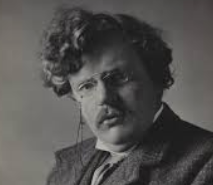
Even the tyrant never rules by force alone; but mostly by fairy tales. And so it is with the modern tyrant, the great employer. The sight of a millionaire is seldom, in the ordinary sense, an enchanting sight: nevertheless, he is in his way an enchanter. As they say in the gushing articles about him in the magazines, he is a fascinating personality. So is a snake. At least he is fascinating to rabbits; and so is the millionaire to the rabbit-witted sort of people that ladies and gentlemen have allowed themselves to become.
▼
Source
p. 19
3 months 3 weeks ago
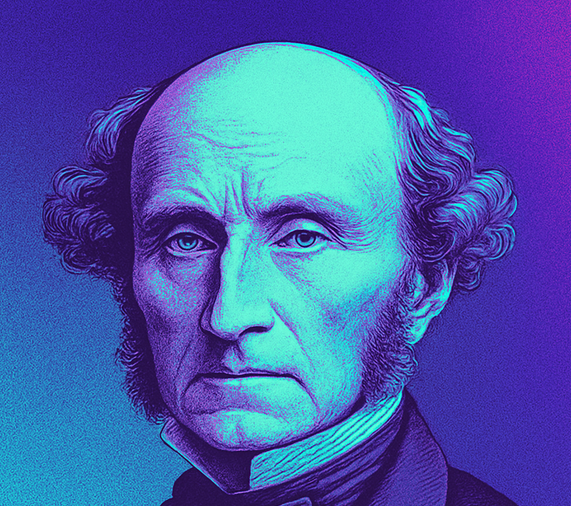
Human nature is not a machine to be built after a model, and set to do exactly the work prescribed for it, but a tree, which requires to grow and develop itself on all sides, according to the tendency of the inward forces which make it a living thing.
▼
Source
Ch. III: Of Individuality, As One of the Elements of Well-Being
3 months 3 weeks ago
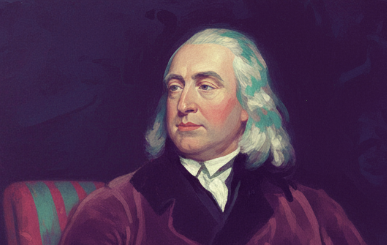
Lawyers are the only persons in whom ignorance of the law is not punished.
▼
Source
Attributed to Bentham in The Dictionary of Humorous Quotations (1949) by Evan Esar, p. 29; no earlier sources for this have been located.

3 months 3 weeks ago
The new governmental reason does not deal with what I would call the things in themselves of governmentality, such as individuals, things, wealth, and land. It no longer deals with these things in themselves. It deals with the phenomena of politics, that is to say, interests, which precisely constitute politics and its stakes; it deals with interests, or that respect in which a given individual, thing, wealth, and so on interests other individuals or the collective body of individuals. ... In the new regime, government is basically no longer to be exercised over subjects and other things subjected through these subjects. Government is now to be exercised over what we could call the phenomenal republic of interests. The fundamental question of liberalism is: What is the utility value of government and all actions of government in a society where exchange determines the value of things?
▼
Source
Lecture 2, January 17, 1979, pp. 45-46
3 months 3 weeks ago
Woman is an existent who is called upon to make herself object; as subject she has an aggressive element in her sensuality which is not satisfied on the male body: hence the conflicts that her eroticism must somehow overcome.
▼
Source
Bk. 2, Pt.. 3, Ch. 4: The Lesbian. P. 445 (1974 Vintage edition)
3 months 3 weeks ago
In the matter of reforming things, as distinct from deforming them, there is one plain and simple principle; a principle which will probably be called a paradox. There exists in such a case a certain institution or law; let us say, for the sake of simplicity, a fence or gate erected across a road. The more modern type of reformer goes gaily up to it and says, "I don't see the use of this; let us clear it away." To which the more intelligent type of reformer will do well to answer: "If you don't see the use of it, I certainly won't let you clear it away. Go away and think. Then, when you can come back and tell me that you do see the use of it, I may allow you to destroy it." This paradox rests on the most elementary common sense. The gate or fence did not grow there. It was not set up by somnambulists who built it in their sleep. It is highly improbable that it was put there by escaped lunatics who were for some reason loose in the street. Some person had some reason for thinking it would be a good thing for somebody. And until we know what the reason was, we really cannot judge whether the reason was reasonable. It is extremely probable that we have overlooked some whole aspect of the question, if something set up by human beings like ourselves seems to be entirely meaningless and mysterious. There are reformers who get over this difficulty by assuming that all their fathers were fools; but if that be so, we can only say that folly appears to be a hereditary disease. But the truth is that nobody has any business to destroy a social institution until he has really seen it as an historical institution. If he knows how it arose, and what purposes it was supposed to serve, he may really be able to say that they were bad purposes, or that they have since become bad purposes, or that they are purposes which are no longer served. But if he simply stares at the thing as a senseless monstrosity that has somehow sprung up in his path, it is he and not the traditionalist who is suffering from an illusion.
▼
Source
Ch. IV: The Drift From Domesticity
3 months 3 weeks ago
Stupidity is much the same all the world over. A stupid person's notions and feelings may confidently be inferred from those which prevail in the circle by which the person is surrounded. Not so with those whose opinions and feelings are an emanation from their own nature and faculties.
▼
Source
Ch. 1
3 months 3 weeks ago
In order for parrhesia to have positive political effects, it must... be linked to a good education, to intellectual and moral formation, to paideia or mathesis.

3 months 3 weeks ago
How singular is the thing called pleasure, and how curiously related to pain, which might be thought to be the opposite of it; for they never come to a man together, and yet he who pursues either of them is generally compelled to take the other. They are two, and yet they grow together out of one head or stem.
3 months 3 weeks ago
No philosopher would be willing to accept the idea of philosophy as a way of escape, but might there not be a question of the philosopher being in duty bound to refuse to accept a world, like our real world here, of disorder and crime where the values of the mind and spirit can no longer find a home?
▼
Source
p. 116
3 months 3 weeks ago
My father was as well aware as anyone that Christians do not, in general, undergo the demoralizing consequences which seem inherent in such a creed, in the manner or to the extent which might have been expected from it. The same slovenliness of thought, and subjection of the reason to fears, wishes, and affections, which enable them to accept a theory involving a contradiction in terms, prevents them from perceiving the logical consequences of the theory. Such is the facility with which mankind believe at one and the same time things inconsistent with one another, and so few are those who draw from what they receive as truths, any consequences but those recommended to them by their feelings, that multitudes have held the undoubting belief in an Omnipotent Author of Hell, and have nevertheless identified that being with the best conception they were able to form of perfect goodness.
▼
Source
([https://archive.org/details/autobiography01mill/page/41/mode/1up pp. 41–42])
3 months 3 weeks ago
I often asked myself the following question. There is no doubt that at all times for many men one of the greatest tortures of their lives has been the contact, the collision with the folly of their neighbours. And yet how is it that there has never been attempted — I think this is so — a study on this matter, an Essay on Folly? For the pages of Erasmus do not treat of this aspect of the matter.
▼
Source
Chap. VIII: The Masses Intervene In Everything, And Why Their Intervention Is Solely By Violence
3 months 3 weeks ago
As there are misanthropists, or haters of men, there are also misologists or haters of ideas, and both spring from the same cause, which is ignorance of the world. Misanthropy arises from too great confidence of inexperience; you trust a man and think him altogether true and good and faithful, and then in a little while he turns out to be false and knavish; and then another and another, and when this has happened several times to a man, especially within the circle of his most trusted friends, as he deems them, and he has often quarreled with them, he at last hates all men, and believes that no one has any good in him at all. ...The reason is that a man, having to deal with other men, has no knowledge of them; for if he had knowledge he would have known the true state of the case, that few are the good and few the evil, and that the great majority are in the interval between them.

3 months 3 weeks ago
What is dignity? The measure of liberty.
3 months 3 weeks ago
All those to whom I looked up, were of opinion that the pleasure of sympathy with human beings, and the feelings which made the good of others, and especially of mankind on a large scale, the object of existence, were the greatest and surest sources of happiness. Of the truth of this I was convinced, but to know that a feeling would make me happy if I had it, did not give me the feeling.
▼
Source
([https://archive.org/details/autobiography01mill/page/138/mode/1up p. 138])
3 months 3 weeks ago
That science is incapable of solving in its own way those fundamental questions is no sufficient reason for slighting them
▼
Source
p. 14
3 months 3 weeks ago
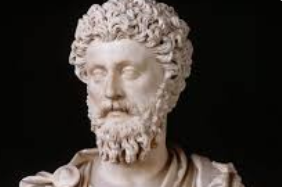
Whatever this is that I am, it is flesh and a little spirit and an intelligence.
▼
Source
This that I am, whatever it be, is mere flesh and a little breathe and the ruling Reason (Haines translation) | This Being of mine, whatever it really is, consists of a little flesh, a little breath, and the part which governs. | A little flesh, a little
3 months 3 weeks ago
Two sorts of truth: profound truths recognized by the fact that the opposite is also a profound truth, in contrast to trivialities where opposites are obviously absurd.
▼
Source
As quoted by his son Hans Bohr in "My Father", published in Niels Bohr: His Life and Work (1967), p. 328 | Unsourced variant: The opposite of a correct statement is a false statement. But the opposite of a profound truth may well be another profound truth
3 months 3 weeks ago
What do you say about making a libation out of this cup to any god? ...I may and I must pray to the gods to prosper my journey from this to that other world—may this, then, which is my prayer, be granted to me. [Then holding the cup to his lips, quite readily and cheerfully he drank off the poison. And hitherto most of us had been able to control their sorrow; but now, when we saw him drinking, and saw too, that he had finished the draft, we could no longer forbear, and in spite of myself my own tears were flowing fast; so that I covered my face and wept over myself, for certainly I was not weeping over him, but at my own calamity at having lost such a companion. Nor was I the first, for Crito, when he found himself unable to restrain his tears, had got up, and moved away, and I followed; and at that moment, Apollodorus, who had been weeping all the time, broke out in a loud cry which made cowards of us all. Socrates alone retained his calmness:] What is this strange outcry? ...I sent away the women mainly in order that they might not offend in this way, for I have heard that a man should die in peace. Be quiet then, and have patience.
3 months 3 weeks ago
The Fascist, on the other hand, conceives philosophy as a philosophy of practice (”praxis”). That concept was the product of certain Marxist and Sorellian inspirations (many Fascists and the Duce, himself, received their first intellectual education in the school of Marx and Sorel)—as well as the influence of contemporary Italian idealistic doctrines from which Fascist mentality drew substance and achieved maturity.
▼
Source
“The Philosophy of Fascism,” first published in English in the Spectator, November 1928, pp. 36-37. Reprinted in Origins and Doctrine of Fascism, A. James Gregor, translator and editor, Transaction Publishers (2003) p. 33
3 months 3 weeks ago
I well knew that to propose something which would be called extreme, was the true way not to impede but to facilitate a more moderate experiment.
▼
Source
([https://archive.org/details/autobiography01mill/page/294/mode/1up p. 294])
3 months 3 weeks ago
If you do the job in a principled way, with diligence, energy and patience, if you keep yourself free of distractions, and keep the spirit inside you undamaged, as if you might have to give it back at any moment— If you can embrace this without fear or expectation—can find fulfillment in what you're doing now, as Nature intended, and in superhuman truthfulness (every word, every utterance)—then your life will be happy. —
▼
Source
III, 12 (Hays translation)

3 months 3 weeks ago
The capacity to reason is a special sort of capacity because it can lead us to places that we did not expect to go.
▼
Source
Chapter 4, Reason, p. 88
3 months 3 weeks ago
Exercise till the mind feels delight in reposing from the fatigue.
▼
Source
First appearance on google books is C. Edwards Lester's 1845 English translation of Ansaldo Ceba's book Il Cittadino di Repubblica, translated as The Citizen of a Republic, which on [https://books.google.com/books?id=82rDFVelj_oC&pg=PA92#v=onepage&q&f=fal

3 months 3 weeks ago
I can find no words for what I feel. My consciousness is withdrawn into itself; I hear my heart beating, and my life passing. It seems to me that I have become a statue on the banks of the river of time, that I am the spectator of some mystery, and shall issue from it old, or no longer capable of age.
3 months 3 weeks ago
I do not know whether then or at any other time so short a book ever instantly produced so wide and so important an effect on contemporary thought as did Mill's On Liberty in that day of intellectual and social fermentation (1859)... Mill believed that no symmetry, no uniformity of custom and convention, but bold, free expansion in every field, was demanded by all the needs of human life, and the best instincts of the modern mind... The little volume belongs to the rare books that after hostile criticism has done its best are still found to have somehow added a cubit to man's stature... [It] is a restatement and new reinforcement of Tolerance, discussion without restriction, the free life of the individual, so long as he does not injure other people, fair play for social experiment. On all this nothing could be more bracing than Mill's handling of his lofty case, and the idealism of it, the enthusiasm, sustained as it was for page after page, very nearly approached the electrifying region of the poetic, in the eyes of ardent men and women in our age.
▼
Source
pp. 60-63
3 months 3 weeks ago
The possibility of peace, on whose behalf many are working, might perhaps become actual because the technical advances in offensive weapons make the prospect of a European war so disastrous, and because, if the nations were at grips again, even the victorious aggressor would be ruined. But there still remains open the possibility of a new war which, more dreadful than any that have preceded it would make an end of contemporary Europeans.
3 months 3 weeks ago
Remember this— that there is a proper dignity and proportion to be observed in the performance of every act of life.
▼
Source
IV, 32

3 months 3 weeks ago
He who cares nothing for the good things of the world has dominion over them all.
▼
Source
The Way of Perfection, p. 41
3 months 3 weeks ago
Life is short and we have never too much time for gladdening the hearts of those who are traveling the dark journey with us. Oh, be swift to love, make haste to be kind!
▼
Source
December 16, 1868. | As translated in Amiel's Journal: The Journal Intime of Henri-Frédéric Amiel (1885), by Mrs. Humphry Ward. [https://www.google.com/books/edition/Amiel_s_Journal_The_Journal_Intime_of_He/Qv7CDwAAQBAJ?hl=en Description] and [https://www
3 months 3 weeks ago
Prize that which is best in the universe; and this is that which useth everything and ordereth everything.
▼
Source
V, 21

3 months 3 weeks ago
He that works and does some Poem, not he that merely says one, is worthy of the name of Poet.
▼
Source
Introduction to Cromwell's Letters and Speeches (1845).
3 months 3 weeks ago
From Richard McKeon and Robert Brumsbaugh I learned to view the history of philosophy as a series, not of alternative solutions to the same problems, but of quite different sets of problems. From Rudolph Carnap and Carl Hempel I learned how pseudo-problems could be revealed as such by restarting them in the formal mode of speech. From Charles Hartshorne and Paul Weiss I learned how they could be so revealed by being translated into Whiteheadian or Hegelian terms.
▼
Source
Preface
3 months 3 weeks ago
What indeed tended so greatly to the knowledge of himself, as his appearing in the humiliation of the flesh,—a degradation all the lower indeed if the flesh were only illusory? For it was all the more shameful if he, who brought on himself the Creator’s curse by hanging on a tree, only pretended the assumption of a bodily substance.
▼
Source
Book I, Chapter XI.—The Evidence for God External to Him; But the External Creation Which Yields This Evidence is Really Not Extraneous, for All Things are God’s. Marcion’s God, Having Nothing to Show for Himself, No God at All. Marcion’s Scheme Absurdly

3 months 3 weeks ago
It seems to me, upon the whole matter, that to save or redeem a nation under such circumstances from perdition, nothing less is necessary than some great, some extraordinary conjuncture of ill fortune, or of good, which may purge, yet so as by fire. Distress from abroad, bankruptcy at home, and other circumstances of like nature and tendency, may beget universal confusion. Out of confusion order may arise: but it may be the order of a wicked tyranny, instead of the order of a just monarchy. Either may happen: and such an alternative, at the disposition of fortune, is sufficient to make a stoic tremble! We may be saved indeed by means of a very different kind; but these means will not offer themselves, this way of salvation will not be opened to us, without the concurrence, and the influence of a PATRIOT KING, the most uncommon of all phænomena in the physical or moral world. Nothing can so surely and so effectually restore the virtue and public spirit, essential to the preservation of liberty, and national prosperity, as the reign of such a prince.
▼
Source
pp. 72-73
3 months 3 weeks ago
No matter what anyone says or does, my task is to be good. (Hays translation)
▼
Source
VII, 15
3 months 3 weeks ago
The barrenest of all mortals is the sentimentalist.
▼
Source
Characteristics.
3 months 3 weeks ago
Else, if it be the later Abraham whom you follow as your father—that is, the digamist (Abraham)—receive him withal in his circumcision. If you reject his circumcision, it follows that you will refuse his digamy too.
▼
Source
Chapter 6
3 months 3 weeks ago
Oh, Diamond! Diamond! thou little knowest what mischief thou hast done!
▼
Source
This is from an anecdote found in [http://www.gutenberg.org/files/15331/15331-h/15331-h.htm St. Nicholas magazine, Vol. 5, No. 4, (February 1878)] :
3 months 3 weeks ago
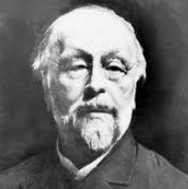
The critic who attempted to carry on 's ideas, who developed them in his own way and added his own distinct and remarkable contribution, was Hippolyte Taine. As an influence on all literary output since their time, the effect of the ideas of these two men is still extraordinary ...
▼
Source
, [https://books.google.com/books?id=T3sLAAAAMAAJ&focus=searchwithinvolume&q=hip- 1st part of quote] [https://books.google.com/books?id=T3sLAAAAMAAJ&focus=searchwithinvolume&q=polyte last part of quote]
3 months 3 weeks ago
To live each day as though one's last, never flustered, never apathetic, never attitudinizing – here is perfection of character.
▼
Source
VII, 69

3 months 3 weeks ago
"The most interesting aspect of suffering is the sufferer's belief in its absoluteness. He believes he has a monopoly on suffering. I think that I alone suffer, that I alone have the right to suffer, although I also realize that there are modalities of suffering more terrible than mine, pieces of flesh falling from the bones, the body crumbling under one's very eyes, monstrous, criminal , shameful sufferings. One asks oneself, How can this be, and if it be, how can one still speak of finality and other such old wives' tales? Suffering moves me so much that I lose all my courage. I lose heart because I do not understand why there is suffering in the world.", in essay: the monopoly of suffering
3 months 3 weeks ago
With what scientific stoicism he walks through the land of wonders, unwondering.

3 months 3 weeks ago
The opposite of an idealist is too often a man without love.

3 months 3 weeks ago
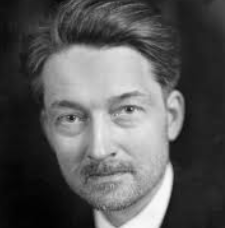
There are several sorts of religions, not only in different parts of the island, but even in every town; some worshipping the sun, others the moon or one of the planets. Some worship such men as have been eminent in former times for virtue or glory, not only as ordinary deities, but as the supreme god. Yet the greater and wiser sort of them worship none of these, but adore one eternal, invisible, infinite, and incomprehensible Deity; as a Being that is far above all our apprehensions, that is spread over the whole universe, not by His bulk, but by His power and virtue; Him they call the Father of All, and acknowledge that the beginnings, the increase, the progress, the vicissitudes, and the end of all things come only from Him; nor do they offer divine honours to any but to Him alone. And, indeed, though they differ concerning other things, yet all agree in this: that they think there is one Supreme Being that made and governs the world, whom they call, in the language of their country, Mithras. They differ in this: that one thinks the god whom he worships is this Supreme Being, and another thinks that his idol is that god; but they all agree in one principle, that whoever is this Supreme Being, He is also that great essence to whose glory and majesty all honours are ascribed by the consent of all nations.
▼
Source
Ch. 9 : Of the Religions of the Utopians
3 months 3 weeks ago
The first step to be taken by everyone who wishes to act morally is to decide not to act according to the general customs and doings of his fellow-men.
▼
Source
p. 137.
3 months 3 weeks ago
No longer let thy breathing only act in concert with the air which surrounds thee, but let thy intelligence also now be in harmony with the intelligence which embraces all things. For the intelligent power is no less diffused in all parts and pervades all things for him who is willing to draw it to him than the aërial power for him who is able to respire it.
▼
Source
VIII, 54
3 months 3 weeks ago
The terrifying experience and obsession of death, when preserved in consciousness, becomes ruinous. If you talk about death, you save part of yourself. But at the same time, something of your real self dies, because objectified meanings lose the actuality they have in consciousness.
3 months 3 weeks ago
France was long a despotism tempered by epigrams.
▼
Source
Pt. I, Bk. I, ch. 1.
CivilSimian.com created by AxiomaticPanic, CivilSimian, Kalokagathia